Korean Age vs International Age
For foreigners interested in Korea, the Korean age system is one of the most confusing but also most fascinating parts of the culture. It affects daily conversation, social hierarchy, and even how people speak to each other.
What Is “Korean Age”?
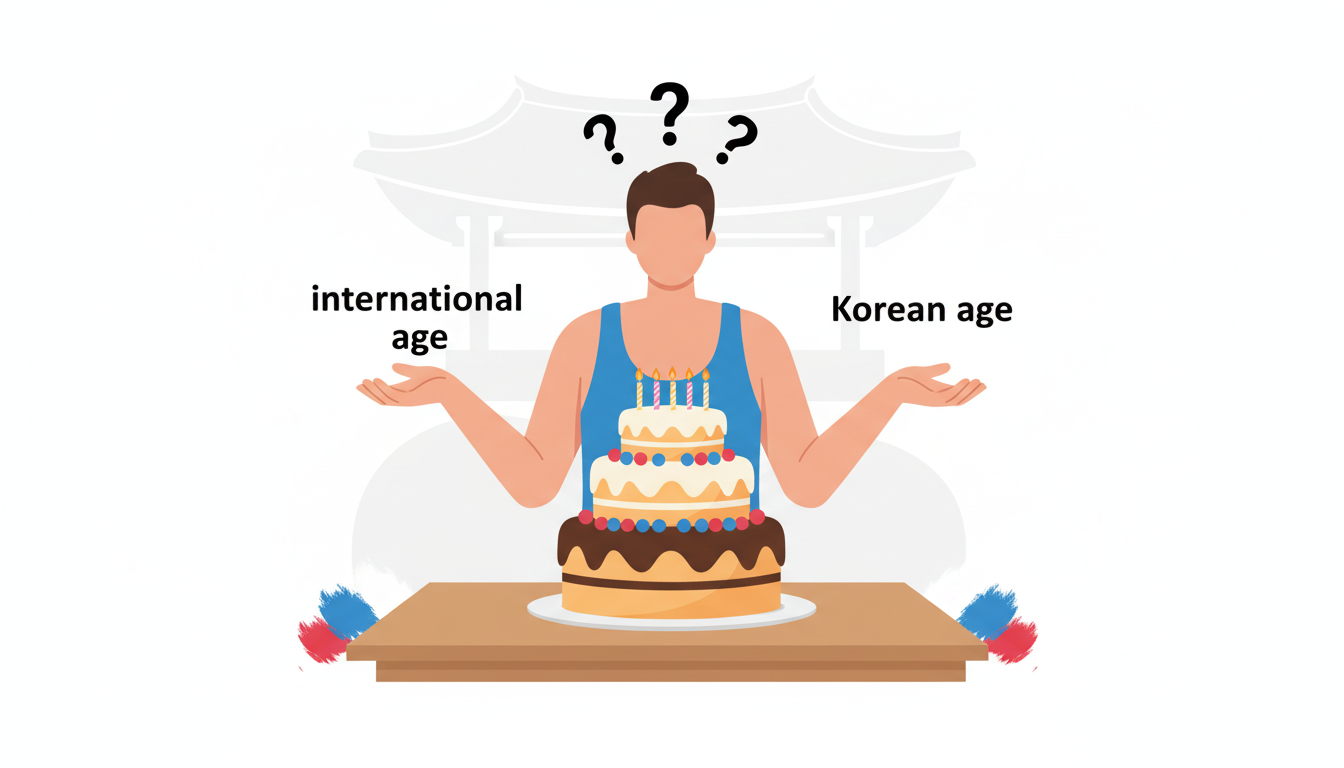
In the traditional Korean age system, you are considered 1 year old at the moment you are born. Then, instead of getting older on your birthday, everyone in Korea gets one year older together on January 1st.
Because of this, your Korean age is usually 1–2 years older than your international age (also called “Western age” or “international age”).
A simple way to think about it:
- International age:
– You start at 0 at birth.
– You add 1 year on every birthday. - Korean age (traditional):
– You start at 1 at birth.
– You add 1 year on January 1st, no matter when your birthday is.
A commonly used formula is:
So if someone was born in 1997 and the current year is 2024:
This is why a person can be 26 years old internationally but 27 or 28 in Korean age, depending on the time of year.
Korean Age Calculator
Korean Age Calculator 2025
Enter your birth year to calculate your Korean age (한국 나이) and international age (만 나이) as of today:
BTS Members Korean Age 2025
BTS Members’ Korean Age and International Age (as of 2025, using the same calculation method as the calculator above):
| Member | Birth Year | Korean Age | International Age |
|---|---|---|---|
| Jin | 1992 | 34 | 33 |
| Suga | 1993 | 33 | 32 |
| J-Hope | 1994 | 32 | 31 |
| RM | 1994 | 32 | 31 |
| Jimin | 1995 | 31 | 30 |
| V | 1995 | 31 | 30 |
| Jungkook | 1997 | 29 | 28 |
Tip: Tip: Use the calculator above to check your own Korean age!
Other Age Systems Used in Korea
Korea has actually used three age-related concepts side by side, which created a lot of confusion.
- International age (만 나이 / “full age”)
- Traditional Korean age
- Year-based age (연 나이)
This mix of systems is one reason the government decided to standardize age usage.
The “Full Age” Reform in Korea
In June 2023, South Korea officially adopted the international (full) age system as the legal standard.
Key points:
- By law, all official documents, contracts, and public services must now use international age.
- As a result, many Koreans suddenly became 1–2 years younger on paper, compared to their previous “Korean age”.
- The change was introduced to reduce confusion, disputes, and social costs caused by multiple age systems.
However, the reform is not 100% universal:
- Some areas, such as school entry, military service, or certain eligibility rules, may still refer to year-based calculations or special criteria.
- In everyday life, many Koreans still casually talk in “Korean age”, especially among friends, family, or in entertainment and fandom communities.
So in modern Korea, you will see international age in official situations, but Korean age is still alive culturally and socially.
What Foreigners Should Know in Practice
When you interact with Koreans, you may hear questions like:
- “How old are you in Korean age?”
- “What year were you born?”
Age matters because it influences:
- Which speech level to use (formal vs informal).
- Whether someone is considered an “older brother/sister” type or a “younger” person.
Practical tips:
- For anything legal or official (contracts, hospital, immigration, tickets): use your international age.
- In casual conversation, people might still be curious about your Korean age, especially if they want to know how to address you politely.
- If you get confused, you can just say, “I’ll use my international age instead of Korean age,” or “I’m not really sure what my Korean age is, but my international age is ○ years old.”
Once you understand these basic ideas and the general feeling behind them, it becomes much easier to talk about age with people in Korea.
About the Author