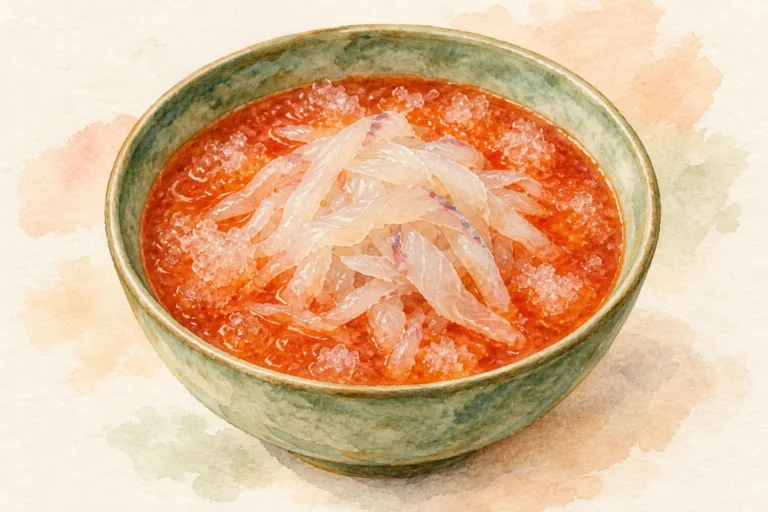
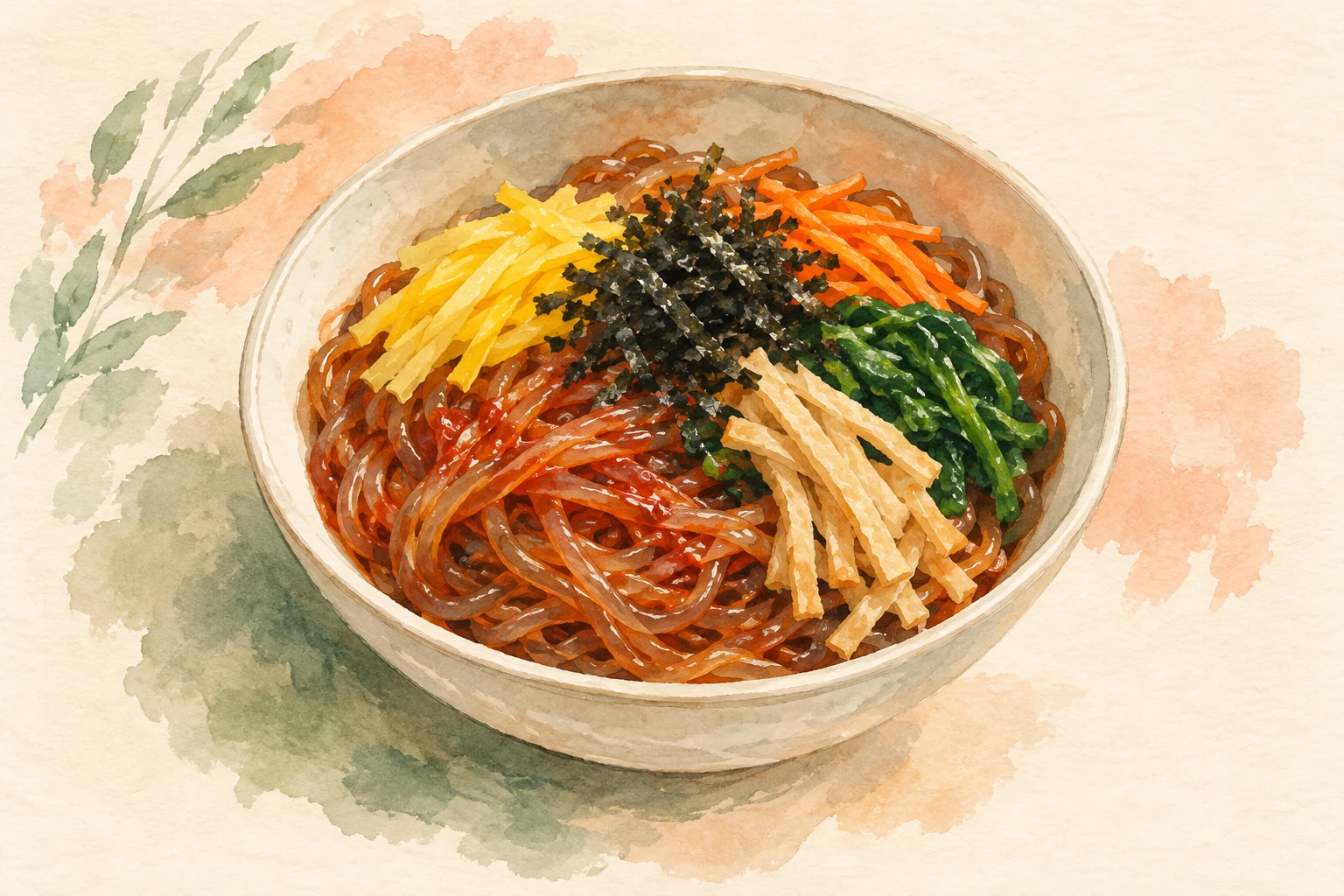
Chewy glass noodles, pickled radish, seaweed and spicy-sweet seasoning come together in bibim dangmyeon (비빔당면), a mixed noodle dish associated with Busan’s markets. 1 Segye Ilbo’s September 10, 2026 report points visitors toward the Bupyeong Kkangtong Market (부평깡통시장) and Gukje Market (국제시장) area to find it. 1 That sounds like an appetizing starting point for a market meal: a bowl with plenty to mix and explore.
What goes into the bowl?
In its September report, Segye Ilbo describes toppings including pickled radish, seaweed, carrots, spinach or chives, and fish cake, combined with spicy-sweet seasoning. 1 The ingredients and seasoning vary by shop, while the basic preparation stays consistent: boiled glass noodles mixed with assorted additions. 1 For ordering, that means the dish’s name identifies a style of mixed noodles rather than one fixed topping combination. 1 Ask about the particular stall’s version if an ingredient matters to your choice.
The paper describes an earlier, simpler preparation of boiled glass noodles mixed with gochujang seasoning and sesame oil. 1 The vegetables, seaweed, pickled radish and fish cake were later additions in that account. 1 This gives the bowl two layers of interest: its noodle-and-seasoning foundation and the broader assortment of toppings described today. 1 The prospect of mixing everything together is part of what sounds so inviting.
Why glass noodles suited market life
Segye Ilbo, citing the regional culture portal Jiyeok N Munhwa, recounts a traditional origin story linking bibim dangmyeon to Bupyeong Market traders and refugees relieving their hunger during the Korean War. 1 It presents this as a handed-down account of the dish’s development. 1
The practical details help explain that connection: the report says glass noodles expanded when boiled, made small quantities filling and softened less readily than other noodles. 1 It also explains that vendors can prepare the noodles ahead, then add seasoning and toppings to serve the dish immediately. 1 Together, those properties connect the choice of ingredient with the way a market stall could assemble a meal: a filling noodle base and a short final preparation. 1
Where to look in Busan
Gukje Market is in Sinchang-dong, Jung-gu, Busan. 2 Segye Ilbo’s September reporting identifies its surrounding area and Bupyeong Kkangtong Market as places to eat bibim dangmyeon alongside other Busan foods, including fish cake. 1
There’s also a recent, concrete account of visitors eating the dish: Dailyvet reports that participants in an international veterinary student event held in Busan in August 2026 tasted bibim dangmyeon at Kkangtong Market. 3 Their market meal also included foods such as tteokbokki and fish cake. 3 For your own visit, check current stall menus and service times before making a special trip.
Another bite with a practical story
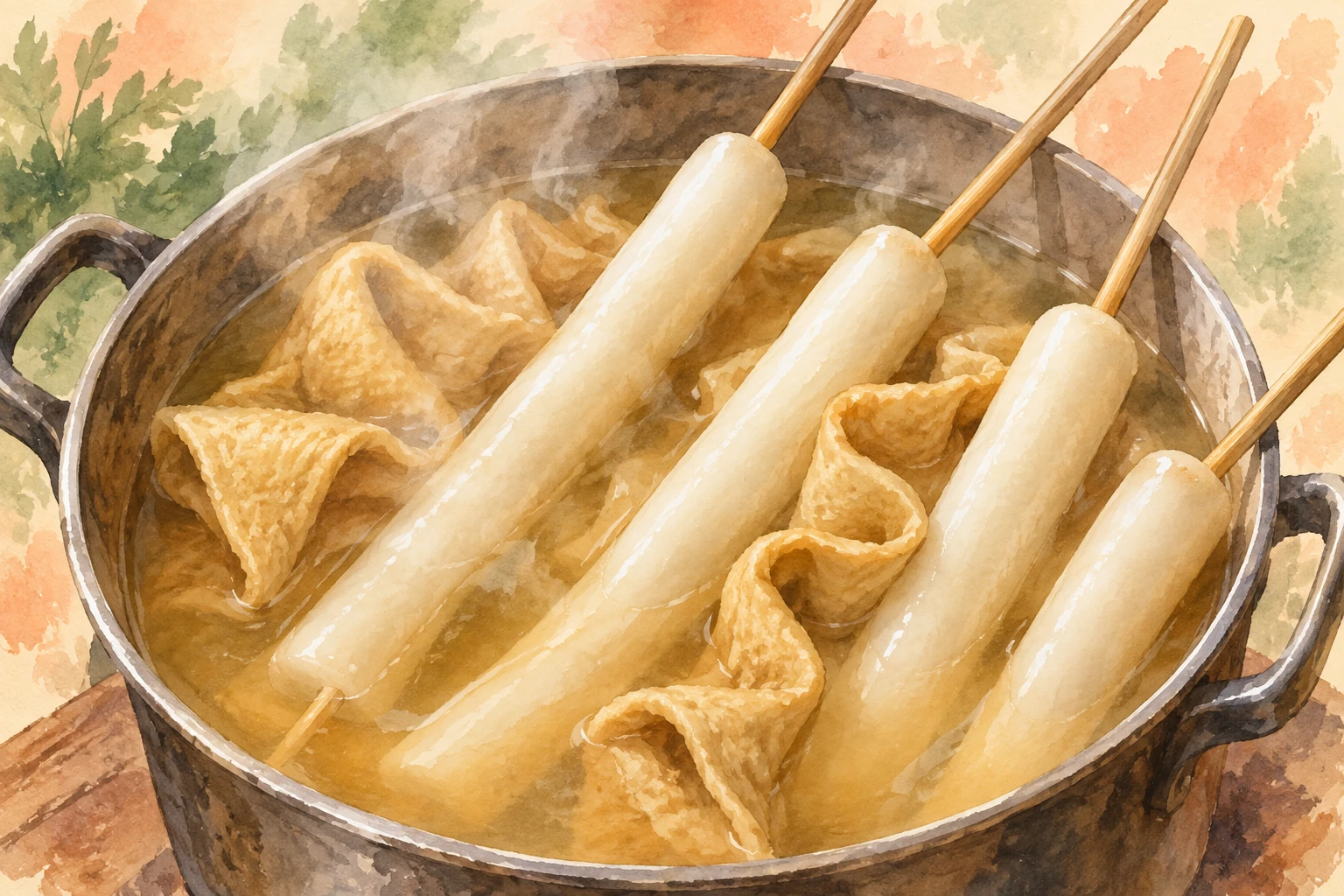
For a neighboring market-food idea, consider multteok (물떡), long rice cakes threaded onto skewers and simmered with fish cake, as described by NewsCulture. 2 The paper explains that using the existing fish-cake broth pot made this an efficient menu item without elaborate additional cooking equipment. 2
The connection to bibim dangmyeon is in the preparation: one assembles preboiled noodles with toppings, while the other makes use of a pot already cooking fish cake. 1 2 They offer two distinct expressions of practical market cooking—mixed glass noodles with spicy-sweet seasoning, and long rice cakes simmered on skewers alongside fish cake. 1 2
Sources
- 부산의 원조 패스트푸드…피란민 허기 달래던 ‘비빔당면’ [FOOD+]
- [전통시장N] 81년 부산 현대사의 축소판… 'K-관광' 명소 된 국제시장 – 뉴스컬처
- 13개국 76명 수의학도 부산에 모였다..2026 IVSA ROK Summer Event 성료
About the Author