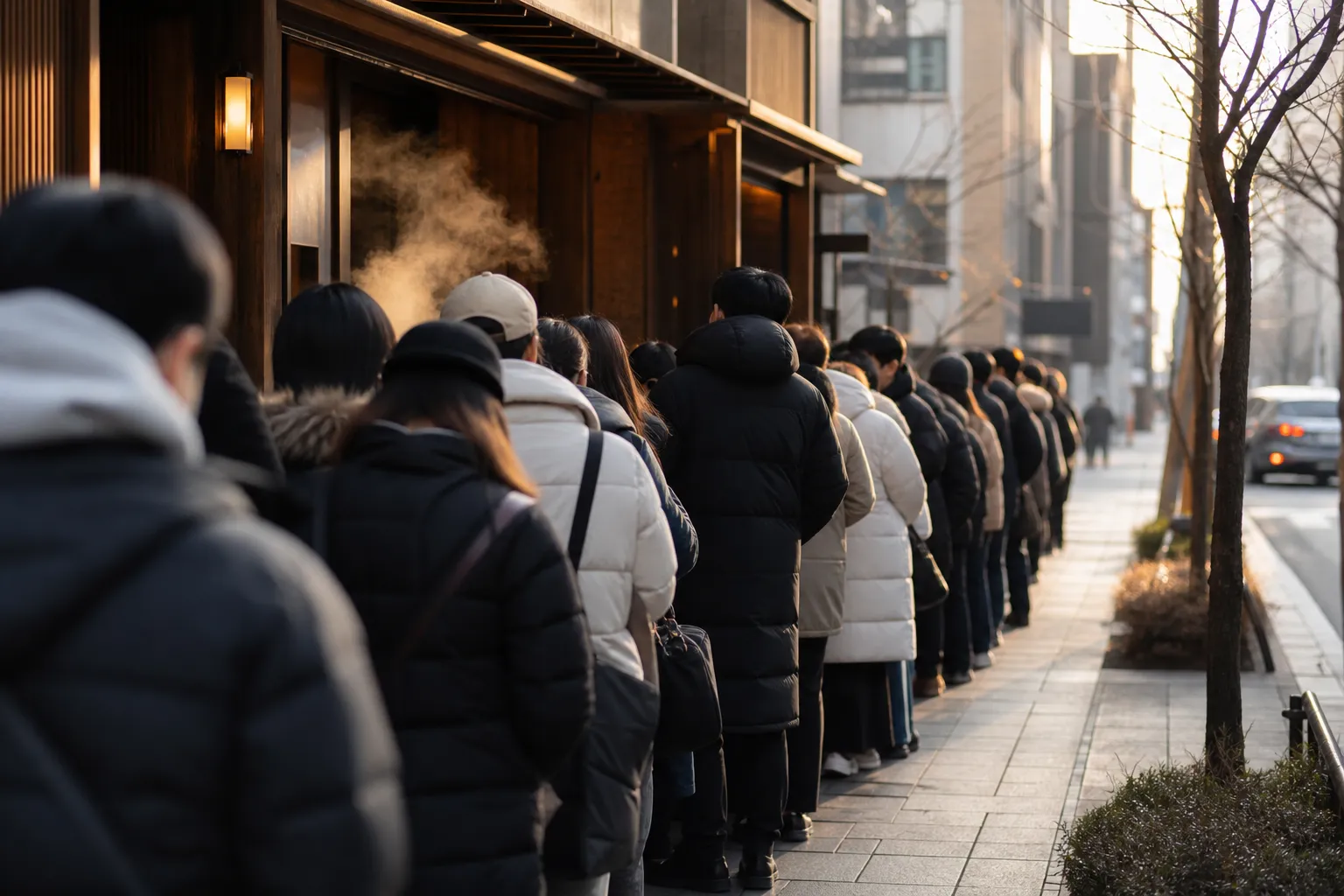
The waiting line at Somunnan Seongsu Gamjatang has become part of the restaurant’s identity. If you are looking up Seongsu Gamjatang before heading to the neighborhood, the queue is one of the first things to understand: sources describe a place where people line up around lunchtime, where weekend evenings can mean more than an hour of waiting, and where the crowd now includes both regular Korean diners and international visitors.
Somunnan Seongsu Gamjatang is not a new viral pop-up. Food platform Siksin describes it as a long-running Seongsu restaurant that opened in 1983, and Seoul Metropolitan Government’s “My Seoul” column also identifies it as a gamjatang spot near Seongsu Station with a history going back to 1983.12 That long timeline helps explain why the line feels less like a one-season trend and more like a local fixture that has been pulled into Seongsu’s wider rise.
Why the Somunnan Gamjatang Line Gets So Long
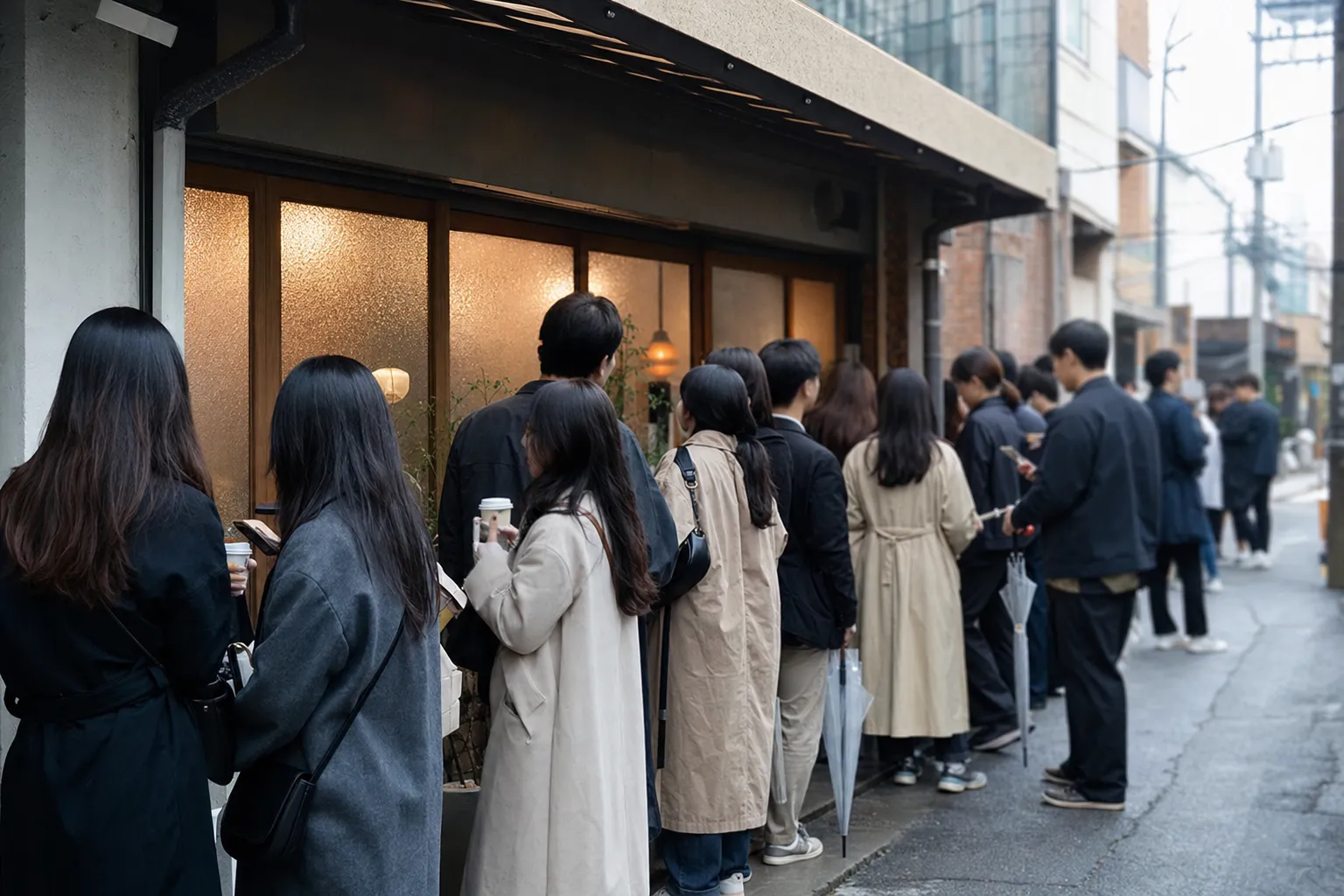
The simplest reason for the line is demand at obvious meal times. Korea Textile News described the restaurant as a place where a long queue forms every day even before lunchtime, while Seoul’s city-run media column advised arriving a little early to avoid the lunch rush.32 In other words, the wait is not limited to a special event or one weekend burst of attention. It is tied to the restaurant’s everyday rhythm.
There is also the Seongsu factor. The neighborhood has become one of Seoul’s most watched commercial areas, and Korea Textile News discussed Somunnan Gamjatang in the same context as the value of core Seongsu real estate and changes in the food-and-beverage district.3 A restaurant with an old-school menu, a visible line, and a central location becomes more than a place to eat. It turns into a landmark people use to read the neighborhood itself.
For visitors, the queue also works as a signal. A line outside a restaurant tells you that the place has a reputation, even before you check a review app. That does not mean every diner will have the same expectations, but it explains why the waiting line can feed its own visibility. People notice the crowd, search the name, and the restaurant becomes part of a Seongsu itinerary.
What the Wait Looks Like by Time and Day
The most useful source-backed detail is that waiting conditions vary. Siksin’s restaurant information says weekend evenings can involve a wait of more than one hour, while also noting that table turnover is relatively fast.1 That combination matters. A long line may look intimidating, but a fast-moving restaurant can feel different from a slow, reservation-only dining room.
Catch Table lists Somunnan Seongsu Gamjatang as a Korean restaurant near Seongsu Station and marks it with “phone always waiting,” with the location noted as about 233 meters from Seongsu Station and the phone number listed as 02-465-6580.4 The wording points to a restaurant where waiting is expected enough to be built into the listing, not treated as an occasional inconvenience.
There are also clues about when the line may be lighter. A 2024 Brunch Story post recorded an arrival around 10:40 a.m. with no wait, while the inside was already nearly full.5 That is only one account, so it should not be treated as a guarantee. Still, it fits the broader pattern from other sources: earlier timing can help, but the restaurant may already be busy before the standard lunch hour.
The restaurant’s 24-hour operation, noted by Siksin, adds another layer.1 Unlike places that compress all demand into a narrow lunch-and-dinner window, a 24-hour restaurant gives diners more possible entry points. Even so, the repeated mentions of lunch crowds and weekend evening waits suggest that convenience does not erase peak-time pressure.
A Queue That Now Includes Global Visitors
The line is no longer only a local office-worker or neighborhood regular story. JoongAng Ilbo reported on foreign tourists moving into Seongsu’s everyday commercial areas and used Somunnan Seongsu Gamjatang as one example; its lunchtime crowd included many foreign customers.6 That detail is important because it shows how a traditional Korean dish in a long-established restaurant can become part of a travel experience, not just a local meal.
One quoted tourist from Hangzhou, China, said, “This is my fourth visit to Korea, and I eat gamjatang every time I come.”6 The quote is short, but it captures why the restaurant’s appeal can cross language and travel barriers. Gamjatang is hearty, communal, and strongly associated with Korean dining culture. For some visitors, seeking it out in Seongsu may feel like participating in ordinary Seoul life rather than checking off only palace, shopping, or cafe stops.
The restaurant’s media history also contributes to its recognition. Siksin notes that Somunnan Seongsu Gamjatang has been featured on SBS’s “3 Great Kings,” and the 2024 Brunch Story post also mentions its association with Baek Jong-won’s “3 Great Kings.”15 Television exposure is not the only reason people wait, but it can widen the circle of diners who know the name before they arrive.
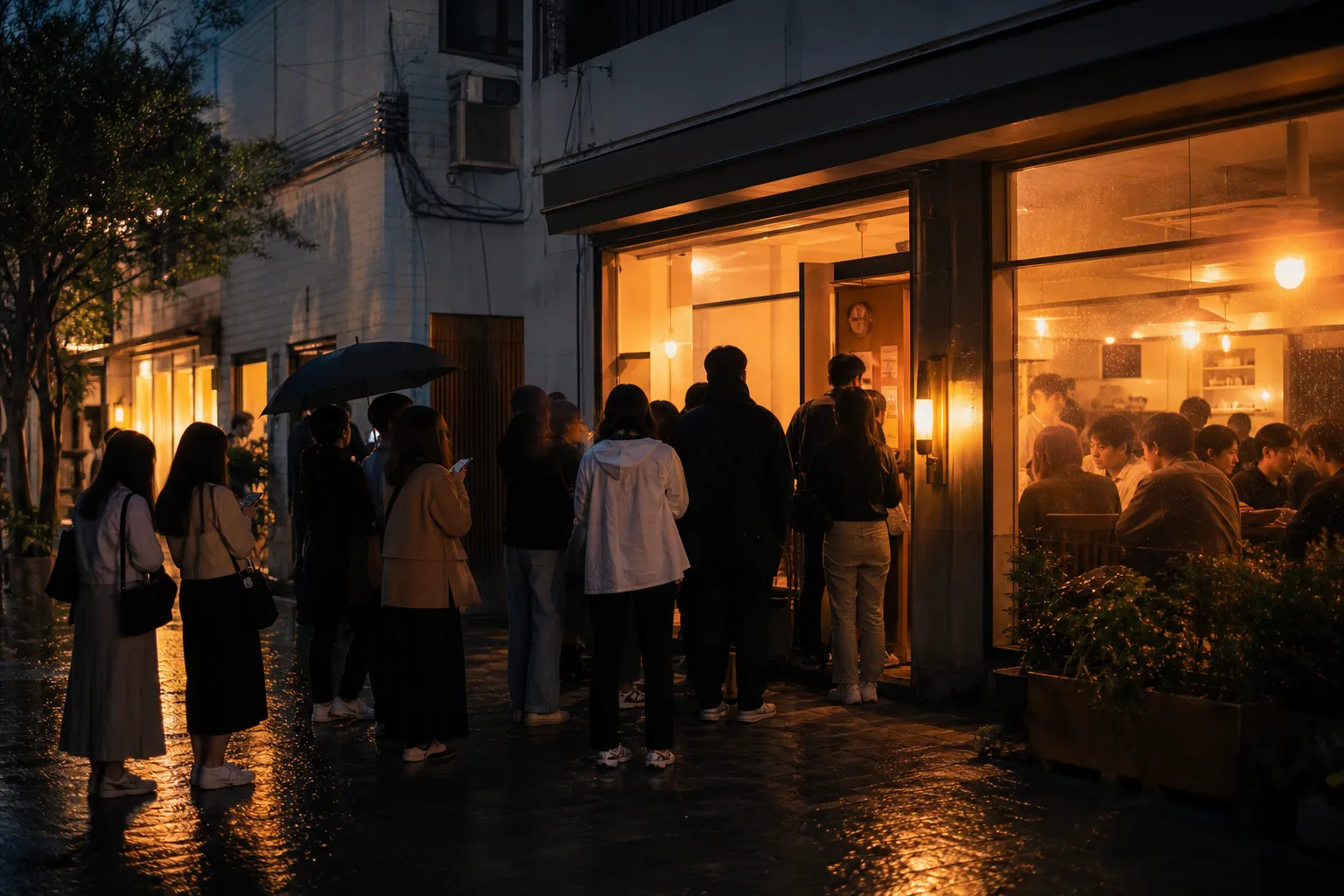
For anyone planning around the Somunnan Gamjatang waiting line, the source-backed takeaway is practical: expect peak-time crowds, especially around lunch and weekend evenings; consider arriving earlier if your schedule allows; and remember that fast turnover may make the line feel more manageable than it first appears. The restaurant’s long history, Seongsu Station proximity, 24-hour operation, and growing attention from foreign visitors all help explain why the queue keeps forming.
Somunnan Seongsu Gamjatang’s waiting line is not just a delay before the meal; it is part of how this 1983 Seongsu restaurant remains visible in a neighborhood that keeps changing around it.
References
- 40년 전통 성수 명물, 소문난성수감자탕 (식신, 2025-08-11)
- [정동현·한끼서울] 성수동 감자탕 (서울시 내 손안에 서울, 2017-07-17)
- 평당 5억 대 '소문난 감자탕' 부지 매각설…성수 상권 해석 엇갈렸다 (한국섬유신문, 2026-04-14)
- 소문난성수감자탕 – 캐치테이블 매장 정보 (캐치테이블)
- 30년 맛집,124-웨이팅 끝판왕, 소문난성수감자탕 (브런치스토리, 2024-04-27)
- "한국오면 꼭 먹는 음식" 불고기 아니었다…외국인들의 '한국인 놀이' (중앙일보, 2025-12-25)
About the Author