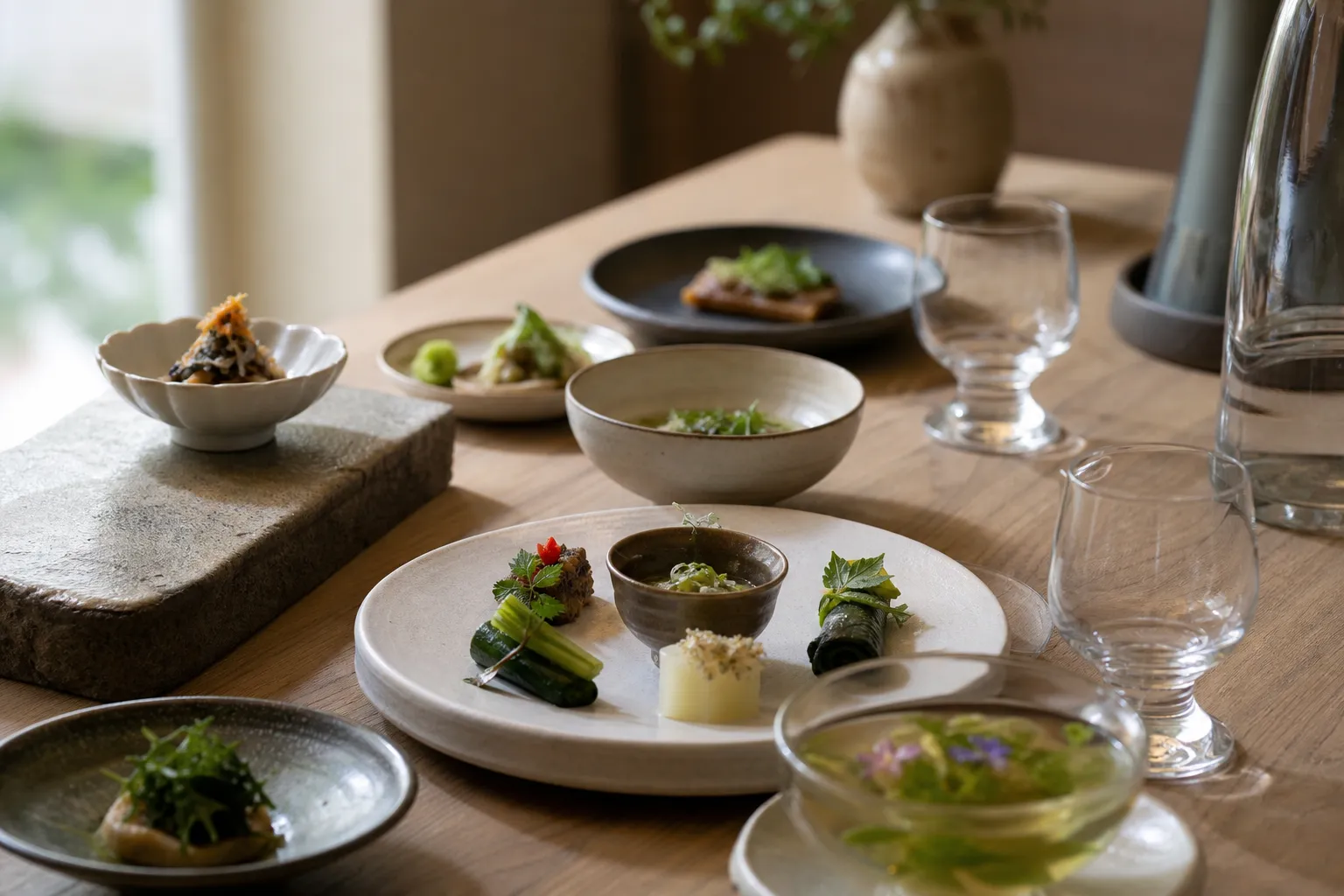
The Onjium summer course is best understood as a seasonal expression of Korean fine dining, shaped by traditional food research rather than a fixed list of headline dishes. At Onjium Hansik in Seoul, the summer meal belongs to a broader philosophy: studying Korean culinary heritage, working with seasonal ingredients, and translating older food culture for contemporary diners.1
That distinction matters because the available source material does not provide a complete official summer menu. What it does clearly show is the framework behind the course: Onjium is a hansik restaurant in Jongno-gu, set near the stone wall path of Gyeongbokgung Palace and a residential neighborhood, and the MICHELIN Guide presents it as a place where Korean spatial beauty, seasonality, and modern interpretation meet.1
What the Onjium Summer Course Represents
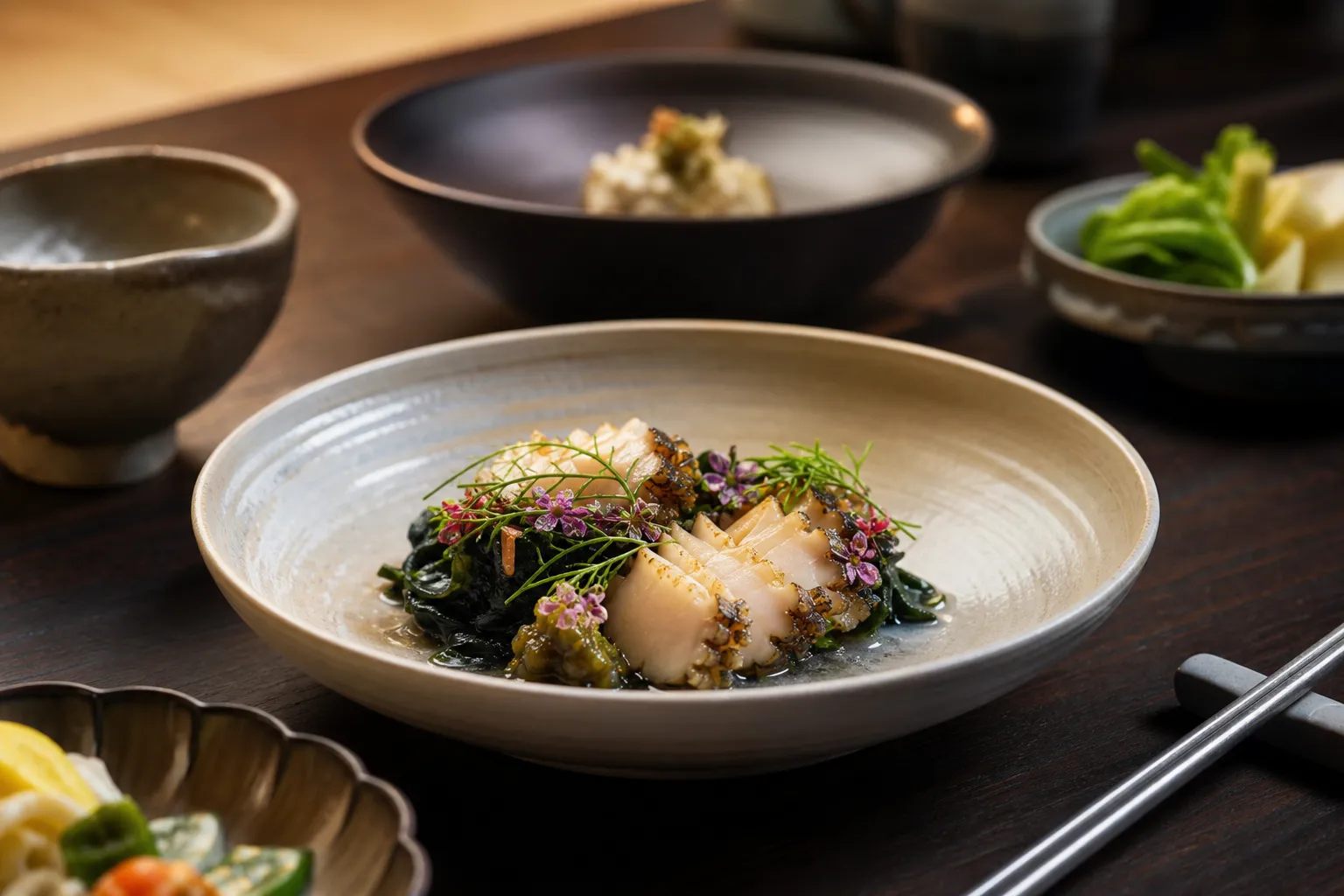
A summer course at Onjium is less about chasing novelty and more about reading the season through Korean food culture. The restaurant is repeatedly described through ideas of seasonal ingredients, traditional-culture research, old cookbook study, and a modern table suited to diners now.2 So if you are trying to understand the appeal of Onjium’s summer course, the most useful starting point is not a dish-by-dish checklist. It is the restaurant’s method.
That method places Onjium between preservation and reinterpretation. It is not presented as a museum-like reconstruction of historic meals, but it also is not simply modern plating with Korean references. JoongAng SUNDAY’s April 25, 2026 interview reports that Onjium has explored hansik for contemporary tables through research into seasonal ingredients and old cookbooks.2 In that context, Cho Eun-hee’s Korean phrase “현대의 반가음식” is best treated carefully in English as a concise description of Onjium’s direction: a modern interpretation connected to the food culture of traditional noble households.2
Summer is a natural lens for a restaurant built around seasonality. Cook&Chef reported on January 7, 2026 that Onjium’s cuisine centers on seasonal ingredients, house-made and aged jang, and fermented ingredients.3 Those details are especially helpful because they tell you what to expect from the restaurant’s logic even when the exact summer menu is not listed in the source material: a course guided by timing, fermentation, restraint, and ingredient character.
For readers planning a visit or simply following Korean fine dining, this is the safest way to describe the Onjium summer course: a seasonal tasting experience grounded in documented hansik research, fermentation, jang, and contemporary interpretation. The sources support the philosophy and course format, but they do not confirm a full official list of summer dishes.
The Chefs and Research Behind the Meal
Onjium is led by chefs Cho Eun-hee and Park Sung-bae. Cook&Chef describes it as a Michelin one-star Korean fine-dining restaurant and reports that it has maintained one star since 2020.3 That recognition is part of the restaurant’s public profile, but the more interesting story is the research culture behind the table.
Asia’s 50 Best Restaurants named Cho Eun-hee the recipient of the Asia’s Best Female Chef Award 2026. Its official profile explains that Cho opened Onjium with Park Sung-bae in 2013 after work connected to Joseon royal court cuisine research and education, and it places fermentation and jang research at the center of Onjium’s cuisine.4
That background gives the summer course a particular kind of seriousness. It suggests that a seasonal menu is not just a response to market produce or weather. It is part of a longer study of how Korean food carries memory, technique, and attitude across time. In a May 1, 2026 interview with Asia’s 50 Best Restaurants, Cho put that attitude plainly: “Good food does not come solely from good technique; it begins with a good attitude.”5
The same interview frames Cho as the 2026 Best Female Chef Award winner and connects Onjium’s food to the way ingredients, colleagues, and Korean culinary continuity are treated.5 That helps explain why Onjium’s seasonal cooking can feel meaningful even when described without dramatic menu language. The point is not excess. It is care, continuity, and precision.
Practical Context for Visiting Onjium
For practical planning, Catchtable lists Onjium’s course prices after a March 2026 price increase as 200,000 Korean won for lunch and 300,000 Korean won for dinner. The same reservation source lists a four-glass traditional Korean alcohol pairing at 80,000 Korean won and a lunch wine pairing at 120,000 Korean won.6
Those numbers are useful because they place the summer course in its current fine-dining context. This is not casual dining; it is a structured course experience with optional pairings. At the same time, the sources describe a restaurant whose identity is rooted in Korean tradition, seasonality, fermentation, and research rather than luxury for its own sake.
Onjium’s broader standing also grew in 2026. JoongAng SUNDAY reported that Onjium ranked No. 14 at Asia’s 50 Best Restaurants 2026, held in Hong Kong on March 25, 2026, and that Cho Eun-hee was selected as Asia’s Best Female Chef.2 For anyone watching Korean restaurants on the international stage, that ranking adds context to why Onjium’s seasonal courses attract attention beyond Seoul.
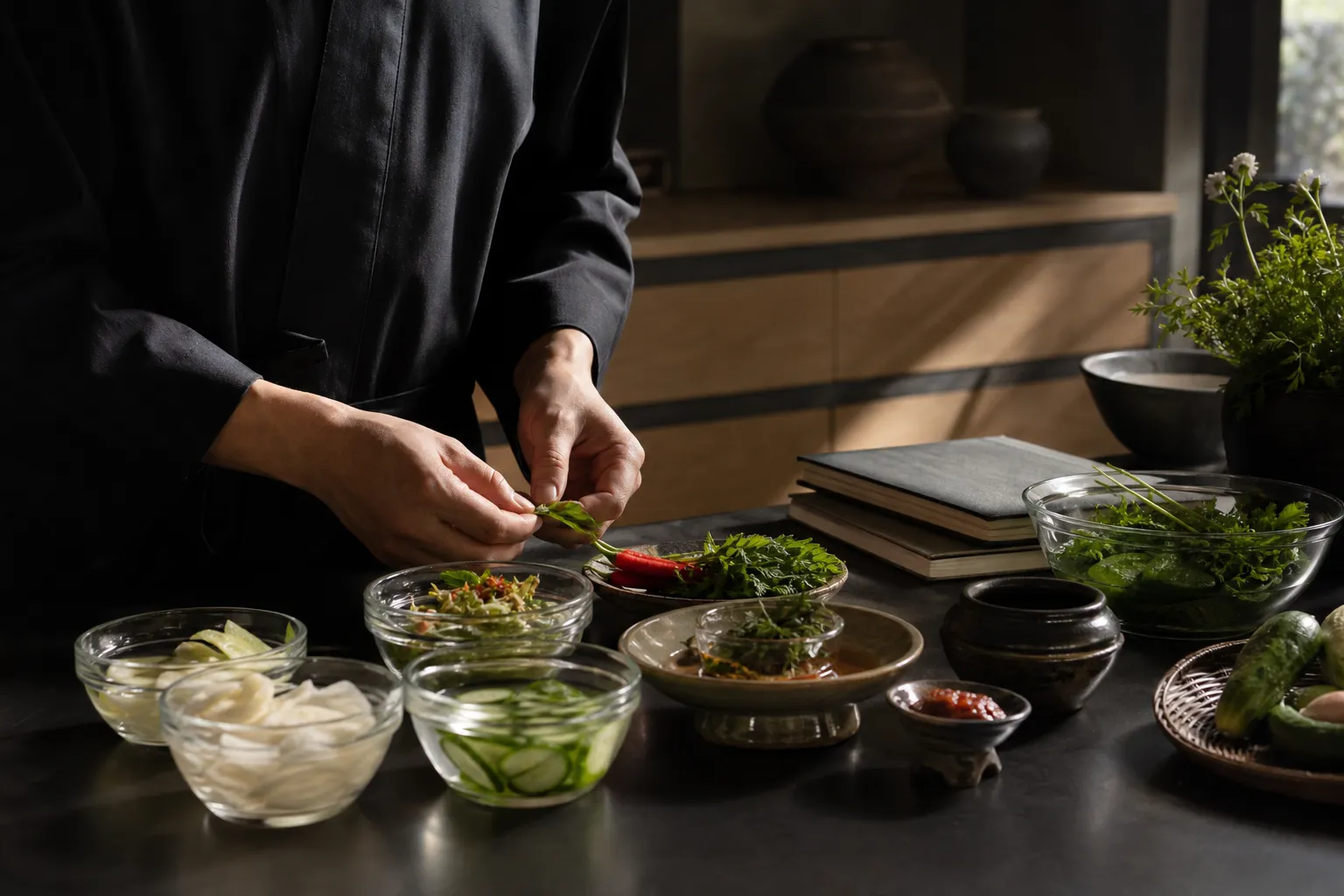
The Onjium summer course is therefore best approached as a seasonal hansik experience with a research-led backbone. The confirmed facts point to a Seoul restaurant shaped by Korean culinary history, seasonal ingredients, fermentation, jang, and the leadership of Cho Eun-hee and Park Sung-bae. If you want to understand why the course matters, look less for spectacle and more for the quiet discipline behind each season’s table.
References
- 온지음 – Seoul – 의 미쉐린 가이드 레스토랑 (MICHELIN Guide)
- ‘현대의 반가음식…욕심 없는 담백한 마음을 담죠’ (중앙SUNDAY / Daum, 2026-04-25)
- [미슐랭 스토리] 궁중·반가음식을 현대적으로 재해석한 미쉐린 1스타 한식 다이닝 ‘온지음’ (Cook&Chef, 2026-01-07)
- Asia's Best Female Chef Award 2026 (Asia’s 50 Best Restaurants)
- Cho Eun-hee interview: “Korean food does not follow trends” (Asia’s 50 Best Restaurants, 2026-05-01)
- 온지음 (Catchtable)
About the Author