Chinese tourists have become one of the clearest drivers of Myeongdong’s 2026 recovery, with spending and visitor data pointing to a renewed shopping-focused flow through central Seoul. For anyone tracking Myeongdong Tourism, the key point is practical: Chinese visitors are not only returning in large numbers, but also changing what businesses in the district need to prepare for.
In April 2026, Seoul recorded 1.56 million foreign visitors, up 18.8% from the same month a year earlier, and Chinese visitors formed the largest national group at 440,000, ahead of Japan and Taiwan. Seoul also reported foreign card spending of 1.1532 trillion won for that month, while Chinese visitor numbers had recovered to 112.6% of the April 2019 level.1 The spending signal continued into May 2026, when foreign tourists’ domestic card spending reached 2.1222 trillion won and Chinese tourist spending more than tripled year on year.2
Myeongdong Chinese Tourists: What the 2026 Data Shows
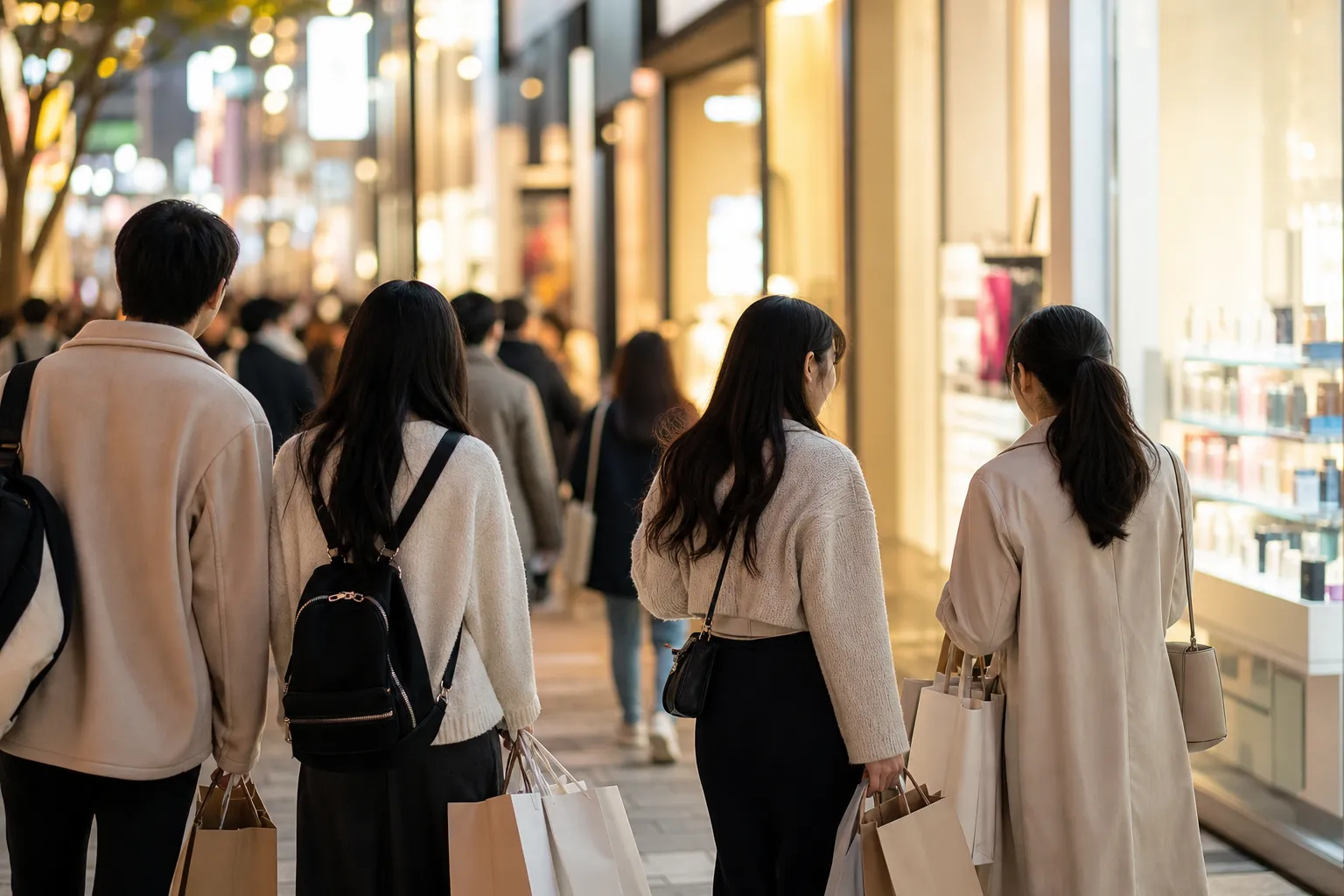
Myeongdong’s role is best understood as part of a broader Seoul pattern. The city said foreign tourist consumption is spreading across traditional tourism districts such as Myeongdong and Dongdaemun, high-value shopping areas in Gangnam, and local commercial districts such as Hongdae and Seongsu.1 That matters because Myeongdong is no longer just a symbolic tourist street; it is one of several active spending zones competing for visitor time and purchases.
For Myeongdong specifically, the clearest 2026 signal is spending growth. In Seoul’s Jung District, where Myeongdong is located, card spending rose 162.0%, supported by shopping demand including customized clothing production services.2 SBS Biz also reported that Chinese tourists were a major spending group in high-end shopping categories such as watches and jewelry in Cheongdam-dong, showing that demand is not limited to low-cost retail.2
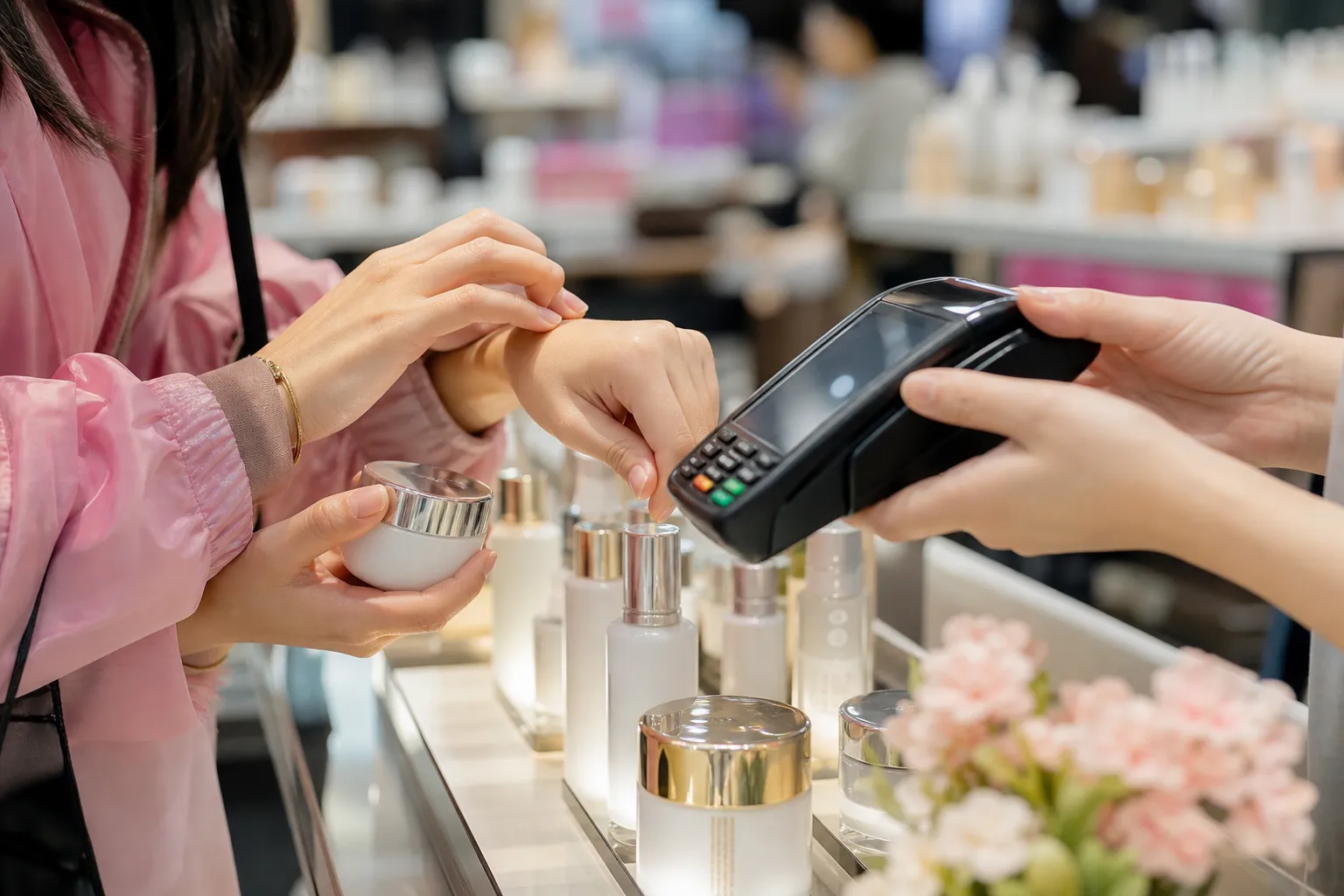
The recovery was already visible in earlier annual data. Based on Korea Tourism Organization data, Newstap reported that foreign card spending in Myeongdong reached 781.9 billion won in 2025, up 136.0% from 2019 and 34.7% from 2024.3 The same analysis said Myeongdong’s recovery was centered less on the older mix of clothing shops and road shops, and more on K-beauty-related consumption such as dermatology clinics, plastic surgery clinics, and drugstores.3
For retailers, clinics, pharmacies, and service operators, this means the practical question is not simply whether tourists have returned. The more useful question is which products, services, and languages are now shaping the visitor route.
How Shops and Services Are Adapting
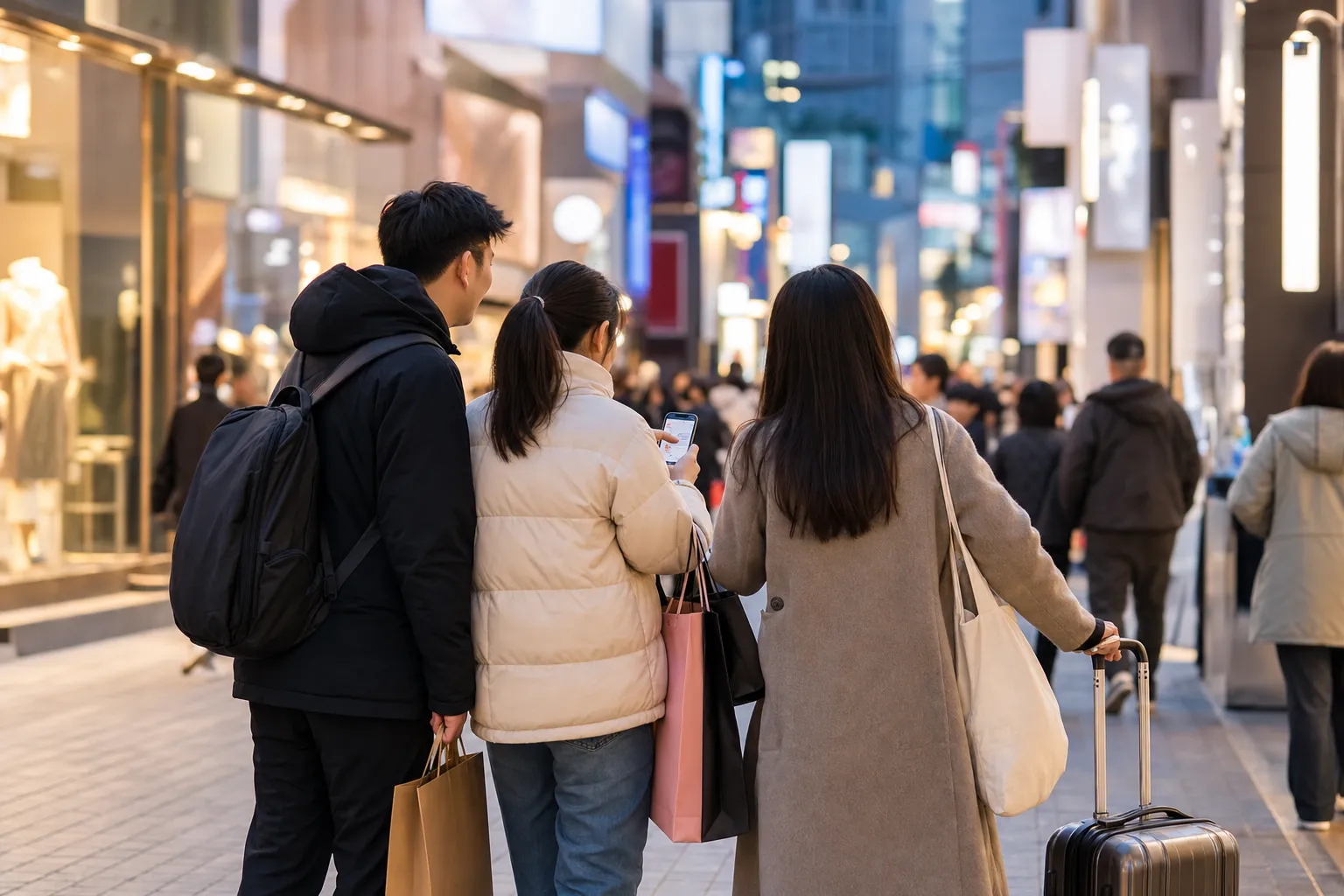
Myeongdong businesses are responding directly to Chinese shopping demand. Financial News reported that pharmacies and stores around Myeongdong have added Chinese-language guidance and staff who can speak Chinese.4 For visitors, that can reduce friction when buying cosmetics, medicine, fashion items, or services that require product explanation. For businesses, it suggests that language support is no longer a bonus feature but part of basic service readiness.
The shopping interest described in the reporting is broad. One Chinese visitor, identified as Jang, was quoted as saying, “I am interested in everything Korean people eat, wear, and apply.”4 That short comment helps explain why Myeongdong demand stretches across categories: food, apparel, cosmetics, pharmacy goods, and beauty-related services can all sit within the same tourist itinerary.
K-beauty deserves special attention because it appears repeatedly in the spending pattern. Newstap’s analysis found that within foreign card spending at medical institutions in Myeongdong, dermatology accounted for 64.0%.3 That does not mean every Chinese tourist is visiting a clinic, but it does show why the district’s tourism economy cannot be read only through street cosmetics shops or department stores. Beauty services, drugstores, and medical-related spending are part of the commercial mix.
There is also a seasonal and policy context. For the 2026 Chinese New Year holiday period, the Ministry of Culture, Sports and Tourism and the Korea Tourism Organization expected up to 190,000 Chinese tourists to visit Korea, about 44% more than the same period a year earlier.5 During that period, the Korea Tourism Organization and Alipay planned a welcome event zone in Myeongdong.5 The ministry also said Chinese tourist numbers had been increasing steadily after visa-free entry for group tourists was implemented.5
Businesses should also be aware of sensitivity around the visitor experience. MBC reported in September 2025 that visa-free entry for Chinese group tourists was set to begin on September 29, 2025, while some Myeongdong merchants were expecting China National Day holiday demand but worried about anti-China protests.6 The Chinese Embassy in Korea advised Chinese tourists to keep their distance from political gatherings in areas including Myeongdong and Daerim-dong.6
Practical Takeaways for Visitors and Businesses
For Chinese visitors, Myeongdong remains useful because it concentrates shopping, pharmacy access, cosmetics, and beauty-related services in a compact district. The available reporting supports a simple planning approach: expect Chinese-language support at some shops and pharmacies, but do not assume it is universal. If a purchase involves medical services, customized clothing, high-value goods, or product instructions, it is practical to confirm language support, payment method, and service details before committing.
For Myeongdong businesses, the data points toward three priorities. First, Chinese-language information matters, especially where products require explanation. Second, the visitor journey is category-blended: tourists may move from food and cosmetics to pharmacies, clinics, department stores, or customized services in the same trip. Third, spending growth is strong, but visitor confidence depends on a smooth and welcoming street-level experience.
For city and tourism planners, the picture is broader than a single shopping street. Seoul’s own analysis described both quantitative and qualitative growth in Seoul tourism, with tourism consumption diversifying across older tourism districts, premium Gangnam areas, and local commercial zones.1 Myeongdong still has a central role, but its 2026 relevance comes from how well it connects shopping, language support, K-beauty, and visitor convenience.
Quick FAQ
How many Chinese tourists visited Seoul in April 2026?
Seoul recorded 440,000 Chinese visitors in April 2026, the largest group by nationality among foreign visitors that month. Total foreign visitors to Seoul reached 1.56 million.1
What are Chinese tourists spending on in Myeongdong?
The source material points to shopping demand, customized clothing services, pharmacies, stores with Chinese-language support, and K-beauty-related spending such as dermatology, plastic surgery clinics, and drugstores.243 Myeongdong’s 2026 Chinese tourist rebound is therefore best read as a practical service story: stronger visitor numbers, higher card spending, broader shopping categories, and a clear need for language-ready, visitor-friendly retail and beauty services.
References
- 4월, 서울 찾은 외국인 156만 명… 소비액 1조 1500억 원 기록 (서울특별시, 2026-05-31)
- 중국 관광객 소비액 3배 급증…명동 162%·성수동 142% (SBS Biz, 2026-06-17)
- [팩트체크] 돌아온 외국인 관광객, 명동은 다시 ‘활활’? (뉴스톱, 2026-03-20)
- 로드샵부터 백화점까지… 중국인 특수 누리는 명동 (파이낸셜뉴스, 2026-06-16)
- 다음주 중국인 19만명 한국 몰려온다…문체부, 환영 행사 개최 (머니투데이, 2026-02-11)
- '무비자 입국' 앞둔 명동‥"'혐중'에 매출 반토막" (MBC 뉴스, 2025-09-26)
About the Author