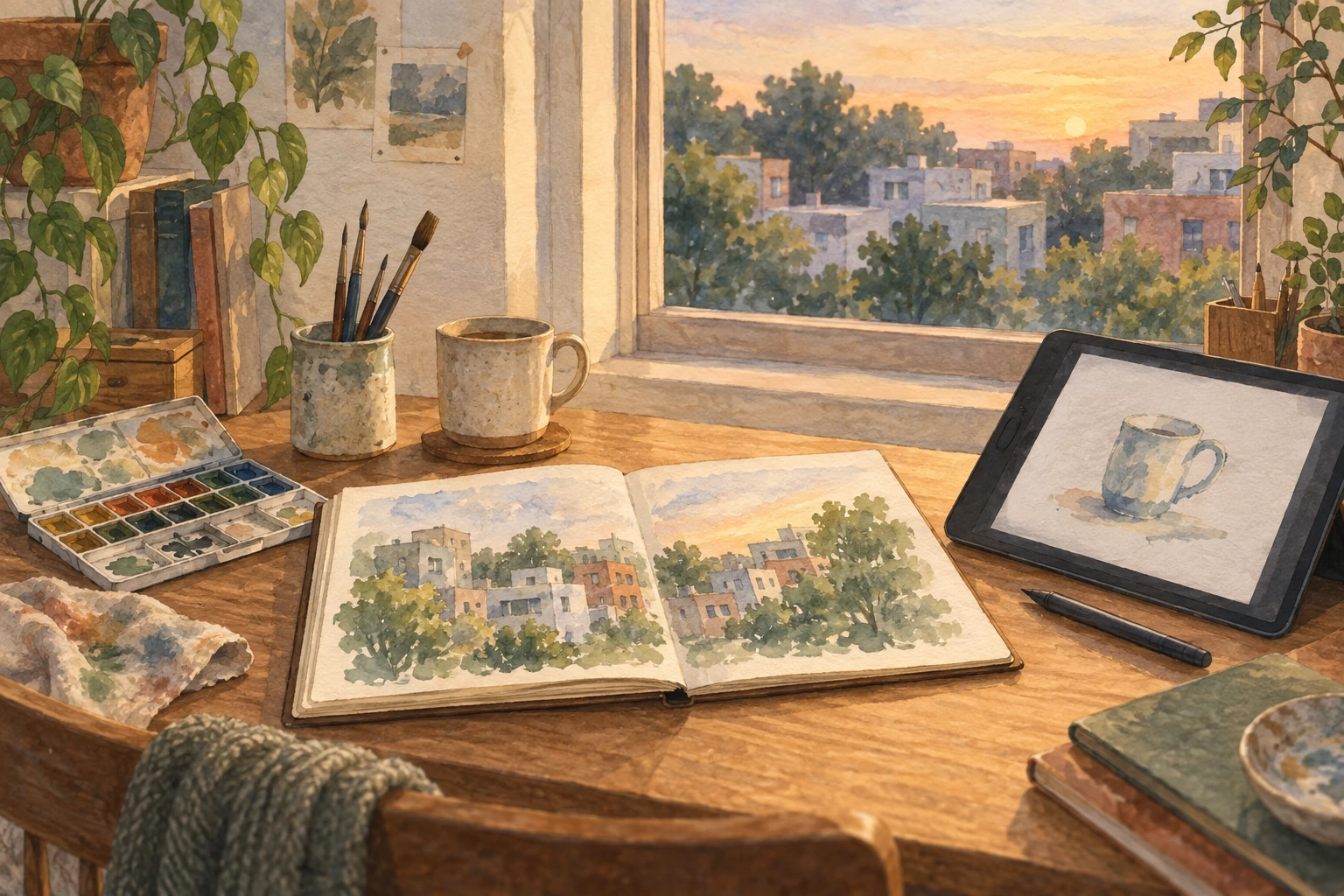
Why are South Korean office workers turning to sketchbooks and tablet computers after long office hours instead of settling for passive rest? Across South Korea, an increasing number of adults are drawing in sketchbooks or on tablet computers after work and on weekends, turning accessible genres such as urban sketching, watercolor, oil pastel, and digital drawing into regular everyday hobbies 1. This everyday pursuit of hobby art, known locally as chwimi misul, has emerged as a practical way for working professionals to unwind and cultivate personal creativity 1.
According to Voice of You big data researcher Kim A-mi, the core strength of adult hobby art content is the ability to break down the creative process into small steps so beginners do not give up, rather than showing off artistic skill 1. Kim explained that drawing, watercolor, and digital painting require relatively simple tools and leave immediate tangible records, making them well suited to expand as hobbies bridging self-development and relaxation 1.
Lowering Psychological Barriers with Honest Online Mentors
How do beginners overcome the initial anxiety of facing a blank page? Many Korean creators address this hesitation directly by demystifying the creative process 1. Drawing YouTube channels actively help viewers establish art as an everyday routine without giving up, intentionally exposing unedited editing processes that show wobbling lines and bleeding colors to lower psychological barriers to art 1.
A prominent example of this approach is the YouTube channel LEEYEON, which held approximately 941,000 subscribers as of June 2026 1. The channel introduces itself as a welcoming space for an everyday artist who draws, writes, and speaks 1. Rather than confining drawing to a technical skill, the channel reframes drawing as an expressive language to organize daily life, explaining tool selection and composition in a friendly tone to reduce beginners’ hesitation 1.
Other online creators focus specifically on initial mechanical challenges 1. An introductory channel operated by a 12-year veteran art teacher, Beginner Drawing_My First Hobby Art, held about 9,090 subscribers and over 60 videos as of June 2026 1. This channel targets practical obstacles adult beginners encounter, focusing on basic sketching routines, line-drawing exercises, and self-study tips that prompt viewers to pick up a pencil directly 1. Meanwhile, the academy-centered channel Adult Hobby Art Academy Art Atelier, which held around 5,290 subscribers and over 600 videos as of June 2026, approaches hobby art from the perspective of an offline classroom 1. The channel details the characteristics of mediums such as oil, acrylic, watercolor, and oil pastel in the context of adult students, conveying classroom atmosphere and genre-selection guidance to foster long-term continuity 1.
Building Creative Stamina Through Ten Years of Everyday Art
The restorative power of everyday art is clearly reflected in the experience of office worker and citizen artist Lee Ki-beom, who turned to painting and dance in 2014 after experiencing physical warning signs from continuous workplace tension 2. Seeking rest and hobby activities to manage stress, Lee Ki-beom practiced little by little after work and on weekends over more than ten years, steadily building what the artist described as creative muscle developed through regular practice 2. Observing this ongoing dedication, an acquaintance characterized Lee Ki-beom’s creative routine as an art of survival practiced literally to endure daily life, confront reality, and transcend it 2.
To mark a decade of creative practice, Lee Ki-beom presented a solo exhibition, Naui Geurim Chum Iyagi (나의 그림 춤 이야기), recounting personal stories of painting and dance through July 24 at PSPD Gallery Neutinamu (참여연대 갤러리 느티나무) 2. The exhibition displayed 33 artworks created in oil, acrylic, and drawing that depicted modern dance, tango, circle dance, and group dance 2. Lee Ki-beom developed these artistic skills through adult community programs, including PSPD Academy Neutinamu (참여연대 아카데미느티나무) courses such as Neutinamu Art School (느티나무 미술학교) and Seoul Drawing (서울드로잉), alongside croquis sessions and oil painting classes at the Hongik University Lifelong Education Center 2.
Sustaining Creativity Through the Sixty Percent Attendance Rule
How can busy professionals maintain an artistic practice over years alongside demanding corporate schedules? For Lee Ki-beom, the key was letting go of rigid perfectionism 2. When signing up for evening classes, Lee Ki-beom adopted the mindset that aiming for 100 percent attendance prevents a person from starting at all, concluding that a 60 percent attendance rate—equivalent to an academic D grade—is sufficient to make time and learn 2. The artist recalled that when arriving at art school visibly exhausted after work, instructor Lee Sang-kwon noticed his fatigue and held back on harsher critiques, recognizing the commitment required simply to attend 2.
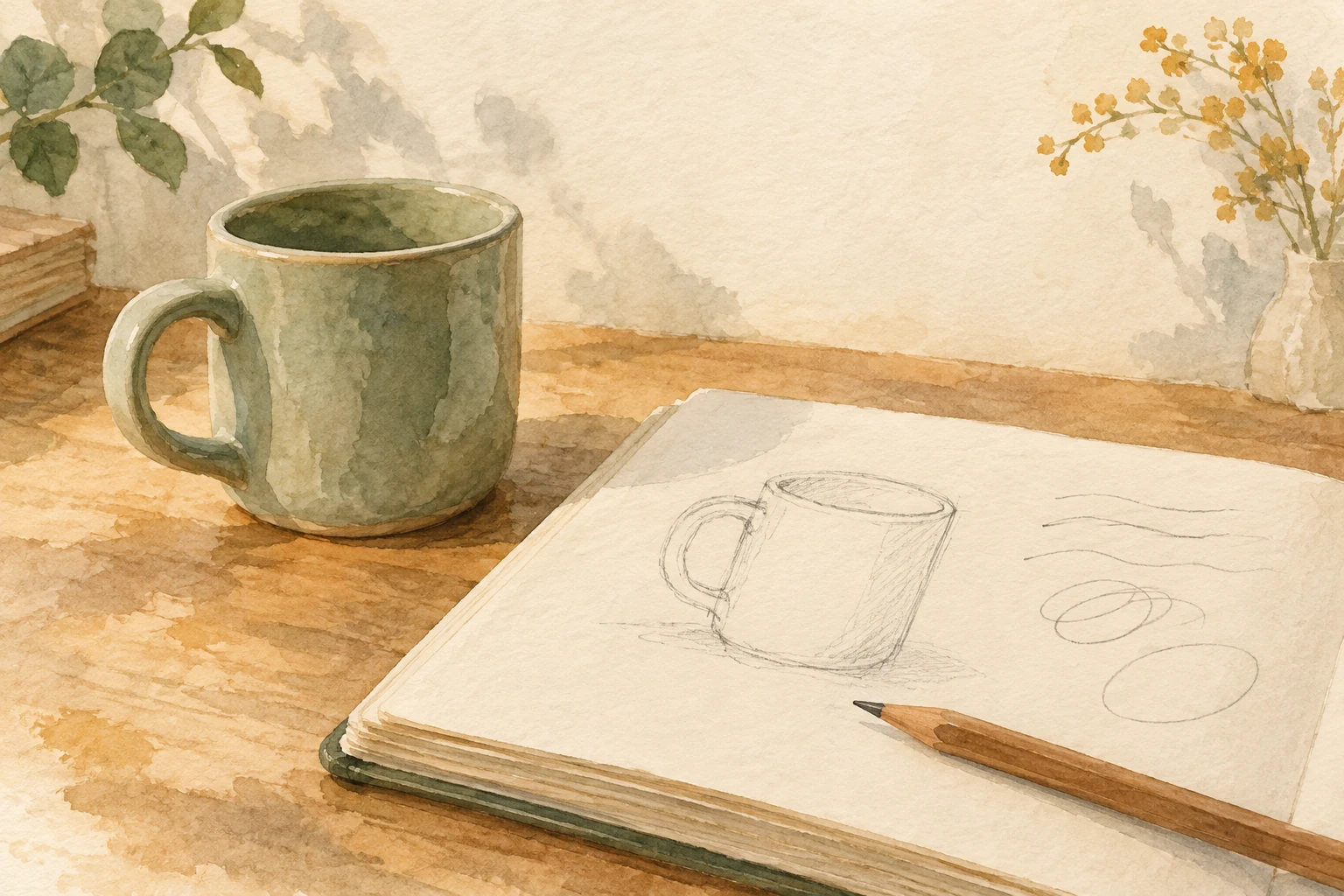
Lee Ki-beom maintains this creative discipline by working an average of five hours weekly, primarily on weekends, noting that layered mediums such as acrylic and oil require at least four weeks of steady effort to complete 2. This decade of creative work was originally sparked by early praise from instructor Bae Min-jeong at Academy Neutinamu, who commended the line of a small mug Lee Ki-beom drew in front of a pen portrait and urged the student to draw steadily until the canvases stacked as high as his height 2. Lee Ki-beom also drew inspiration from the late painter Jang Sang-cheol’s guidance to consult reference photographs during initial stages but discard them as work progresses in order to paint from the heart 2. Looking ahead, the citizen artist is planning a subsequent exhibition targeted for spring 2027 under the provisional working title Chunja-ui Bom, exploring warm spring stories of mothers 2.
Sources
About the Author