Korean craft beer in 2026 is not just a story about more taps, more cans, or more colorful labels. It is becoming a story about a market growing up: convenience stores are shifting away from bargain bundles, regional breweries are winning formal recognition, festivals are still drawing broad participation, and some early craft pioneers are facing difficult financial pressure.
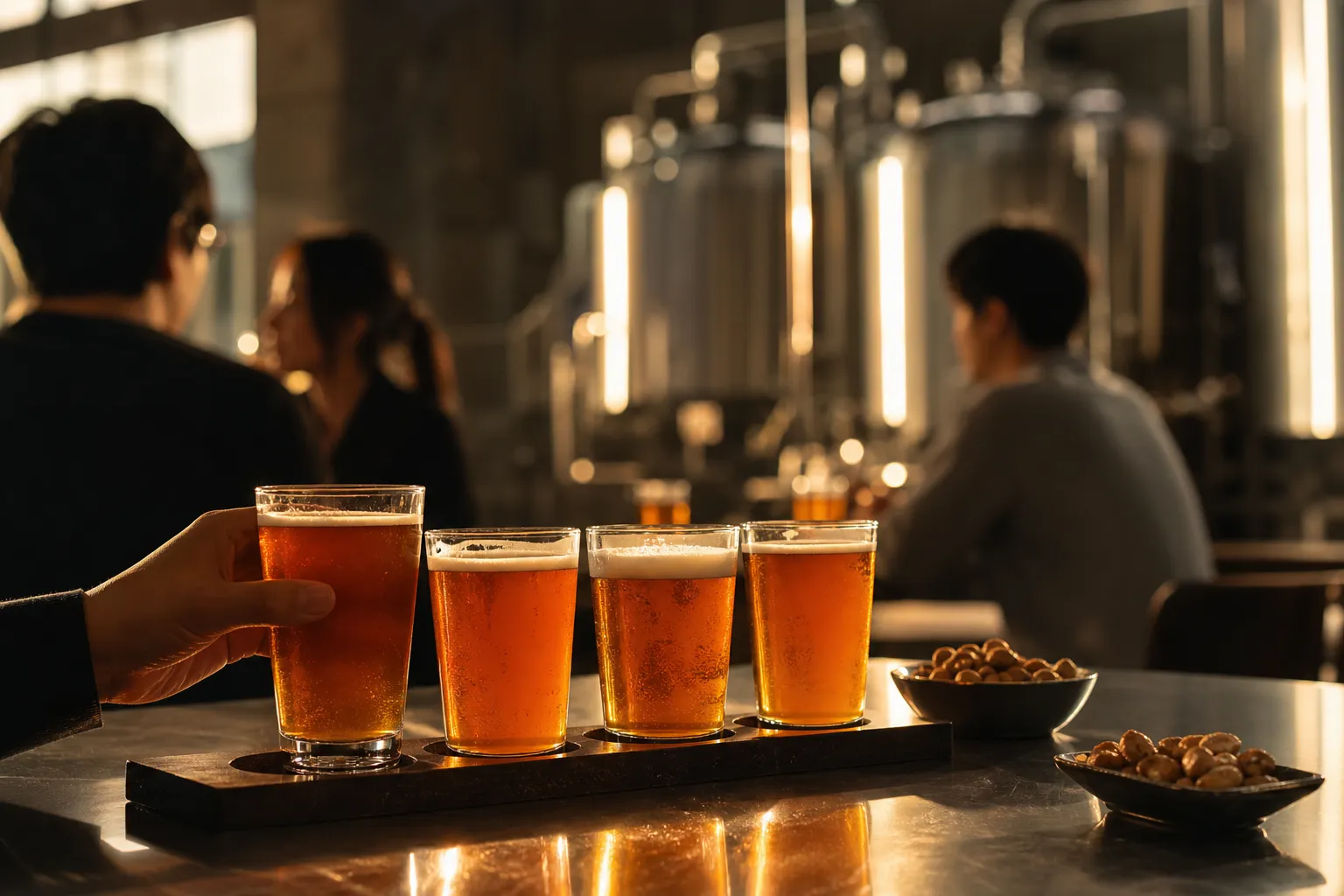
For readers who associate the scene with Seongsu Craft Beer, Brooklyn-inspired taprooms, or brewery-hopping in Seoul, that wider picture matters. Seongsu remains part of the conversation because it helped make Korean craft beer feel urban, independent, and culture-driven, but the current moment is bigger than one neighborhood.
Korean Craft Beer Is Moving Beyond Cheap Four-Packs
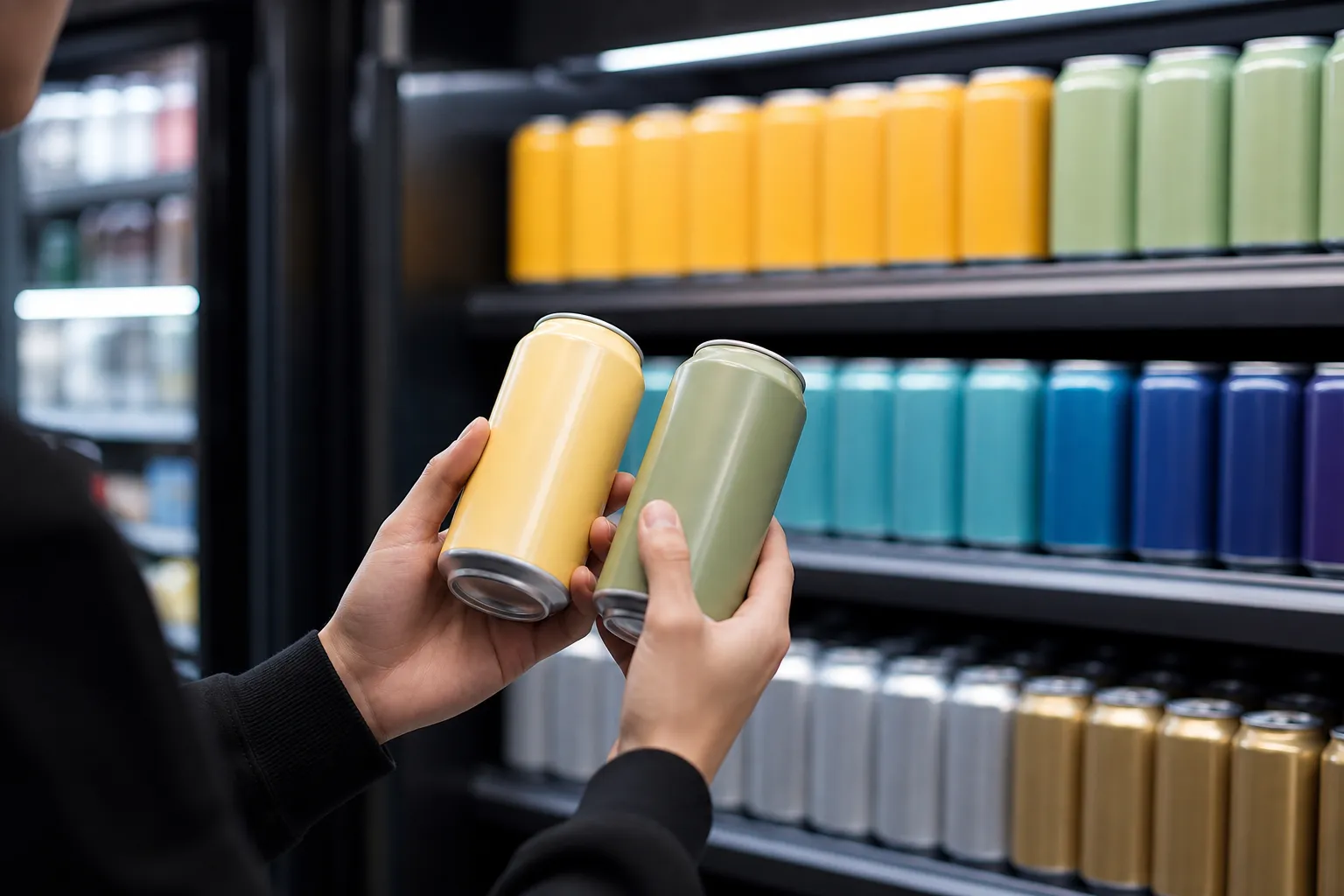
One of the clearest signs of change is happening in convenience stores. Chosun Biz reported on June 21, 2026, that the convenience-store craft beer segment is moving away from the old race around low-price bundle promotions such as “four cans for 10,000 won,” and toward products built around individuality, story, and quality. The same report mentioned collaboration examples involving breweries with dedicated fan bases, including Mikkeller and Seoul Brewery.1
That shift says a lot about where the Korean craft beer market now stands. In an earlier phase, novelty and accessibility helped craft beer reach casual shoppers. A playful label, a familiar retail shelf, and a discounted multi-can deal could turn craft beer into an easy impulse buy. In 2026, the emphasis described in the source material is different: the beer has to carry a clearer identity.
For drinkers, that can be a good thing. A more mature craft market tends to reward brewers who can explain what makes a beer distinct, whether that distinction comes from style, ingredient choices, fermentation approach, local branding, or a brewery’s established reputation. For retailers, it also means craft beer is being treated less like a temporary fad and more like a category that needs curation.
This is where the Seongsu connection still feels relevant. The parent image of Seongsu Craft Beer is not only about beer itself; it is about the atmosphere around it: design-conscious venues, local neighborhoods, independent makers, and a taste for products with stories attached. The source material does not provide details about Brooklyn Brewery operations in Seongsu, so the stronger supported angle is the broader Korean craft beer scene that such neighborhoods helped popularize.
The Market Is Also Facing Real Pressure
The warmer, lifestyle-friendly side of Korean craft beer sits beside a much harder business reality. Chosun Biz reported on May 12, 2026, that Wild Wave, described as one of Korea’s first-generation craft beer companies, filed for bankruptcy with the Busan Bankruptcy Court. The brewery had started operating its brewhouse in 2017 and was known for sour and wild beers, with deepening losses cited as part of the background to its management difficulties.2
That is an important reminder: craft beer culture can look lively from the outside while individual breweries struggle with costs, debt, demand changes, or the challenge of scaling beyond a niche audience. Sour and wild beers can build strong reputations among enthusiasts, but specialist styles do not automatically guarantee a stable business.
Another pressure point appeared in Seoul. Newsis reported on January 28, 2026, that Amazing Brewing Company, which had operated brewpubs and its own brewing facilities centered around Seongsu-dong, received a decision ending its rehabilitation procedure after failing to submit a rehabilitation plan within the deadline. The same report noted that other craft beer companies, including SevenBrau and Y Brewery, were also undergoing rehabilitation procedures.3
The company’s side was quoted in the report as saying, “Nothing has been decided at this point regarding future plans.”3 That short line captures the uncertainty surrounding some of the country’s better-known craft names. For readers who came to Korean craft beer through Seoul taprooms, this is not just accounting news. It shows how the first wave of the scene is being tested in a more competitive and less forgiving market.
Still, pressure does not mean disappearance. It can also mean sorting. Breweries with clearer identities, better cost structures, stronger distribution, or deeper local support may be better positioned, while others may need restructuring, smaller operations, or new partnerships.
Regional Brewers and Festivals Keep the Scene Active
Korean craft beer is not only a Seoul story. Gunsan offered one of the brighter data points in the 2026 source material. Newsis reported on April 21, 2026, that four craft beer products from the Gunsan area won gold medals by category at the 2026 Korea International Beer Award, held at COEX in Seoul. The competition featured 464 products from 92 breweries across 17 countries, judged through blind tasting by 41 international judges.4
A Gunsan Agricultural Technology Center official, Park Hong-soon, described the result as proof of “the quality competitiveness of Gunsan malt.”4 That matters because it frames craft beer not only as a bar or retail product, but also as part of a local ingredient and regional branding story.
Festivals are another sign that consumer interest remains broad. Yonhap News reported that the 13th Osan Yamaek Festival took place from June 5 to 7, 2026, at Osan Osaek Market in Gyeonggi Province, introducing more than 200 craft beers from 28 breweries nationwide, alongside food booths, a flea market, and busking performances.5
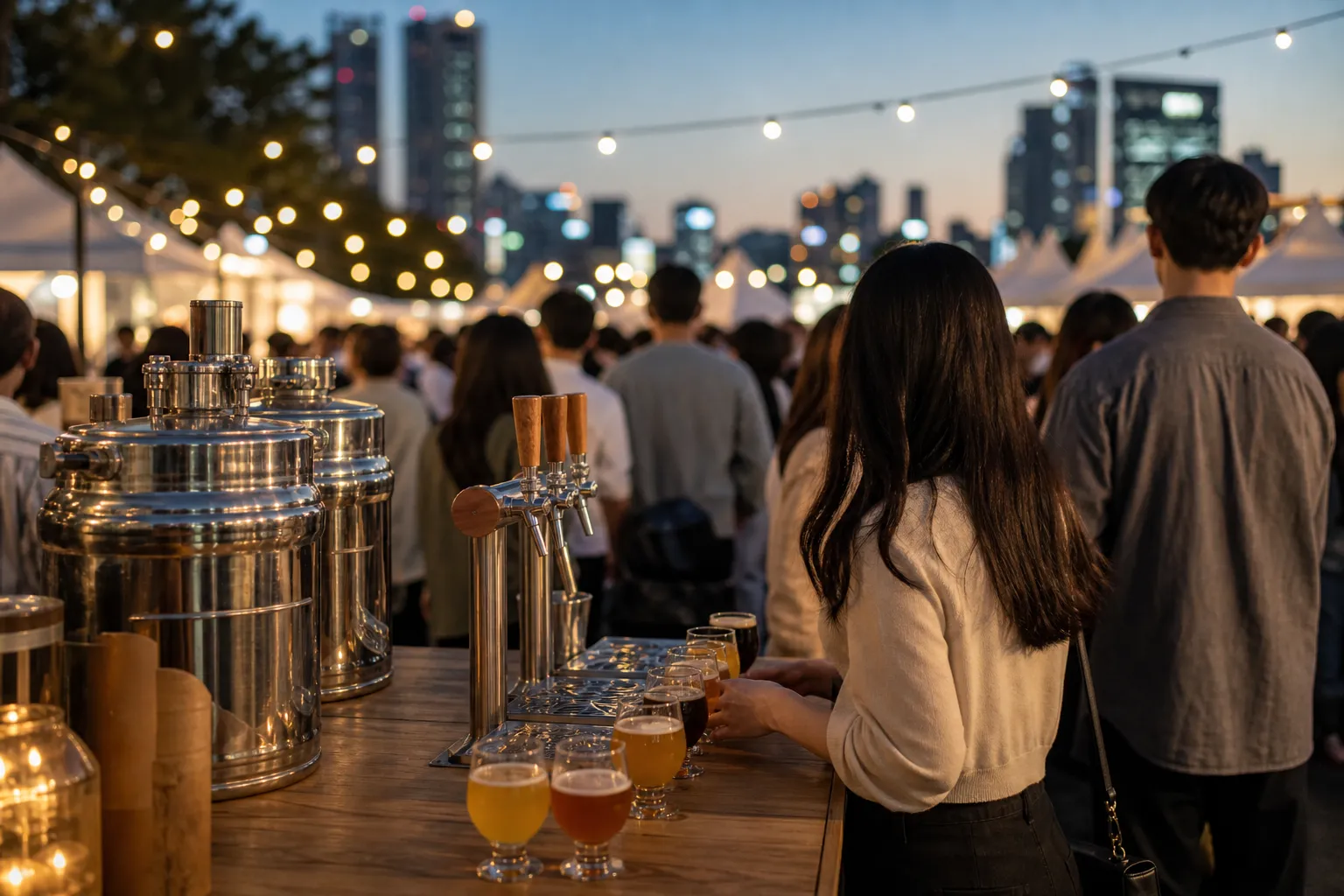
International attention also continues. AVING reported that the Brewers Association operated a U.S. craft beer pavilion at KIBEX 2026, held from April 16 to 18, 2026, at COEX in Seoul. The pavilion featured more than 100 beers from 28 U.S. breweries representing 13 states, while 13 new breweries explored entry into the Korean market.6
Put together, the picture is more nuanced than a simple boom-or-bust headline. Korean craft beer in 2026 is becoming more selective, more regional, more quality-conscious, and more exposed to business risk. If you are following the scene through Seongsu, convenience-store releases, regional festivals, or award-winning local malt, the main takeaway is the same: Korean craft beer is no longer just expanding; it is learning what kind of market it wants to be.
References
- [비즈톡톡] ‘4캔에 1만원은 잊어라’… 진화하는 편의점 수제맥주 (조선비즈, 2026-06-21)
- [단독] 수제맥주 1세대 줄도산… 와일드웨이브도 파산 신청 (조선비즈, 2026-05-12)
- 수제맥주 거품 꺼지나…회생법원 문 두드리는 K브루어리들 (뉴시스, 2026-01-28)
- 군산 수제맥주, 국제 품평회서 ‘금메달 4관왕’ (뉴시스, 2026-04-21)
- ‘전국 수제맥주 한자리에’…오산 야맥축제 5일 개막 (연합뉴스, 2026-06-02)
- 미국크래프트맥주협회, KIBEX 2026서 미국 수제 맥주 통합 전시관 운영한다 (에이빙(AVING), 2026-04-10)
About the Author