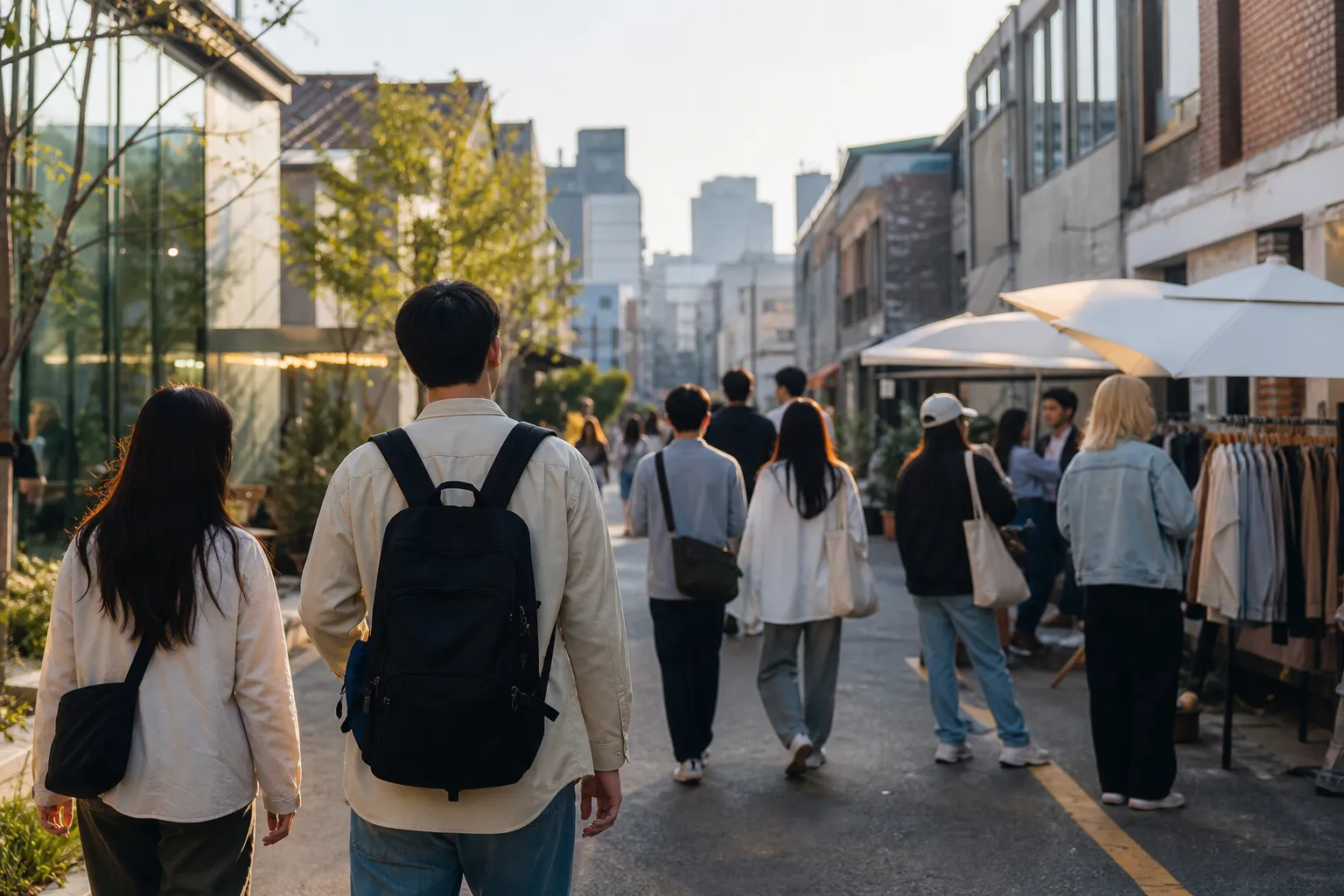
Foreign tourists in Seongsu-dong are no longer treating the area as a quick side stop in Seoul. The district has become a practical destination for travelers who want a Seongsu Dailycation: time spent moving through cafes, pop-up stores, flagship shops, beauty retailers, bakeries, and local streets in a way that feels closer to everyday Korean life than conventional sightseeing.
The numbers explain why travel planners, brands, and visitors are paying attention. LGU+ DataPlus figures cited by Korea.net show that foreign visitors to Seongsu-dong rose from 330,000 in the first half of the previous year to 910,000 in the first half of 2025, nearly tripling in scale.1 By 2024, Seongsu-dong had drawn about 29 million total visitors, including more than 3 million foreign tourists, based on Seongdong-gu data cited in later reporting.2
Why Foreign Tourists Are Choosing Seongsu-dong
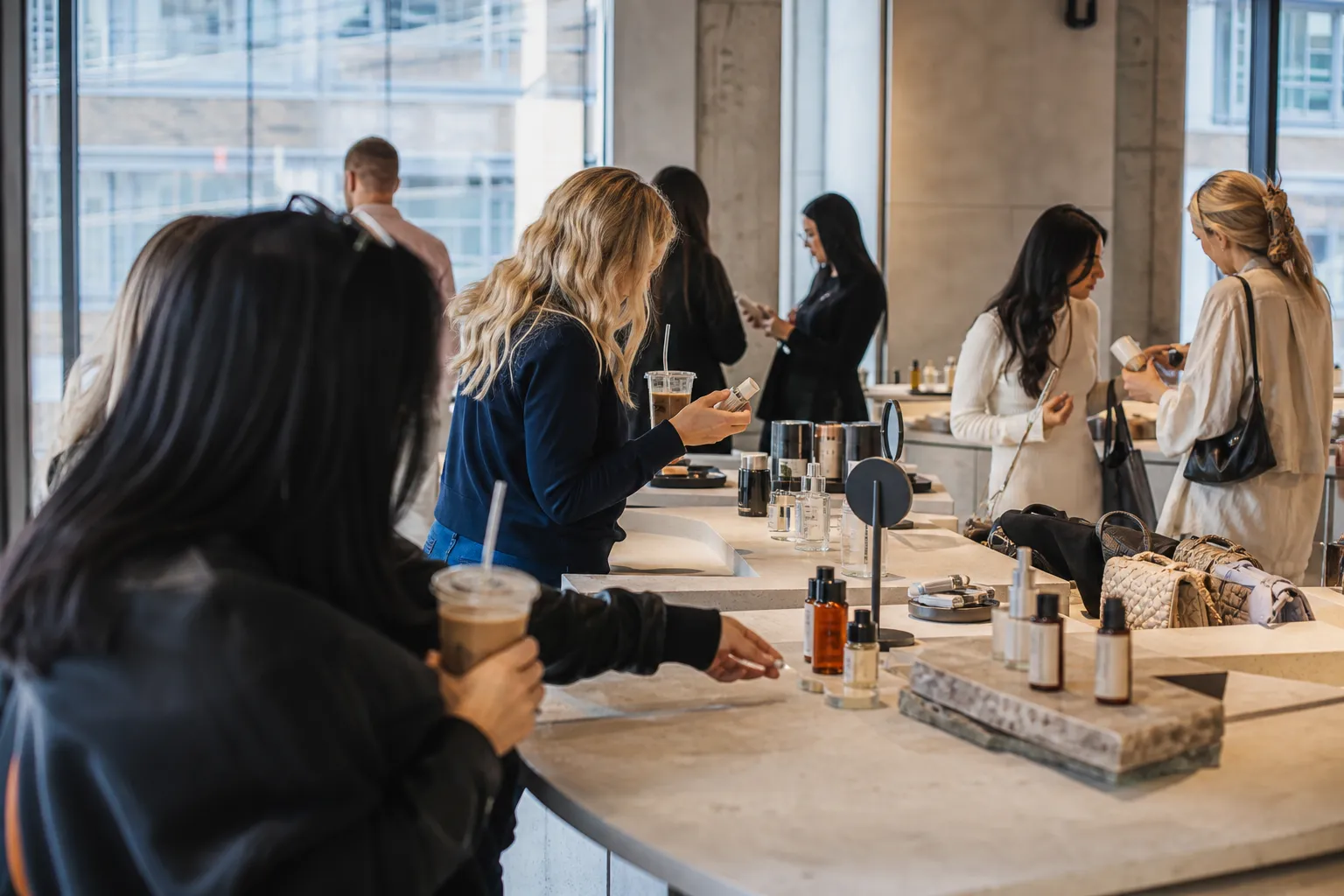
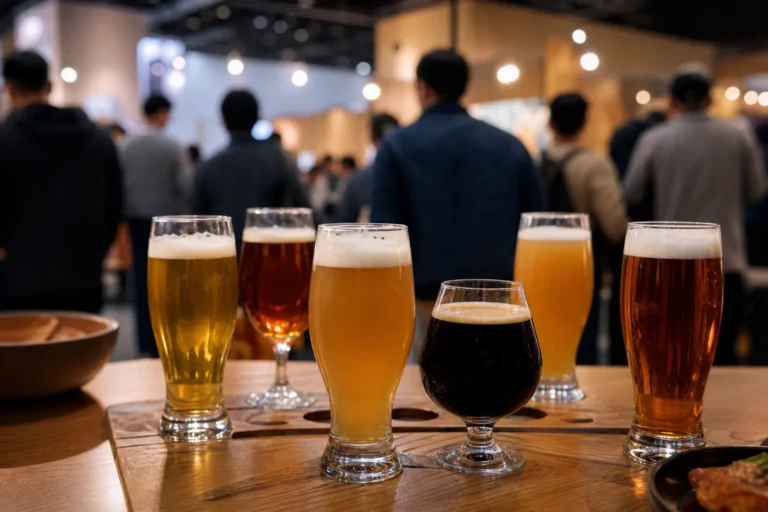
The main appeal of Seongsu-dong is not a single landmark. It is the ability to combine several kinds of Korean lifestyle consumption in one walkable area. Source reports repeatedly describe foreign visitors moving between K-fashion, K-beauty, cafes, flagship stores, pop-ups, bakeries, drugstores, and restaurants saved from social media.13
This is the shift often described as “dailycation”: travel built around experiencing everyday life like locals, rather than only visiting famous attractions. Segye Ilbo described Seoul routes for foreign travelers as being reshaped around places such as Seongsu-dong pop-up stores, Hannam-dong K-style spots, and Euljiro retro food streets, with Seongsu linked to Seoul Forest, converted cafes, and flagship store browsing.4
For visitors, that means Seongsu-dong works best as a flexible half-day or full-day neighborhood route. A practical plan can start with a cafe or bakery, continue through pop-up stores and brand spaces, and include K-beauty or drugstore shopping before ending with a restaurant. K-Gonggam reported that foreign tourists in late January 2026 were moving through restaurants, dessert cafes, pop-up stores, and drugstores they had saved through social media.3
The shopping pattern is also changing. K-Gonggam analyzed foreign spending as moving away from a luxury-heavy model toward repeated purchases tied to daily usefulness and personal taste, including K-beauty, pharmacies, stationery, and small lifestyle goods.3 One Japanese woman in her twenties was quoted as saying she was curious because it was “a product used by a Korean idol,” a small example of how K-content can turn ordinary retail products into travel targets.3
How to Plan a Seongsu Dailycation Route
A Seongsu Dailycation is easiest to approach as a sequence of nearby stops rather than a checklist of monuments. The sources support four core categories: brand stores, pop-up stores, cafes or bakeries, and practical shopping such as K-beauty, drugstores, stationery, and small goods.32
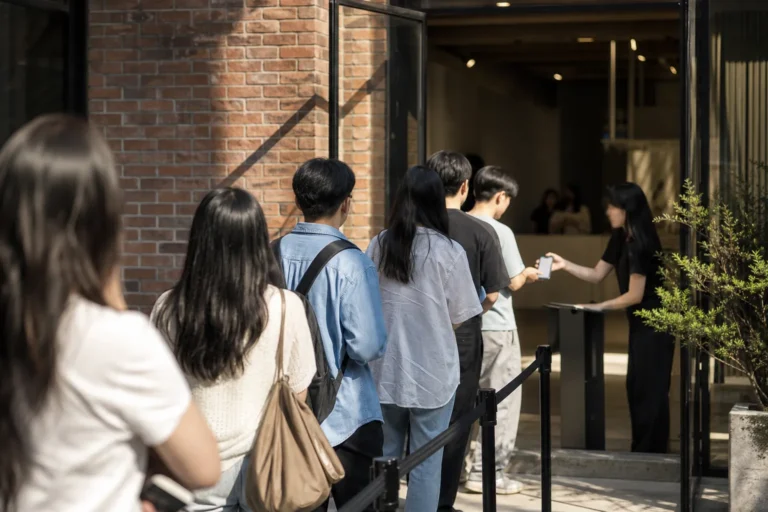
Start with the places most likely to have queues or limited-time availability. Pop-up stores are a major part of the Seongsu-dong draw: Asia Economy cited Sweet Spot data saying the area hosts around 50 to more than 100 pop-up stores each month.2 Because pop-ups change frequently, visitors should treat them as time-sensitive stops and check the specific brand or store information before going.
Next, build in time for browsing rather than rushing. Asia Economy’s May 26, 2026 field reporting described foreign tourists spending time moving among brand shops, pop-up stores, cafes, and bakeries around Yeonmujang-gil.2 A Japanese tourist named Aya was quoted as saying she had allocated the longest time of her Korea trip to Seongsu, which reflects how the area is being planned as a main destination rather than a short detour.2
For shopping-focused travelers, Seongsu-dong is increasingly competitive with older tourist retail centers. Apparel News reported that Seongsu 2-ga 1-dong and 3-dong recorded 1,090,693 foreign tourists in the first quarter of 2026, up 110% year over year. In the same period, Myeong-dong remained larger at 3,553,947 visitors, but Seongsu showed the higher growth rate.5 The same report described Seongsu as an experience-based commercial district centered on brand experience and content consumption, with foreign sales by tax-refund standards reaching about 70% of Myeong-dong’s level.5
For comfort, visitors should also account for crowding. Seongdong-gu said that crowd density had risen around Yeonmujang-gil because of foreign tourists and pop-up store visitors, while also stating that there had been no casualties from crowd-gathering incidents in the previous year. The district credited prevention to advance monitoring and on-site crowd response systems.6 Practically, that means travelers should expect busy streets at peak times and leave room in the schedule for waiting, rerouting, or returning later.
What Visitors Should Know Before Going
Seongsu-dong is best suited to travelers who enjoy browsing, comparing, tasting, and discovering. It is less about seeing one famous site and more about building a route from current interests: a brand launch, a beauty product, a cafe, a bakery, a restaurant, or a limited pop-up.
The strongest source-backed reason to go is the concentration of K-style experiences. Korea.net described Seongsu-dong as emerging as a new must-visit Seoul destination where K-fashion, K-beauty, cafes, and flagship stores can be experienced together.1 That mix is why the area fits foreign travelers who want a practical, current version of Seoul’s lifestyle culture.
Quick FAQ
Is Seongsu-dong mainly for shopping or sightseeing?
Based on the available sources, Seongsu-dong is more of an experience-based district than a traditional sightseeing zone. Foreign visitors are reported to combine pop-up stores, brand shops, cafes, bakeries, restaurants, K-beauty, and everyday retail in one route.32
Is Seongsu-dong more popular with foreign tourists than Myeong-dong?
Myeong-dong remained larger in the first quarter of 2026, with 3,553,947 foreign visitors compared with 1,090,693 in Seongsu 2-ga 1-dong and 3-dong. However, Seongsu’s year-over-year growth rate was higher at 110%, showing its rapid rise as a foreign tourist area.5 Seongsu-dong’s appeal to foreign tourists comes from a clear change in travel behavior: visitors want to shop, eat, browse, and move through Seoul in ways that feel connected to current Korean daily life. For travelers planning a Seongsu Dailycation, the most useful approach is to choose a few priority pop-ups or brand stops, leave enough time for cafes and street-level browsing, and expect the area to be busy because its foreign tourist profile is still growing.
References
- [2025 외국인 관광 트렌드] ① 일상이 여행이 되는 '성수동' ···K-스타일 성지 급부상 (코리아넷, 2025-12-23)
- [K-관광로드]②"한국인 일상 체험"…성수 골목 누비는 외국인 (아시아경제, 2026-05-29)
- 감자탕집 오픈런·빵지순례… '보는 관광’에서 ‘체험하는 관광’으로 (K-공감, 2026-02-05)
- “성수동 팝업·힙지로 맛집 즐겨요”…외국인 관광지도 바꾼 K콘텐츠 (세계일보, 2026-03-20)
- 외국인 관광객 2천만 시대…명동과 성수 주가 상승 (어패럴뉴스, 2026-04-26)
- 사람은 몰렸지만 사고는 없었다… 성수동 ‘인파사고 제로(ZERO)’의 배경 (성동구청, 2026-01-27)
About the Author