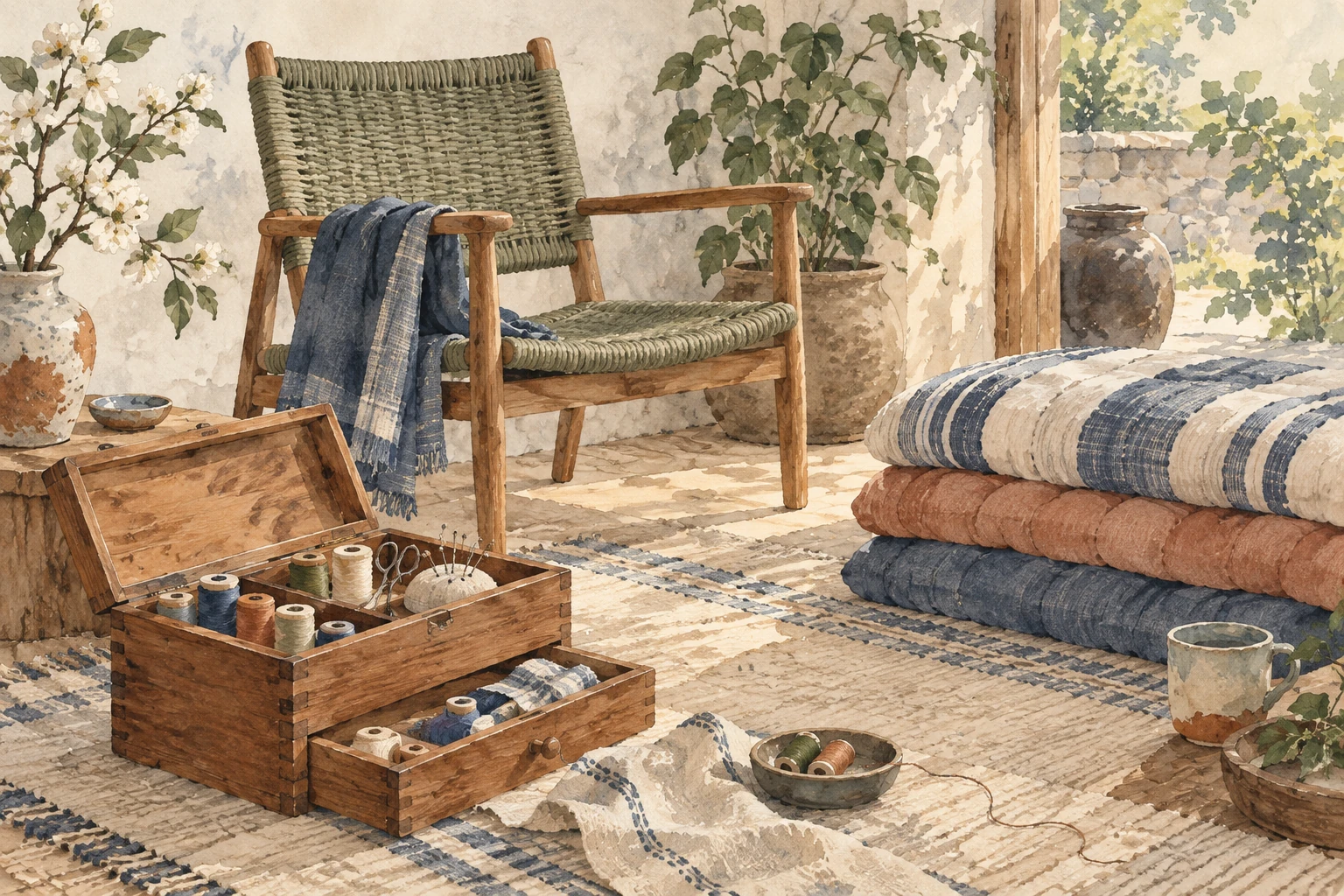
A mother-of-pearl-inlaid lacquer sewing box and Yi Gwang-ho’s nylon-rope armchair both appear in Jeong: The Spirit of Korean Craft and Design. 1 Published by Phaidon, the visual book explores Korean craft and design through objects spanning historical and contemporary work. 2 Its selection brings museum-held belongings into the same discussion as contemporary furniture, horsehair craft and everyday household objects. 1 What might connect a sewing box with an armchair beyond their appearance?
Attachment through making and use
The book’s author, London-based graphic designer Yi Hyo-jeong, examines 175 works across approximately 3,000 years of Korean craft and design culture. 3 Yi Hyo-jeong interprets jeong as a sense of relationship connecting the maker, the material and the user. 4 In this reading, time spent making and living with objects helps explain their emotional significance. 2
Exhibition curator Jeong So-yeong describes the author’s approach through two connected experiences: the feelings accumulated as a maker devotes time and care to a craft object, and the relationship a user develops while becoming accustomed to it. 2 That offers a useful distinction between an object’s visible qualities and the attachment that develops through making and use. 2 A reader can ask both what an object looks like and what place it might acquire in someone’s life.
Begin with familiar activities
The book approaches lacquerwork, ceramics, furniture, embroidery and clothing through eating and drinking, housekeeping and organizing, resting, dressing, and ritual, play and decoration. 4 These activities give its wide range of materials a shared setting in daily life. 4
The historical examples include the sewing box from Onyang Folk Museum, a ceramic bottle decorated with peonies from Leeum Museum of Art, and silver-inlaid tobacco boxes from the Victoria and Albert Museum’s collection. 1 Read alongside the book’s activity-based organization, these objects invite attention to both decorative work and household purposes. 41 For a reader wondering where to begin, eating, storing belongings or resting can serve as a starting question before considering a particular material or technique.
The contemporary examples extend that range: Yi Gwang-ho’s armchair uses nylon rope, Jeong Da-hye works with horsehair, and Gim Dong-jun’s moon jars are white porcelain. 1 JoongAng Ilbo describes these as contemporary works that reinterpret tradition. 1 Yi Hyo-jeong’s stated aim was to explore how the beauty of everyday objects and the aesthetics and values of traditional craft techniques continue and expand in contemporary design. 1 Together, that aim and the book’s interpretation of jeong support a broader way to consider continuity—through materials, making and relationships with objects, as well as through form. 41
From the page to a shared room
The publication exhibition brought this discussion into physical spaces in June 2026; reporting that month listed June 11–26 at Areumjigi’s Tongui-dong building, its Anguk-dong hanok and Onjieum. 1 At the Tongui-dong building, Joseon-era craft and contemporary works were placed together on the second floor. 1 That arrangement presented objects from different centuries within one space, exploring how traditional craft could sit naturally within contemporary everyday surroundings. 1
The book also includes belongings found in old homes by Yi Hyo-jeong and photographer Min Hyeon-u: bush-clover brooms, mother-of-pearl-inlaid cabinets and multicolored striped bedding. 1 Their inclusion extends its exploration beyond museum collections and named designers to the objects of sweeping, storage and rest. 1 Alongside the lacquer sewing box and nylon-rope armchair, a household broom and striped bedding also become subjects through which to explore Korean design. 1
Sources
- 자개장부터 달항아리까지…‘정’으로 풀어낸 한국 공예 | 중앙일보
- 영국 예술서적 출판사가 조명한 한국 전통 공예…‘정(情)’ 발간
- ‘한국적인 것’의 또 다른 이름…파이돈이 주목한 ‘정’ – 전남일보
- 한국 공예의 정수를 담은 ‘정(情)’ 출간 기념 전시
About the Author