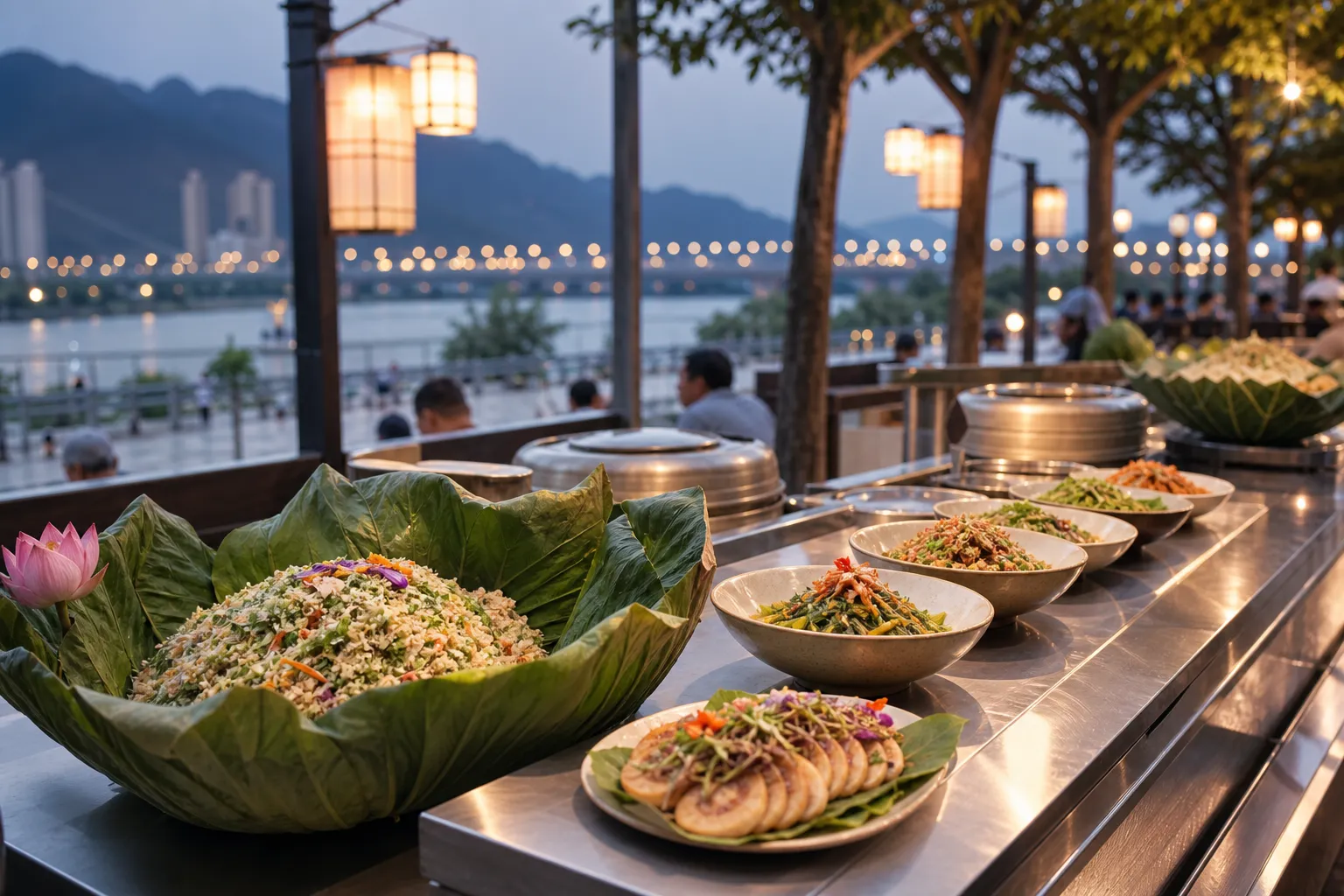
The International Temple Food Culture Festival is a central food-and-culture program within the 2026 Ulsan Taehwa Garam Grand Festival, held from May 8 to 10, 2026, at the Nam-gu riverside area of Taehwagang National Garden in Ulsan. For readers searching for a Temple Food Class or a hands-on way to understand Korean Buddhist food culture, this festival is best understood as a broader public event: it combines exhibitions, cooking demonstrations, communal offering, cultural performances, meditation, and visitor experience programs rather than only a single classroom-style lesson.1
International Temple Food Culture Festival: Dates, Venue, and Core Idea
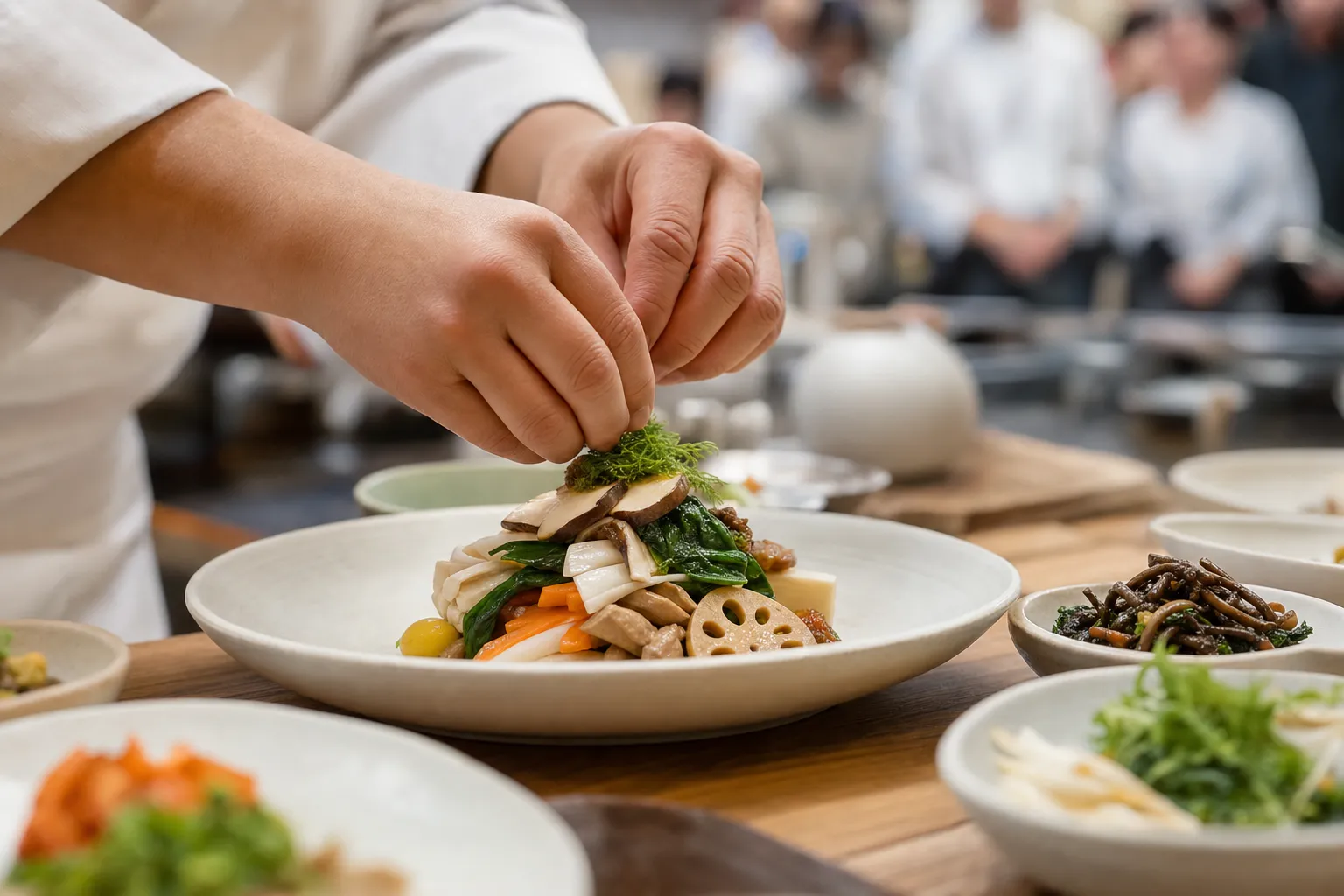
The 2026 festival took place as part of Ulsan Taehwa Garam Grand Festival, a civic cultural festival built around light, Buddhist culture, traditional food, and public participation. The venue was the Nam-gu riverside area of Taehwagang National Garden, and the full festival period was May 8 through May 10, 2026.2
The wider event expanded from the earlier Taehwagang Lotus Lantern Festival into Ulsan Taehwa Garam Grand Festival in 2026. Earlier reporting described this change as a move to present the lantern festival together with the International Traditional Temple Food Culture Festival and Nakhwa Nori, a traditional firework-like performance.3
The festival slogan was “Connecting through light, connecting through compassion,” and the program included Taehwagang Lotus Lantern Festival and the International Temple Food Culture Festival.2 That framing matters for visitors because the food program was not presented simply as dining or cooking entertainment. It was connected to Buddhist cultural values, communal participation, and public access to traditions that are often experienced inside temples.
One short comment from Hyewon Sunim described the expanded festival as covering “temple food, traditional culture, and citizen experiences,” while sharing Ulsan Buddhist culture more broadly and deeply.3 In practical terms, visitors could expect food displays, cooking presentations, and experience booths within a larger riverside festival setting rather than a closed culinary school format.
What Visitors Could See and Do
The International Traditional Temple Food Culture Festival included a temple food exhibition zone, an international temple food exhibition zone, Manbal Gongyang, a temple food cooking concert, and an international temple food cooking show.1 These program names point to three main ways to experience the event: looking at food traditions through exhibitions, watching monks and guests explain preparation methods, and joining a public festival atmosphere centered on Buddhist food culture.
For visitors specifically interested in a Temple Food Class, the closest festival-style program was the temple food cooking concert. On May 9 and May 10, Sunjae Sunim and Myeongcheon Sunim were scheduled to introduce both the philosophy of temple food and its cooking process through cooking concerts.2 This format differs from a small one-day cooking class, but it directly addressed how temple food is made and why its principles matter.
The international cooking show added a comparative angle. Japan and China were scheduled for May 9, while Thailand and Vietnam were scheduled for May 10.4 Another report also listed Japan, China, Thailand, and Vietnam as participating countries in the international temple food cooking show.5 For visitors, that meant the event was not limited to Korean Buddhist temple cuisine; it also introduced food traditions connected to Buddhist culture in other Asian countries.
The Manbal Gongyang program was described as serving around 3,000 people.5 Because the source material does not provide detailed participation rules, registration steps, or serving times, readers should avoid assuming walk-up eligibility or a guaranteed portion from the available information alone. What can be said is that the program was planned as a large-scale communal food element within the festival.
Family-oriented and general visitor programs were also part of the wider festival. Permanent experience booths included lotus lantern making, a 108-bow experience, and a Buddha Birthday cafe.5 These activities make the event relevant even for visitors who are curious about temple food but are also attending with family members who may want cultural or hands-on activities beyond cooking demonstrations.
How This Differs from a One-Day Temple Food Class
A one-day temple food class usually suggests a smaller, guided cooking session. The source material includes one example outside Ulsan: the Korean Temple Food Center in Anguk-dong, Jongno-gu, Seoul, operated by the Cultural Corps of Korean Buddhism, offers programs that can include both Korean and foreign participants. A Seoul city article described a temple food meditation one-day class involving meditation led by Hagyeong Sunim and making japchae with seasonal seaweed, specifically fresh tot.6
That Seoul example helps clarify the difference. The Ulsan International Temple Food Culture Festival was a public festival program with exhibitions, cooking concerts, international cooking shows, and large-scale communal offering. The Seoul program described in the source was a more class-like setting at the Korean Temple Food Center, located on the second floor of Anguk Building, 39 Yulgok-ro, Jongno-gu, Seoul, and open Tuesday through Sunday from 9:00 to 18:00.6
So, readers looking for a “Temple Food Class” should separate two needs. If the goal is to watch temple food being explained in a public cultural festival context, the Ulsan festival’s cooking concerts and cooking shows fit that interest. If the goal is to personally cook in a structured one-day class, the available source material supports the Seoul Korean Temple Food Center as a clearer example of that format.
Hyejin Sunim, the organizing committee chair for the Ulsan festival, said the event was “a new start to meet Ulsan citizens more closely” and also expressed a wish to introduce “Buddhist ritual foods that are disappearing” and inherited temple foods from individual temples.4 Those comments help explain why the festival emphasized preservation, public access, and cultural sharing as much as cooking technique.
Quick FAQ
When and where was the International Temple Food Culture Festival held?
It was part of the 2026 Ulsan Taehwa Garam Grand Festival, held from May 8 to 10, 2026, at the Nam-gu riverside area of Taehwagang National Garden in Ulsan.1
Was it the same as a Temple Food Class?
Not exactly. The Ulsan program included cooking concerts and international cooking shows, while the source-backed example of a one-day class is the temple food meditation class at the Korean Temple Food Center in Seoul.26 The International Temple Food Culture Festival offered a practical entry point into Buddhist food culture through public demonstrations, exhibitions, international programs, and visitor experiences. For anyone comparing it with a Temple Food Class, the key distinction is scale: Ulsan presented temple food as a festival-based cultural program, while a dedicated one-day class offers a smaller hands-on learning format.
References
- 주말 울산, 불과 빛으로 물든다 (울산매일UTV / 다음뉴스, 2026-05-07)
- 계절의 여왕 5월, 울산 곳곳 축제로 물들어 (경상일보 / 다음뉴스, 2026-05-07)
- ‘태화강연등축제’, ‘태화가람대축제’ 로 커진다 (울산매일 / 다음뉴스, 2026-04-05)
- “연등 빛으로 시민과 잇고, 사찰음식으로 불교문화 나누겠습니다” (울산매일 / 다음뉴스, 2026-05-05)
- 빛과 자비로 시민을 잇다… 내달 8~10일 ‘울산태화가람대축제’ (울산제일일보, 2026-04-12)
- 선재스님처럼 정갈한 음식 만들어볼까? 사찰음식 요리 체험기 (내 손안에 서울, 2026-02-13)
About the Author