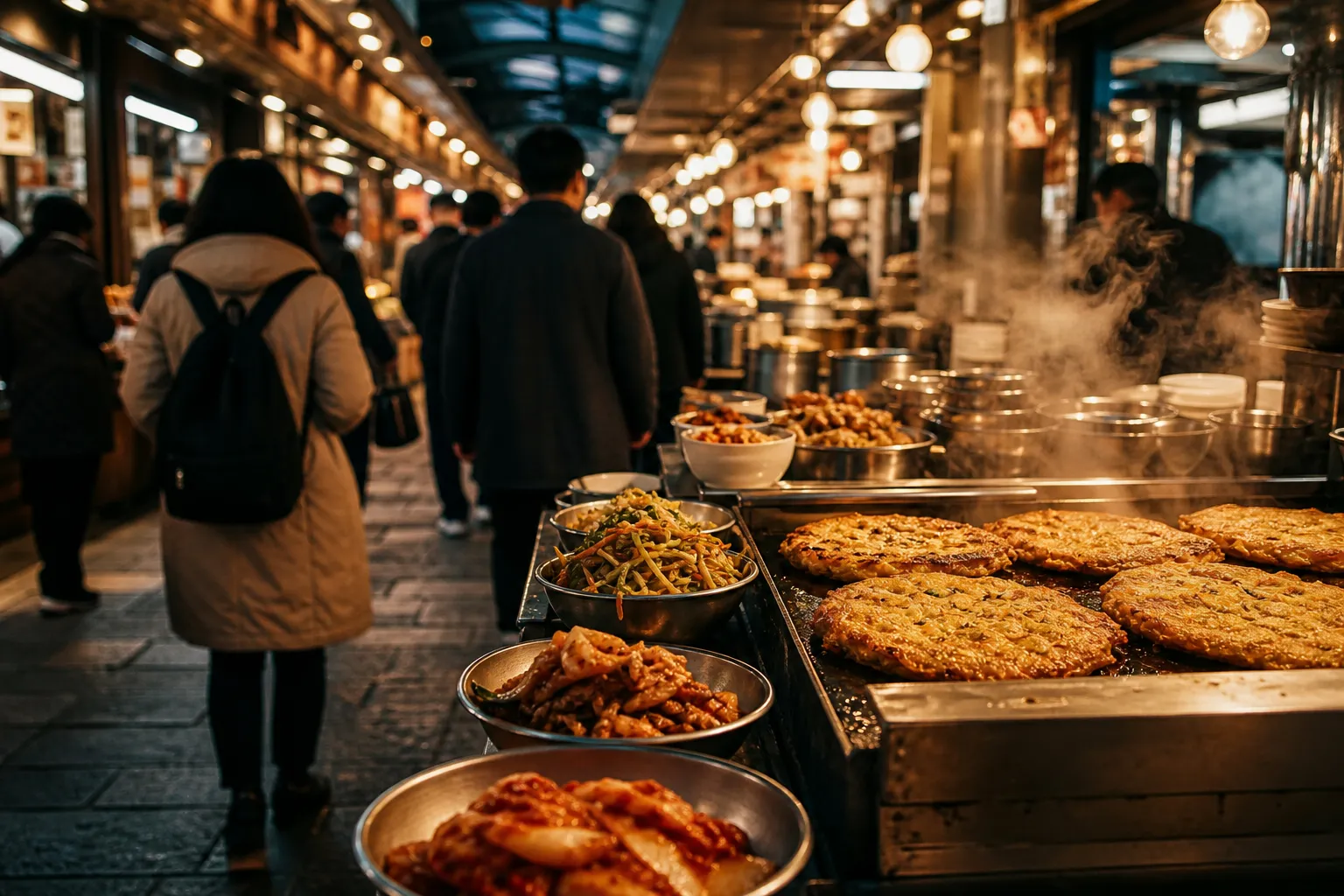
Gwangjang Market’s renewed food scene is not just about finding a good plate of bindaetteok or yukhoe. The bigger story is how one of Seoul’s most recognizable traditional markets is trying to rebuild trust while welcoming newer F&B brands, pop-up-style energy, and younger visitors alongside its long-standing food alleys.
For travelers searching for Hidden Market Eats, that makes Gwangjang Market especially interesting in 2026. The market remains a place associated with Korean traditional food culture, but the conversation around it now includes transparent pricing, hygiene checks, multilingual guidance, and a changing mix of old and new storefronts.
Gwangjang Market Renewal Eats: What Is Changing
The latest renewal push follows a series of public concerns over pricing and service. On May 20, 2026, Yonhap News reported that Seoul City and Jongno District would conduct intensive checks from May to June 2026 on about 260 shops and food stalls in Gwangjang Market. The inspections were set to use Korean and foreign mystery shoppers to check for overcharging, forced sales, unfair treatment toward foreign visitors, unfriendly service, and hygiene problems, before moving into a regular monitoring system.1
That effort did not appear out of nowhere. On December 5, 2025, the Ministry of SMEs and Startups, Seoul City, Jongno District, and the Gwangjang Market merchants’ association held an on-site meeting focused on restoring trust and supporting coexistence. The shared action points included price display rules, payment transparency, improved guidance for foreign visitors, hygiene and kindness training, and multilingual information.2
The official language around the market has been careful but clear. Lee Byung-kwon, the ministry’s second vice minister, said it was important to create an environment where “anyone can visit with peace of mind.”2 Seoul City’s Lee Hae-seon also said the city would work to establish regular management and constant monitoring so the market could become trusted.1
For visitors, the practical meaning is simple: the renewal is not only cosmetic. It is tied to how clearly prices are shown, how stalls handle customers, and whether tourists can navigate the market without feeling uncertain. That matters because Gwangjang Market has long been framed as a representative traditional market where foreign tourists experience Korean culture.2
Classic Food Alleys Still Anchor the Market
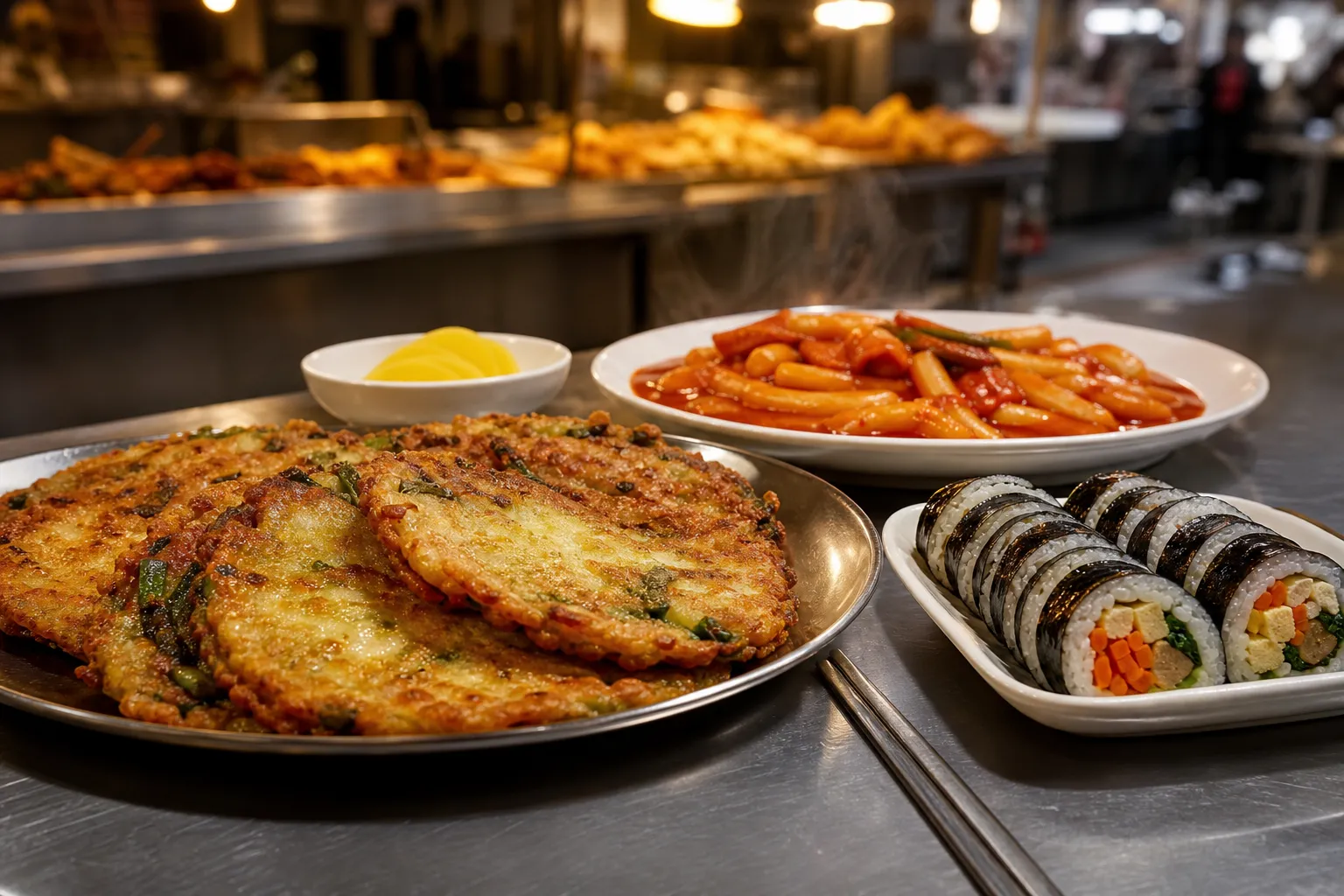
Even with the renewal talk, Gwangjang Market’s food identity still rests on familiar classics. HeyPop’s June 24, 2026 feature described the market as a place where traditional food, fashion, beauty, and F&B now coexist, while still naming bindaetteok, mini gimbap, and the yukhoe alley as must-visit routes for tourists.3
Seoul’s “내 손안에 서울” also highlighted that traditional foods such as kalguksu, bindaetteok, and yukhoe remain popular, even as newer snacks and bakeries attract younger visitors. The same article noted that, as of 2024, Gwangjang Market had 5,628 stores, which helps explain why the market can feel less like a single food stop and more like a layered district of eating, shopping, and browsing.4
This is where the phrase Hidden Market Eats fits naturally. The market’s famous dishes are not exactly hidden anymore, but the renewed appeal comes from the way old and new sit close together. A visitor may come for bindaetteok or yukhoe, then encounter newer bakery items, street snacks, or branded F&B spaces nearby. The discovery is not only about one unknown stall; it is about watching a traditional market widen its food map without losing the foods people already associate with it.
That balance is important because Gwangjang Market has also had to deal with reputation issues. MBC News reported on November 12, 2025 that a sundae stall linked to a pricing controversy received a 10-day business suspension from the Gwangjang Market merchants’ association. The report said a YouTuber claimed they ordered sundae marked at 8,000 won but were asked for 10,000 won, and the related video surpassed 12 million views in eight days.5
MBC also pointed back to a 2023 controversy over assorted jeon, after which a fixed-quantity display system had been pursued, while similar concerns still resurfaced.5 In other words, the 2026 renewal push is best understood as part of a longer attempt to protect the market’s appeal by addressing the exact issues that can make first-time visitors hesitate.
New F&B, Beauty, and Fashion Add a Second Layer
The other side of the renewal is the changing commercial mix. HeyPop described Gwangjang Market in 2026 as a space where traditional foods now stand beside fashion, beauty, and F&B brands. It listed examples including Olive Young’s retro-concept store “올영양행,” Off Beauty, Kodak Gwangjang Market branch, and Matin Kim around the west gate and the fabric and hanbok shopping area.3
Earlier signs of this shift were already visible. Maeil Business Economy reported on January 4, 2024 that the 120-year-old traditional market was keeping its long-standing image while drawing young visitors and foreign tourists. Its examples of newer F&B arrivals included Onion Gwangjang Market, Abebe Bakery, Sagwadang, Gyeongju Ten Won Bread, Bagel Gwangjang, and Croissant Store.6
The same report noted a Jeju Beer pop-up collaboration with Parkgane Bindaetteok, one of the market’s representative food names.6 That kind of pairing says a lot about the direction of the market: renewal does not mean replacing the old food culture. It means using recognizable traditional foods as anchors while surrounding them with new formats that younger and international visitors already understand.
Seoul’s city media similarly described newer draws such as twisted doughnuts, Abebe Bakery Seoul, Gyeongju Ten Won Bread, and mugwort choco pie as foods attracting younger generations.4 Together, these details show why Gwangjang Market can now be approached in two ways: as a classic food market and as a compact trend-watching route.
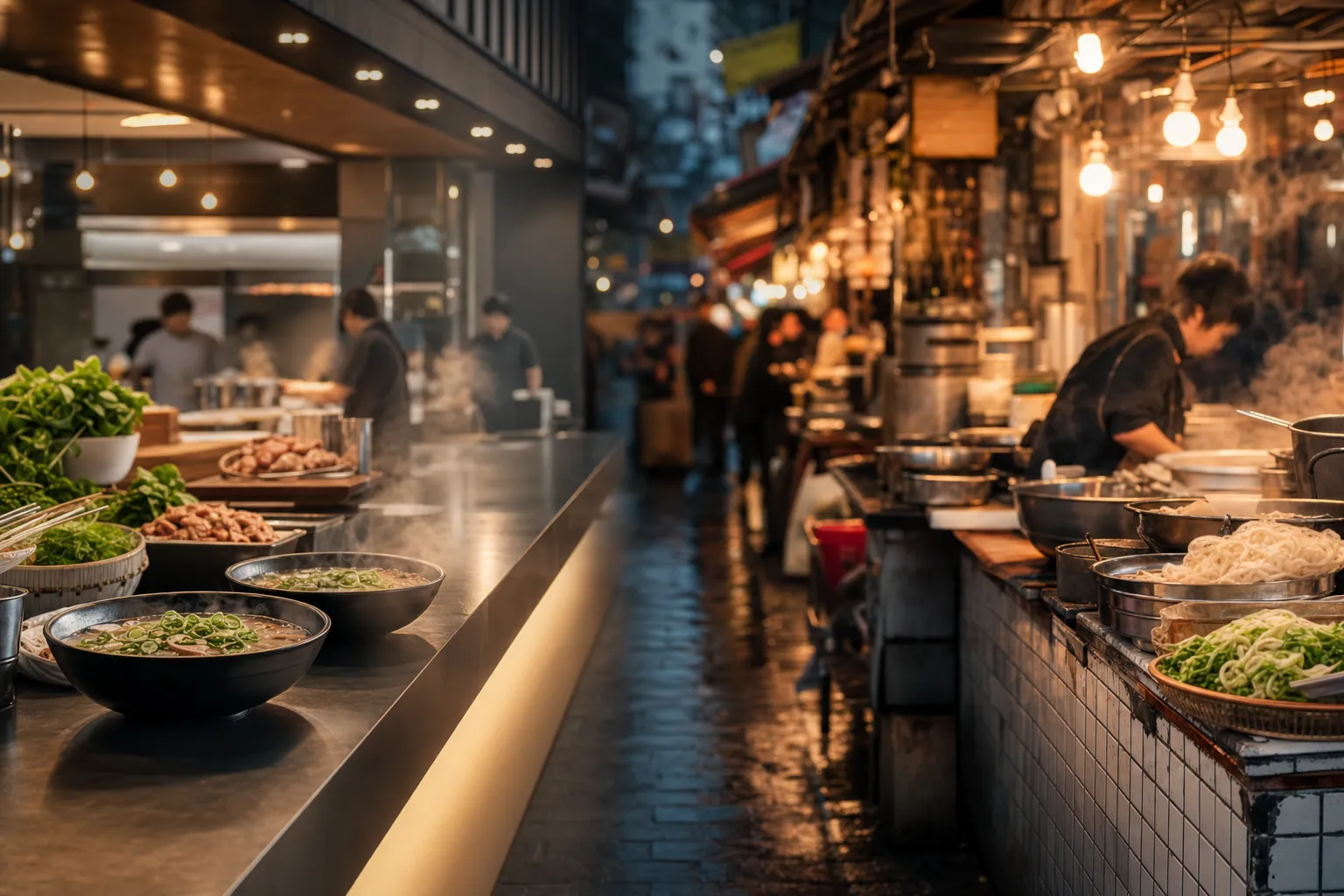
For a reader planning a food-focused stop, the most useful takeaway is to treat Gwangjang Market as a renewed market in progress. The established dishes remain central, the newer F&B names add variety, and the public reforms around price display, hygiene, service, and foreign-language guidance are part of the same story. Gwangjang Market’s best Hidden Market Eats may now be found in the overlap between tradition, trust-building, and careful change.
References
- 광장시장 '바가지요금·비위생 점포' 잡는다…미스터리쇼퍼 투입 (연합뉴스, 2026-05-20)
- 광장시장, 신뢰 회복 나선다…가격 표시·위생·서비스 전면 점검 (대한민국 정책브리핑, 2025-12-05)
- 달라진 광장시장, 2026 지금 가봐야 할 곳은? (헤이팝, 2026-06-24)
- MZ세대까지 사로잡은 광장시장! 맛있는 먹거리에 팝업스토어 구경까지 (서울시 내 손안에 서울, 2025-02-11)
- 1분짜리 '쇼츠'에 '광장시장 바가지 논란' 재점화 (MBC 뉴스, 2025-11-12)
- 젊어진 120살 전통시장···WELCOME TO 광장 [스페셜리포트] (매경이코노미, 2024-01-04)
About the Author