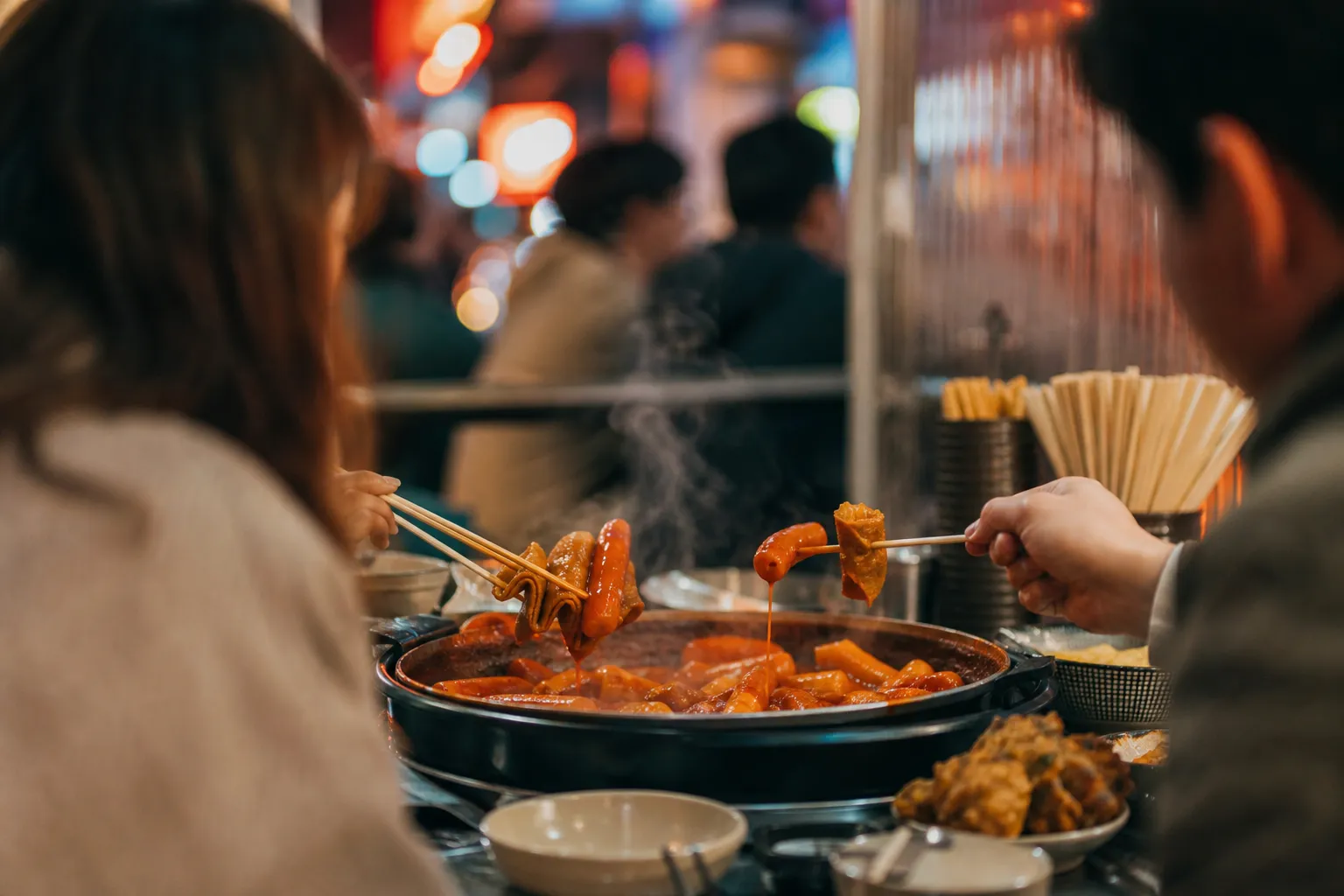
Sindang-dong’s tteokbokki alley is no longer only a familiar Seoul food landmark for local diners. It is becoming part of a wider foreign-tourist route through “Hipdang-dong,” where old snack-shop energy, newer cafés, small shops, and Seoul culture experiences now sit side by side.
The change is not being framed as a sudden reinvention from nowhere. Seoul and Jung District sources describe it as a gradual widening of attention: from the long-known tteokbokki street to a neighborhood identity that now includes food alleys, creative shops, youth culture, and international curiosity. For visitors searching for Hipdang-dong Tteokbokki, that means the appeal is not just one spicy dish, but a compact look at how a traditional food street can become part of a broader urban culture route.
Why Foreign Tourists Are Looking Toward Sindang-dong
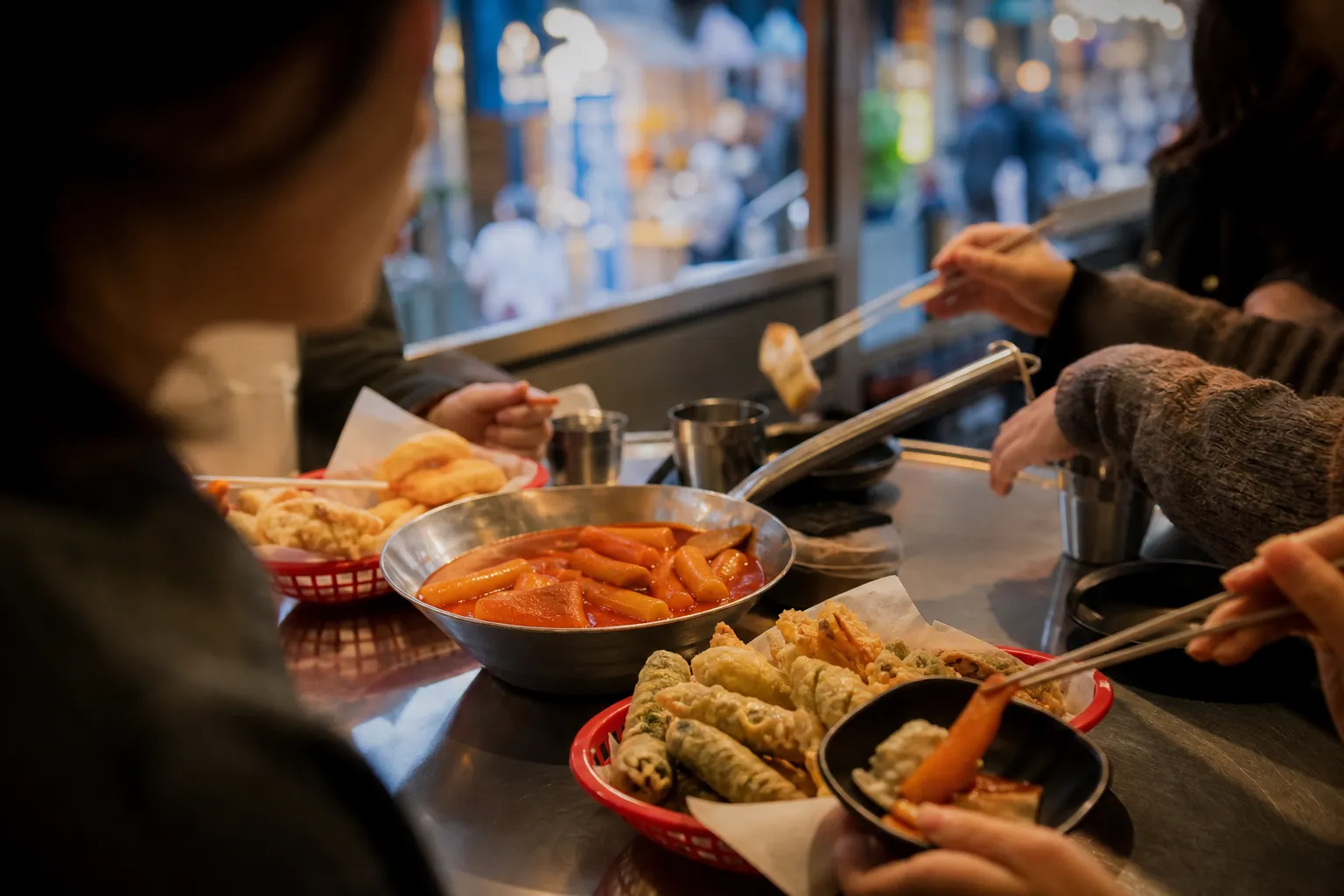
One of the clearest signs of this shift came from Seoul Jung District’s “Seoul Jung-gu Tour Pass.” On July 13, 2026, the district announced that the pass had expanded from two types to four, offering K-tour courses for foreign visitors and allowing users to enjoy Jung District food, including Sindang-dong tteokbokki, along with K-culture experiences. The district also said cumulative sales had exceeded 5,500 passes, and that it aimed to connect tourist movement concentrated in Myeong-dong toward places such as Euljiro and Sindang-dong.1
That matters because Sindang-dong is being positioned not only as a place to eat, but as a stop inside a larger visitor flow. Myeong-dong remains one of the most obvious tourist hubs in central Seoul, but Jung District’s stated goal is to spread movement into surrounding neighborhoods. Sindang-dong’s tteokbokki alley fits naturally into that plan because food is often one of the easiest entry points into a neighborhood.
Seoul’s own cultural research also gives the area a broader frame. The Seoul Metropolitan Government announced that the Seoul Museum of History had published the 2025 Seoul Living Culture Research Report, titled “Sindang-dong: 神·新·Hip.” The report organized tteokbokki street, Ssajeon Street, Gaemi Alley, and Ironworks Street as four specialized streets that show Sindang-dong’s identity.2 In other words, tteokbokki remains central, but it is now being read alongside other streets that show the neighborhood’s layers.
From Tteokbokki Street To “Hipdang-dong”
The nickname “Hipdang-dong” helps explain why the neighborhood is drawing more attention from both younger Koreans and foreign visitors. Coverage tied to the Seoul Museum of History report described Sindang-dong as a place that has changed beyond tteokbokki street, with cafés, small goods shops, and design studios contributing to its newer image among MZ-generation visitors and international tourists.3
That does not erase the food alley’s older identity. Instead, it gives travelers more reasons to linger nearby. A visitor may come for a pan of tteokbokki, but the surrounding neighborhood now offers more points of interest than a single meal. That combination is useful for foreign tourists because it turns a food stop into a walkable culture stop.
The foreign visitor profile is also becoming more varied. Seoul noted that Asian tourists have been the main group on the tteokbokki street, while visits by Western tourists have also been increasing as Sindang-dong becomes known through overseas content.2 A representative from Mabokrim Halmeonijip was quoted as saying, “Recently, many Western tourists also visit due to the influence of overseas content.”3
That short comment captures something important: the alley’s international reach is being shaped not only by official tourism planning, but also by the way Korean food and neighborhood culture circulate through media. For many visitors, tteokbokki is already familiar as a Korean street-food symbol. Sindang-dong adds a specific place-name and history to that familiar image.
What Visitors Can Expect From The Food Alley Story
The available sources point to a place with different rhythms depending on timing. Financial News reported in March 2026 that Sindang-dong’s tteokbokki alley was relatively quiet on weekdays, while young visitors and foreign tourists were more noticeable on weekends. One local source quoted in that report said foreign tourists are “often seen on weekends.”4
That weekend pattern fits the broader image of a destination that is both a neighborhood food street and a leisure stop. It is not described in the sources as a polished tourist attraction separated from everyday Seoul. Instead, it appears as a working food alley being pulled into wider tourism, youth culture, and K-food interest.
Jung District has also tried to strengthen the alley through events and branding. In 2023, the district announced a food festival and new brand declaration for the Sindang-dong tteokbokki and food alley, noting that since the area was designated an alley-style shopping district in 2021, it had pursued improvements such as guide signs, promotional banners, character development, and commercial-district revitalization projects.5
In 2024, Jung District announced the “Sindang-dong Food Festa,” held on October 11 at the Sindang-dong tteokbokki and food alley. The event included a car-free street, tteokbokki tasting corner, a performance by the character “Deokbokki,” performances, and a receipt event. The district said it hoped the festival would introduce the food alley’s appeal to MZ-generation visitors and foreign tourists coming to Hipdang-dong.6
That focus on events shows how the district wants to connect the alley’s classic reputation with newer visitor habits. A food street can be more than a row of restaurants when it is paired with walkable programming, photo-friendly branding, and nearby culture stops. At the same time, Financial News noted that overcharging aimed at tourists remains one of the challenges in the globalization of K-snack food, a reminder that popularity also brings responsibilities for fair and trustworthy visitor experiences.4
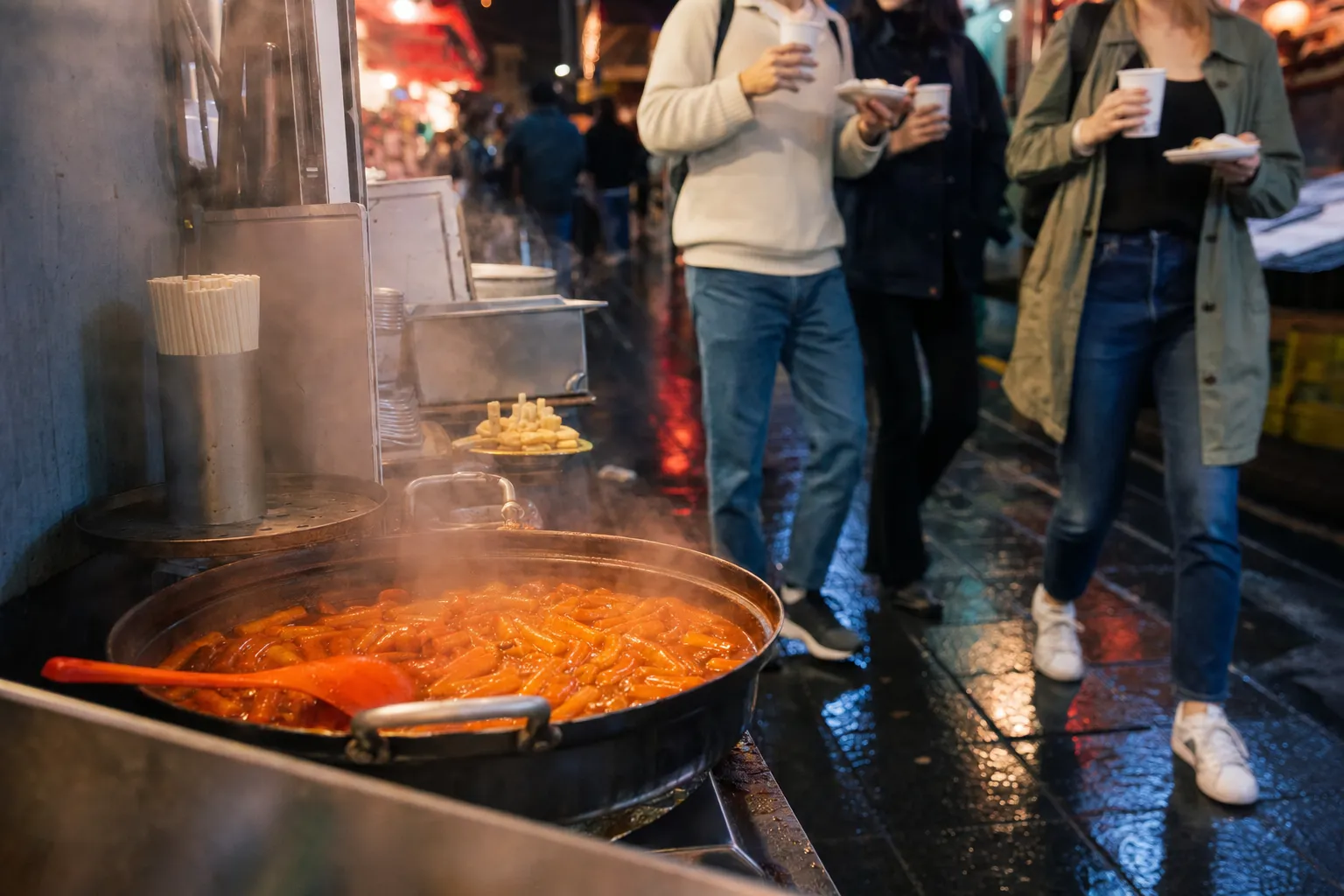
For foreign tourists, the draw of Sindang-dong’s tteokbokki alley is easy to understand: it offers a recognizable Korean food in a neighborhood whose identity is still evolving. The sources do not present Hipdang-dong Tteokbokki as a finished trend with one simple meaning. They show a street where long-running snack culture, district-led tourism routes, overseas content, and a changing local scene are now meeting in one flavorful place.
References
- 중구, 투어패스 업그레이드…취향따라 더 알차게 즐긴다! (서울시 중구청, 2026-07-13)
- (석간) 떡볶이 너머 ‘힙당동’… 신당동의 세 얼굴 『神·新·Hip』 보고서 발간 (서울특별시, 2026-07-07)
- 무당촌에서 ‘힙당동’ 되기까지…떡볶이 너머 신당동의 변신 (동아일보, 2026-07-11)
- 외국 관광객 줄서서 먹는 떡볶이·김밥… "한국 음식 힙해요" (파이낸셜뉴스, 2026-03-24)
- 신당동 먹거리 축제 개최, 떡볶이 골목 명성 되찾는다 (서울시 중구청, 2023-05-17)
- 떡볶이 성지, 중구 신당동 먹거리 페스타 (서울시 중구청, 2024-10-07)
About the Author