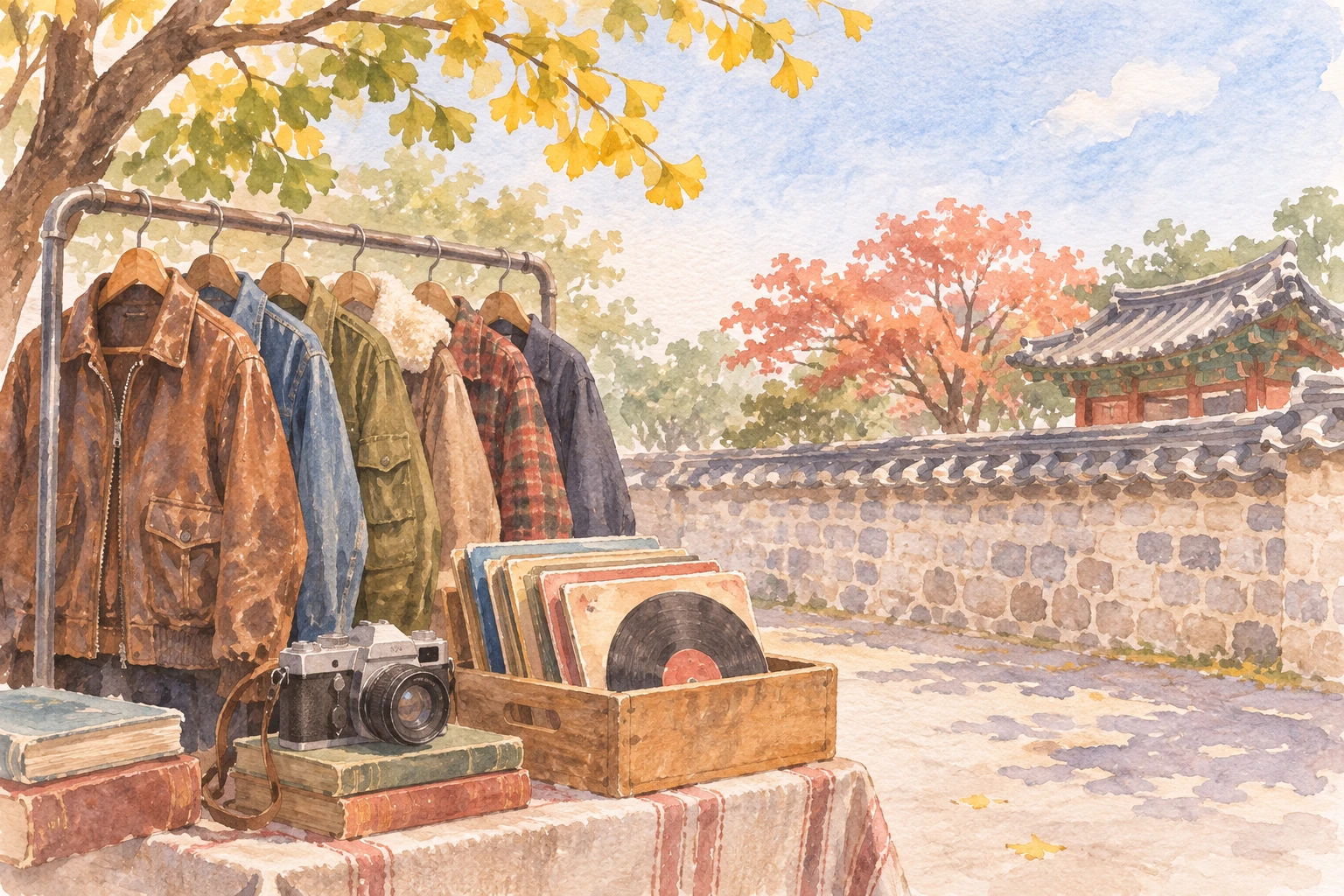
At Dongmyo Market, secondhand clothes and antiques line the wall of a historic shrine; at Noryangjin Fish Market, shoppers can choose seafood and take it upstairs to eat. 1 They are among five traditional markets the Seoul Tourism Organization highlighted in November 2026, along with nearby places to explore. 2
The choice depends on the outing you want: browse for vintage finds at Dongmyo, seek out a meal at Inhyeon or Noryangjin, or pair a market visit with a former railway walk at Gongneung-dong. 12 The subway directions below were reported in November 2026; check individual shop arrangements when planning a visit. 1
Namdaemun Market: Everyday goods and a city-wall walk
Namdaemun Market (남대문시장) traces its beginnings to shops established during the reign of King Taejong of the Joseon dynasty. 2 Today, its shops sell clothing, household goods, food and kitchenware, while food alleys offer kalguksu, or noodle soup, and braised cutlassfish. 2
For a walk after browsing, head toward Baekbeom Square in Namsan Park and the Hanyang city wall, which extends from Sungnyemun Gate. 1 The market’s reported subway access is Hoehyeon Station on Line 4, Exit 5. 1
Inhyeon Market: Old restaurants in the printing district
Inhyeon Market (인현시장) is a roughly 200-meter stretch in Chungmuro’s printing district. 2 After the Korean War, restaurants took root here to serve people working in the printing trade; its older eateries include places offering set meals and braised fish. 2
This is a good choice for a meal paired with a heritage stop: Namsangol Hanok Village is nearby. 2 For the market, the reported subway options are Euljiro 3-ga Station on Line 2, Exit 7, or Chungmuro Station on Line 4, Exit 8. 1
Dongmyo Market: Vintage shopping beside a shrine
Dongmyo Market (동묘시장) grew around Dongmyo, a shrine dedicated to Guan Yu, as street vendors gathered in the late 1980s. 1 Vendors who had to move from the Hwanghak-dong flea market later joined them. 1
Browse for secondhand clothing along the shrine wall, as well as watches, records and cameras. 12 For a different kind of shopping nearby, continue to the Changsin-dong stationery and toy market. 2 The reported subway access is Dongmyoap Station on Line 1, Exit 3. 1
Noryangjin Fish Market: Seafood for a meal or picnic
Noryangjin Fish Market (노량진수산시장) grew out of a fish market that opened near Seoul Station in 1927 and moved to Noryangjin in 1971. 1 On the first floor, visitors can choose fish and seafood, then take it to a second-floor restaurant or have it packed to take away. 1
One option is to take packed raw fish to Yeouido Hangang Park or Nodeul Island for a picnic. 2 For the market, use Noryangjin Station on Line 1, Exit 9, or Line 9, Exit 7, according to the November report. 1
Gongneung-dong Dokkaebi Market: Snacks and a railway trail
Gongneung-dong Dokkaebi Market (공릉동도깨비시장) traces its origins to small vendors who gathered near Hwarangdae Station around the opening of the Gyeongchun railway in 1939. 1 Its nickname evokes a dokkaebi, a figure from Korean folklore: vendors were said to appear and disappear quickly as they avoided enforcement. 1
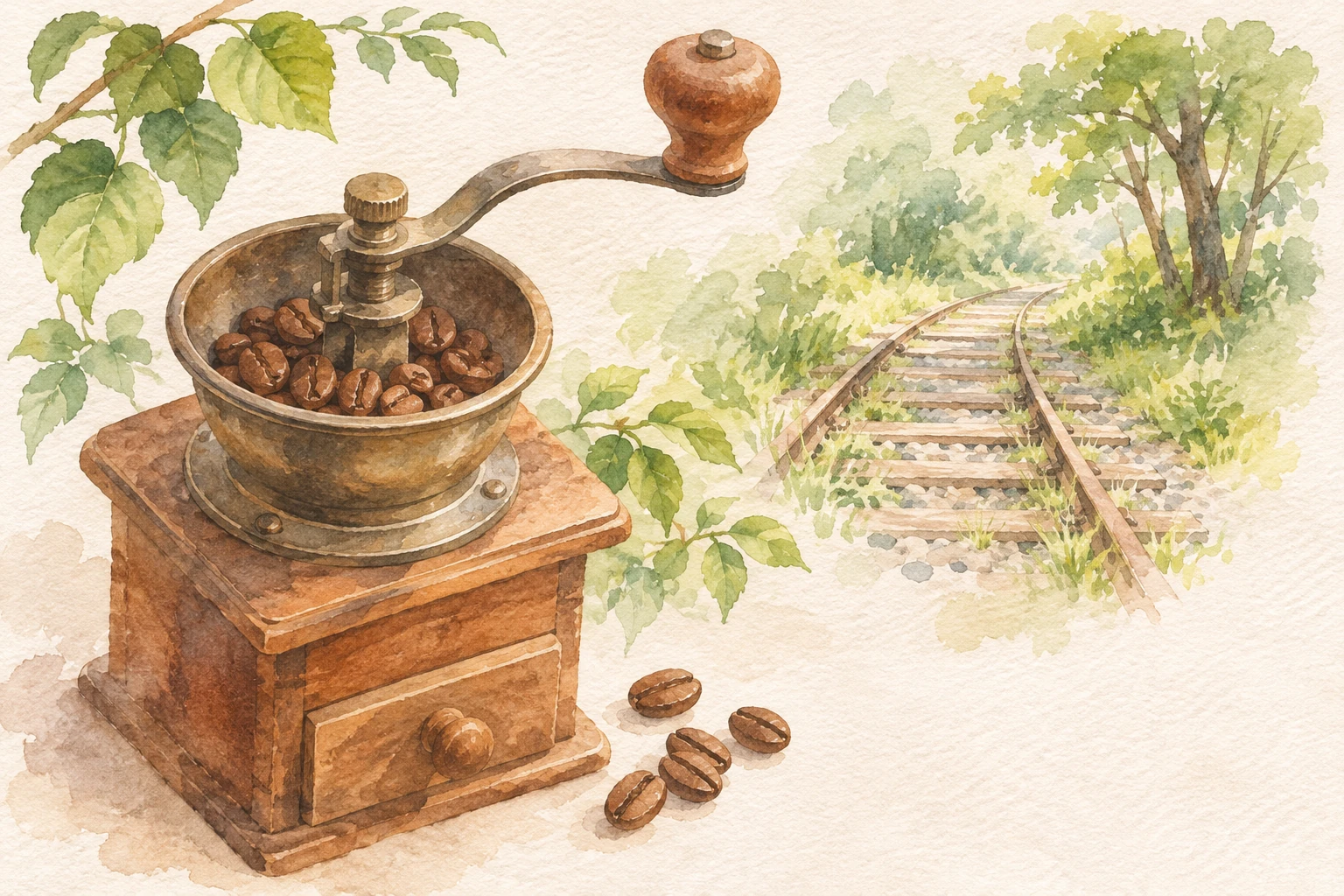
Inside the market, a coffee-grinder museum and cafe displays coffee equipment, including hand-crafted European grinders and later mass-produced models. 1 The market’s rear entrance connects to the approximately 7-kilometer Gyeongchun Line Forest Trail, a green route along former railway tracks that leads toward Hwarangdae Railway Park. 2
The reported subway options are Gongneung Station on Line 7, Exit 2, or Taereung Entrance Station on Line 7, Exit 4. 1 Look for twisted doughnuts or handmade dumplings at the market before exploring the old railway route. 12
Sources
- 서울관광재단이 추천한 가을 정취 짙은 '전통시장' 5곳 … “때밀이 타올부터 한강 ‘회크닉’까지” – 퍼블릭뉴스통신(Public news-network for TTL)
- 서울관광재단, 서울 전통시장 5곳 '역사·문화·체험' 연계 생활형 관광 공간으로 탈바꿈
About the Author