Euljiro Yangmiok sits at the center of a bigger Seoul story: the long-running tension between redevelopment and the preservation of old urban restaurants. The focus is not only one famous yangdaechang restaurant, but also what its case says about Euljiro’s changing streets, the Seun redevelopment district, and the city’s effort to balance new construction with living heritage.
Euljiro Redevelopment and Yangmiok’s Place in the Debate
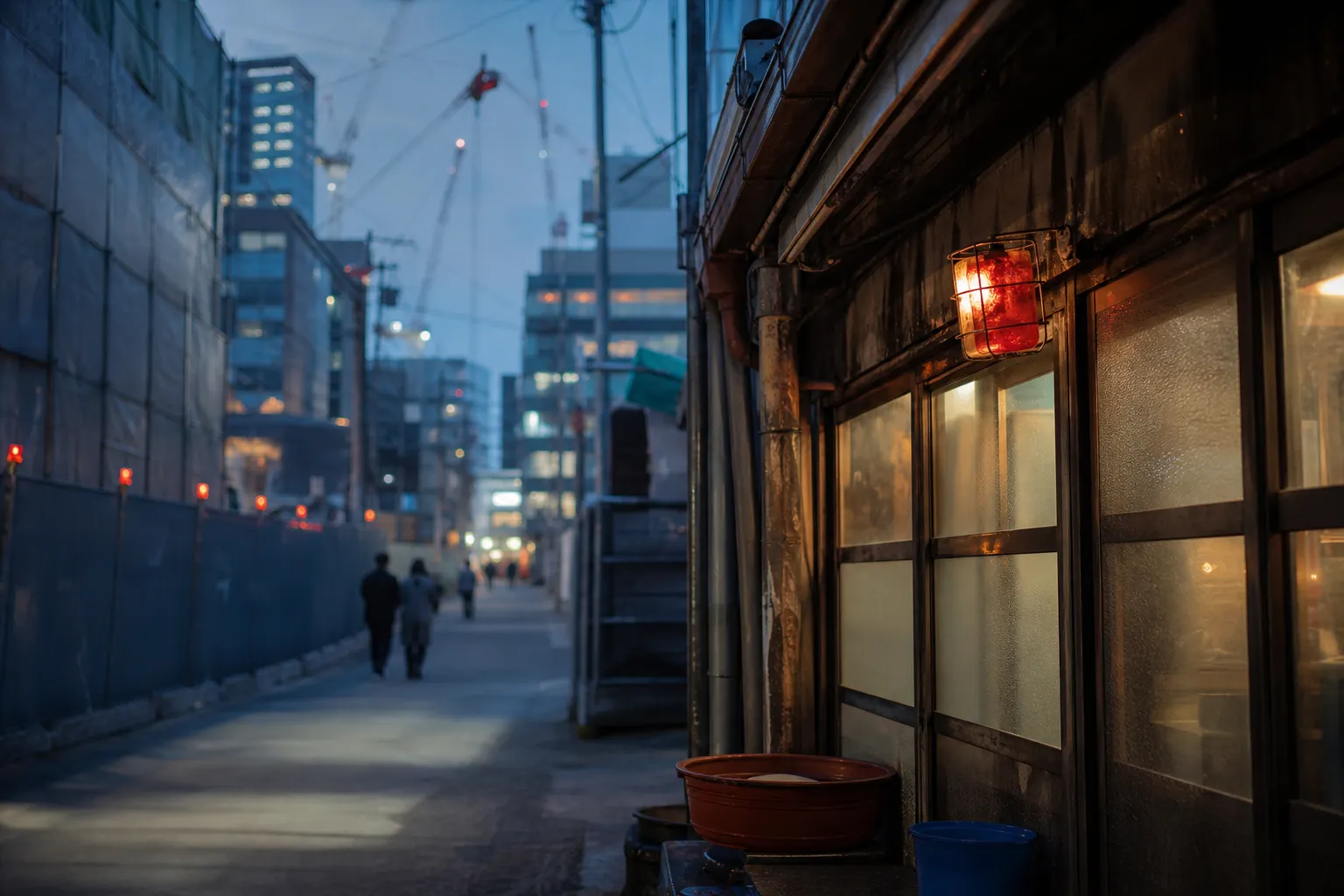
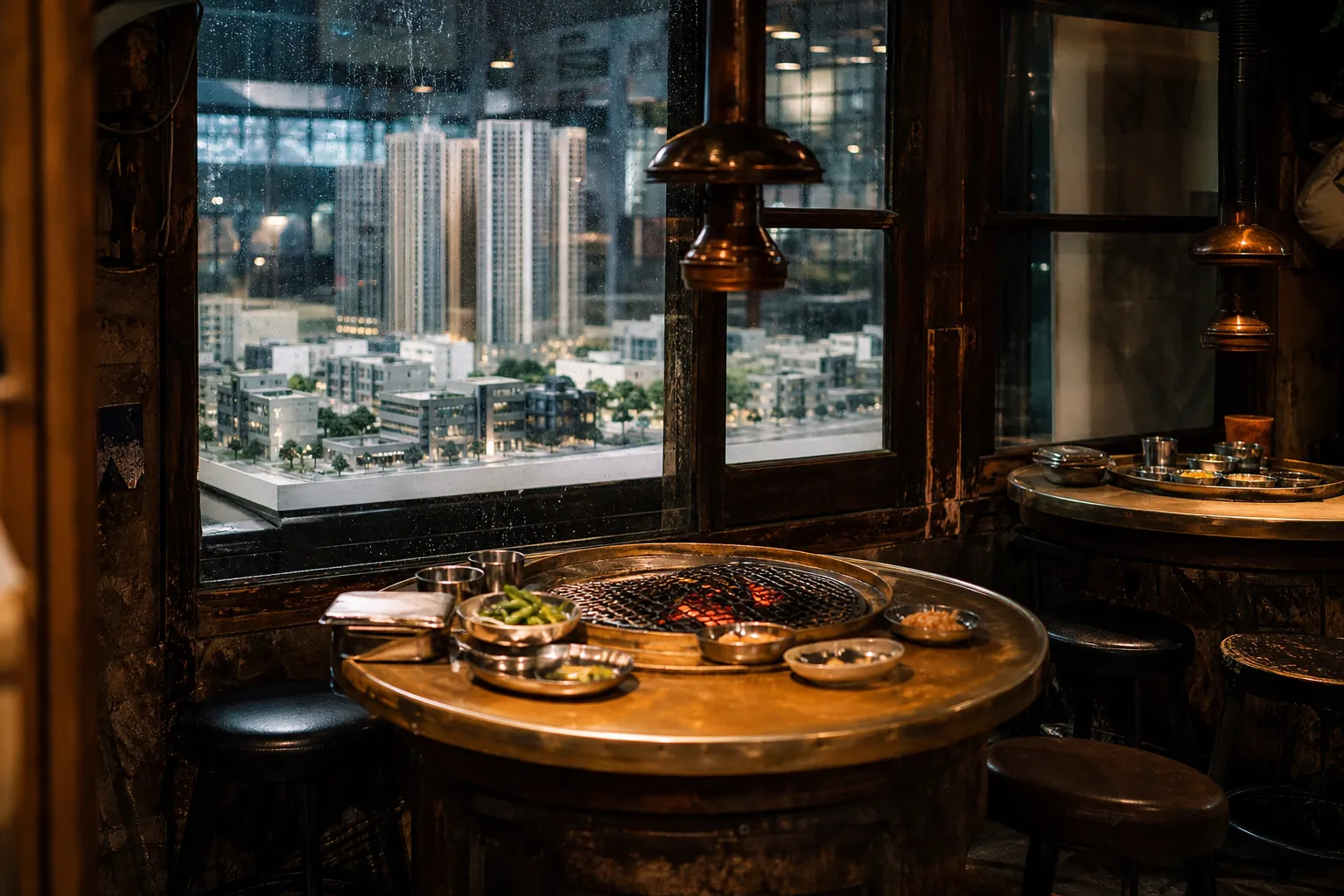
Yangmiok entered the redevelopment conversation most clearly through the Seun redevelopment district, an area where Seoul’s old workshops, restaurants, alleys, and planned high-rise projects have repeatedly collided. In January 2019, Yonhap News reported that Yangmiok was located in Seun District 3-3, where a business implementation approval application had been filed in December 2018. The same reporting described growing criticism over the demolition of old alleys and the plan for mixed-use residential and commercial development in the area.1
That context matters because Euljiro is not a blank development site. It has long been associated with small manufacturers, tool shops, repair trades, restaurants, and dense street-level commerce. When redevelopment plans move through a neighborhood like this, the question is not simply whether buildings are old or new. It becomes a question of what kinds of urban life should remain visible in the middle of Seoul.
The city’s position shifted into a fuller public review in January 2019. Seoul announced that it would reexamine the Seun redevelopment promotion district from the perspective of preserving downtown traditional industries and long-standing restaurants, while preparing a comprehensive plan by the end of that year. Yonhap reported that Seoul planned to work with Jung District Office so that living-heritage sites in Seun District 3, including Euljimyeonok and Yangmiok, would not be forcibly demolished.2
For readers trying to understand why Euljiro Yangmiok became such a keyword in redevelopment coverage, this is the core point: the restaurant was not only discussed as a business in a redevelopment zone. It was treated as part of a broader “living heritage” argument, where the continuity of familiar places became part of the planning conversation.
What Seoul Said About Forced Demolition
The most important source-backed detail is that Seoul officials publicly addressed concerns about forced demolition. In a January 23, 2019 briefing Q&A reported by Yonhap, Kang Maeng-hoon, then head of Seoul’s Urban Regeneration Office, said Euljimyeonok and Yangmiok opposed forced removal caused by redevelopment, and he explained that preservation conditions would be attached at the management-disposal approval stage.3
His wording is useful because it shows the city’s stated line at the time. Kang said, “It does not mean proceeding against individual will,” and also said the city would take administrative measures so that living heritage would not be forcibly demolished even if it legally met demolition conditions.3 Those comments did not mean redevelopment disappeared. They meant Seoul was trying to signal that redevelopment would have to make room for places identified as culturally and socially meaningful.
Former Seoul Mayor Park Won-soon also framed the issue around continuity. At the same 2019 turning point, he said the basic direction was to preserve and revitalize as much as possible “living heritage and the industrial ecosystem that carries downtown traditional industries.”2 In plain terms, the city was acknowledging that the value of Euljiro was not captured only by land use, floor area, or building height. Its working culture and old neighborhood institutions were part of the equation.
This is why the Yangmiok case continues to feel relevant even when newer redevelopment decisions concern other sections of the Seun area. It helps explain the policy mood around Euljiro: redevelopment is moving, but the debate over what should be protected has not disappeared.
Later Updates Show Redevelopment Still Moving
The larger Seun redevelopment framework continued to advance after the 2019 preservation debate. On June 8, 2026, Seoul’s 5th Urban Redevelopment Committee conditionally approved revisions to the redevelopment promotion plan for the Seun redevelopment promotion district and Seun 6-1-4 area. The changes included an upgrade in zoning, a floor-area ratio of up to 1,300%, relaxed height limits of up to 186 meters, cultural and business functions, and the creation of open green space.4
That 2026 decision is not presented in the source material as a direct update on Yangmiok itself. Still, it is important background because it shows that Euljiro and the Seun district remain active redevelopment territory. The neighborhood conversation has therefore continued on two tracks: large-scale planning on one side, and concern for long-standing places and older urban industries on the other.
Jung District Office materials also show redevelopment activity around Euljiro 3-ga. The public PDF listed Euljiro 3-ga Area Districts 1 and 2 as having management-disposal plan approval in March 2024 and construction scheduled for August 2025. It also listed District 6 as having started construction in April 2023, with completion planned for May 2026.5 These project timelines add another layer to the picture: Euljiro’s redevelopment is not a single event, but a set of overlapping district-by-district changes.
Yangmiok’s own public story also includes a serious fire. Yonhap reported that a fire broke out at the Euljiro restaurant around 8 p.m. on November 23, 2021, leading more than 80 people to evacuate. Fire authorities deployed 247 personnel and 60 vehicles, and the first and second floors of Yangmiok, along with the second floor of a neighboring building, were burned. Two people were reported to have minor injuries, with no deaths identified in the report.6
For anyone following Euljiro Yangmiok through the redevelopment lens, the useful takeaway is that the restaurant’s name stands for more than nostalgia. It points to a practical urban question Seoul has been wrestling with for years: how to rebuild a central district without erasing the places and industries that gave it character. The available sources show redevelopment continuing, preservation promises being made, and Yangmiok remaining part of the public memory of that debate.
References
- '오락가락' 재개발 행정에 혼란 가중…"을지면옥이 다가 아닌데" (연합뉴스, 2019-01-22)
- 서울시 "을지면옥 강제철거 안 한다"…세운재정비 전면 재검토(종합) (연합뉴스, 2019-01-23)
- [일문일답] 서울시도시재생실장 "을지면옥 등 생활유산은 강제철거 방지" (연합뉴스, 2019-01-23)
- (석간) 제5차 도시재정비위원회 개최결과 (서울특별시, 2026-06-09)
- 을지로2가구역 제1,3,6,18지구 등 도시정비형 재개발사업 자료 (서울특별시 중구청)
- [영상] 양미옥 1·2층 화재로 잿더미…손님 등 84명 대피 (연합뉴스, 2021-11-24)
About the Author