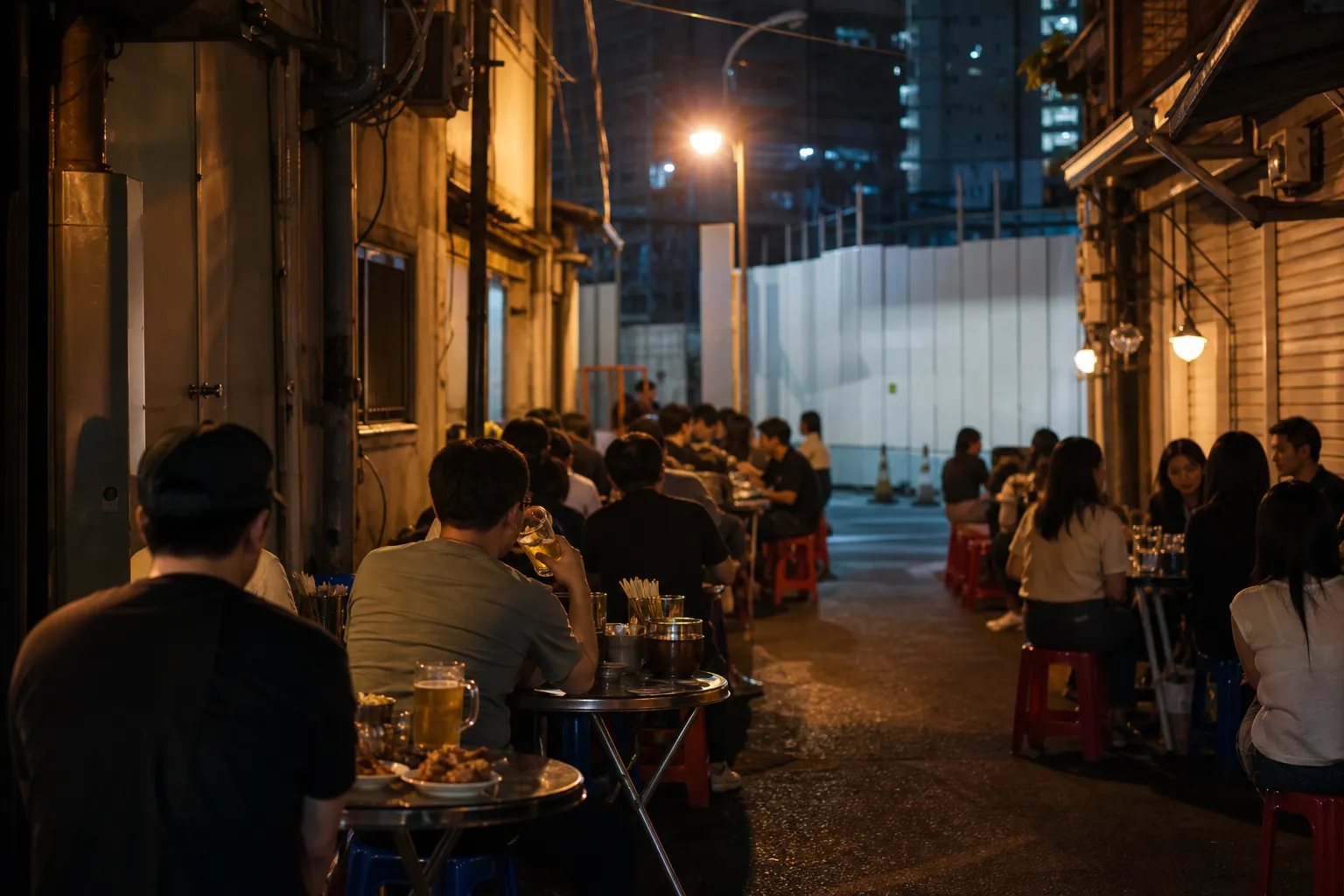
Euljiro Nogari Alley outdoor seating was once one of the clearest images of Euljiro Nightlife: simple tables set outside, cold draft beer, and dried pollack shared after work. By 2026, however, the story of that open-air scene is less about a carefree night out and more about how redevelopment, road-use rules, and local heritage have collided in one small but symbolic Seoul alley.
The area is commonly described as a 465-meter stretch around Exit 4 of Euljiro 3-ga Station, including parts of Eulji-ro 11-gil, Eulji-ro 13-gil, Chungmu-ro 9-gil, and Chungmu-ro 11-gil. Seoul Jung-gu materials identify it as the Euljiro Nogari Hof Alley area and note that outdoor business activity and car-free street operation were once supported there, before later restrictions tied to redevelopment changed the situation.1
The Outdoor Tables That Defined Euljiro Nogari Alley
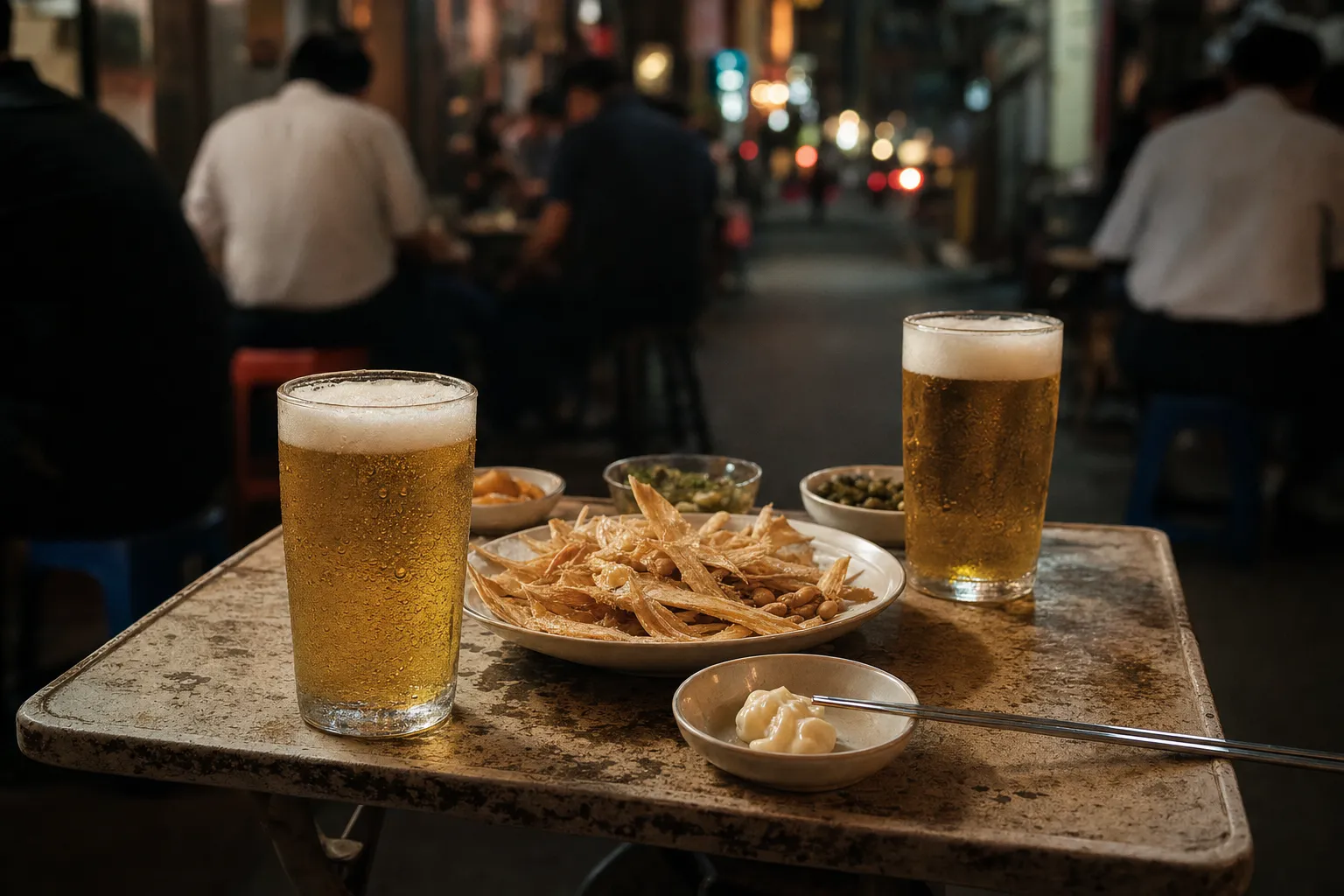
To understand why the outdoor tables mattered so much, it helps to start with what the alley represented. The place grew around a modest pairing: nogari, or dried young pollack, and draft beer. Tourism information based on Korea Tourism Organization material describes the alley as extending from Euljiro 3-ga Station Exit 4 and links its beginnings to Eulji OB Bear, which opened in November 1980 as the first nogari hof in the area.2
That origin story is closely tied to Euljiro’s working culture. The same tourism material explains that the alley formed around printing-industry workers who would finish their shifts and gather for beer and nogari.2 In other words, the outdoor tables were not just an aesthetic backdrop for photos. They were part of a practical after-work rhythm in a district known for small workshops, printing businesses, and late-night activity.
The local government eventually recognized and formalized this outdoor culture. In May 2017, Seoul Jung-gu announced that restaurants in the Euljiro Nogari Hof Alley would be allowed to operate outdoors under facility standards. The permitted section covered 465 meters across Eulji-ro 11-gil, Eulji-ro 13-gil, Chungmu-ro 9-gil, and Chungmu-ro 11-gil, and 17 hof establishments were introduced as eligible for outdoor operations at that time.3
Those permissions came with rules. Jung-gu said businesses had to avoid obstructing pedestrian movement, refrain from outdoor cooking, and remove facilities after business hours.3 That detail is important because it shows the alley’s outdoor seating was not simply informal street overflow. At least from 2017, it was framed as a managed urban-nightlife policy, balancing street use, business activity, and public order.
A short quote from the 2017 announcement captures the official ambition of the moment. Then Jung-gu Mayor Choi Chang-sik said the plan would “bring vitality to the nighttime downtown suffering from hollowing out.”3 The phrasing sounds administrative, but the idea was simple: keep the city center alive after office hours by supporting a local food-and-drink culture that already existed.
From Revival Efforts to Tighter Controls
The outdoor seating story did not move in a straight line. In June 2020, during the COVID-19 period, Seoul Jung-gu announced a two-week pilot operation to restart outdoor business in Euljiro Nogari Hof Alley after pandemic-related disruption. The conditions were specific: COVID-19 testing for workers, QR electronic entry logs, two meters of spacing between outdoor tables, and hygiene-rule education.4
That 2020 pilot shows how outdoor seating was treated as both an economic lifeline and a public-health challenge. Then Jung-gu Mayor Seo Yang-ho said the district would focus on both “strengthening quarantine” and “revitalizing the local economy.”4 For readers looking back from 2026, this is a useful reminder: the alley’s famous street tables survived through layers of regulation even before redevelopment became the defining issue.
The bigger shift came later. OhmyNews reported from the scene in April 2024 that outdoor table operations in Euljiro Nogari Alley had effectively been prohibited after redevelopment and the cancellation of road-occupation permission. The report said Jung-gu canceled the road-occupation permit for outdoor business in November 2022, and that the nightly car-free street operation was also lifted in July 2023.5
The reason was tied to the changing use of the road itself. An official from Jung-gu’s transportation administration department was quoted as saying that, as vehicle access became necessary for construction, “the character of the road also changed,” and the car-free street was lifted along with that change.5 The same report pointed to construction in the Supyo District and Euljiro 3-ga District 12 as factors that altered both the atmosphere of the alley and the conditions for pedestrian movement.5
Jung-gu’s own pledge material also reflects this tension. It notes that the district had supported car-free street designation and outdoor business permission in the past, but that a ban on outdoor business was imposed after the area was included in a redevelopment zone.1 So the present picture is not simply one of nightlife being “discovered” and then fading. It is a policy story, a redevelopment story, and a heritage story unfolding in the same narrow streets.
Why This Corner of Euljiro Still Matters
The emotional weight around the alley also comes from Eulji OB Bear. LandZip / Chosun Ilbo reported in May 2022 that Eulji OB Bear, described as the original force behind Nogari Alley, was forcibly removed on April 21, 2022 after a lease dispute. The article said the establishment opened in 1980 as the first franchise location of Dongyang Beer, the predecessor of OB Beer, and helped spark the growth of nearby hof pubs by selling nogari and beer.6
That same report stated that Seoul designated Nogari Alley as a Seoul Future Heritage site in 2015, and that Eulji OB Bear was selected as a “Baeknyeon Gage,” or hundred-year store, in 2018.6 Those recognitions help explain why the debate around the alley feels larger than a normal dispute over tables and permits. For many people following Seoul’s urban culture, this is about whether a working-class nightscape can remain visible while the surrounding city is rebuilt.
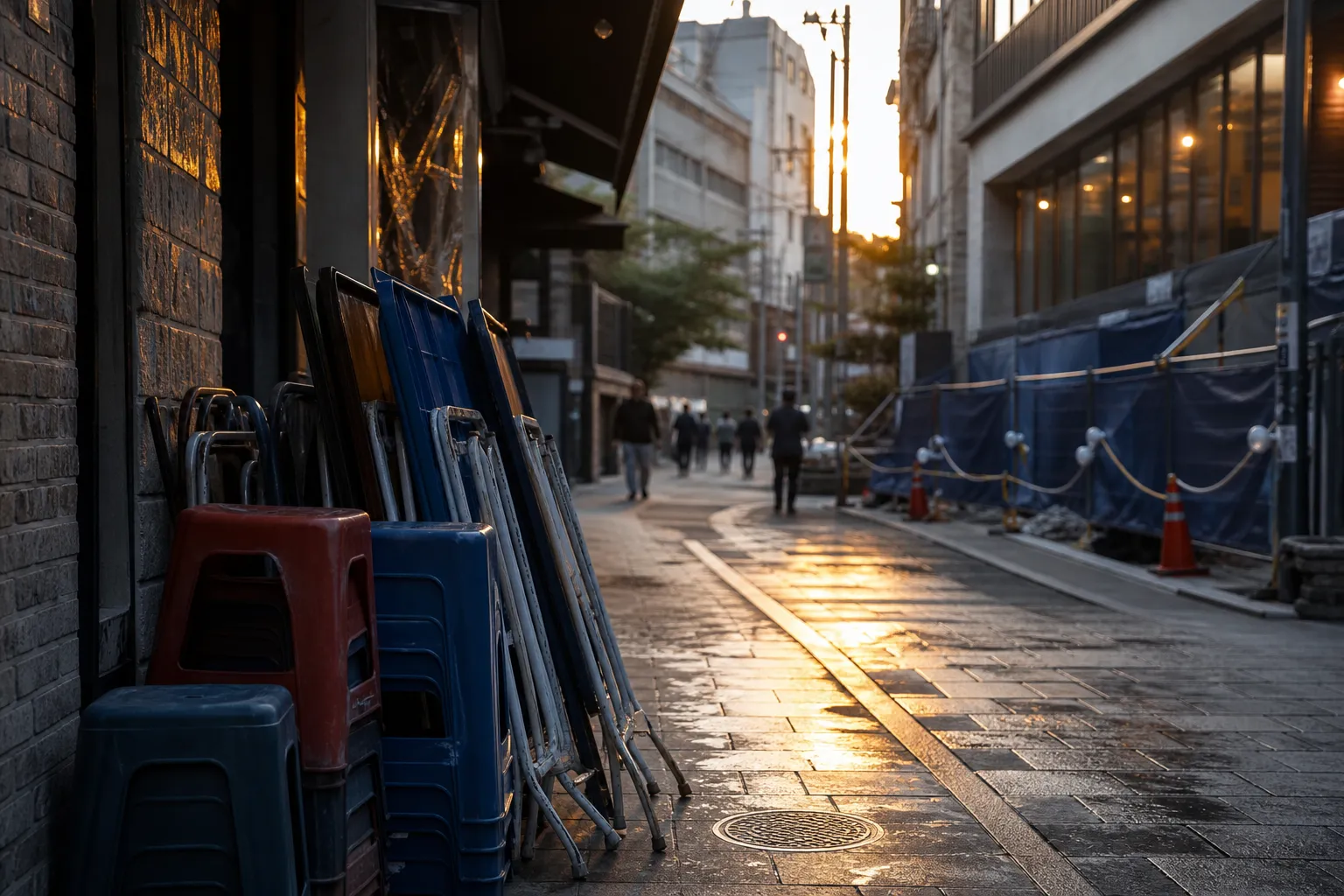
For visitors and readers trying to understand Euljiro Nightlife now, the key is to avoid freezing the alley in an old image. The familiar picture of dense outdoor tables, beer glasses, and late-night chatter belongs to the alley’s identity, but the official and reported facts show that outdoor operations have been heavily restricted since the 2022 permit cancellation and the 2023 end of nightly car-free street operation.5 The place still carries the history of nogari, beer, printers, old hof pubs, and Seoul’s downtown after-hours culture, but its street-level experience has changed.
In the end, Euljiro Nogari Alley’s outdoor seating story is compelling because it is both ordinary and fragile. It began with workers gathering after shifts, became a recognized nightlife district, passed through public-health controls, and then ran into redevelopment and road-use limits. What remains is a vivid case study in how Seoul’s beloved local scenes depend not only on taste and atmosphere, but also on permits, streets, buildings, and the policies that decide how much room a city leaves for memory.
References
- 다동·무교동 음식문화거리, 신당동 떡볶이, 을지로 노가리 등 먹거리 문화지역에 팝업스토어, 차없는거리 시행 (서울특별시 중구청)
- 을지로 노가리골목 (TripMate / 한국관광공사 자료, 2025-11-06)
- 을지로 노가리호프 골목 옥외영업 허용 (서울특별시 중구청 뉴스포털, 2017-05-11)
- 골목상권 일상복귀 위한 시동! 중구, 을지로 노가리골목 옥외영업 시범운영 (서울특별시 중구청 뉴스포털, 2020-06-08)
- '서울미래유산'이라더니 이젠 단속만… 힙지로 '노가리 골목' 한숨 (오마이뉴스, 2024-04-30)
- "을지 OB베어 살려내라!"…42년 노포도 못 피한 임대 갈등 (땅집고 / 조선일보, 2022-05-16)
About the Author