At Gobokhui (고복희), centuries-old Joseon furniture shares a setting with furniture by 20th-century designers Le Corbusier, Charlotte Perriand and Pierre Jeanneret. 1 The shop belongs to Seoul’s Dapsimni antique market (답십리 고미술 상가), in Dongdaemun district between Dapsimni and Janghanpyeong stations on subway Line 5. 1
For a first visit, there are two complementary browsing experiences: densely stocked antique shops and newer spaces that arrange selected objects with room around them. 2 Together, they offer both a broad encounter with old Korean belongings and concrete examples of how those belongings can fit into contemporary rooms. 1 2
Browse the everyday objects
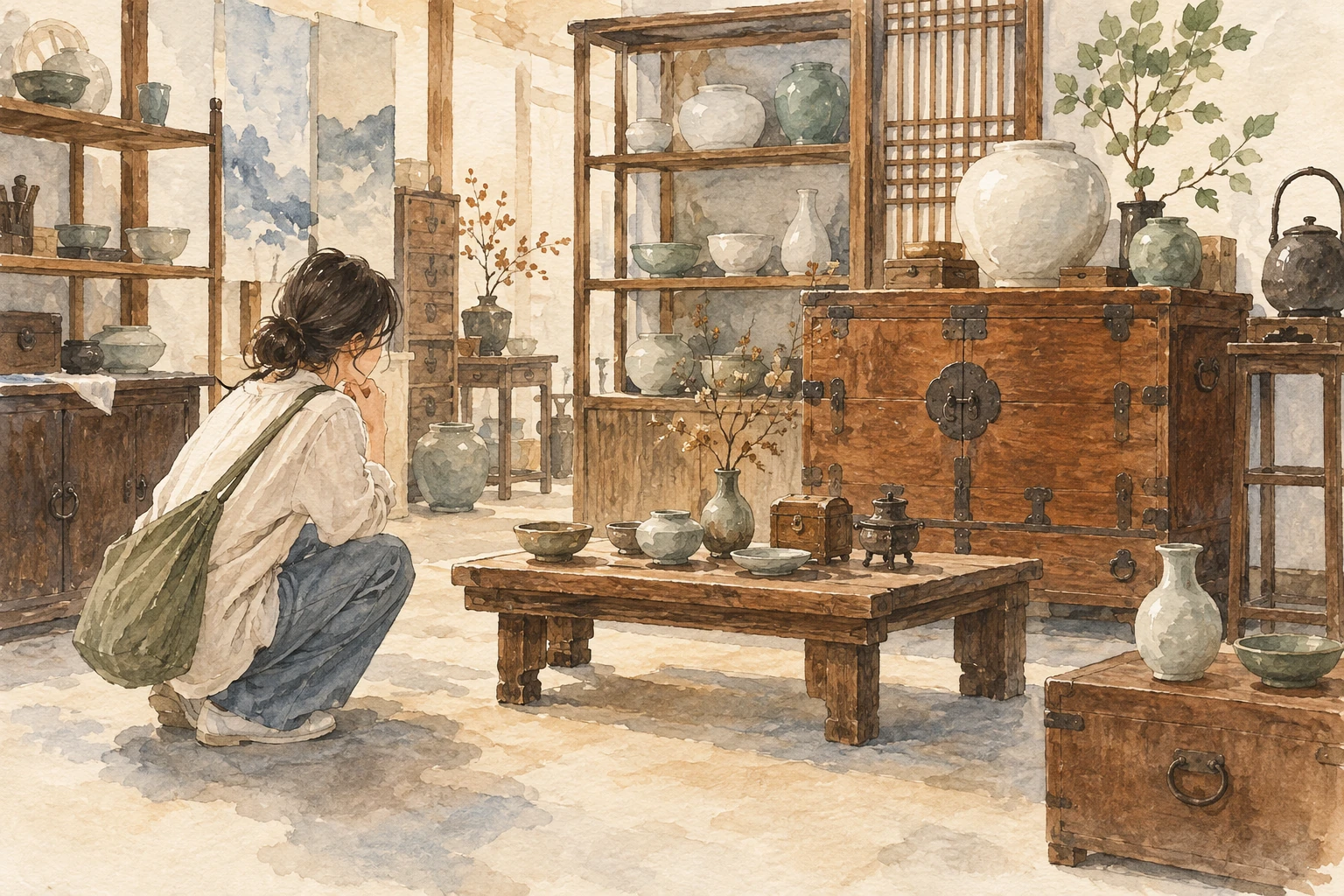
The market’s stock ranges from old furniture and doors to ceramics, textiles, paintings, inkstones, brassware, hairpins and books. 1 Objects fill the shops and continue into building corridors and out onto the street. 1 That variety puts domestic objects alongside paintings and furniture, giving a beginner several different starting points for browsing. 1
Shopkeepers’ explanations were part of the pleasure for visitor Bae Eun-ji, interviewed in Hankyung’s March 31, 2026 report. 3 Visiting with a friend, she said she enjoyed the detailed explanations and became interested in antique art during the visit. 3 After looking around four or five shops, objects she had previously found difficult to approach felt more familiar. 3 Her account offers a modest reason to explore before deciding what, if anything, to collect: familiarity came through browsing and conversation. 3
Gobokhui: furniture and a roof-tile detail
Gobokhui opened in 2025 in a converted storage space that had housed its founders’ collection of furniture and antiques. 1 The couple’s interest in Western modern vintage furniture had led them toward Korean antiques, a connection reflected in the shop’s combination of Joseon pieces and modern design. 1
One distinctive detail is in the atelier’s small room: a blue door with a mountainlike motif rising above its frame. 1 The design reinterprets a mangwa, an ornamental tile installed at the end of a roof ridge, from the collection. 1 Here, the old object contributes a shape to the room itself, extending the relationship between antiques and contemporary interiors beyond furniture placement. 1
Gobokhui also operates a nearby small-object shop featuring pieces intended to be kept close and enjoyed in everyday life. 1 This gives its presentation a smaller scale alongside the antique furniture and architectural detail. 1
OF: a painting becomes a room
OF takes its inspiration from chaekgado, traditional paintings that convey a person’s taste, knowledge and approach to life through furniture, books and other belongings. 1 Its wall furnishings bring together old ceramics, furniture, everyday crafts, small objects and contemporary artists’ works. 1 Where Gobokhui connects furniture across periods, OF uses this painting tradition to bring different kinds of objects into one display. 1
The broader practice extends to new uses for old things. 2 In its April 2026 feature, IMBOLDN described a speaker placed on a Joseon wooden chest and tea utensils and cups arranged in ritual vessels. 2 These examples show how an antique can remain part of daily life while serving a different purpose from its original one. 2
Put the reported prices in context
IMBOLDN’s April 22, 2026 report described prices ranging from small accessories in the 10,000–19,999 won band to antique furniture costing tens of millions of won. 2 Those figures provide dated context across very different kinds of objects, rather than a current quote for a particular piece. 2
The range of displays is equally useful for choosing a browsing style: crowded shops offer many objects to discover, while the more selective showroom arrangements make individual combinations easier to see, down to a wooden chest sharing space with a speaker. 2
Sources
- 문갑 옆 빈티지 의자, 현대판 책가도… 일상과 만나 되살아나는 옛것[김대균의 건축의 미래]
- 요즘 사람들이 답십리 고미술 상가로 가는 이유는? – 임볼든(IMBOLDN)
- "할배 취미인 줄 알았는데"…2030, 주말마다 푹 빠졌다 [현장+]
About the Author