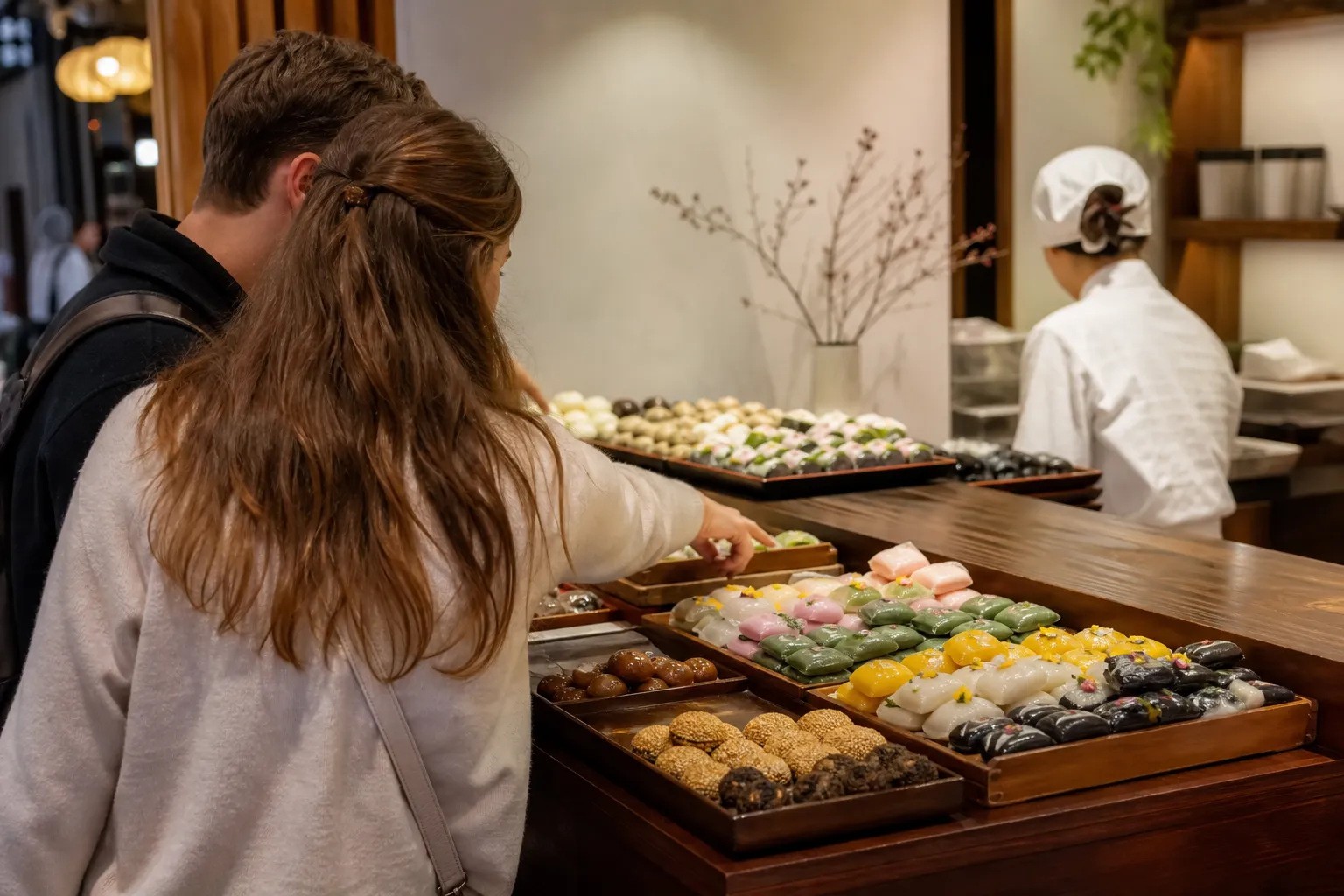
Ajindang Rice Cake Shop in Nakwon-dong has become a small but telling example of how foreign visitors are discovering Korean Rice Cakes in Seoul. A Korea Economic Daily report from April 14, 2026 described foreign tourists at the shop eating rice cakes and yakgwa, with about 30 kinds of rice cakes on display, including injeolmi and chapssaltteok that were noted as popular among international customers. 1
This is not just a story about one dessert shop. It also sits inside a wider travel and food moment: more foreign visitors are coming to Korea, and Korean traditional snacks are becoming easier for newcomers to notice, understand, and buy.
Why Ajindang Rice Cake Shop Is Catching Foreign Visitors’ Attention
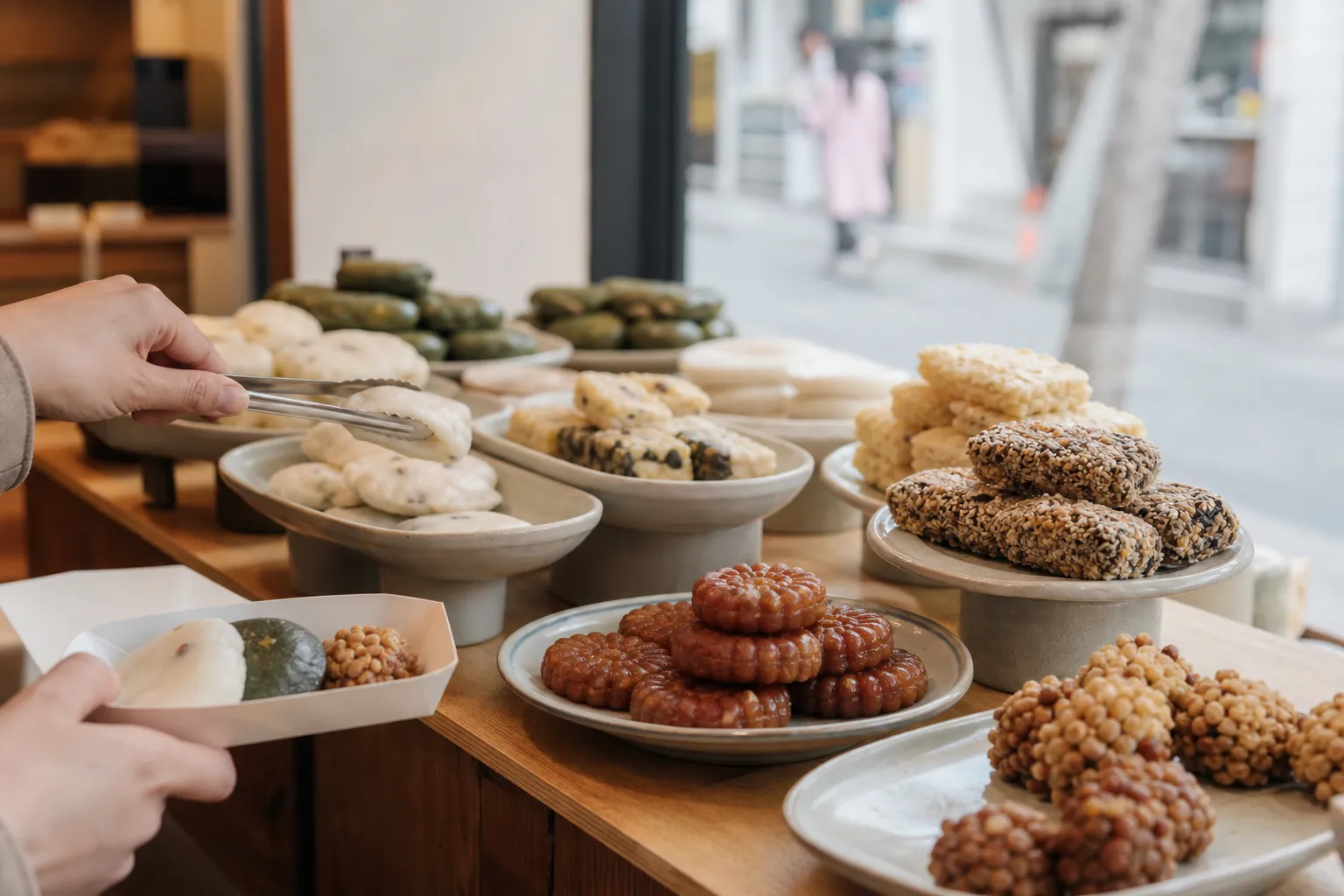
The appeal of Ajindang Rice Cake Shop starts with something very simple: the food is visual, tactile, and approachable. Rice cakes come in different shapes, colors, fillings, coatings, and textures, so even visitors who do not know the Korean names can still browse with curiosity. The Korea Economic Daily report described a shop scene where foreign tourists were eating rice cakes and yakgwa, a traditional Korean sweet often associated with a rich, syrupy texture. 1
For travelers, Korean Rice Cakes can be both familiar and unfamiliar at the same time. They are made from rice, a staple ingredient many visitors already know, but the chewy texture and traditional presentation can feel distinctly Korean. That contrast makes them a natural entry point into Korean dessert culture.
Ajindang also appears to be responding to the needs of international customers in practical ways. The report noted that the shop had signs in English showing consumption-period information, a small detail that matters when visitors are deciding what can be eaten immediately, carried around, or taken back to lodging. 1
The foreign customer presence is significant enough to show up in the shop’s sales mix. Cho Mi-soon, identified as the owner, said foreign-customer sales had been around 10% before COVID-19 and had risen to as much as 60%. 1 That figure suggests a notable shift in who is buying traditional Korean snacks in the area.
A Traditional Snack Shop in a Bigger K-Food Moment
Ajindang’s popularity with international visitors makes more sense when placed next to broader food and tourism data. South Korea’s Ministry of Agriculture, Food and Rural Affairs said K-Food+ exports reached $3.35 billion in the first quarter of 2026, up 3.5% from the same period a year earlier. Rice-processed food exports rose 9.4%, with the ministry pointing to gluten-free demand in the United States and the popularity of K-street food in ASEAN markets as factors behind the increase. 2
That export data does not mean every visitor is coming to Seoul for rice cakes, of course. But it does show that rice-based Korean foods are gaining international commercial attention beyond Korea’s borders. When tourists later encounter a dedicated rice cake shop in Seoul, the category may feel less obscure than it once did.
Tourism numbers help explain the foot traffic side of the story. Segye Ilbo reported, citing the Ministry of Culture, Sports and Tourism, that 4,759,471 foreign visitors came to Korea in the first quarter of 2026, the highest first-quarter figure on record. March alone brought about 2.06 million inbound visitors, also described as a monthly record, with growth from China, Japan, Taiwan, the United States, Europe, and other long-distance markets. 3
In that context, a shop like Ajindang can become a cultural stop without needing to be a formal tourist attraction. A visitor may be exploring central Seoul, looking for traditional snacks, or following recommendations from social platforms. One visitor, Mao Xin, was quoted as saying they came after seeing Xiaohongshu, while another visitor, Luna, said they visited because they wanted to taste traditional Korean desserts. 1
What Visitors Can Know Before Going
Ajindang is presented by FKI TOWER as a traditional snack brand that combines the hanok image of Ikseon-dong with a modern sensibility. The same page describes the brand as handling Korean traditional snacks such as rice cakes, wagashi-style sweets, gaeseong juak, and dried persimmon rolls, while also introducing traditional snacks to foreign visitors. 4
For readers trying to place the shop geographically, Tabling lists Ajindang Rice Cake Shop as a Jongno-gu location at 34-6 Donhwamun-ro 11-gil, Jongno-gu, Seoul. Its listed hours are Monday, Wednesday, Thursday, and Friday from 10:00 to 22:30; Tuesday from 11:00 to 22:30; and Saturday and Sunday from 10:00 to 22:00, with no regular closing day shown on the listing. 5
Those details are useful because rice cakes are not always treated like ordinary shelf-stable souvenirs. Some are best eaten fresh, and the shop’s English consumption-period signs, noted in the Korea Economic Daily report, point to that practical reality. 1 If you are new to Korean Rice Cakes, it helps to think of them less as packaged candy and more as fresh traditional desserts with different textures and ideal eating windows.
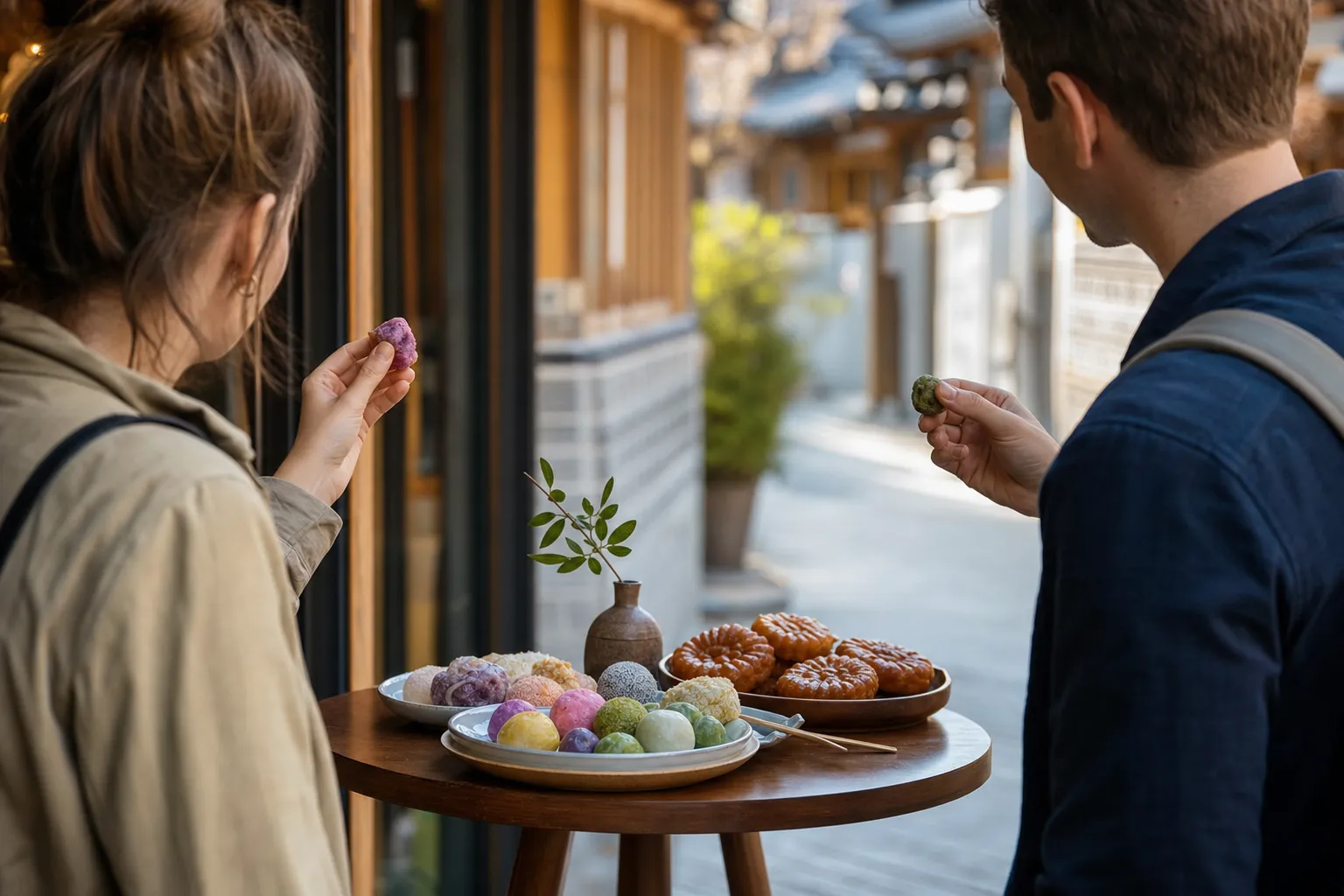
Ajindang Rice Cake Shop’s foreign-customer story is appealing because it is grounded in ordinary choices: browsing sweets, reading signs, following social media, and wanting to taste something traditional while in Korea. The reported rise in foreign-customer sales, the presence of roughly 30 rice cake varieties, and the broader growth in inbound tourism all point in the same direction: Korean traditional snacks are becoming part of how many visitors experience Seoul, one chewy bite at a time.
References
- "쫀득한 식감 굿"…입이 '떡' 벌어진 외국인들 (한국경제 via 다음뉴스, 2026-04-14)
- 'K-푸드+' 수출 33억 5000만 달러, 3.5%↑…가공·신선 모두 호조 (대한민국 정책브리핑 / 농림축산식품부, 2026-04-03)
- 2026년 1분기 방한 외국인 관광객 ‘역대 최대’ (세계일보, 2026-04-16)
- 아진당 (FKI TOWER)
- 아진당 떡상점 – 테이블링 (테이블링)
About the Author