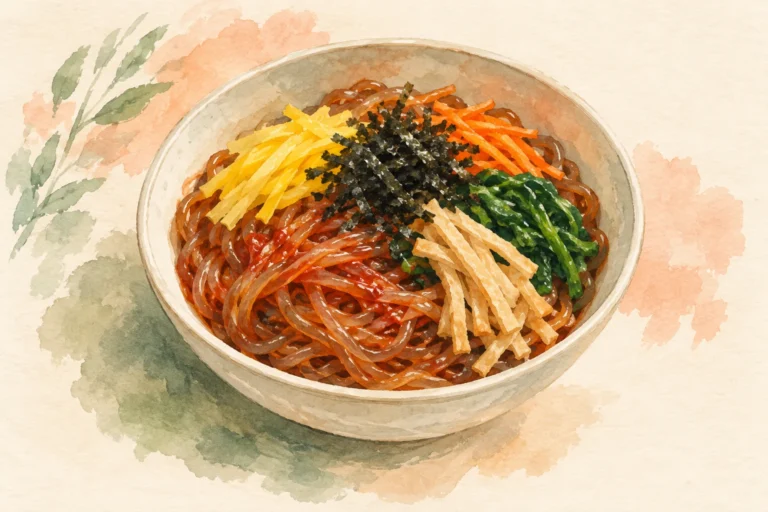
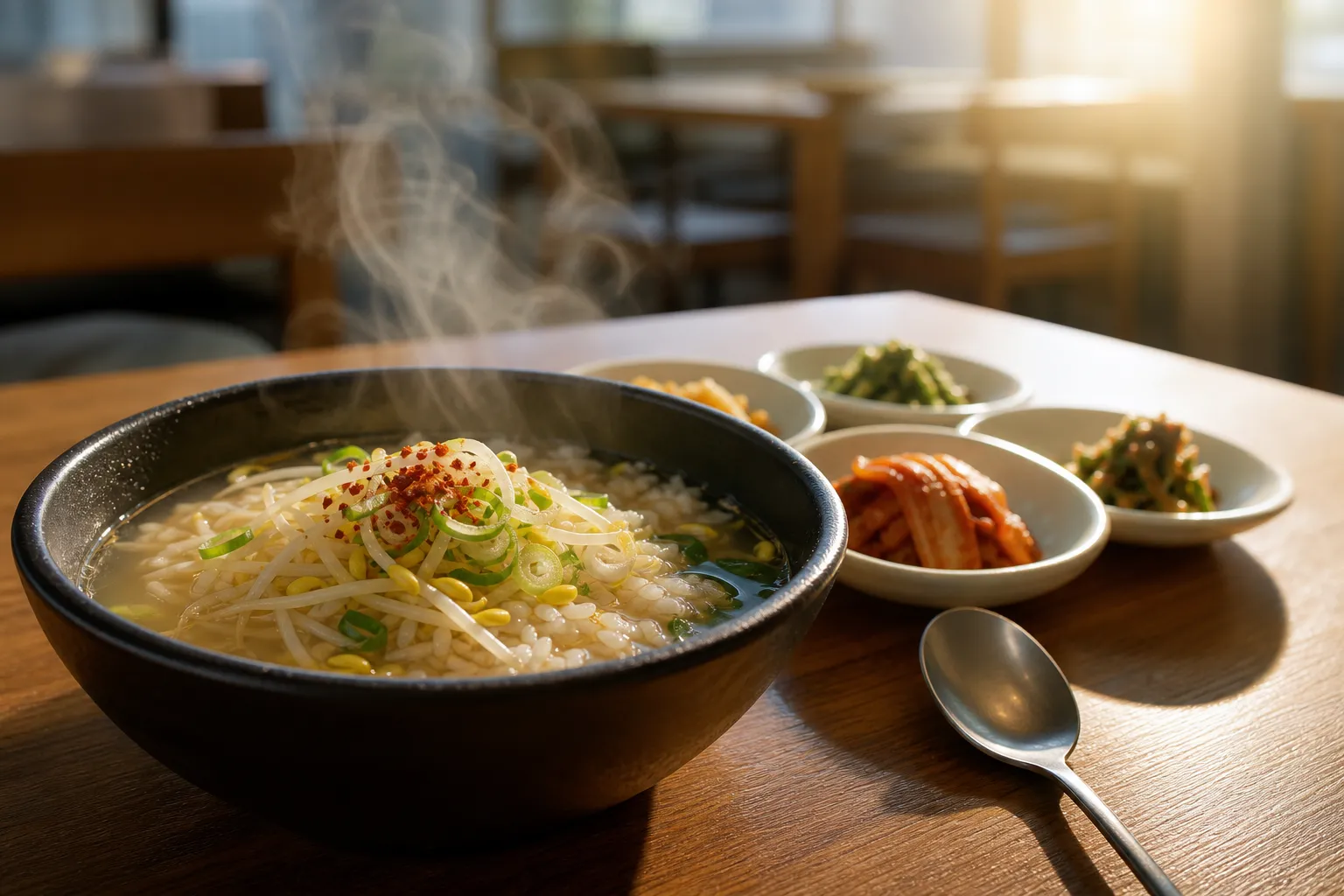
For a Sambaekjip Jeonju breakfast, the central idea is simple: a hot bowl of Jeonju kongnamul gukbap, served at a restaurant whose original branch is officially listed as open 24 hours. The main branch is located at 454-1 Gosa-dong, Wansan-gu, Jeonju, Jeonbuk, with the phone number 063-284-2227, making it a practical option for travelers planning an early meal as well as locals looking for a familiar morning bowl.1
Sambaekjip Jeonju Breakfast and the 24-Hour Appeal
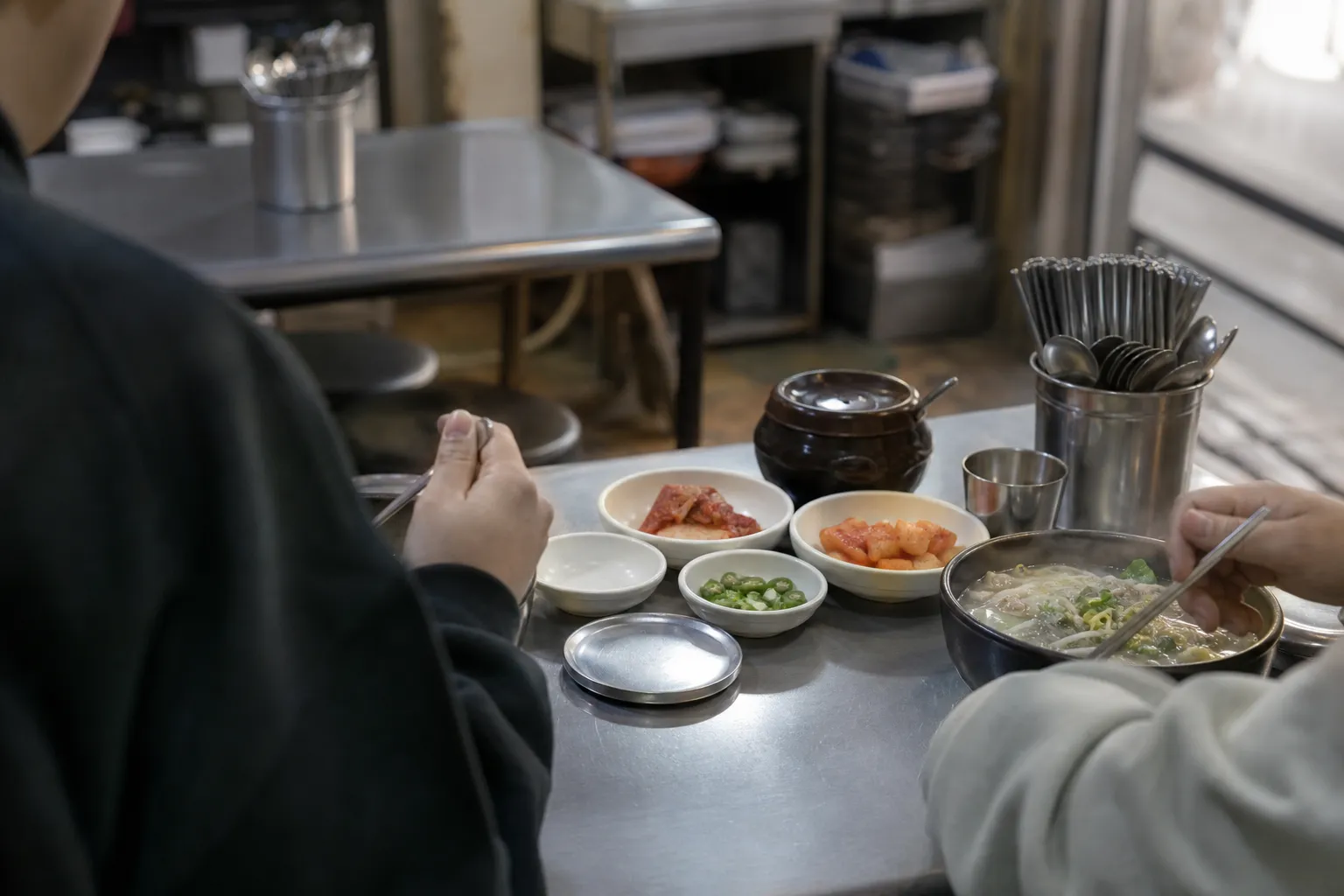
Breakfast at Sambaekjip Jeonju is closely tied to the everyday comfort of kongnamul gukbap, or soybean sprout soup with rice. The Korea Tourism Organization introduces the Jeonju main branch as a restaurant that has continued the tradition of this local dish, and it connects the restaurant’s name to founder Lee Bong-sun, who was said not to sell more than 300 bowls a day.2 That origin story gives the place a memorable identity: not just a shop that serves soup, but one associated with a measured, old-fashioned sense of care.
The breakfast angle matters because kongnamul gukbap has long worked as both a morning meal and a restorative bowl. Jeonbuk Ilbo reported that Sambaekjip opened in 1947 and described it as an original-style Jeonju kongnamul gukbap restaurant. The same article noted that the main branch had been popular enough to sell about 1,500 bowls a day and had served office workers on their way to work as both breakfast and hangover soup.3
That combination explains why Sambaekjip Jeonju fits naturally into a morning itinerary. If you are starting a day of sightseeing in Jeonju, the appeal is not a complicated tasting menu or a slow brunch format. It is a direct, warming meal built around rice, broth, soybean sprouts, seasoning, and egg, rooted in a local food tradition that is easy to understand even if you are encountering it for the first time.
What Makes the Sambaekjip-Style Bowl Different
Jeonju kongnamul gukbap is not presented as a single uniform style in the source material. The Korea Tourism Organization’s travel article separates it into Sambaekjip-style and Nambu Market-style versions. In the Sambaekjip-style description, rice, boiled soybean sprouts, chopped kimchi, and broth are placed in an earthenware bowl and boiled, with an egg added during the cooking process.4
That detail is helpful for breakfast planning because it tells you what kind of bowl to expect: hot, cooked together, and built to be eaten as a full meal. The official Korea Tourism Organization page for the main branch also describes the preparation with rice, soybean sprout soup, seasoning, and raw egg boiled together.2 In other words, the dish is not just soup served beside rice; the rice and broth are part of the same warming bowl.
The Chosun Ilbo also discussed Jeonju’s kongnamul gukbap culture and mentioned the main branch’s representative boiled-style kongnamul gukbap. Its January 14, 2020 coverage referred to a scene at the Jeonju main branch where the dish was cooked using direct heat.5 For readers trying to picture the breakfast experience, the important point is that the bowl is served in a cooked, heat-forward style rather than as a light side dish.
There is also a reason the dish is often linked with the morning after drinking. Big Data News described Sambaekjip’s kongnamul gukbap as a one-bowl meal made with broth, soybean sprouts, and rice, and connected it with demand for hangover food on the morning after drinking.6 That does not mean you need any special context to enjoy it. It simply shows how the dish sits in Korean food culture: practical, filling, and especially welcome when the body wants something clear and warm.
A Restaurant With a Long Jeonju Story
Sambaekjip’s breakfast reputation is easier to appreciate when you place it within the restaurant’s longer history. Jeonbuk Ilbo identified the restaurant as having opened in 1947, while Big Data News later described the main branch as a 70-year-tradition kongnamul gukbap specialist located on Jeonju’s Movie Street.36 Those descriptions point to the same broad idea: this is a Jeonju restaurant known less for novelty than for continuity.
The founder story also matters. The Korea Tourism Organization’s explanation of Lee Bong-sun and the 300-bowl origin gives the name “Sambaekjip” a human-scale background.2 Even without adding anything beyond the available sources, that makes the restaurant’s identity feel more specific than a generic famous eatery. The name itself is tied to a limit, a daily rhythm, and a remembered way of serving.
One short quote from the restaurant’s leadership captures that continuity. Cho Jung-rae, identified by Jeonbuk Ilbo as a Sambaekjip representative, said the restaurant would continue “the taste of care made by the two grandmothers,” even as times change.3 It is a modest line, but it fits the food: a bowl that depends on steady repetition rather than flashy reinvention.
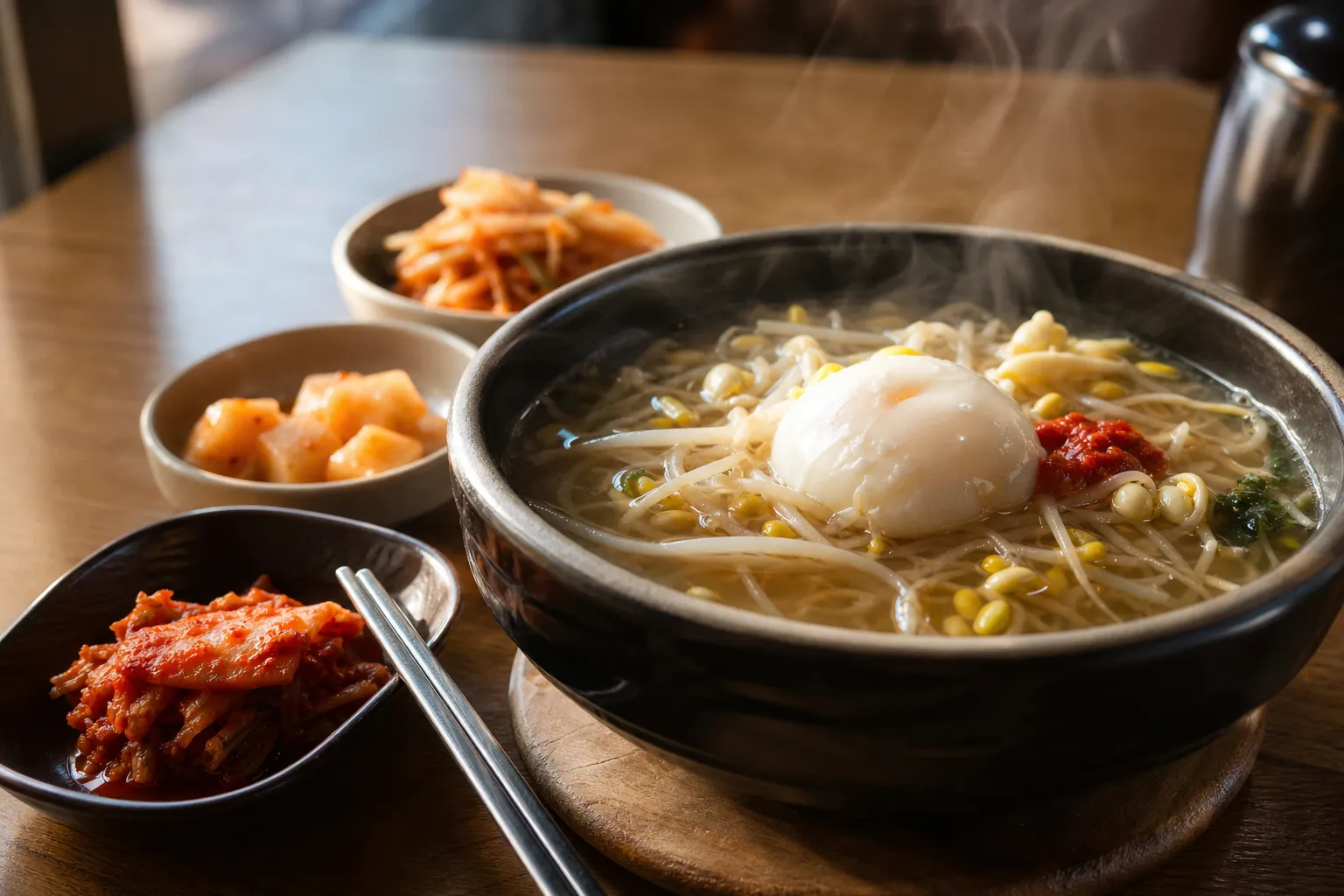
For a traveler, the most useful takeaway is straightforward. Sambaekjip Jeonju is officially listed as a 24-hour restaurant at its Jeonju main branch, and its best-known breakfast context is kongnamul gukbap: a hot Jeonju soybean sprout rice soup associated with workday mornings, hangover recovery, and local food tradition. If your Jeonju plans call for an early, source-backed breakfast choice, Sambaekjip Jeonju stands out because the available records connect its location, hours, dish style, and long history in one clear place.
References
- 정성으로 담아내는 잊을 수 없는 맛 매장찾기 – 삼백집 (삼백집 공식 홈페이지)
- 삼백집(전주본점)> 여행지 (대한민국 구석구석)
- 〖4. 전주 삼백집〗66년 전통 콩나물국밥 원조 (전북일보, 2013-03-05)
- 무엇과도 비교할 수 없는 깊고 시원한 맛 ‘전주 콩나물국밥’ (대한민국 구석구석)
- [뉴트로 푸드] 100년전 아재도 5전에 전주콩나물국밥·막걸리 한사발 '뚝딱' (조선일보, 2020-01-14)
- 전주 콩나물국밥 ‘삼백집’, 신규매장 상암MBC몰점 오픈 (빅데이터뉴스, 2018-09-06)
About the Author