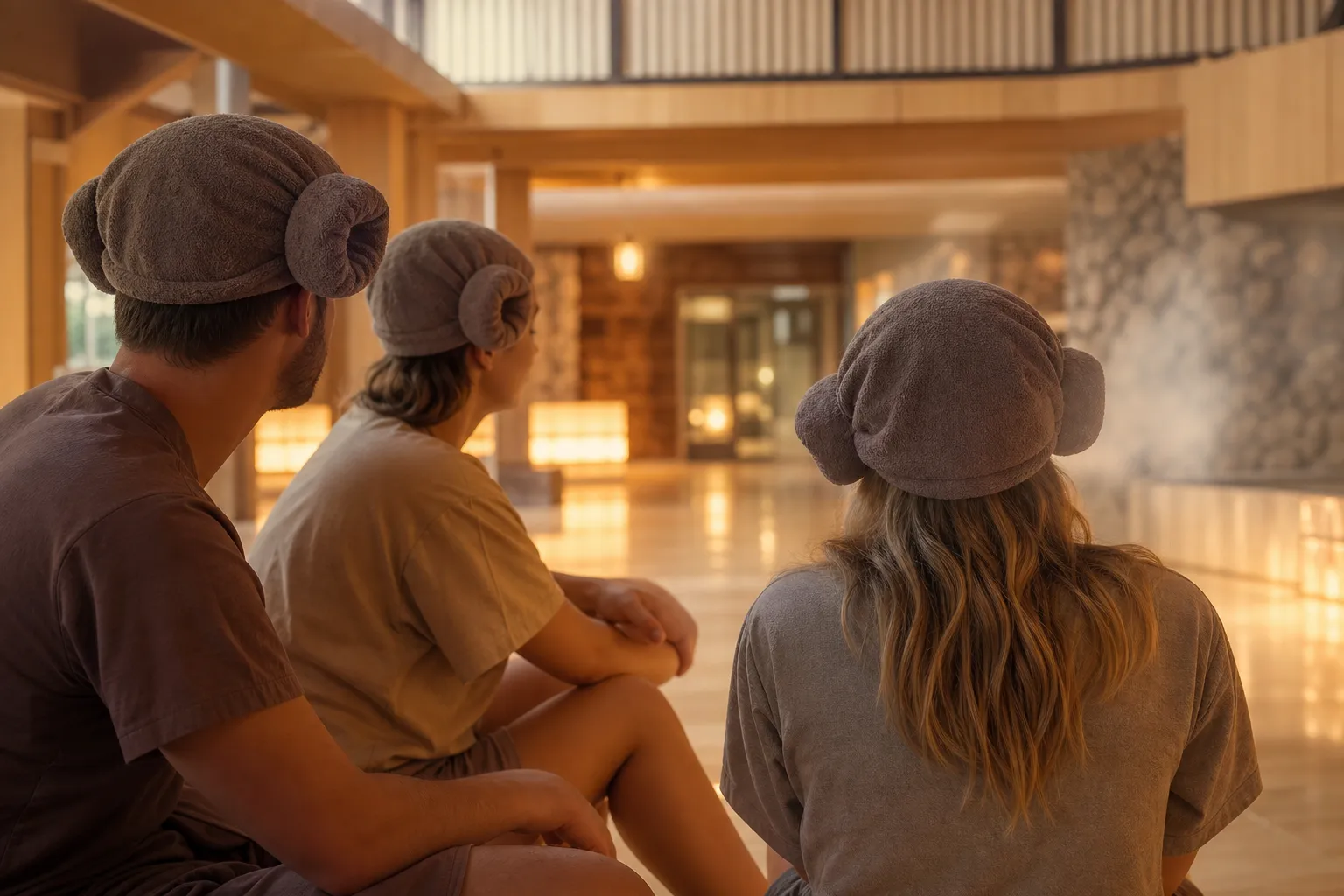
Foreign visitors are increasingly adding Korean jjimjilbangs to their travel plans, turning an everyday sauna and rest-space routine into a hands-on cultural stop. The appeal of Jjimjilbang Culture is practical as much as cultural: travelers can experience hot rooms, cold rooms, rest areas, Korean sauna snacks, and in some cases even budget overnight stays in one place.
Reports from Seoul and other major visitor areas show that jjimjilbangs are no longer just local facilities. During the 2026 Lunar New Year holiday period, a Seoul jjimjilbang near Dongdaemun History & Culture Park Station had multilingual notices and stored suitcases, while Chinese group tourists and Malaysian visitors used the facility as part of their itinerary. A front-desk employee was quoted as saying, “There are many foreign tourist guests.”1
Why Foreign Visitors Are Choosing Jjimjilbangs
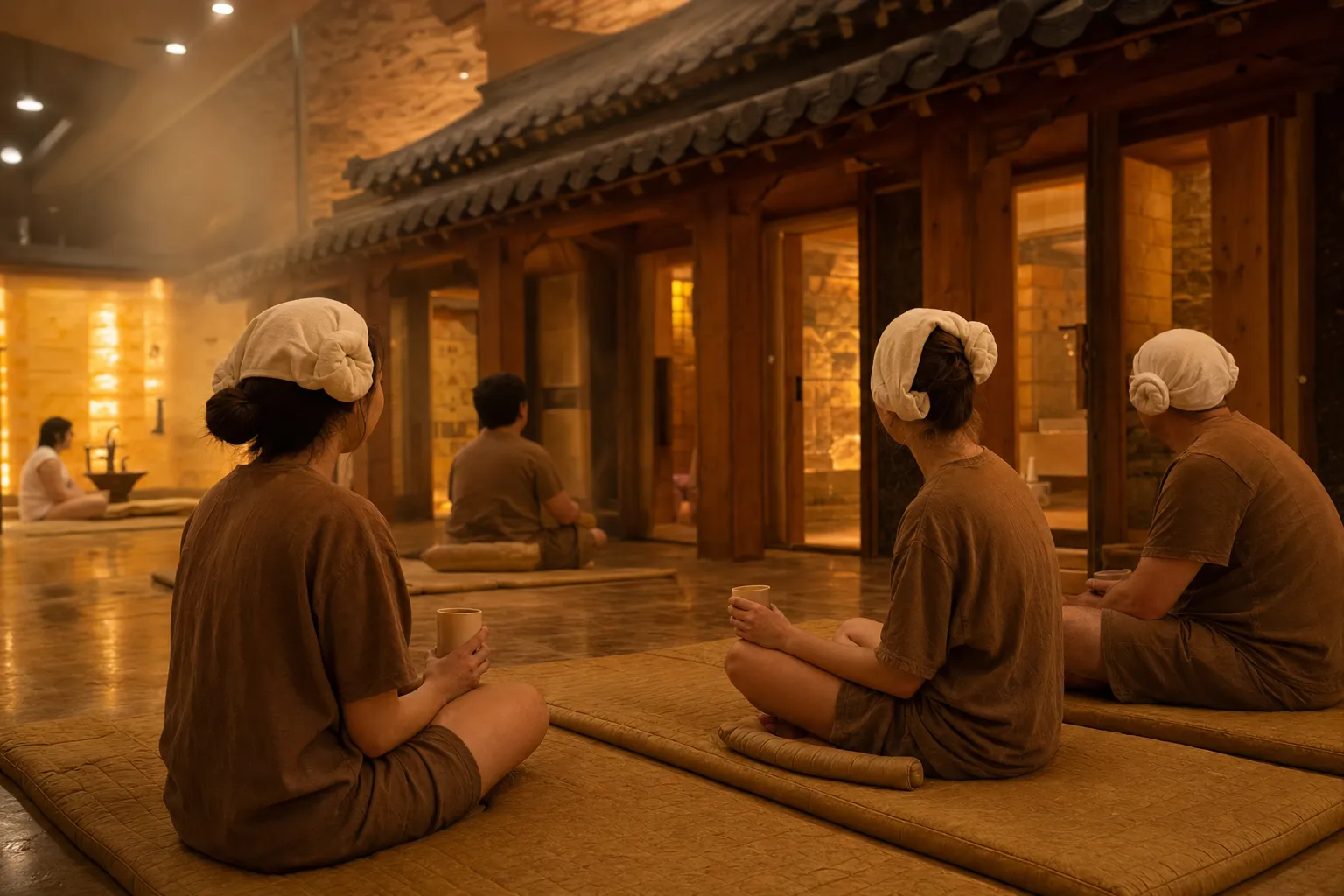
The clearest reason to understand this trend is that jjimjilbangs fit the current demand for experiential travel. They are not simply places to wash or rest. Yonhap described a jjimjilbang covered in its reporting as a Korean everyday-experience venue with features such as a hanjeungmak hot room, an ice room, and massage-chair rest areas. On the day of that report in September 2025, one Seoul facility appeared to have foreign visitors making up about half of its customers even though it was a Monday, and notices had been translated into Chinese.2
Korean pop culture and video content are also helping turn sauna visits into travel goals. Maeil Business Newspaper reported that jjimjilbang and Korean body-scrub culture have spread as Korea travel-course experiences when combined with K-pop and screen content. In the same report, a Thai tourist, Katun, was quoted as saying that she had put a jjimjilbang into her Korea travel course.3
The broader visitor numbers give useful context. SBS reported Seoul city data showing that 1.36 million foreign tourists visited Seoul in July 2025, a record high for that month. From January through July 2025, cumulative foreign visitors to Seoul reached 8.28 million, up 15.9% from the same period a year earlier. Seoul officials linked the growth partly to experience-focused content and interest in local everyday life among global MZ-generation travelers.4
What to Expect Inside a Korean Jjimjilbang
For first-time foreign visitors, the experience is best understood as a sequence of shared facilities rather than a single sauna room. Source reports describe hot-room experiences such as bulgama-style heat rooms, ice rooms for cooling down, rest spaces, massage-chair areas, and casual food items. Asia Economy reported examples of tourists from China, Japan, Vietnam, India, and other countries enjoying sikhye, roasted eggs, and hot kiln-style jjimjilbang experiences.5
The practical setup can also make jjimjilbangs attractive during a travel day. The Korea Economic Daily reported that at a Seoul jjimjilbang near Dongdaemun History & Culture Park Station, suitcases were being stored and multilingual guidance was visible. Its article headline referenced a daily overnight cost of 16,000 won, presenting the facility as a low-cost stay option for some visitors during the 2026 Lunar New Year travel period.1
Visitors should still treat each facility as different. The source material confirms that some sites have multilingual signs, suitcase storage, hot rooms, cold rooms, rest areas, massage chairs, snacks, and overnight-use appeal, but it does not provide a universal rule for every jjimjilbang in Korea. If a traveler needs a specific service, such as luggage storage, overnight access, or language support, the available facts support checking that facility’s own guidance rather than assuming all venues operate the same way.
A jjimjilbang can also include experiences that feel unfamiliar to visitors from countries without a similar public bath culture. The reported reactions suggest curiosity more than discomfort. In Yonhap’s coverage, a Taiwanese visitor said, “It was hot, but it was a fun experience.”2 That brief response captures the likely first impression for many newcomers: the heat can be intense, but the format is memorable because it is social, relaxed, and distinctly Korean.
How to Plan a First Visit
The most practical approach is to choose a jjimjilbang that already appears to serve travelers. Reports mention facilities in Seoul tourist areas with multilingual notices and visible luggage storage, which can reduce confusion for a first visit. Areas near major transport and shopping districts may be easier for tourists because they already handle foreign customers, including group visitors.1
Plan the visit around the experience you want. If the goal is a cultural stop, set aside time for hot rooms, cooling areas, rest spaces, and simple jjimjilbang foods such as sikhye and roasted eggs, both of which appeared in reporting on foreign guests. If the goal is rest during a long itinerary, prioritize places where overnight or extended use is clearly available. The source material supports the idea that some travelers use jjimjilbangs as part of an itinerary, but it does not establish a single national booking or entry process.
Demand data suggests that this is not a niche curiosity anymore. Hana Card analysis cited by The Korea Economic Daily found that foreign spending in sauna, jjimjilbang, and bathhouse businesses in the third quarter of 2025 rose 37% compared with the same period a year earlier.1 Chosun Hotels & Resorts data cited by Maeil Business Newspaper also showed the foreign-customer share at Aquafield and Busan Centum Spa Land rising from 8.7% in 2023 to 15.8% in 2024 and 20.2% in 2025.3
Quick FAQ
Are jjimjilbangs popular with foreign tourists in Korea?
Yes. Multiple reports describe foreign tourists visiting jjimjilbangs as part of Korean travel itineraries, and cited spending and customer-share data show growth in foreign demand for sauna, jjimjilbang, and bathhouse experiences.13
What parts of the experience are most often mentioned for visitors?
Reported visitor experiences include hot rooms, ice rooms, massage-chair rest areas, sikhye, roasted eggs, bulgama-style heat rooms, multilingual notices, and in some facilities, suitcase storage or overnight-use appeal.25 For foreign travelers, a jjimjilbang visit works best when approached as a practical cultural experience rather than a checklist attraction. Choose a traveler-friendly facility, confirm the services you need, and leave enough time to move between heat, rest, food, and cooling spaces at an unhurried pace.
References
- "하루 숙박비 1만6000원 실화냐"…한국 온 중국인 '바글바글' [현장+] (한국경제, 2026-02-24)
- [샷!] "가장 편안한 24시간 도전이었다" (연합뉴스, 2025-09-25)
- “어서와 K-때밀이는 처음이지?”…찜질방·세신숍에 반한 외국인들 (매일경제, 2026-03-29)
- '케데헌' 열풍에 7월 서울 온 외국인 관광객 136만 '역대 최대' (SBS, 2025-09-02)
- "으어 시원하다" 찜질방서 몸 지지고 계란까는 외국손님들 (아시아경제, 2023-06-13)
About the Author