Mangwon Market’s foreign visitor fixed-price push is now part of a wider K-Tourism Market service campaign. For travelers, the practical point is simple: Mangwon Market is being positioned as a more transparent, foreigner-friendly traditional market, with participating merchants pledging fixed prices, card payment welcome, cleanliness, and friendlier service.
The campaign was launched on May 14, 2026, at Mangwon Market in Mapo-gu, Seoul, with the Ministry of Culture, Sports and Tourism and the Korea Tourism Organization joining 11 selected traditional markets for a Smile Campaign kickoff event. At the event, merchant association leaders and young merchants announced a joint declaration covering price transparency, card payments, hygiene management, and customer service for foreign tourists.1
Mangwon Market Fixed Prices for Foreign Visitors
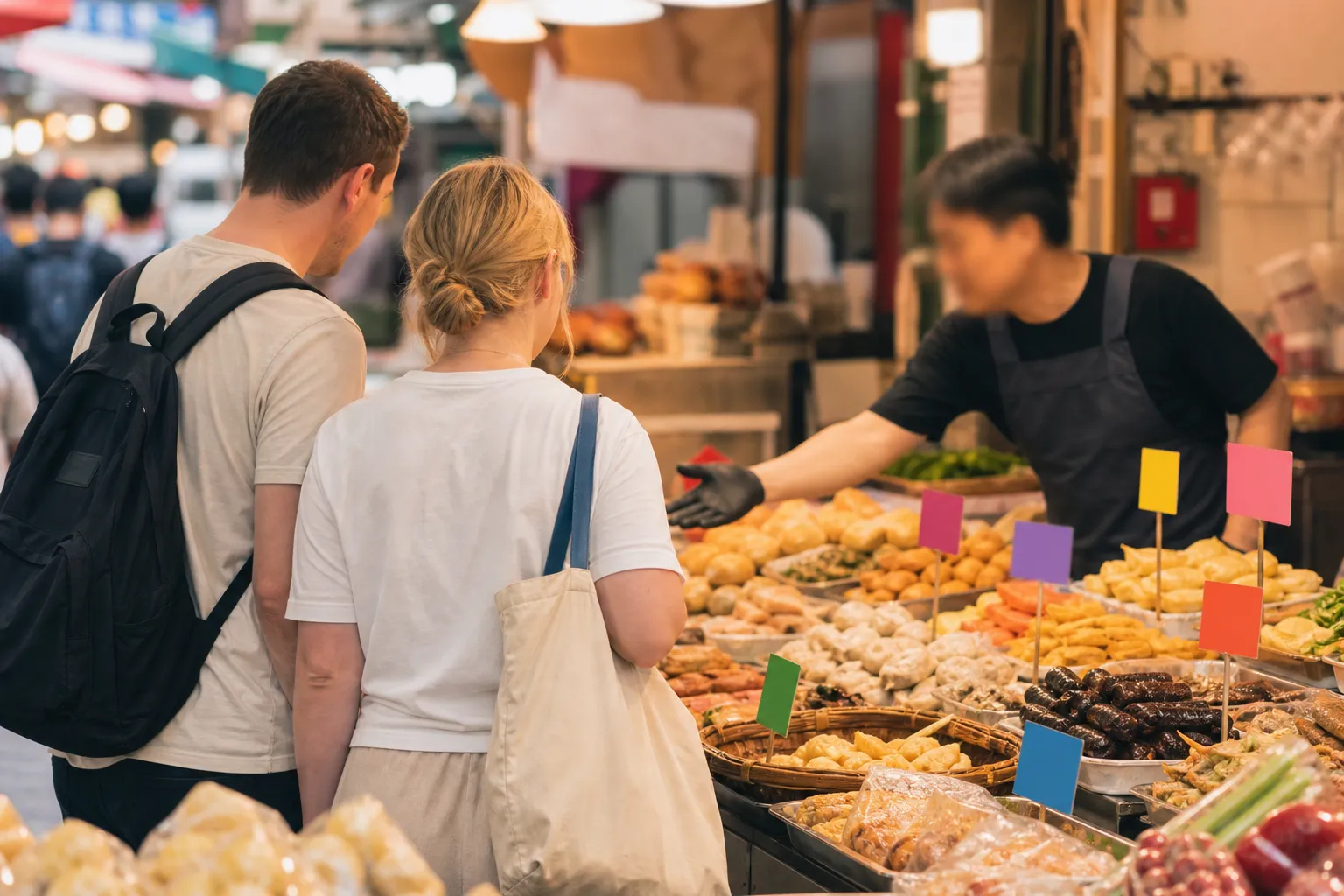
The phrase “Mangwon Market Fixed Prices” refers to the new emphasis on visible, reliable pricing rather than bargaining uncertainty or surprise charges. The pledge is especially relevant because the campaign was framed around improving the experience for foreign tourists visiting traditional markets, where language barriers and unfamiliar payment customs can make shopping confusing.
The May 14 declaration included four service commitments: fixed prices, a welcome for card payments, clean hygiene management, and friendly responses to customers. NewsPim reported that the merchant association heads of the 11 markets signed a joint declaration covering these four service improvements.2 Sports Donga also reported that about 50 people, including merchant association leaders and young merchants, attended the Mangwon Market event and joined the declaration.3
For visitors, the most useful way to read the campaign is as a checklist for smoother shopping. Look for clearly displayed prices, ask before ordering if a price is not visible, and use card payment where accepted. The campaign does not provide a source-backed list of individual stall prices, so travelers should not assume every item across the market has a uniform price. What is confirmed is the service direction: participating market groups publicly committed to reducing overcharging concerns and improving visitor handling.
The focus on transparent pricing is not separate from the rise in foreign traffic. Hankyung reported from on-site coverage dated March 30, 2026, that foreign visits to Mangwon Market had increased 43% year on year, while visits in January and February 2026 were about double the same period a year earlier.4 That growth helps explain why a clearer visitor system has become more important.
What Foreign Visitors Can Expect at the Market
Mangwon Market was selected as one of the second-phase K-Tourism Market locations. Other selected markets named in coverage include Gyeongdong Market in Seoul, Haeundae Market in Busan, Seomun Market in Daegu, and Sinpo International Market in Incheon.5 The program is meant to support traditional markets as representative local tourism destinations, not only as places for everyday shopping.
For non-Korean-speaking visitors, the most practical improvement already reported is multilingual product and menu labeling. Hankyung reported that Mangwon Market merchants had added Korean, English, Japanese, and Chinese wording to display stands and menus to improve convenience for foreign customers.4 That matters because food-market purchases often move quickly: visitors need to know what an item is, how much it costs, and whether payment will be easy before a line forms behind them.
The campaign also connects market shopping with nearby tourism. At the May 14 event, a demonstration showed a route concept described as buying groceries at the market and then moving to Mangwon Hangang Park for a picnic.2 For visitors, that suggests a simple half-day plan: shop for food at Mangwon Market, confirm prices before purchase, pay by card where available, and continue to the riverside park.
Mangwon Market’s selection had been announced earlier by Mapo-gu on March 10, 2026. Coverage said the market received strong evaluations for street food, distinctive shops, foreign tourist-friendly infrastructure, and links with the local commercial district. Mapo-gu also planned facility modernization work in 2026, including arcade repair, and linked promotion with Mangwon World Cup Market.6
How to Use the Fixed-Price System in Practice
A practical visit should begin with visible price checking. If a menu or display shows prices in multiple languages, use that as the baseline before ordering. If the price is not clear, ask first rather than waiting until after the item is prepared. The confirmed campaign pledge supports price transparency, but the source material does not provide enforcement procedures, refund rules, or a complaint hotline.
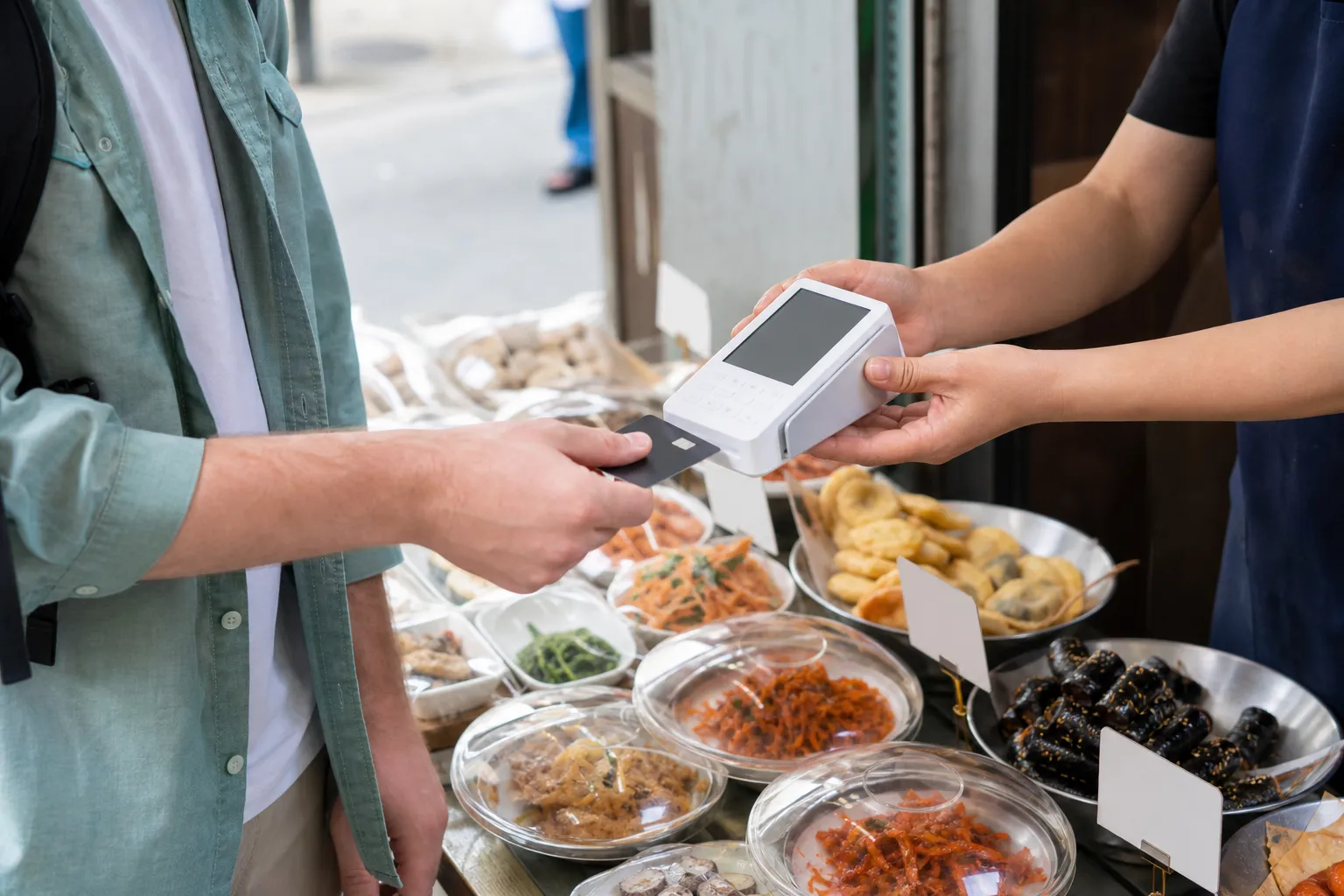
Card payment is another key part of the declared service shift. The declaration specifically included welcoming card payments, which is useful for visitors who may not want to carry much cash.1 Still, the available source material does not confirm that every stall accepts every card type, so it is sensible to check before buying.
The campaign also places hygiene and friendly service alongside pricing. That is important because the foreign visitor experience is not only about avoiding overcharging. It includes whether food areas feel clean, whether staff can respond clearly, and whether visitors feel comfortable asking basic questions.
Korea Tourism Organization president Park Sung-hyuk said that merchants’ smiles and kindness become foreign tourists’ first impression of K-tourism, and that the organization would support K-Tourism Markets as global attractions.1 Kang Dong-jin, tourism policy director at the Ministry of Culture, Sports and Tourism, also described the Smile Campaign as more than a slogan, saying it could become a turning point through merchants’ voluntary participation and practice.2

Quick FAQ
Does Mangwon Market now have fixed prices for foreign tourists?
The confirmed pledge is that participating K-Tourism Market merchants declared a fixed-price approach as part of a four-part service campaign. The sources do not provide a stall-by-stall price list or say that every item in the market has one identical fixed price.
Can foreign visitors pay by card at Mangwon Market?
Card payment welcome was included in the joint declaration at the May 14, 2026 campaign event. The available source material does not confirm acceptance details for every stall, so visitors should check before ordering. Mangwon Market’s fixed-price push is best understood as a practical service upgrade for a market already drawing more foreign attention. The key visitor takeaway is to use visible prices, confirm unclear costs before buying, look for multilingual menus, and treat the K-Tourism Market campaign as a sign that Mangwon Market is actively preparing for more international shoppers.
References
- K-관광마켓 11개 전통시장, 친절·정찰제로 외국인관광객 맞는다 (연합뉴스, 2026-05-14)
- "바가지 근절 나선다"…문체부, 망원 등 전통시장 11곳 'K-관광마켓' 2기 선정 (뉴스핌, 2026-05-14)
- 한국관광공사, 전통시장 ‘정찰제’ 선언했다 (스포츠동아, 2026-05-14)
- "외국인 이렇게 많아?"…'SNS 성지'로 뜨더니 관광객 몰려드는 곳 [현장+] (한국경제, 2026-03-31)
- 전통시장을 지역 대표 관광지로…‘K-관광마켓’ 2기 11곳 선정 (뉴시스, 2026-05-14)
- 마포 망원시장, ‘K-관광마켓 2기’ 선정…K-먹거리 관광 명소 도약 (전국매일신문, 2026-03-10)
About the Author