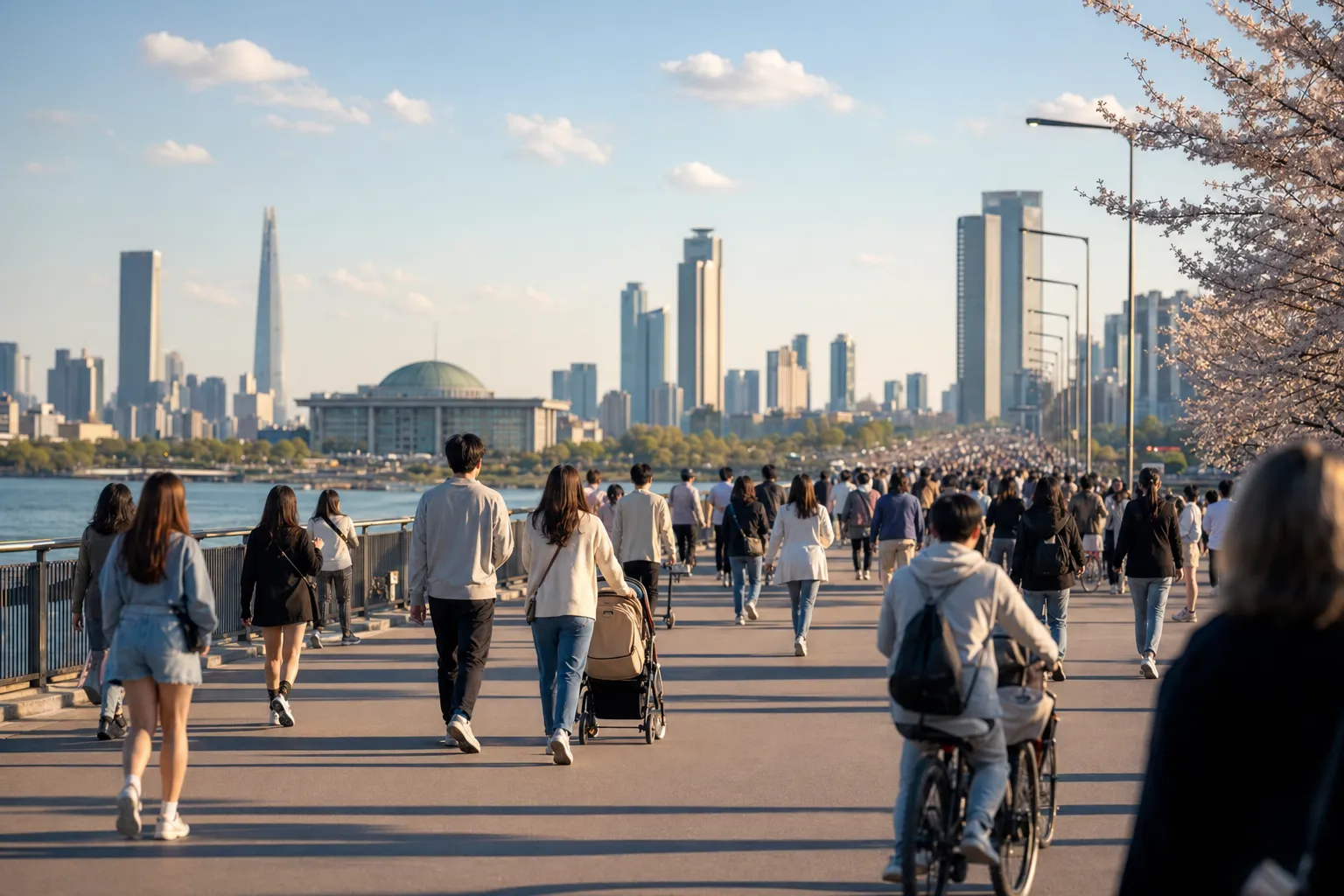
The Jamsu Bridge Festival is back in Seoul for 2026, turning one of the city’s most recognizable river crossings into a car-free Sunday destination. From April 26 to June 14, the festival takes place every Sunday around Jamsu Bridge and Banpo Hangang Park, giving you a rare chance to walk, linger, and enjoy the Han River without the usual flow of cars. The event is officially presented as the 2026 Car-Free Jamsu Bridge Ttukbeok Ttukbeok Festival, with “ttukbeok ttukbeok” carrying the feeling of steady, relaxed footsteps.
For anyone planning a spring or early summer outing in Seoul, this is one of those events that is easy to understand: a bridge becomes a pedestrian space, the riverside becomes a festival ground, and Sundays become a little slower. The key thing to know before you go is that vehicle access is restricted during the festival, so public transportation is strongly recommended.
What to Expect at the Jamsu Bridge Festival
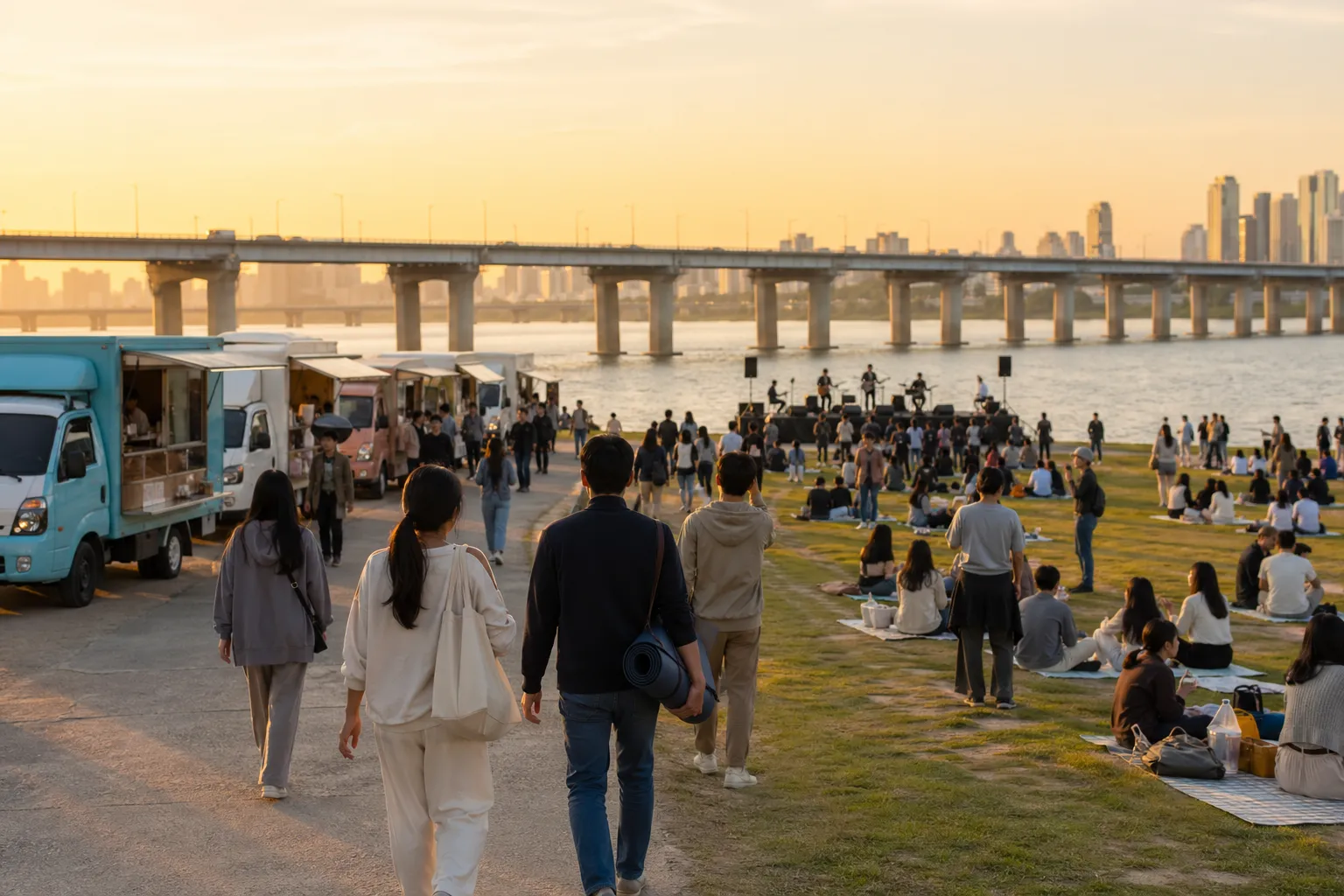
The festival runs for eight Sundays, from April 26 through June 14, 2026. The main area includes Jamsu Bridge and the Banpo Hangang Park surroundings, with the car-free section stretching about 1.1 kilometers from the northern end of Jamsu Bridge to Dalbit Square on the southern side.
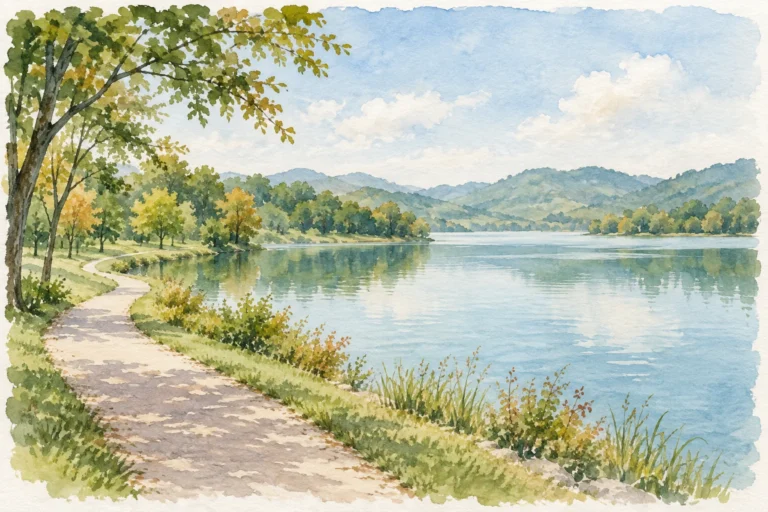
That 1.1-kilometer section is the heart of the experience. Instead of crossing quickly by vehicle, visitors can move through the space on foot, taking in the open river views and the atmosphere of a road temporarily returned to pedestrians. The setting itself is a big part of the appeal: Jamsu Bridge sits low over the Han River, while Banpo Hangang Park is already one of Seoul’s popular riverside gathering places.
The program is designed around weekly Sunday visits rather than a single-day event. Available details point to a mix of parades, live performances, film screenings, and yoga. There are also permanent-style festival attractions during the event period, including 30 food trucks, an LED photo zone, play content, and the operation of the Moonlight Rainbow Fountain.
The first day, April 26, also has a separate opening-day schedule and includes a program called “Shieom Shieom Morning.” Since specific participation details can vary by program, visitors should check the official festival information before choosing a time slot or activity.
Dates, Hours, and Traffic Restrictions
The most important practical detail is the traffic control schedule. For the regular festival Sundays from May 3 to June 14, vehicles are restricted from 11:00 a.m. to 11:00 p.m. The first day, April 26, follows a different schedule, with vehicle access restricted from 5:00 a.m. to 8:00 p.m.
The controlled area covers Jamsu Bridge and the Banpo Hangang Park area, especially the approximately 1.1-kilometer stretch from the northern end of Jamsu Bridge to Dalbit Square on the southern end. If you normally drive through this part of Seoul on Sundays, this is worth noting in advance. The festival is built around a car-free experience, so the traffic changes are not a side detail; they are part of the event’s basic structure.
Bus routes are also affected. Routes 405 and 740 temporarily detour via Banpo Bridge during the festival traffic restrictions. If you rely on those buses, it is a good idea to allow extra time and confirm your route before leaving.
For festival visitors, the simplest plan is to use public transportation. That is also the official recommendation. Because the event takes place every Sunday for several weeks, crowds and traffic conditions may differ depending on the date, weather, and specific programs scheduled for that week.
A Simple Guide for Planning Your Visit
If I were planning a visit, I would start with the date. The festival only runs on Sundays between April 26 and June 14, 2026, so weekday visits will not offer the same car-free setup. Next, I would check the day’s program, because the event includes different types of activities such as parades, performances, film screenings, and yoga.
The food truck area makes the festival easy to pair with a casual meal or snack, while the LED photo zone gives visitors a dedicated place for pictures. The play content suggests the event is meant to be more than a walk across the bridge, and the Moonlight Rainbow Fountain adds another riverside feature to look for during your visit.
Because the available information emphasizes both programs and traffic restrictions, it is smart to plan around time as much as location. From May 3 onward, the car-free hours run into the evening, from 11:00 a.m. to 11:00 p.m., which leaves room for both daytime walks and later visits. On opening day, April 26, the schedule begins much earlier and ends at 8:00 p.m., so that date needs separate attention.
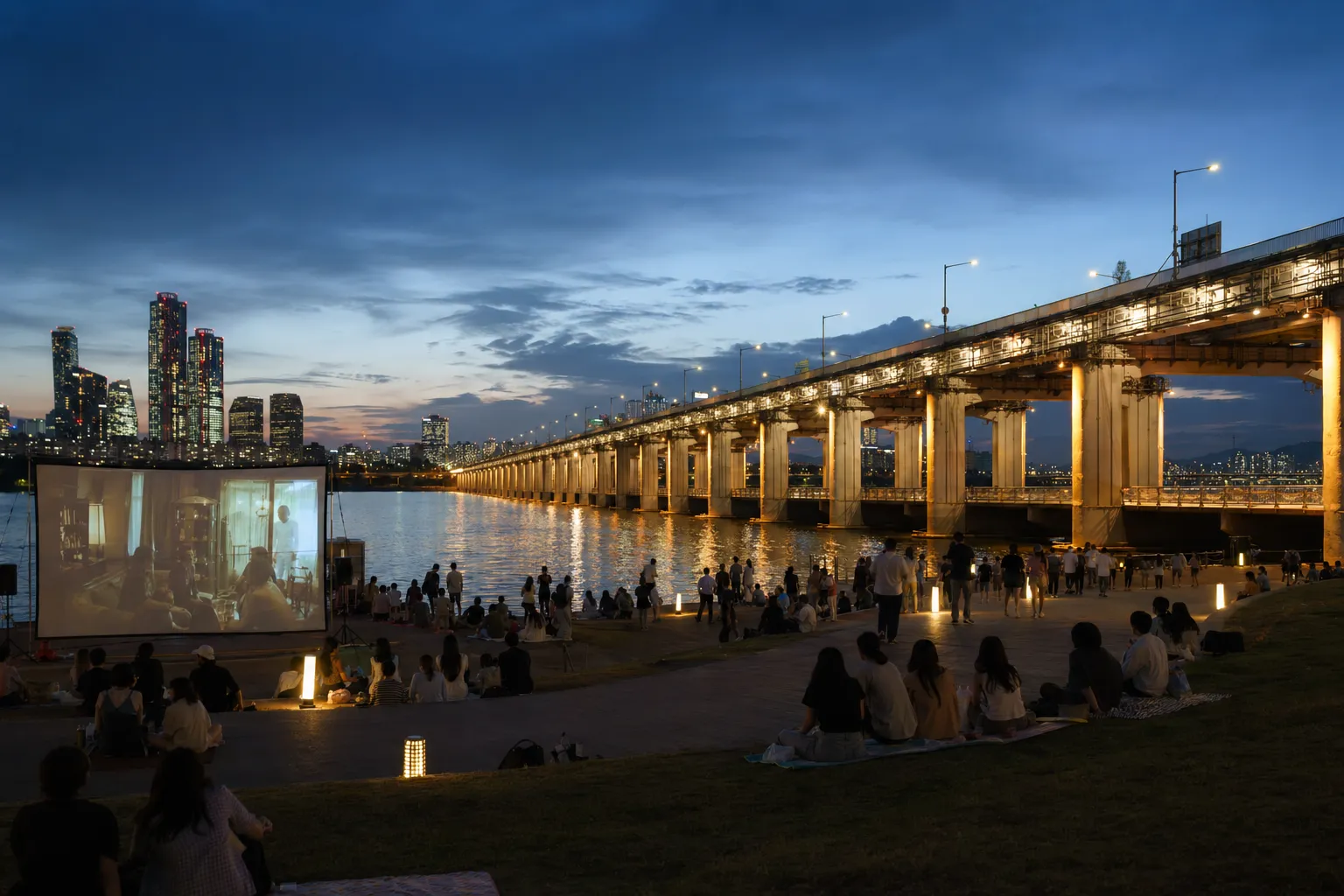
The Jamsu Bridge Festival is a straightforward but memorable Seoul outing: a familiar bridge, a riverside park, and a weekly car-free space filled with performances, films, yoga, food trucks, photo spots, and fountain views. If you are visiting between April 26 and June 14, 2026, choose a Sunday, use public transportation, and give yourself time to enjoy the Han River at walking pace.
About the Author