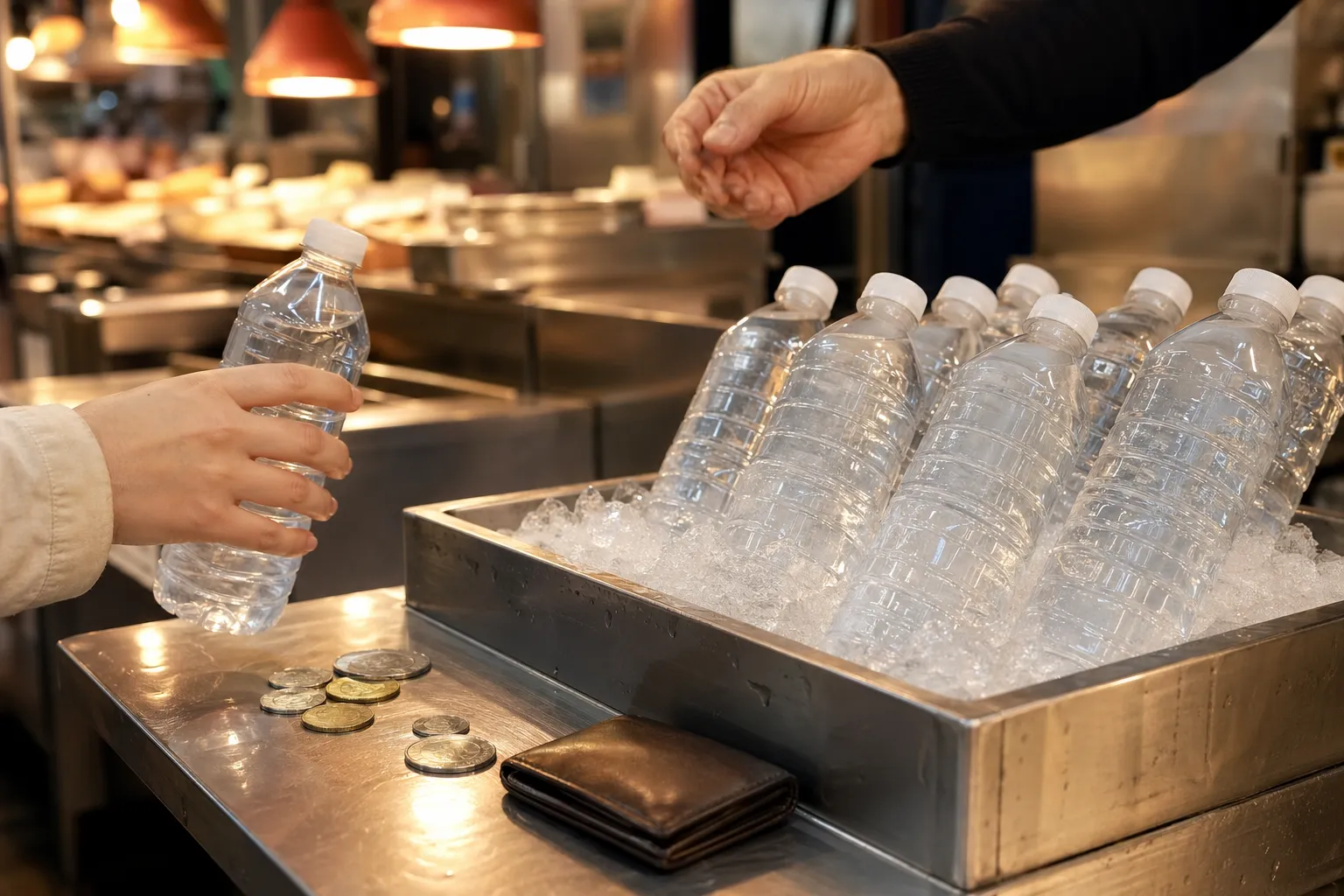
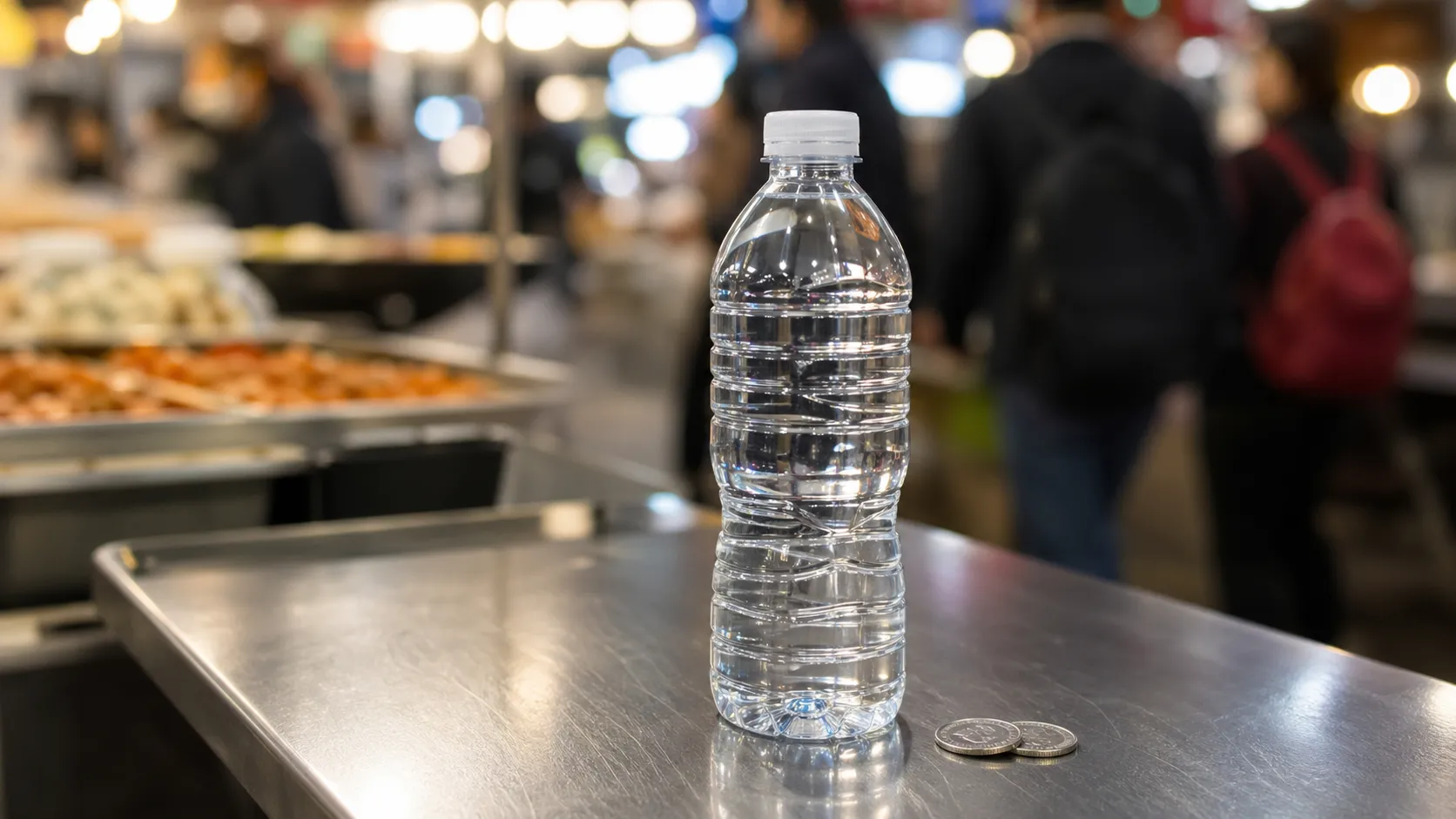
The Gwangjang Market water dispute centers on a 500mL bottled water sold for 2,000 won at a food stall in Seoul’s Jongno District. The issue drew attention after a YouTube video released on April 16, 2026 showed a foreign visitor group asking for water and being told to pay 2,000 won for a bottle, reportedly without a label.1
For visitors, the practical question is simple: what should you expect when ordering food and drinks at Gwangjang Market now? The available reports show that the controversy was not only about one bottle of water, but also about price display, visitor trust, and how market authorities are trying to standardize basic sales practices.
Gwangjang Market Water at 2,000 Won: What Happened
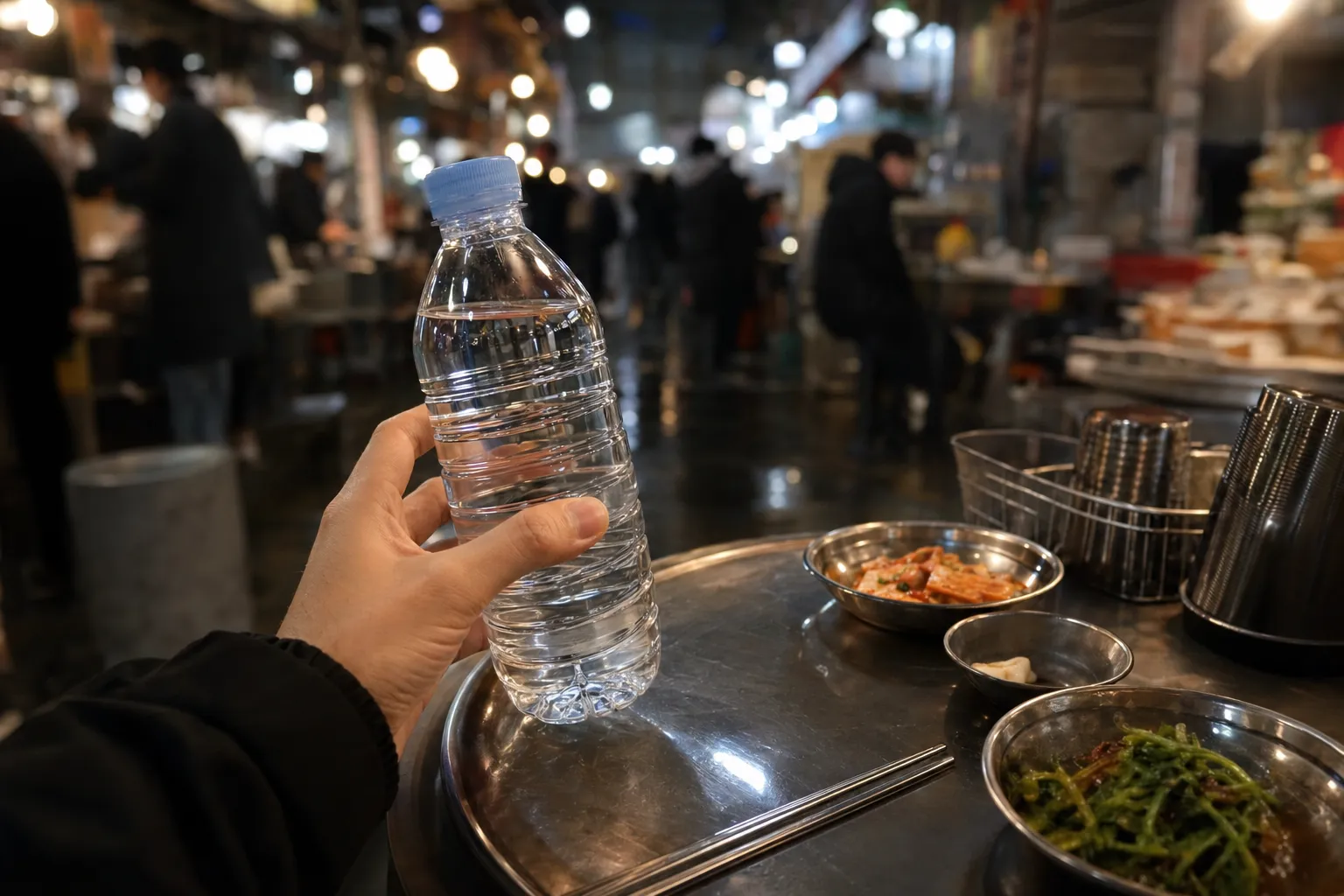
The reported bottle was 500mL and sold for 2,000 won at a food stall. Dong-A Ilbo compared that with typical convenience store pricing for 500mL bottled water, which it described as generally around 1,100 won.1 The video also showed the group reacting with surprise because they had not encountered separate water charges at a Korean restaurant or food stall before. One quoted reaction was: “It was confusing because it was the first time seeing a restaurant or stall charge separately for water.”1
A follow-up site inspection on April 21, 2026 by Seoul city and Jongno District officials found two additional stalls, beyond the originally disputed stall, selling 500mL bottled water for 2,000 won.2 The same report said most other stalls in Gwangjang Market were selling bottled water at about 1,000 won.2
That matters for visitors because the dispute was not framed only as a single misunderstanding. It became a check on whether prices were clearly displayed and whether tourists, especially foreign visitors, could understand what they were being charged before paying.
What Changed After the Dispute
The Gwangjang Market merchants’ association reportedly suspended the stall at the center of the dispute for three days, from April 22 to April 24, 2026.3 News1, cited by Financial News, reported that the merchants’ association and Jongno District found that about one-fifth of Gwangjang Market stalls were selling 500mL bottled water, and three stalls were charging 2,000 won per bottle.3
The same report said stalls selling bottled water would be required to list the price on their menus. Jongno District was also reported to be preparing to fully implement a stall real-name system from June 2026.3 In practical terms, that points to two expected improvements for visitors: clearer price visibility and more identifiable stall operations.
The merchants’ association also signaled a change in how water should be handled. One association official said water would basically be provided “for free,” while also saying the association wanted to set a price that fit social expectations.3 Another report quoted an association official explaining that some foreign visitors had misunderstood shared or remaining water as something left by previous customers.4 That comment suggests the market may be trying to balance hygiene perception, visitor comfort, and pricing norms.
These changes did not appear out of nowhere. Before the April 2026 bottled water dispute, the Ministry of SMEs and Startups had already held a meeting at Gwangjang Market on December 5, 2025 with Seoul city, Jongno District Office, the Korea Small Enterprise and Market Service, and the merchants’ association to address price, hygiene, and service concerns.5 The ministry’s plan included a stall real-name system, foreign-language customer response, stronger tourism guidance, price display checks, and menu display inspections.5
On January 28, 2026, Yonhap News reported that the ministry again visited Gwangjang Market with related agencies to check follow-up measures on trust recovery and coexistence programs. The review covered price display, service response, and market order improvements discussed at the previous December meeting.6 Vice Minister Lee Byung-kwon was quoted as saying that trust in price and service affects the image of the market and the local area.6
Practical Tips for Visitors
If you are visiting Gwangjang Market, the safest approach is to check prices before ordering anything that is not obviously included with the food. That includes bottled water, extra drinks, side items, and takeaway packaging if a stall charges separately. Reports indicate that menu price display is becoming a required point for bottled water sellers after the dispute, but visitors should still confirm prices verbally when something is unclear.3
If a stall offers bottled water, look for the price on the menu first. If it is not displayed, ask how much it costs before opening the bottle. The April 21 inspection found that most other stalls were selling bottled water at about 1,000 won, while three stalls were identified as charging 2,000 won.23 That does not create a universal official price, but it gives visitors a useful reference point from the reported inspections.
It is also worth distinguishing between drinking water served with food and bottled water sold as a separate product. The controversy involved bottled 500mL water, not a formal market-wide rule saying all water must be sold. After the dispute, the merchants’ association indicated that water would basically be provided free, while still discussing socially appropriate pricing for cases where sales apply.3
For foreign visitors, the broader lesson is to avoid assuming that every stall operates the same way. Gwangjang Market is made up of many individual vendors, and reports tied the bottled water issue to wider concerns over prices, cash payment practices, and unfriendly service in the food alley over recent years.4 A simple price check before ordering can prevent most confusion.
Quick FAQ
Is bottled water at Gwangjang Market officially 2,000 won?
The available reports do not establish 2,000 won as an official market-wide price. Inspections found three stalls charging 2,000 won for 500mL bottled water, while most other stalls were reportedly around 1,000 won.23
Was any action taken against the stall involved?
Yes. The stall at the center of the controversy was reportedly suspended by the Gwangjang Market merchants’ association for three days, from April 22 to April 24, 2026.3 !Gwangjang Market water price controversy practical visitor checks The Gwangjang Market water controversy is best understood as a visitor-information issue as much as a price issue. Before ordering, check displayed prices, ask clearly about bottled water, and expect market authorities and the merchants’ association to place more emphasis on visible pricing and accountable stall operations going forward.
References
- 광장시장서 외국인이 물 달라 했더니 “2000원 달라” (동아일보, 2026-04-20)
- [단독] 외국인에 “물 2000원”…광장시장 ‘바가지 생수’ 더 있었다 (중앙일보, 2026-04-21)
- [단독] '2000원 생수' 논란 광장시장 노점…3일 영업정지 (뉴스1/파이낸셜뉴스, 2026-04-24)
- 외국인에 ‘물값 2000원’ 광장시장 노점 ‘철퇴’…사흘간 문 닫았다 (서울신문, 2026-04-24)
- ‘글로벌 광장시장’, 신뢰회복 및 서비스 혁신 위해 관계기관 총력 대응 (중소벤처기업부, 2025-12-08)
- 중기부, 광장시장 상생 활성화방안 후속조치 현장점검 (연합뉴스, 2026-01-28)
About the Author