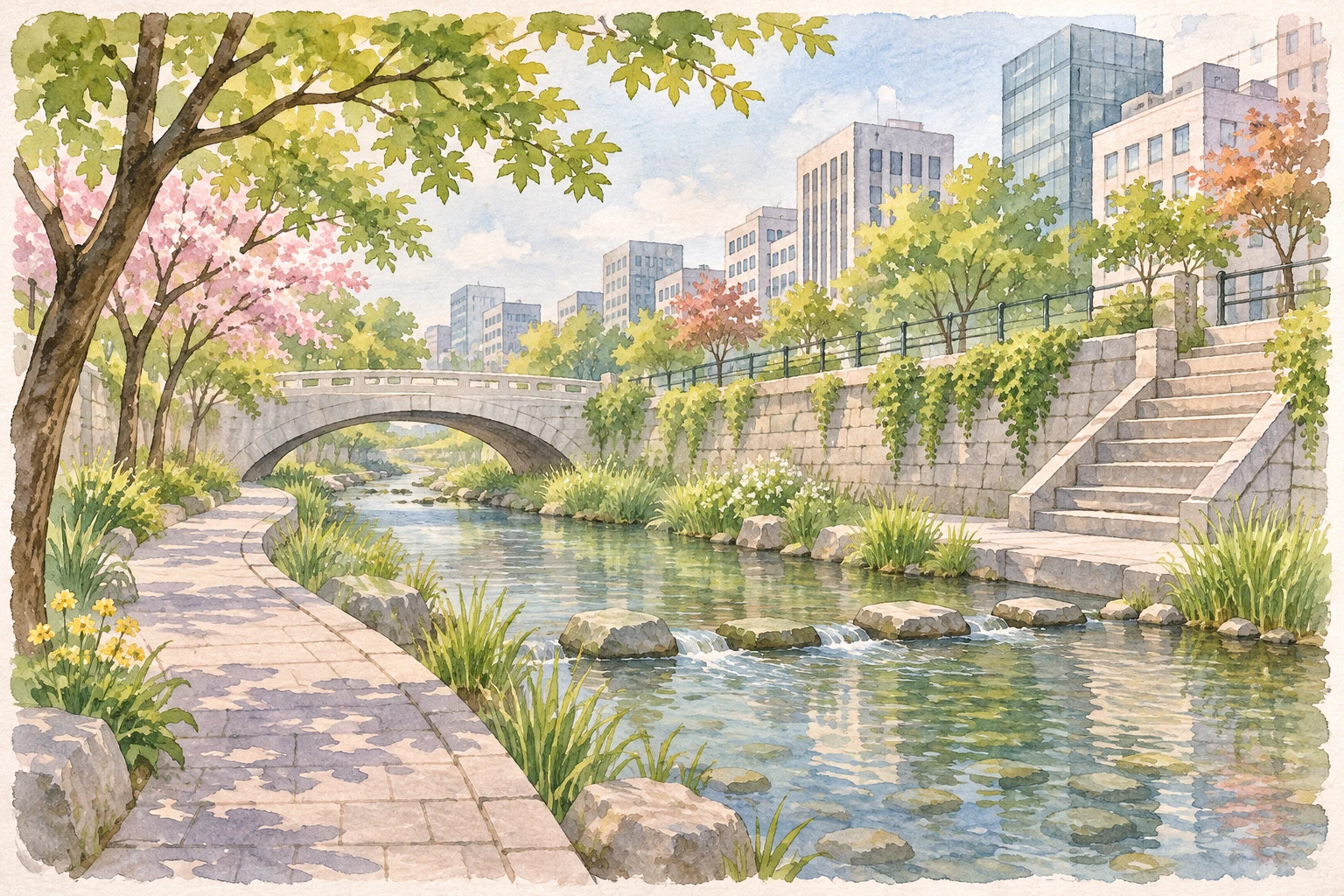
Cheonggyecheon Museum is a starting point for a walk upstream through Seoul, following the water toward Cheonggye Plaza. The route passes remnants of an elevated road, the markets around Dongdaemun and an old stone bridge before reaching the plaza. 1
You can also take the walk in the other direction or choose a shorter section. Wikitree recommends starting at Cheonggye Plaza and walking toward Dongdaemun for a first visit; the plaza area is accessible by subway. 2
Start with the stream’s history
Near Majang-dong, Cheonggyecheon Museum (청계천박물관) traces the waterway’s changes over time. 1 In the Joseon dynasty, the stream was known as Gaecheon and required regular management: a body to oversee improvements was established in 1411, and a major project in 1760 removed accumulated soil and sand and repaired drainage facilities. 1
The museum’s photographs and dioramas also show the difficult living conditions of people who lived along the stream in modern times. 1 After liberation and the Korean War, more makeshift houses appeared along its banks as Seoul’s population grew. 1
That history helps make sense of a feature on the walk outside. Work to cover the stream began in 1958, and an elevated road was added in the 1970s; heading upstream from the museum, you can still see some of its concrete pillars. 1
Cheonggyecheon is 10.84 kilometers long, but that figure describes the whole stream, not the length of a required walk. 2 The section restored between July 2003 and September 2005 measured 5.84 kilometers. 2
Books and labor history near Dongdaemun
As you approach Dongdaemun, shops and markets appear around the stream. 1 Steps connect the waterside path to the streets above, making it possible to explore beyond the water before returning to the walk. 1
Look for the used-book street around Pyeonghwa Market (평화시장). It grew as secondhand book trading from the Cheonggyecheon area gathered around the market; although the street is much smaller than it once was, several shops remain. 1
Beyond the bookshops is Jeon Tae-il Bridge (전태일다리), where a statue of Jeon Tae-il stands with the long Pyeonghwa Market building behind it. 1 The market was one of Seoul’s garment-industry centers in the 1960s and 1970s, and Jeon Tae-il campaigned for better working conditions there. 1 Wikitree also connects the bridge and market with the lives of garment workers during Korea’s industrialization. 2
For a longer look at that history, the Jeon Tae-il memorial hall near Samil-daero covers workers’ lives and the labor movement. 1
A market detour and an old bridge
From the bridge, head toward Gwangjang Market (광장시장) for a break from the stream. Travel Sketch describes food stalls serving bindaetteok, a savory pancake, alongside dishes such as yukhoe and other Korean pancakes. 1
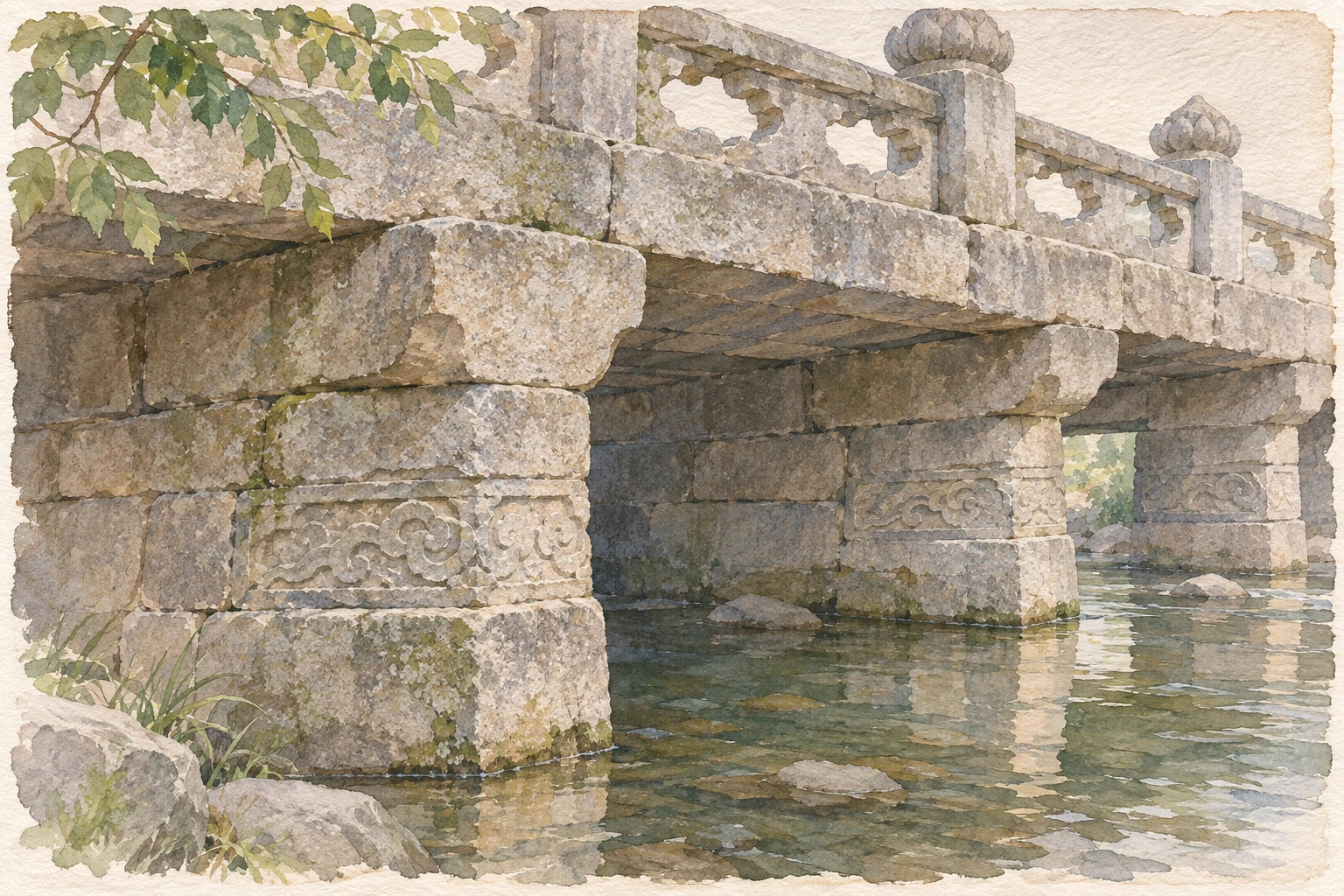
Return to the water and continue upstream to Gwangtonggyo (광통교). The bridge was an important crossing for people and goods in Joseon-era Hanyang, and old stonework and traces of its construction can still be seen beneath it. 1 Wikitree reports that King Taejong had stone objects from Queen Sindeok’s tomb used in the bridge’s construction; look for patterns on the stones below. 2
Finish near Cheonggye Plaza
Near the plaza, a Korean tourism experience space offers K-pop and Korean cultural content, including a large media wall. Its upstairs lounge overlooks Cheonggyecheon, offering a view back toward the water and surrounding buildings. 1
The route can be divided into sections to suit your schedule and energy. 2 Check visitor notices before setting out: access to the waterside path can be restricted during heavy rain or high water. 2
Sources
About the Author