For your first Pyongyang naengmyeon meal in Seoul, would you prioritize a rich beef broth, chewy noodles or a chance to sample several accompaniments? Dong-A Ilbo and Esquire Korea’s May 2026 coverage offers useful points of comparison across Wooraeok, Pildong Myeonok, Eulmildae, Seopyeong Myeonok and Apgujeong Myeonok. 1 2 Use the descriptions below to choose according to your preferences, with broth, noodle texture and portion options considered separately.
Start with the broth
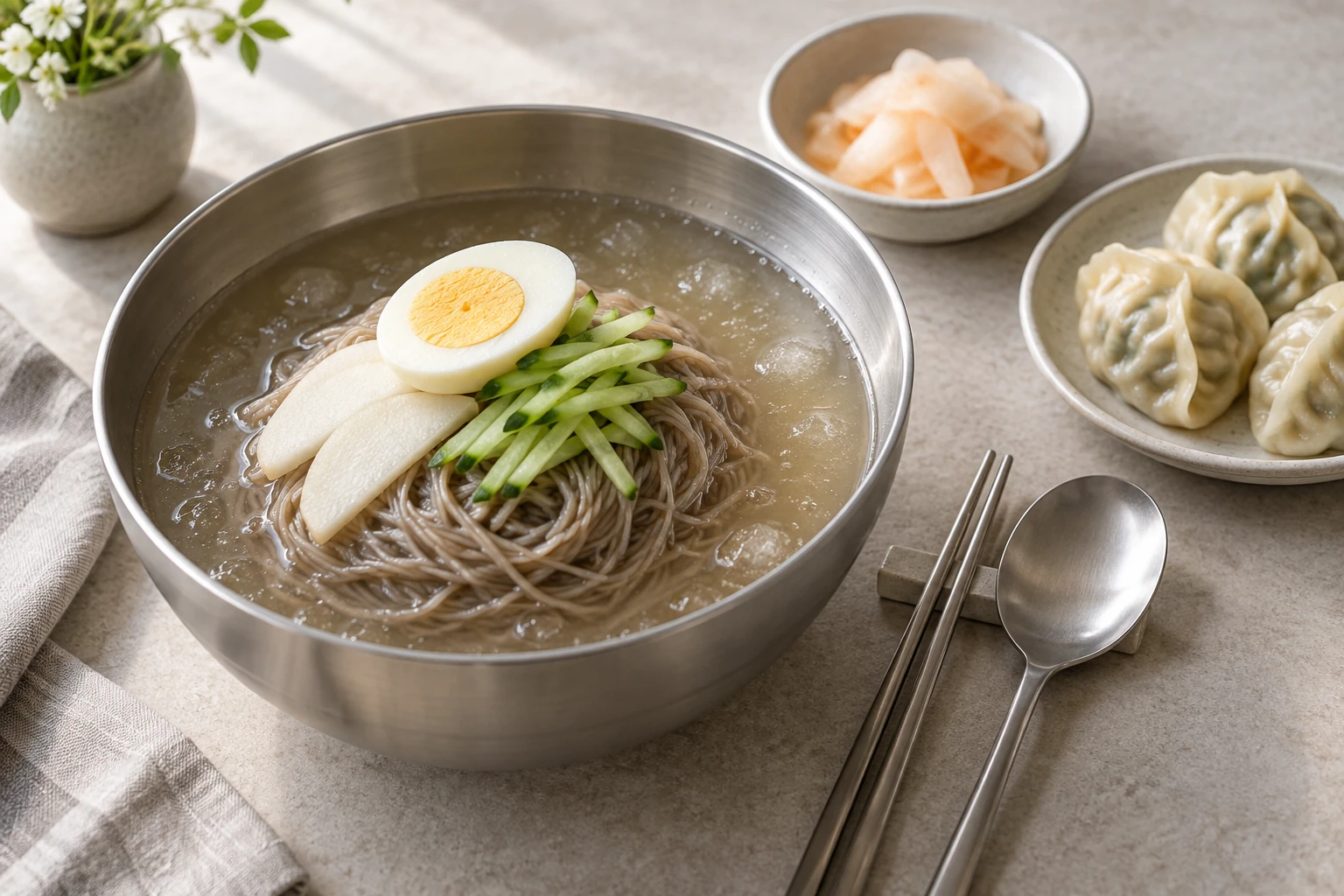
Wooraeok is a starting point if pronounced beef flavor appeals to you: Dong-A Ilbo describes its signature broth as rich, made by simmering lean Korean beef for a long time. 1 Esquire Korea also uses Wooraeok’s substantial meat aroma as a reference when discussing another restaurant’s broth. 2
Pildong Myeonok offers a different combination: Dong-A Ilbo reports a chilled broth made with beef and pork, served with chili powder, scallions and thinly sliced Cheongyang chili peppers. 1 The useful contrast is the reported meat base and garnishes; these descriptions do not establish a measured difference in broth intensity between the two restaurants. 1 Choose between the appeal of Wooraeok’s concentrated beef description and Pildong’s mixed-meat broth with those additions. 1
For a middle position, consider Seopyeong Myeonok: Esquire places its broth between Wooraeok’s pronounced meat aroma and the clean taste of Pyeongyang Myeonok, describing that balance as approachable for beginners. 2 That is the magazine’s sensory comparison, and its reference to Pyeongyang Myeonok does not specify a branch or identify it as Pildong Myeonok. 2
Compare texture separately from composition
At Pildong, Dong-A Ilbo describes noodles mixed with starch as chewy and easy to swallow. 1 At Eulmildae’s main branch in Mapo, the newspaper instead emphasizes textured noodles and broth with thin ice, describing the rich broth as carrying a slight herbal aroma. 1 Eulmildae therefore adds an icy serving texture to the comparison, alongside the reported noodle texture and broth aroma. 1
Apgujeong Myeonok adds an explicit ingredient choice: Esquire reported regular naengmyeon and a premium option made with 100% buckwheat noodles. 2 The article does not give the buckwheat percentage of the regular option, while Dong-A Ilbo does not quantify Pildong’s starch mixture. 1 2 Treat these as different kinds of information: a stated ingredient percentage cannot, from this reporting alone, tell you how chewy the noodles will feel or how intense the broth will taste. 1 2
Build a solo meal or a shared spread
For a solo visit, Seopyeong provides a practical portion comparison: Esquire reported a set including two dumplings, plus half-plate orders of accompaniments such as pyeonyuk, or sliced cooked meat. 2 Those smaller orders make it a useful candidate if you want to try an accompaniment without choosing a full plate. 2 Dong-A Ilbo also highlights cold sliced cooked meat at Pildong, but does not specify its portion size. 1
At Apgujeong, Esquire reported young radish kimchi as a basic accompaniment and a wine list. 2 For groups, the magazine recommended Korean beef eobok-jaengban, a beef platter dish, or Korean beef large-intestine hot pot. 2 That gives a group a different meal-planning option from Seopyeong’s reported smaller portions. 2 Before visiting, confirm current menus, prices, hours and ordering options directly with your chosen restaurant.
Sources
About the Author