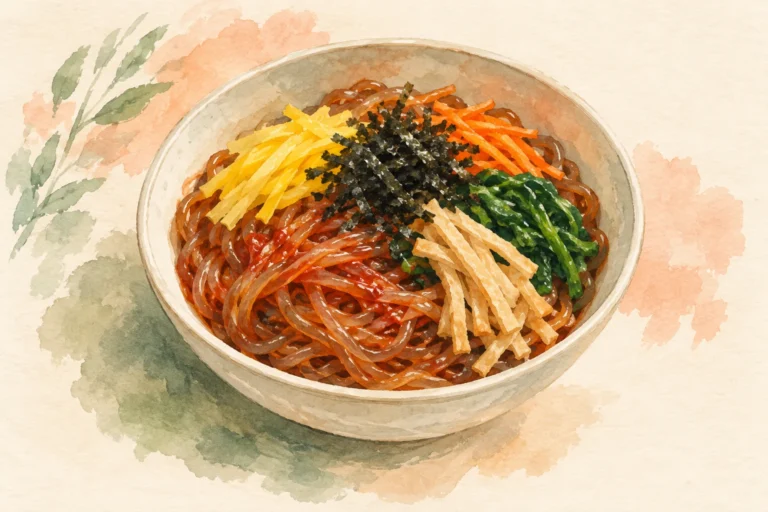
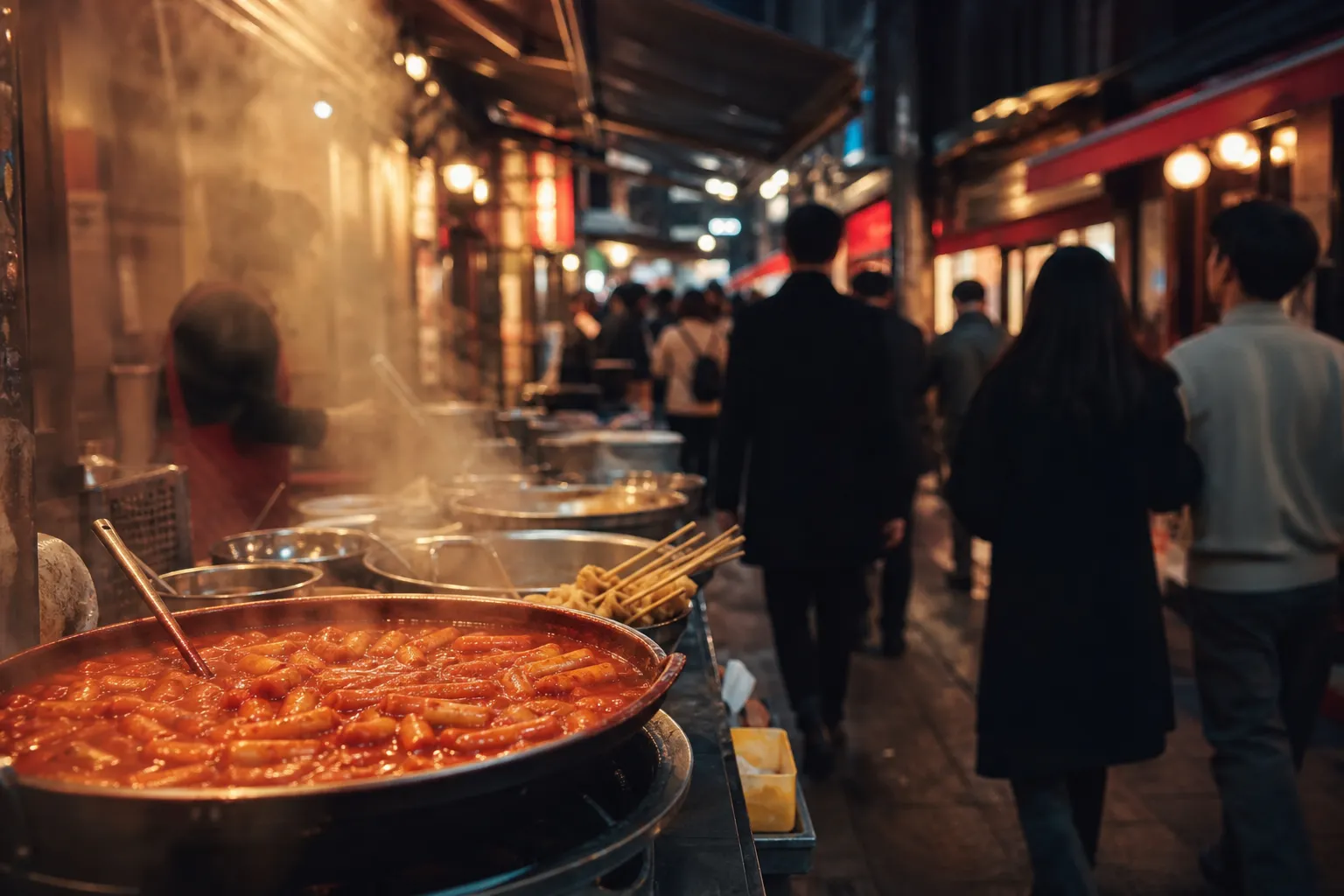
The history of Sindang-dong Tteokbokki Town is really a story about how one Seoul neighborhood kept changing while holding onto a flavor that people recognized. From its postwar commercial roots to its 1980s peak and its more recent place inside the broader “Hipdang-dong” conversation, Sindang-dong Tteokbokki has become more than a simple snack street.
The History Behind Sindang-dong Tteokbokki Town
Sindang-dong’s food alley did not appear in isolation. Seoul Metropolitan Government announced on July 7, 2026, that the Seoul Museum of History had published the 2025 Seoul Living Culture Research Report, 『Sindang-dong: 神·新·Hip』, a report that reads the neighborhood through three layers: a space of shamanic belief, a modern and contemporary residential and commercial district, and a youth-culture commercial area now associated with “Hipdang-dong.”1
That wider frame matters because Tteokbokki Town is one part of a neighborhood that has repeatedly reinvented itself. Yonhap News summarized the report by noting that Sindang-dong carries a name connected to old shrines, or sindang, and that after Korea’s liberation, merchants shaped a series of specialized streets, including Tteokbokki Street, Rice Street, Gaemi Alley, and Ironworks Street.2 B tv news also described the report’s arc: an area outside Gwanghuimun associated with shamanic belief became a modern residential and commercial district, then later drew attention as “Hipdang-dong.”3
Seen this way, Tteokbokki Town is not just a place where spicy rice cakes are sold. It is one of the clearest food-centered examples of how local commerce, everyday life, and urban memory overlapped in Sindang-dong. Choi Byeong-gu, director of the Seoul Museum of History, described Sindang-dong as “a vast museum” compressing Seoul’s dramatic urban transformation into a single neighborhood.1 That short description fits the tteokbokki alley especially well: it carries food history, commercial history, and neighborhood branding all at once.
From Mabokrim’s 1953 Story to the 1980s Boom
The historical anchor most often attached to Sindang-dong Tteokbokki is Mabokrim Tteokbokki. The Korea Tourism Organization’s Visit Korea guide presents Mabokrim Halmeoni’s House and its 1953 beginning story as part of the background of the area, while describing Sindang-dong Tteokbokki Town as a food street lined on both sides with tteokbokki restaurants.4
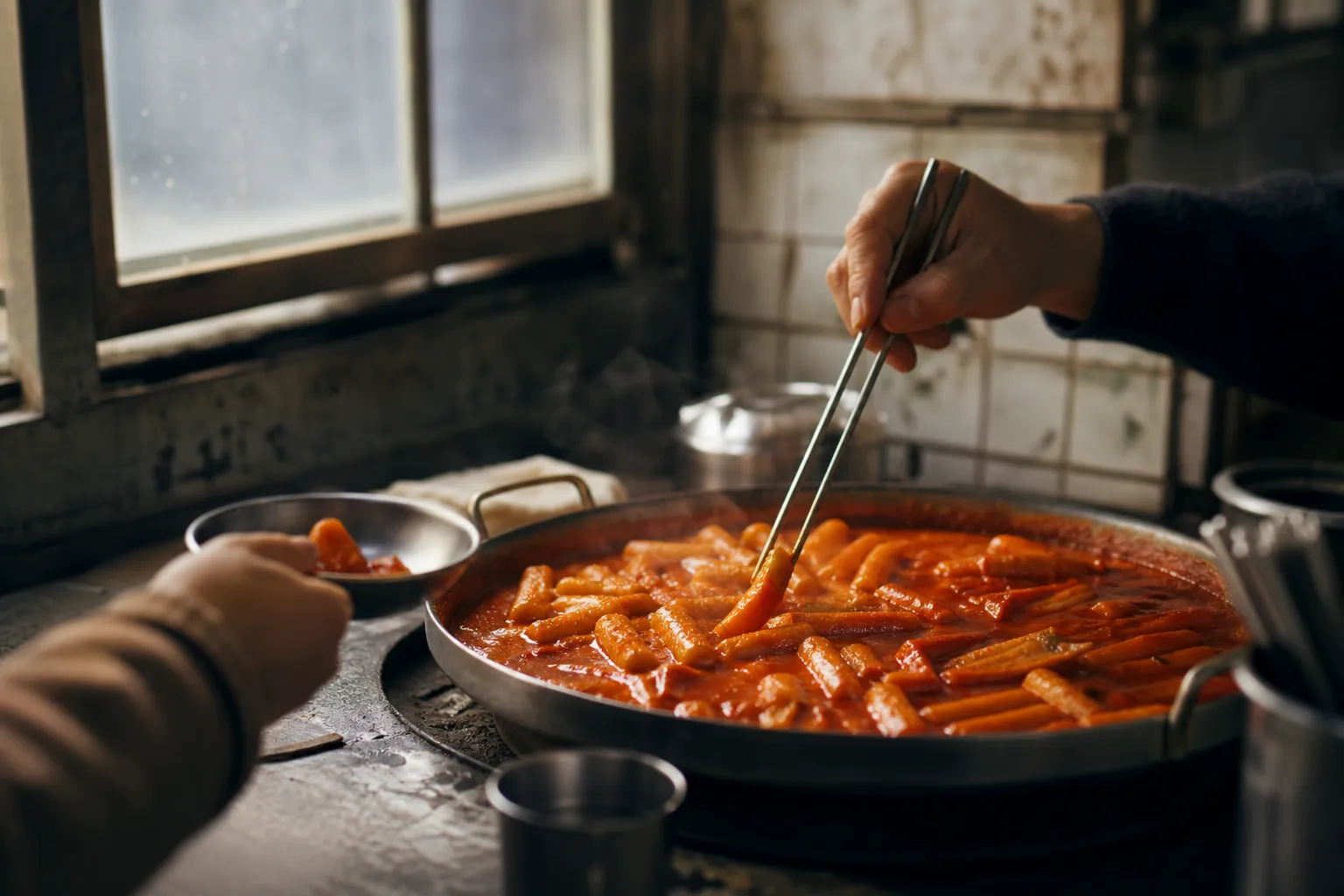
That 1953 point is also central to how the area is remembered in later reporting. The Korea Economic Daily described Mabokrim Tteokbokki, which opened in 1953, as a leading name in the popularization of instant tteokbokki in Sindang-dong Tteokbokki Town.5 The phrase “instant tteokbokki” is important for readers who may only know tteokbokki as a street snack. In Sindang-dong, the dish became closely associated with a table-cooked style, shared in a pan and eaten as a casual social meal.
According to the Visit Korea guide, the alley itself took shape in the late 1970s and reached a heyday in the 1980s alongside DJ booth culture.4 That detail gives the town’s history a very specific mood. The area was not simply a row of restaurants; it was remembered as a youthful, social, sound-filled destination where food and pop culture met in an easygoing way.
For many readers, that may explain why the name still has such staying power. Sindang-dong Tteokbokki Town is not only known because tteokbokki is popular across Korea. It is known because this neighborhood helped make a particular way of eating it feel iconic: gathered around a pan, adding ingredients, talking across the table, and treating the meal as an outing rather than a quick bite.
Decline, Renewal, and the Hipdang-dong Era
The more recent history is less nostalgic, and that makes it useful. By 2023, local officials and media were discussing how to revive the old tteokbokki alley’s visibility. Jung District Office announced a food festival for May 19, 2023, in the Sindang-dong Tteokbokki and Food Alley, where it planned to unveil a new brand and character.6 The district also said it had pursued commercial-area revitalization since the alley was designated as an alley-type shopping district in 2021, including improvements to the street environment, guide signboards, promotional banners, and character development.6
The need for revitalization becomes clearer when you look at the numbers reported that same year. The Korea Economic Daily cited Seoul commercial district analysis service data showing that snack-restaurant transaction counts in the relevant alley-type shopping area fell from 97,391 in the fourth quarter of 2017 to 79,408 in the fourth quarter of 2022.5 In the same report, Kim Dong-hwan, an operations manager at Mabokrim Tteokbokki, said the store’s sales had dropped to about two-thirds of the previous year’s level.5
This does not erase the town’s legacy. Instead, it shows how a famous food street has had to compete with newer patterns of attention. As “Hipdang-dong” became a label for youth-oriented shops and new commercial energy in the surrounding area, the older tteokbokki alley faced the challenge of remaining visible inside a changing neighborhood.
Jung District’s 2023 festival announcement framed that challenge directly as an effort to restore the reputation of the tteokbokki alley. District mayor Kim Gil-sung said the office would seek various ways to revitalize the tteokbokki alley.6 The wording is modest, but the implication is significant: local identity around food still mattered enough to become a public revitalization goal.
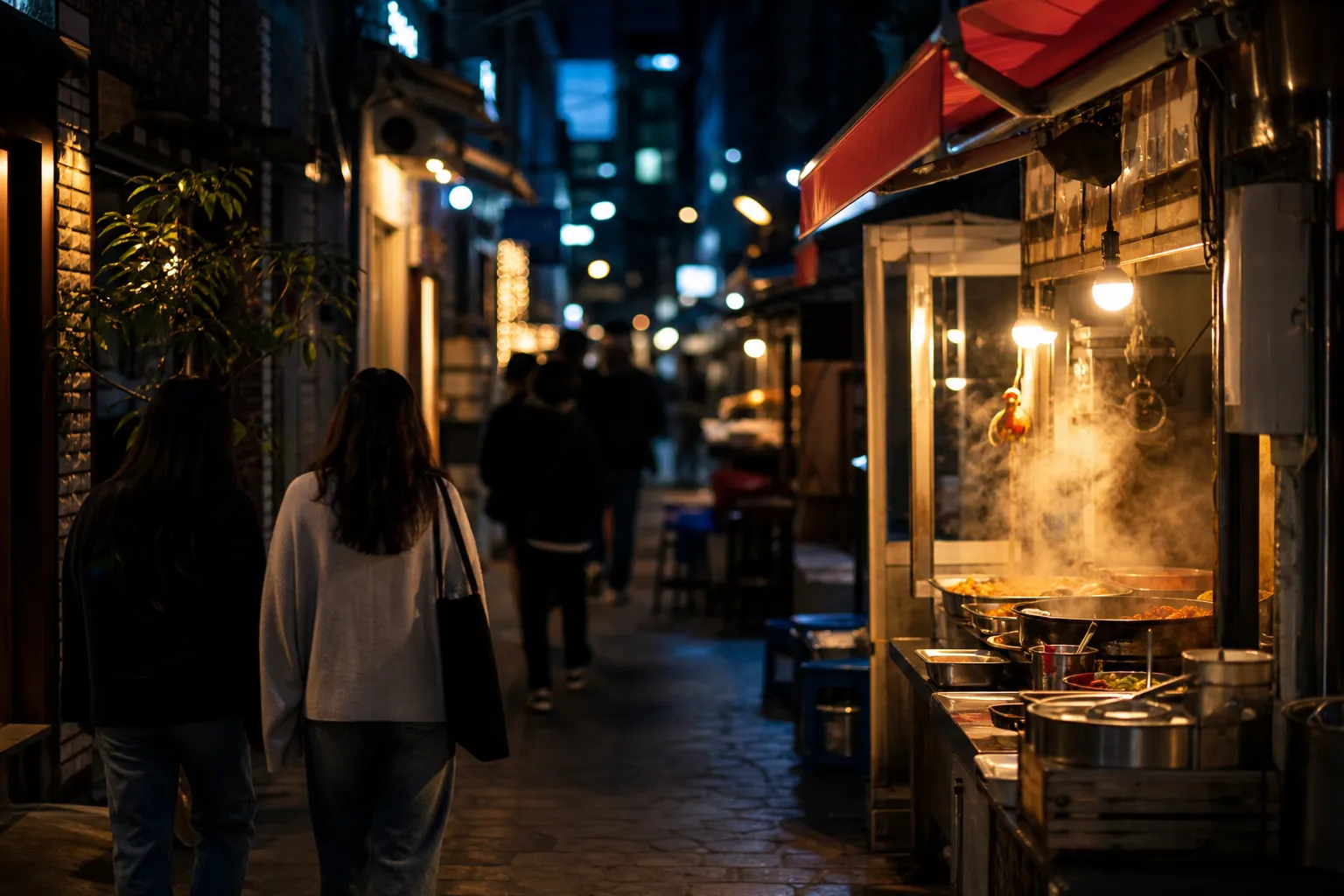
The history of Sindang-dong Tteokbokki Town is therefore not a straight line from fame to nostalgia. It begins with the neighborhood’s older layers, moves through post-liberation merchant streets, gains a defining food identity through Mabokrim’s 1953 story, expands into a late-1970s and 1980s youth-food culture, and then enters a newer period of renewal beside Hipdang-dong. Its appeal comes from that layered history: a single alley where Seoul’s everyday food culture, neighborhood commerce, and urban change can still be read together.
References
- (석간) 떡볶이 너머 ‘힙당동’… 신당동의 세 얼굴 『神·新·Hip』 보고서 발간 (서울특별시, 2026-07-07)
- 무속촌에서 '힙당동'으로…서울역사박물관, 신당동 보고서 발간 (연합뉴스, 2026-07-07)
- 서울역사박물관 신당동 보고서 발간 (B tv news, 2026-07-07)
- 신당동 떡볶이타운 (한국관광공사 대한민국 구석구석)
- 힙당동 뜨자…찬밥 된 신당동 떡볶이타운 (한국경제, 2023-06-05)
- 신당동 먹거리 축제 개최, 떡볶이 골목 명성 되찾는다 (서울시 중구청, 2023-05-17)
About the Author