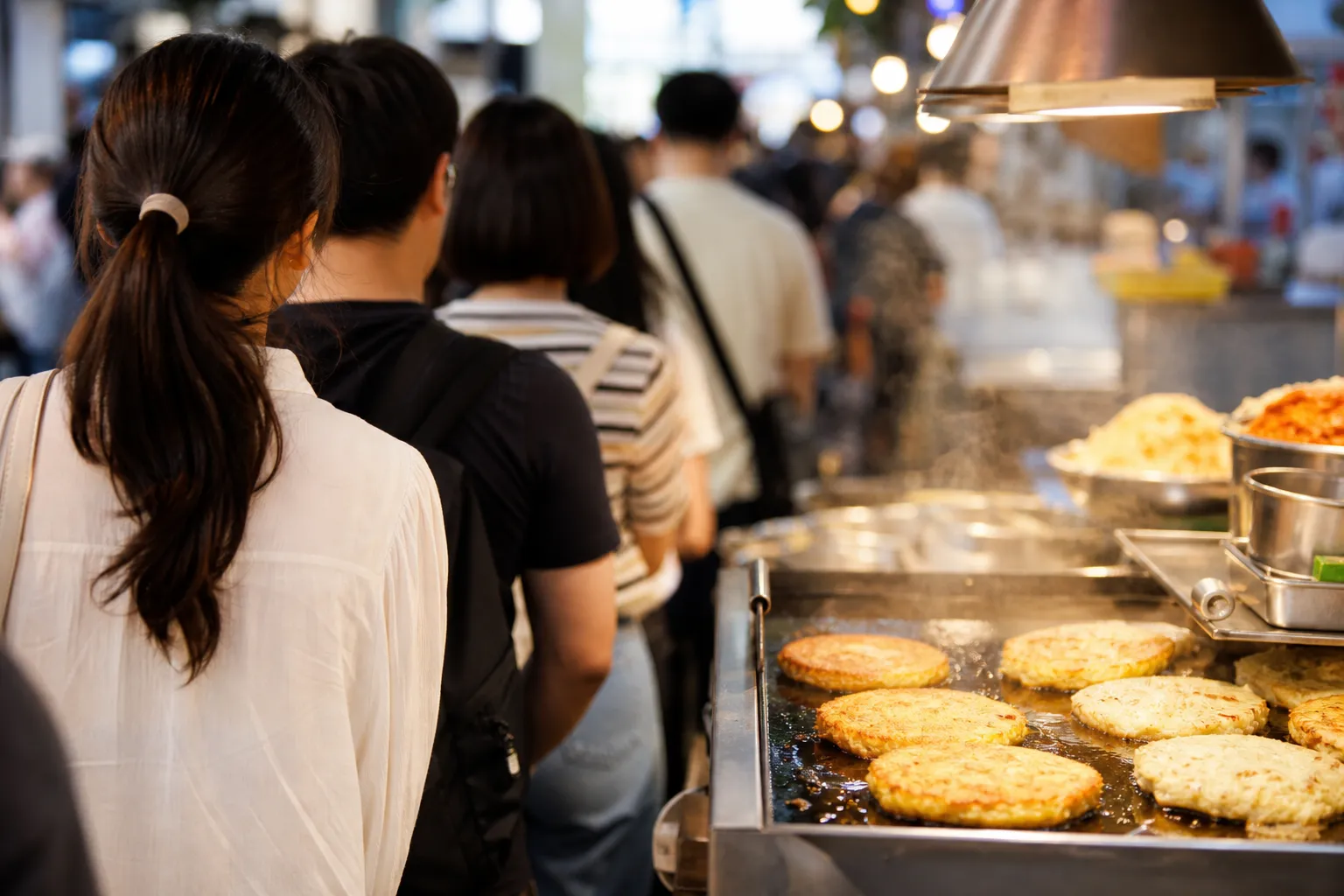
Sunhui-ne Bindaetteok waiting is one of the most useful things to understand before you plan a stop at Gwangjang Market. The well-known shop, also introduced in sources as Wonjo Sunhui-ne Bindaetteok, is closely tied to Gwangjang Market bindaetteok, and available guides point to a practical pattern: lines can form, but turnover is often described as relatively quick.1
That balance matters. A famous market food stall can look busy from the outside, especially when people are gathered near the griddle or moving between dine-in and takeaway orders. Sunhui-ne Bindaetteok is introduced by Visit Seoul as a notable house of bindaetteok and one of Gwangjang Market’s most famous jeon restaurants.2 In other words, the wait is not a side issue; it is part of the planning for a place that many visitors already have on their list.
Sunhui-ne Bindaetteok Waiting: The Most Useful Timing Clues
The clearest source-backed timing tip is straightforward: evening waits tend to be longer, while reviews summarized by Siksin describe the area around 3 p.m. as relatively more relaxed.1 That does not mean you should expect an empty shop at 3 p.m., and it does not guarantee a seat without waiting. It simply gives you a more realistic window if your schedule is flexible and you want to avoid the heaviest meal-time pressure.
Several sources also describe the turnover as fast. One Siksin guide says Gwangjang Market’s dining flow is generally quick, with many reviews noting that visitors can often be seated comparatively soon even during peak periods.3 Another Siksin article says both weekdays and weekends may be full, while still describing the turnover rate as quick.4 For a visitor, that means the visible line may not tell the whole story. A queue can still move faster than expected because the food is served in a high-volume market setting.
Takeaway demand appears to be part of that rhythm. Siksin notes that many customers order to go, which helps explain why the rotation can be quick.1 Visit Seoul also lists packaged batter as available, showing that Sunhui-ne Bindaetteok is not only a sit-down option but also connected to takeaway-friendly use.2 If your priority is tasting the food rather than sitting down for a full meal, asking about takeaway may make the visit easier to fit into a crowded itinerary.
Why the Line Forms in the First Place
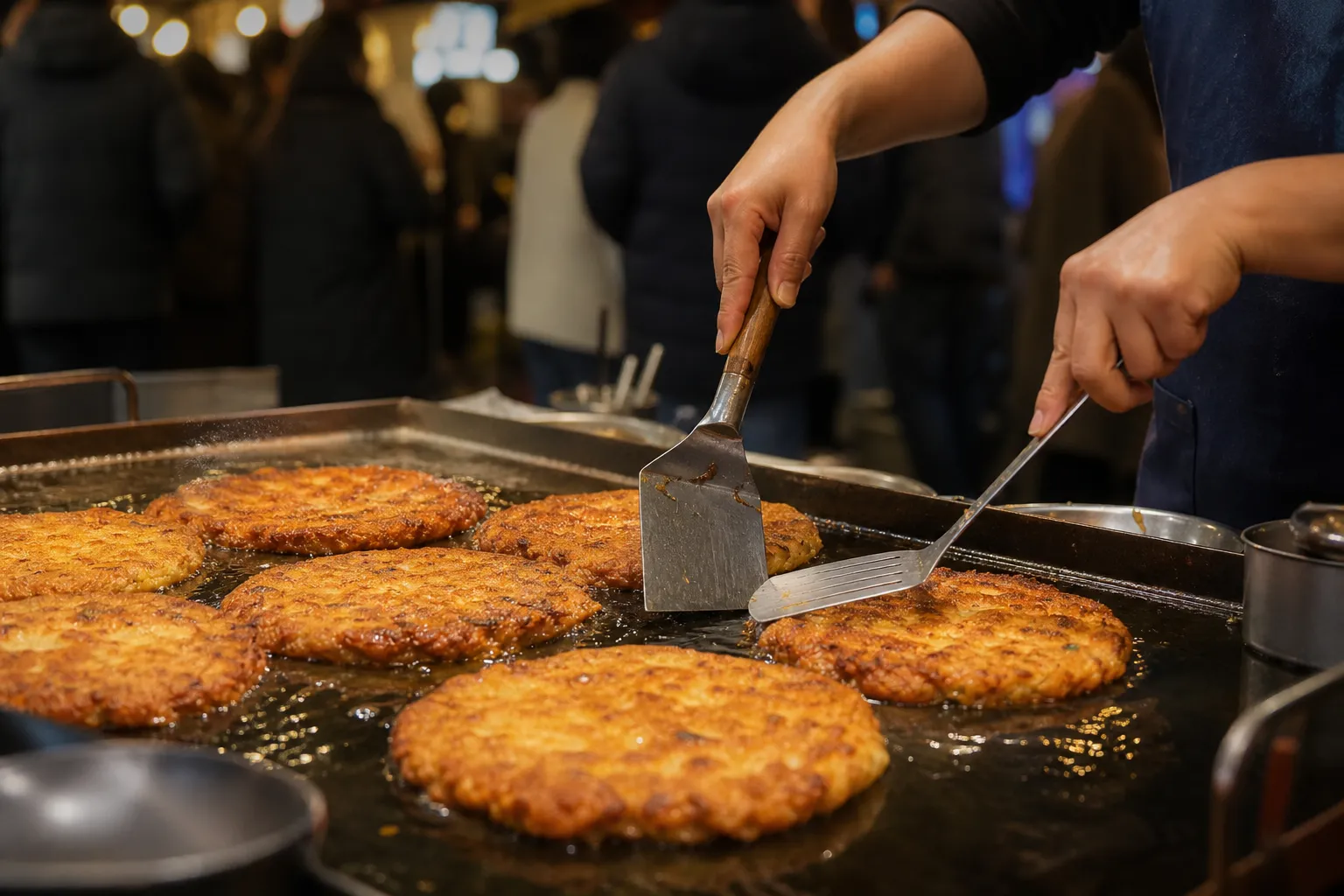
The attention around Sunhui-ne Bindaetteok is not based only on waiting lists or online ranking language. The shop is repeatedly framed as a representative place for mung bean pancakes in Gwangjang Market. Tripinfo describes Sunhui-ne Bindaetteok as a representative market restaurant known through various media, and says mung beans are ground in-store with a millstone before the pancakes are fried on the spot.5
That detail helps explain why visitors are willing to wait. Bindaetteok is a familiar Korean market food, but the sources describe this shop in terms of process as well as fame. Siksin says the batter uses peeled mung beans, mung bean sprouts, green onion, and minced kimchi, and notes that flour and starch are not used.4 Tripinfo emphasizes the freshly fried result, describing the pancake as golden and crisp.5
The menu also gives you a sense of what people are ordering once they make it through the line. Siksin lists mung bean bindaetteok, meat patties, yukhoe, and Gwangjang gimbap among the representative items.4 Another Siksin guide gives the location as 5 Jong-ro 32-gil, Jongno-gu, Seoul, and also names mung bean bindaetteok, meat patties, and yukhoe as key menu items.1 If you are going specifically for Gwangjang Market bindaetteok, the pancake is the natural focus, but the surrounding menu helps explain why groups may stay for more than one dish.
Planning Your Visit Without Overthinking It
The best way to read the available information is practical rather than dramatic. Sunhui-ne Bindaetteok can be busy. Even so, multiple guides describe fast turnover, and one source points to the mid-afternoon period around 3 p.m. as a more relaxed time than the evening.1 That is enough to shape a simple plan: go outside the busiest meal hours if you can, stay flexible if you see a line, and consider takeaway if seating is not essential.
Price expectations are also modestly documented. A Siksin guide presents the mung bean bindaetteok price range at about 5,000 won per piece.3 Because pricing can change and the source gives it as an approximate range, it is best treated as a planning reference rather than a fixed guarantee. Still, it helps explain why the shop can work as a market snack stop as well as a fuller meal, depending on what else you order.
It is also worth remembering the setting. Gwangjang Market is built for movement: people browse, eat quickly, order for takeaway, and continue through the market. A wait at Sunhui-ne Bindaetteok should be understood in that context. The line may be part of a famous-food experience, but the sources do not suggest that it is always a long, slow restaurant-style wait. They point instead to a busy place with steady demand and relatively quick rotation.
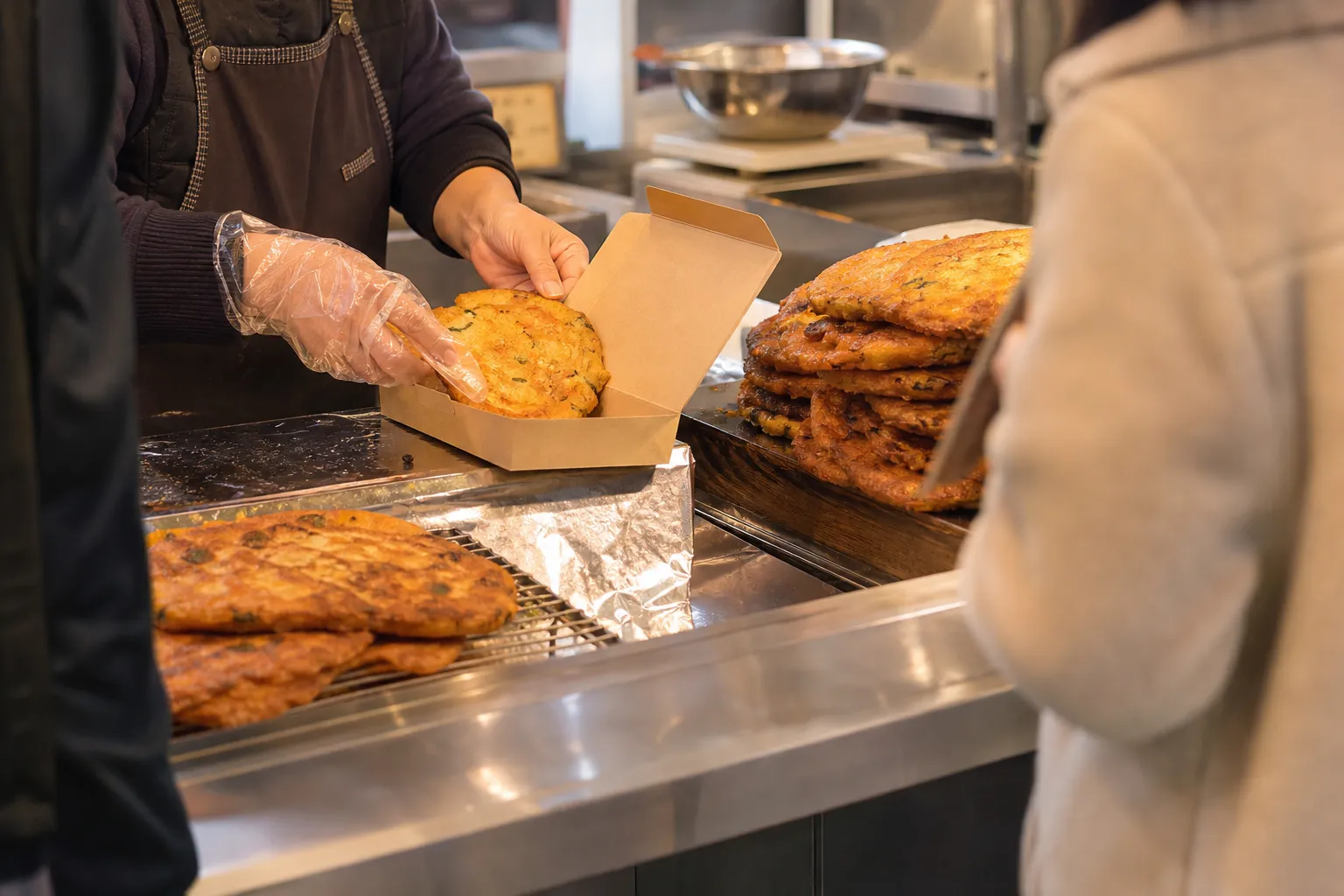
For the smoothest visit, treat Sunhui-ne Bindaetteok as a popular market stop that rewards a little timing strategy. Aim away from the evening rush when possible, expect that seats may be full, and use the quick-turnover and takeaway details to keep your plan flexible. With those expectations, the wait becomes less of a surprise and more of a manageable part of tasting one of Gwangjang Market’s best-known bindaetteok stops.
References
- 광장시장 빈대떡 맛집 TOP 4 웨이팅·메뉴·가격 한눈에 (식신, 2026-03-31)
- 순희네빈대떡 | 서울 공식 관광정보 웹사이트 (서울관광재단 Visit Seoul)
- 광장시장 맛집 베스트 웨이팅 감수할 만한 TOP 8 (식신)
- 광장시장 명물 녹두전, 원조순희네빈대떡 (식신)
- 순희네빈대떡 – 트립인포 (트립인포)
About the Author