
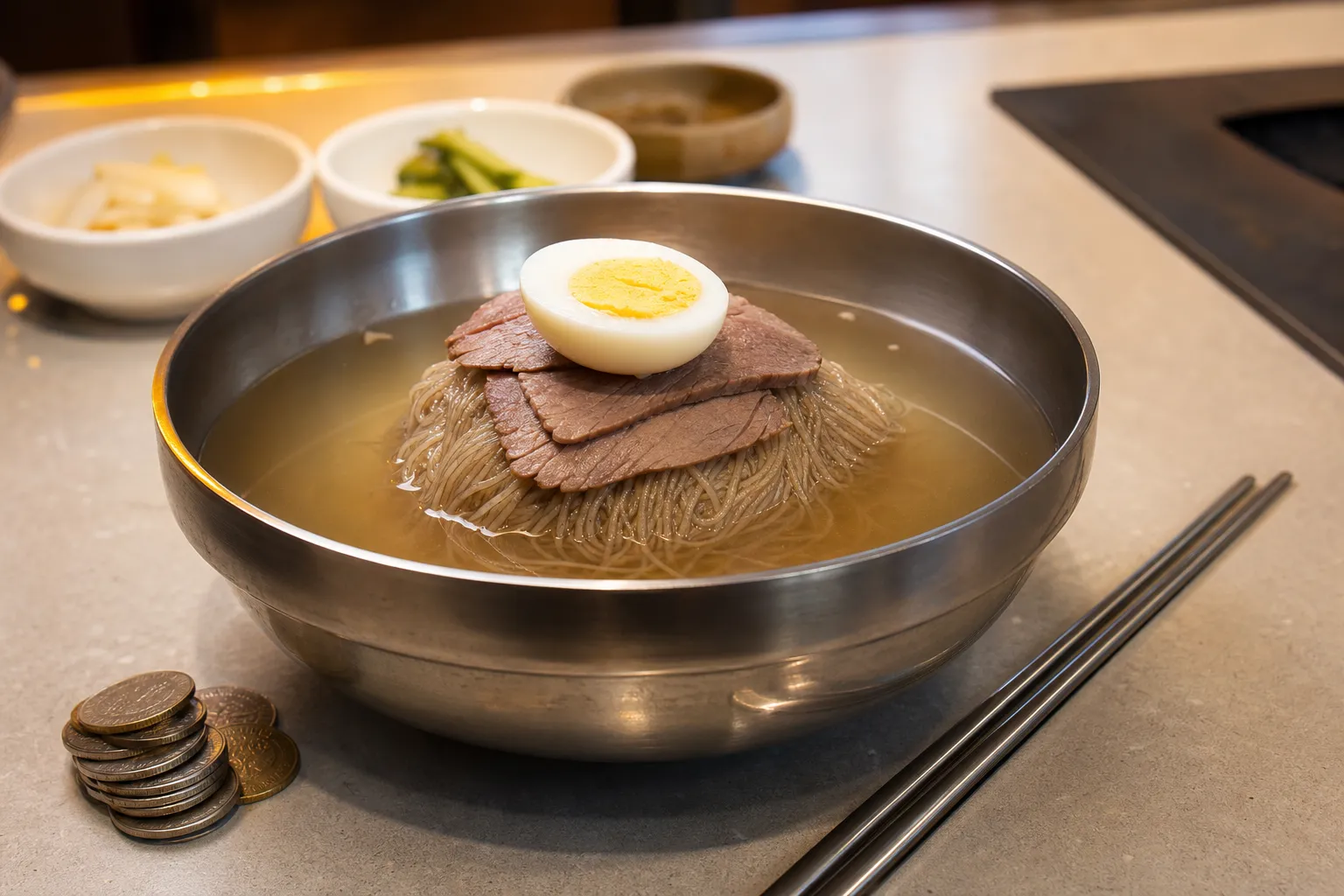
Woo Lae Oak’s 18,000-won naengmyeon price has become a useful snapshot of how much Seoul’s beloved Pyongyang cold noodles now cost. In April 2026, the Seoul Jung-gu restaurant raised its Pyongyang naengmyeon from 16,000 won to 18,000 won, a 12.5% increase that moved Woo Lae Oak Naengmyeon closer to the symbolic 20,000-won mark.1
For many readers, that number may stand out because naengmyeon has long carried an image of being simple, familiar, and widely loved. Yet the price change did not happen in isolation. Reports connected the rise to broader pressure on restaurant costs, including meat prices, labor costs, and the general upward trend in eating-out prices.1 If you follow Seoul food culture, Woo Lae Oak’s price is not just a menu update. It is also a small but telling sign of how classic restaurant foods are being repriced in a more expensive dining environment.
Woo Lae Oak 18,000 Won: What Changed
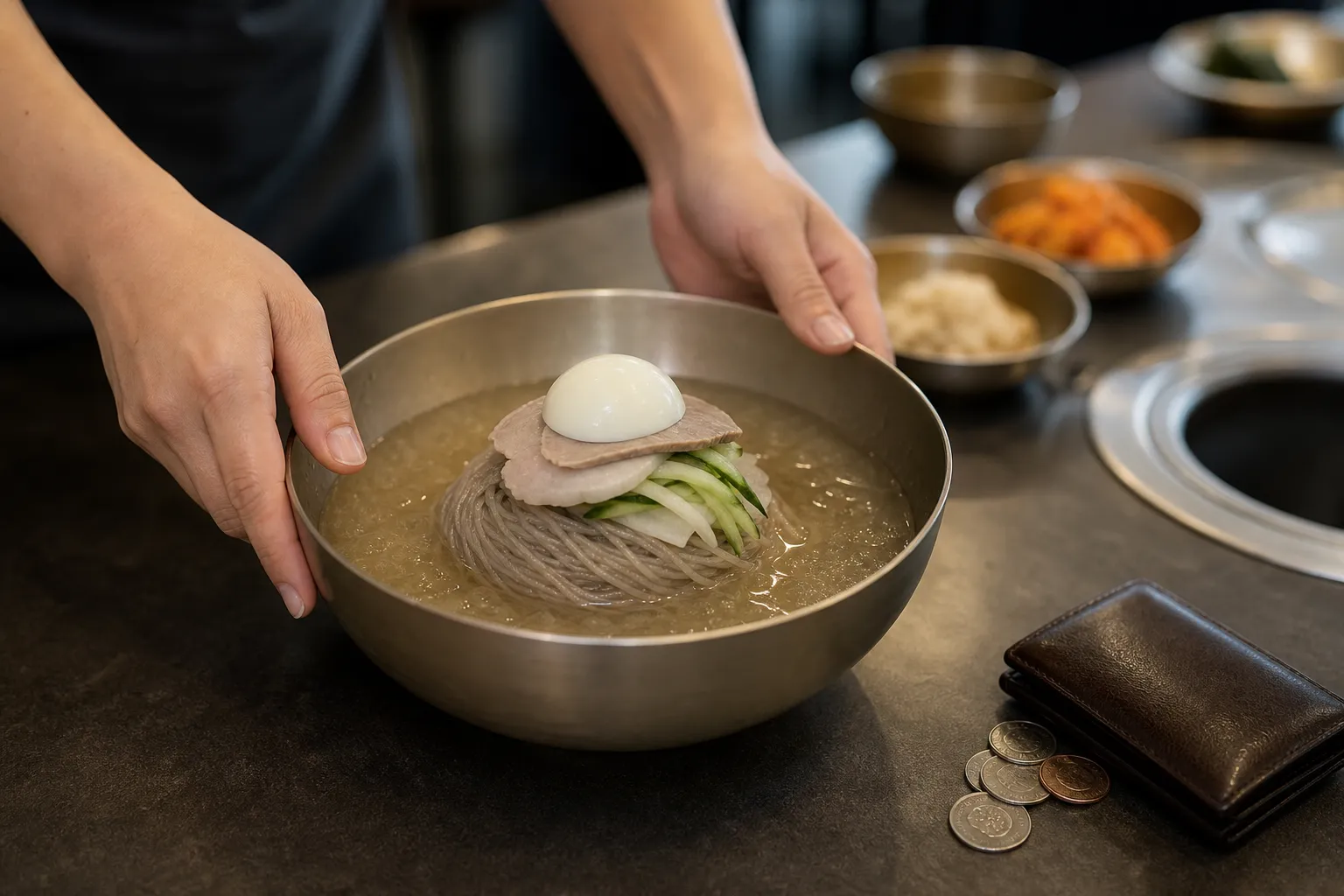
The key change is straightforward: Woo Lae Oak’s Pyongyang naengmyeon went from 16,000 won to 18,000 won beginning in April 2026.1 That means a single bowl now costs 2,000 won more than it did before the increase. In percentage terms, the reported increase was 12.5%.1
That 18,000-won figure feels especially notable because, less than a year earlier, several major references still placed Woo Lae Oak at 16,000 won. In June 2025, reports on Seoul’s summer cold noodle prices listed Woo Lae Oak, Bongpiyang, and Pyeonggaok at 16,000 won per bowl.2 SBS also cited Korea Consumer Agency price data showing that the average price of a bowl of naengmyeon in Seoul reached 12,269 won in May 2025, while Woo Lae Oak, Bongpiyang, and Pyeonggaok were named as examples priced at 16,000 won.3
That comparison helps explain why the 2026 price drew attention. Woo Lae Oak was already above the Seoul average reported for May 2025, and the move to 18,000 won widened the gap further. The sources do not provide a new Seoul-wide average for April 2026, so the safest reading is not that Woo Lae Oak represents every naengmyeon shop. Rather, it shows how a famous, high-demand restaurant can sit at the upper end of a category that has been getting more expensive.
Why This Bowl Gets So Much Attention
Woo Lae Oak is not just another cold noodle shop in Seoul’s crowded dining scene. The MICHELIN Guide lists Woo Lae Oak as a Bib Gourmand restaurant at 62-29 Changgyeonggung-ro, Jung-gu, Seoul, and describes it as a naengmyeon restaurant that opened in 1946.4 Its broth is described as being made by boiling Korean beef arongsatae, then seasoning the stock with salt and soy sauce for a clean, savory flavor.4
That long history matters because the price discussion is tied to reputation. A restaurant founded in 1946 carries a different cultural weight from a newer noodle shop, especially when it is repeatedly mentioned in coverage of Seoul’s Pyongyang naengmyeon scene. In July 2025, Dong-A Ilbo described Woo Lae Oak as a well-known Pyongyang naengmyeon establishment and reported that its waiting system showed 130 teams during a heat-wave period.5
The same July 2025 report said Woo Lae Oak had raised its price to 16,000 won in 2022 and was still maintaining that price at the time of reporting.5 That detail makes the April 2026 jump clearer: the restaurant appears to have held the 16,000-won price for a period before moving to 18,000 won.
There was also a separate operational note in 2025. Land & House reported in July 2025 that Woo Lae Oak had announced a closure of about one month, until the end of August, because of internal construction. The report also cited Jung-gu Office as confirming that there had been no administrative measure such as a business suspension, and it identified the restaurant’s Pyongyang naengmyeon price at that time as 16,000 won.6
A Price Story Beyond One Restaurant
The Woo Lae Oak 18,000-won discussion fits into a larger pattern around summer foods and restaurant prices. In 2025, reports were already paying close attention to naengmyeon and samgyetang prices as popular warm-weather menu items became more expensive. SBS, citing Korea Consumer Agency data, reported that Seoul’s average naengmyeon price rose to 12,269 won in May 2025.3 Newsis reported the same Seoul average for May 2025 and noted that it was up 154 won from the previous month.2
By April 2026, the focus had sharpened around the possibility of a 20,000-won bowl. Asia Economy framed the Woo Lae Oak increase as part of a wider rise in eating-out prices, with cost pressures such as meat and labor cited in the background.1 One restaurant industry official was quoted as saying that the trend of dining-price increases is likely to continue for the time being.1
For diners, the practical takeaway is simple: Woo Lae Oak Naengmyeon now sits at 18,000 won based on the April 2026 report, and that number reflects both the restaurant’s status and the broader cost environment around eating out in Seoul. It may still be discussed as a classic bowl from a long-running restaurant, but it is also now part of the conversation about how far familiar restaurant foods can rise in price.
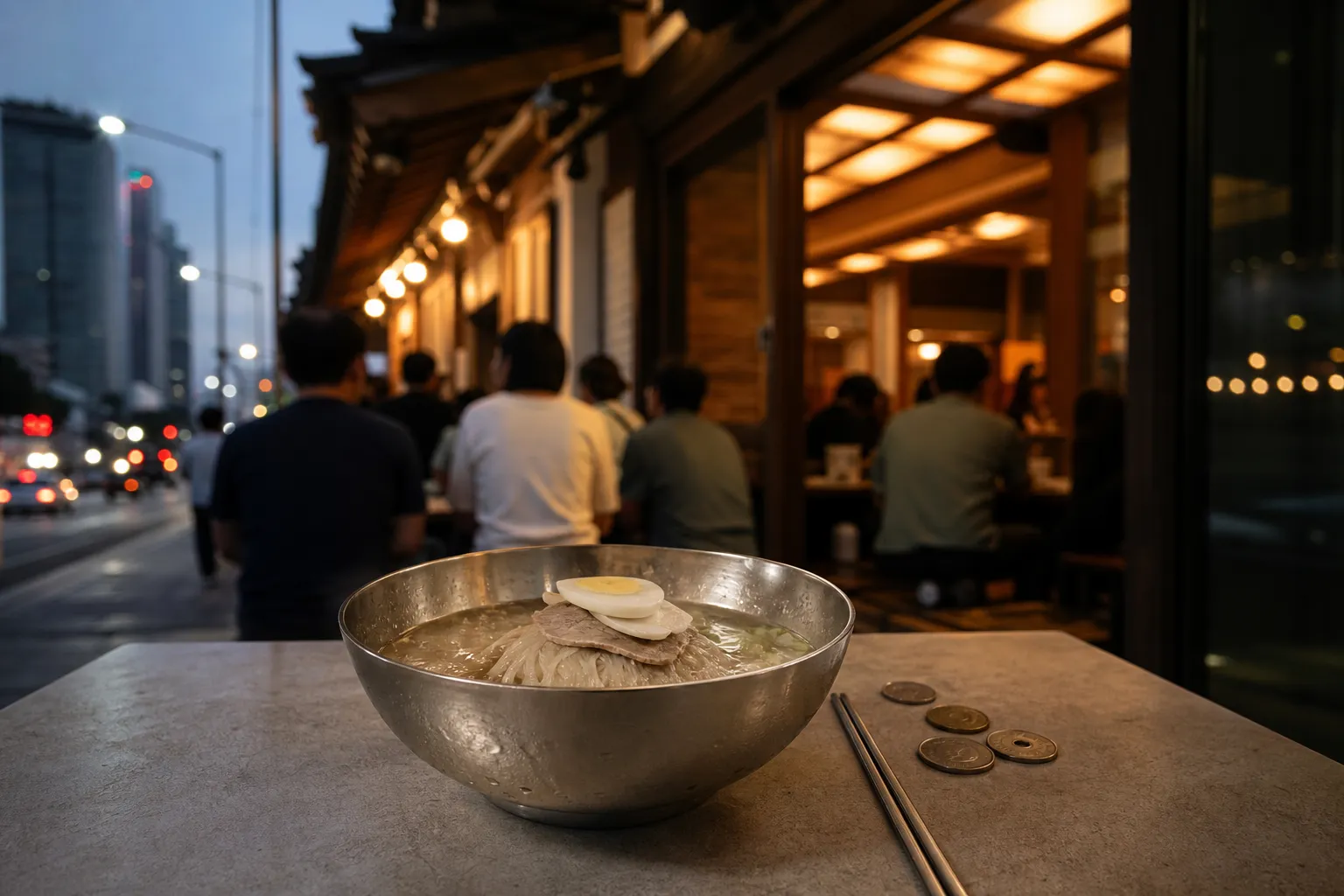
In the end, Woo Lae Oak’s 18,000-won naengmyeon is more than a menu-line update. It captures the tension between tradition, demand, and rising restaurant costs, showing how even a deeply familiar bowl of cold noodles can become a marker of Seoul’s changing dining prices.
References
- 냉면 한 그릇 2만원 눈앞…서민 음식값도 손 떨리네 (아시아경제, 2026-04-17)
- "또 오를까?" 여름철 '평냉 마니아' 긴장…을밀대·우래옥 냉면 1만6000원 달해 (뉴시스, 2025-06-17)
- 여름철 인기메뉴 '냉면·삼계탕' 가격 또 올라 (SBS 뉴스, 2025-06-17)
- 우래옥 – Seoul – 의 미쉐린 가이드 레스토랑 (MICHELIN Guide)
- ‘우래옥 대기 130팀’… MZ의 ‘힙푸드’ 평양냉면 열전 (동아일보, 2025-07-12)
- '우래옥 미스터리' 영업중단에 '평냉 성지' 폭염 웨이팅 지옥 예고 (땅집고, 2025-07-30)
About the Author