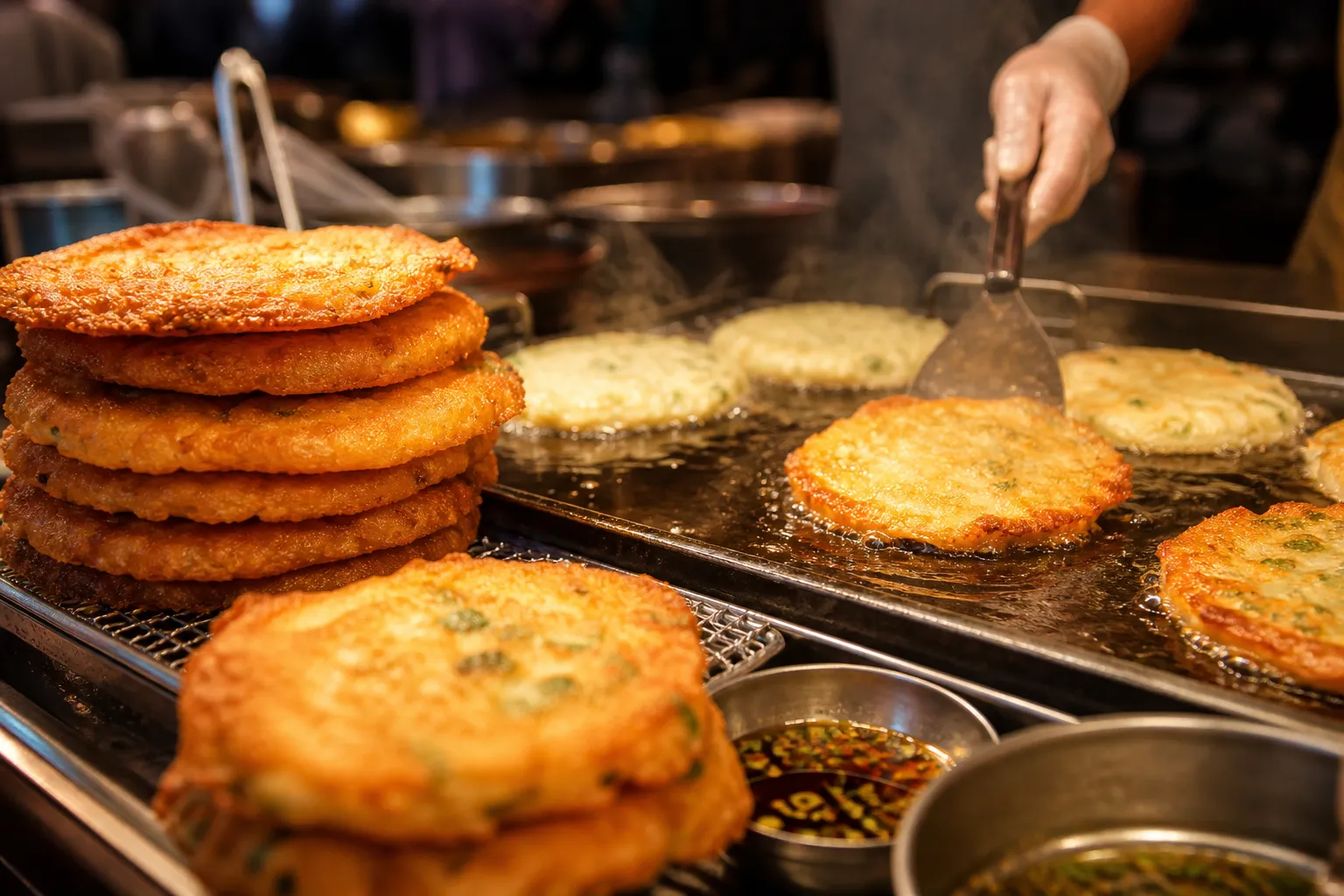
Wonjo Sunhui-ne Bindaetteok is one of the names most closely tied to Gwangjang Bindaetteok, the mung bean pancake many visitors look for when they enter Seoul’s Gwangjang Market. The shop is described by Siksin as a famous specialty of Gwangjang Market in Jongno-gu, Seoul, and its story reaches back to 1994, giving it about three decades of history by the time Siksin profiled it in 2025.1
For travelers, the appeal is easy to understand. This is not presented as a polished restaurant detached from its setting, but as a market food landmark: a place associated with hot griddles, mung bean batter, savory side dishes, and the lively rhythm of one of Seoul’s best-known traditional markets. Visit Seoul, the city’s official tourism information website, also introduces Sunhui-ne Bindaetteok as a noted bindaetteok house and a famous jeon restaurant inside Gwangjang Market.2
Why Wonjo Sunhui-ne Bindaetteok Stands Out
The main dish here is nokdu bindaetteok, a savory pancake made from mung beans. Siksin’s 2025 feature highlights an important detail: the shop uses mung beans ground with a traditional millstone and does not add wheat flour or starch to the batter.1 That detail helps explain why the place is usually discussed not only as a market snack stop, but as a specialist in a very specific Korean comfort food.
Bindaetteok has a texture that is central to its appeal. The Financial Post’s old-shop travel feature frames Wonjo Sunhui-ne Bindaetteok around mung bean pancakes that fill the market alley with a crisp-outside, moist-inside character, and identifies nokdu bindaetteok and gogi wanja, or meat patties, as key menu items.3 Even without over-romanticizing it, that combination tells you a lot: the food is hearty, direct, and built for eating in a busy market rather than lingering over a formal course meal.
The shop’s origin story also gives it a stronger identity than a generic market stall. The Financial Post summary says the business first opened in 1994, beginning as a small stall in Gwangjang Market under founder Chu Jeong-ae, and that it has continued in a family-run form.3 Siksin separately notes the same 1994 opening year, making that date one of the more clearly repeated facts about the restaurant.1
That matters because Gwangjang Market has many food choices. A name like Wonjo Sunhui-ne Bindaetteok stands out not only because it sells a recognizable dish, but because multiple food and travel sources describe it as part of the market’s representative food culture. If you are searching for Gwangjang Bindaetteok, this is one of the establishments that repeatedly appears in that conversation.
What to Order at Sunhui-ne Bindaetteok
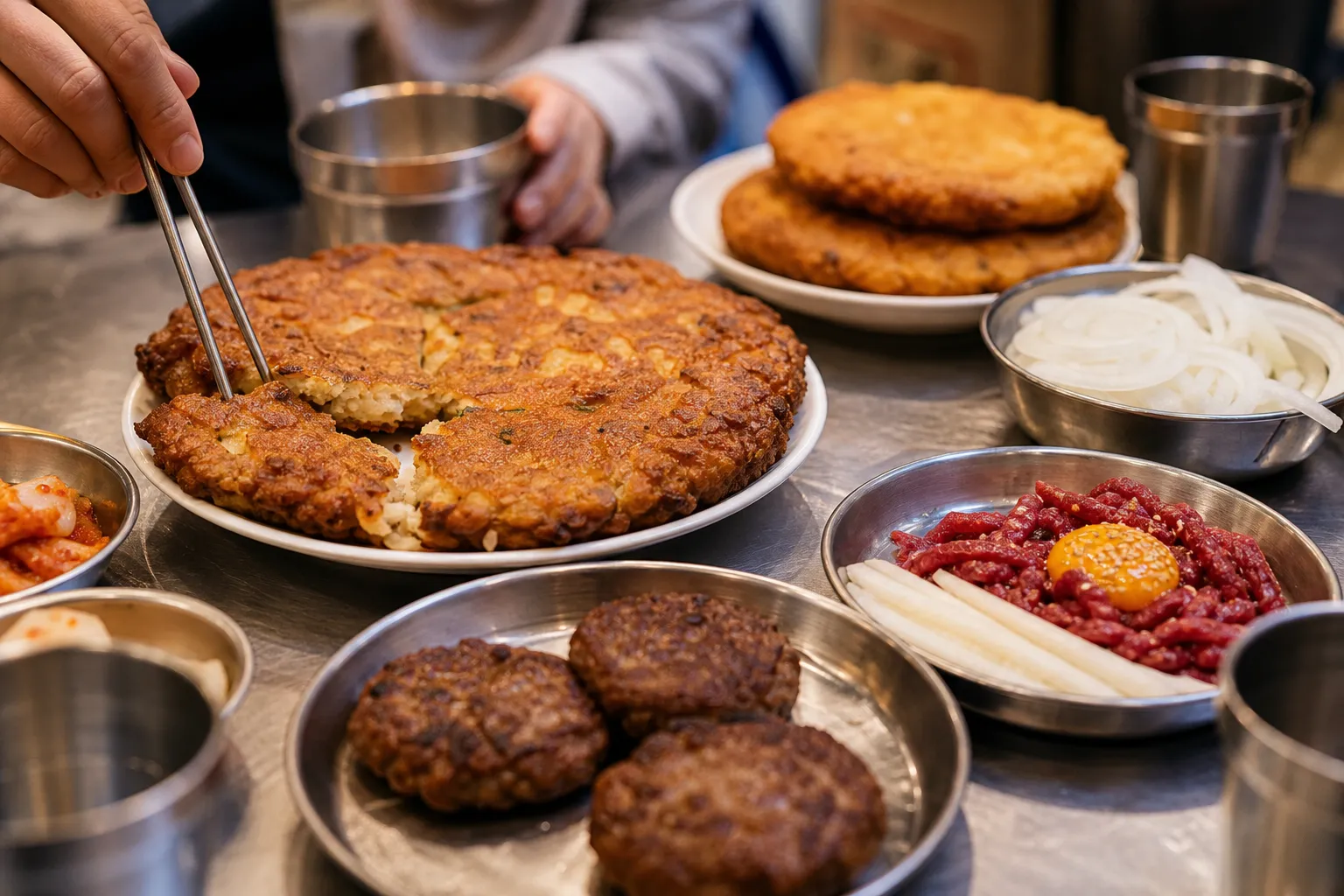
The signature order is nokdu bindaetteok, but the menu is not limited to one item. Siksin lists the representative dishes as nokdu bindaetteok, gogi wanja, yukhoe, and Gwangjang gimbap, with average prices described as around 5,000 won for bindaetteok and in the 20,000-won range for yukhoe.1 Those numbers are useful for setting expectations, though actual prices can change and should be checked at the shop.
Gogi wanja is especially natural to pair with bindaetteok because it keeps the meal in the same savory, pan-fried family. Financial Post also names mung bean pancakes and meat patties as the main items, reinforcing that these two dishes form the core of the shop’s identity.3 If you are planning a casual market meal, that pairing is the most source-backed place to start.
Siksin’s store information page broadens the picture a little further. It classifies Wonjo Sunhui-ne Bindaetteok as a Gwangjang Market restaurant in Jongno 5-ga, Seoul, and its AI highlights mention customer use cases involving nokdu jeon, assorted jeon, yukhoe, makgeolli, takeout, and visits by foreign tourists.4 That does not mean every visitor orders the same spread, but it shows how the shop is commonly understood: pancakes and jeon at the center, with market-friendly companions around them.
There is also an overseas note in the source material. Korea Daily reported that “Gwangjang Market Sunhui-ne Bindaetteok” locations in Arcadia and Chino Hills in the United States ran a 20% discount promotion through January 31, 2025, marking 20,000 bindaetteok sold; the same article mentioned 100% mung bean bindaetteok, gogi wanja, mayak gimbap, and tteokbokki at those U.S. locations.5 Since that promotion ended before June 29, 2026, it should be read as past information, not a current offer.
A Market Food Landmark for Visitors
Part of the usefulness of Wonjo Sunhui-ne Bindaetteok is that it gives visitors a clear entry point into Gwangjang Market’s food scene. Visit Seoul presents Sunhui-ne Bindaetteok as one of the representative places where travelers can eat bindaetteok when visiting the market.2 For someone who wants a focused food stop rather than an open-ended search through every alley, that kind of official tourism listing is meaningful.
Siksin’s store page also shows a longer pattern of recognition, with star-restaurant history displayed from 2016 through 2025.4 That does not replace your own taste, of course, but it does show that the shop has been repeatedly cataloged and discussed over time rather than appearing as a one-off mention.
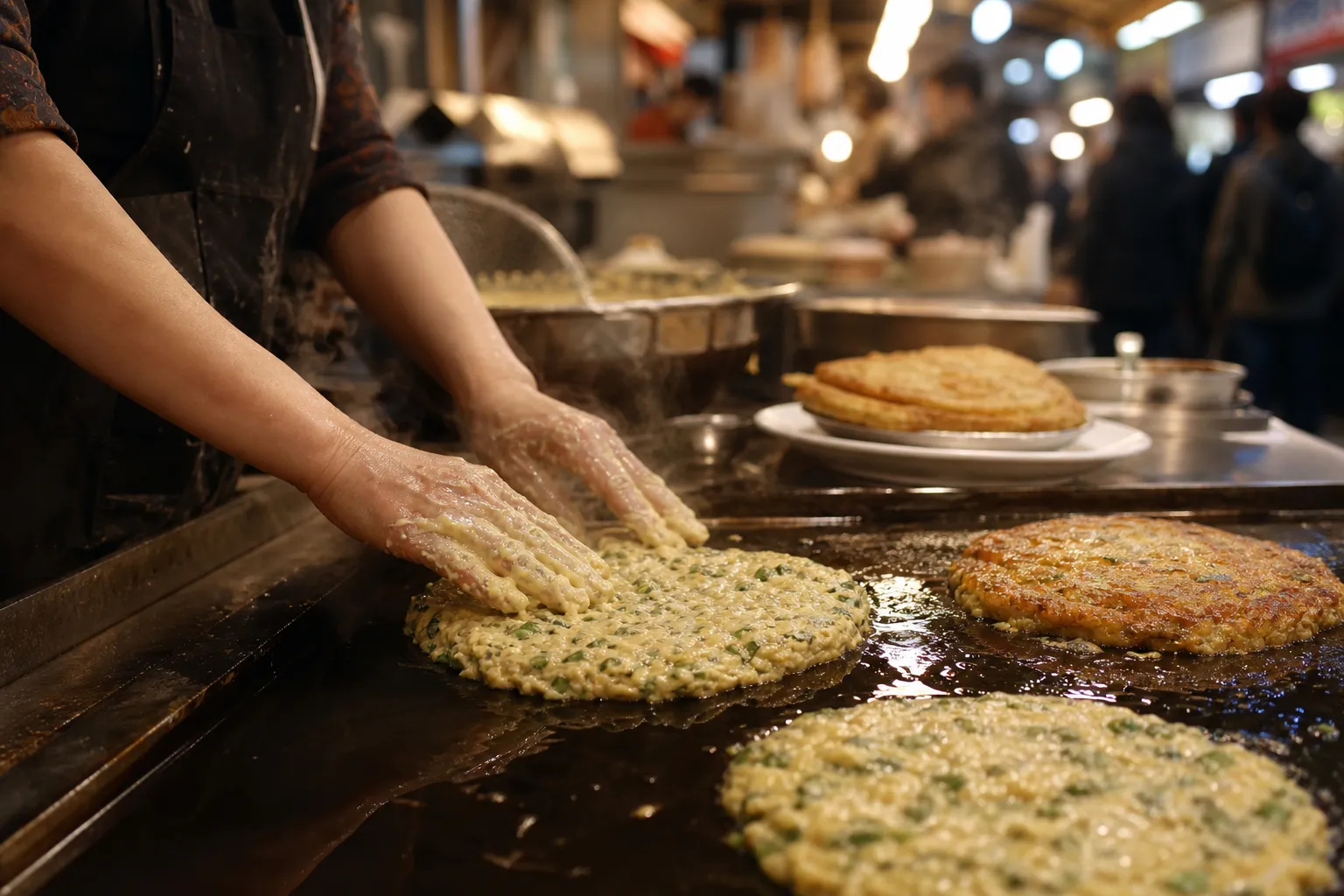
Wonjo Sunhui-ne Bindaetteok is best understood as a classic Gwangjang Market food stop built around mung bean pancakes, meat patties, and the atmosphere of a long-running Seoul market. With a reported 1994 start, a family-run background, and repeated recognition from food and tourism sources, it remains a strong reference point for anyone trying to understand why Gwangjang Bindaetteok is such a memorable part of Seoul’s market food culture.
References
- 광장시장 명물 녹두전, 원조순희네빈대떡 (식신, 2025-08-21)
- 순희네빈대떡 (서울관광재단 Visit Seoul)
- [안병익의 노포기행] 시장 골목을 채우는 겉바속촉 녹두전의 명가, 광장시장 원조순희네빈대떡 (파이낸셜포스트)
- 원조순희네빈대떡 – 서울, 종로구, 종로5가 (식신)
- [알뜰정보] '순희네 빈대떡 20% 할인' 외 (미주중앙일보, 2025-01-26)
About the Author