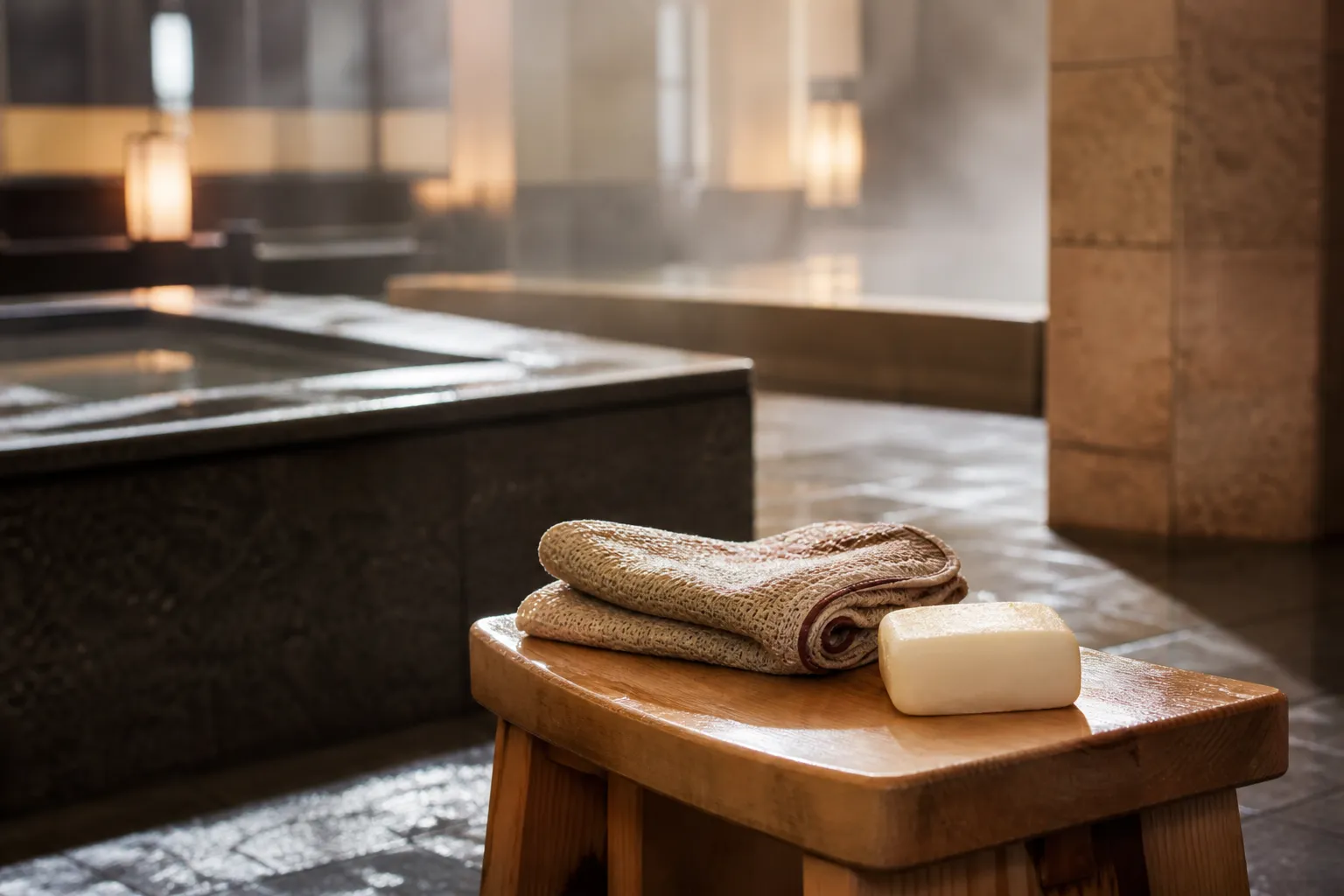
Ttaebinu seshin refers to the Korean body scrub practice associated with bathhouses, jjimjilbangs, and dedicated scrub shops. For travelers and first-time visitors, the key is to understand both the cultural appeal and the skin-care limits before booking or trying it.
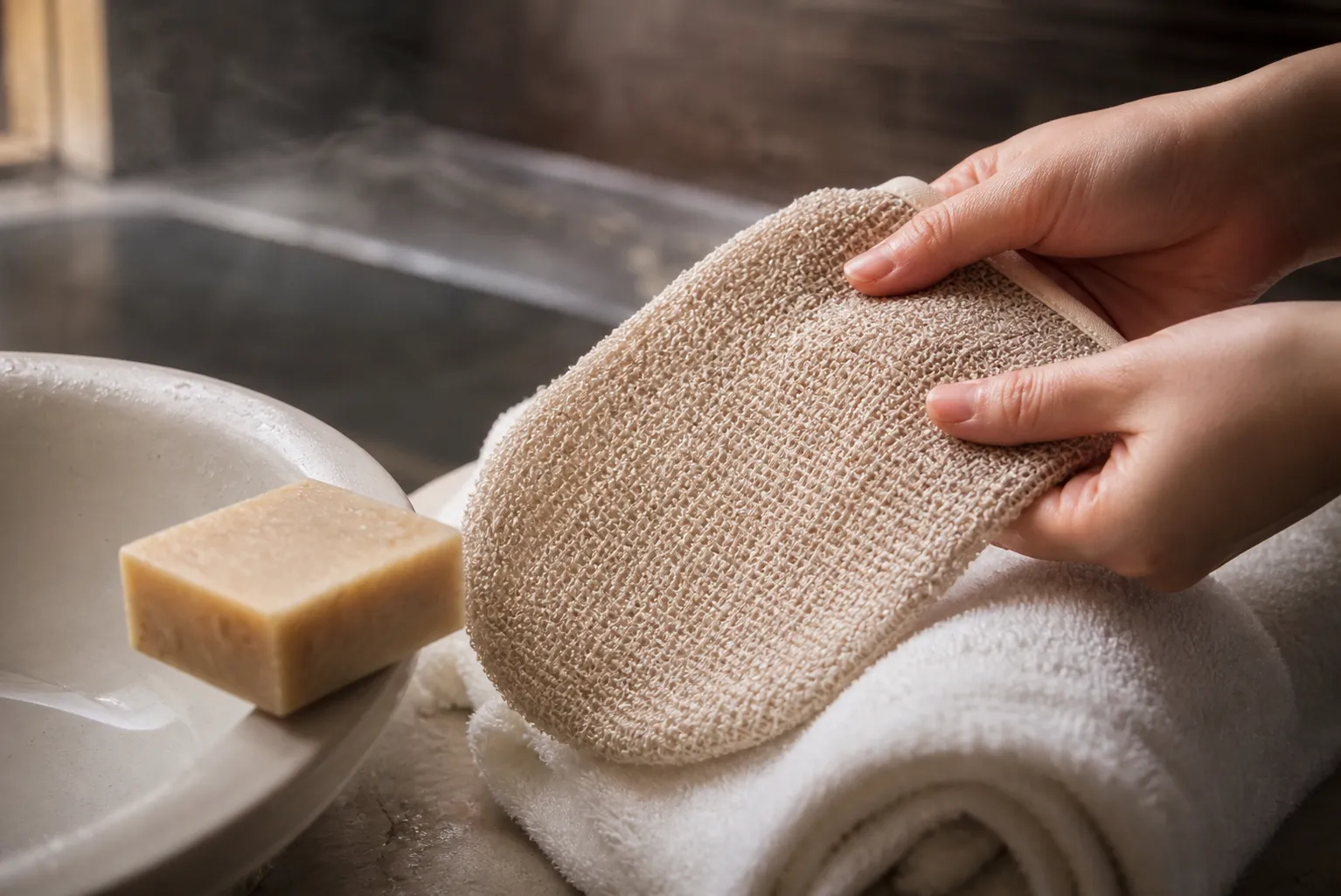
In Korean bath culture, seshin is commonly understood as scrubbing away built-up dead skin cells and impurities. Korean reporting describes “ttae” as a mixture that can include the outer dead-skin layer, sebum, sweat, and dust that accumulates on the skin surface.1 The familiar tool is the textured scrub cloth often called an Italy towel, though professional methods can differ by bath manager and setting. A National Folk Museum of Korea academic survey, cited by Hankyung, described one distinction: male bath managers often wrapped an Italy towel around a towel, while female bath managers were associated with glove-style Italy towels.2
What Ttaebinu Seshin Is, and Why It Is Getting Attention
Seshin is not just a beauty step. It sits inside a broader bathhouse routine in which soaking, heat, washing, and scrubbing are treated as part of personal care. That helps explain why the experience has moved into travel planning: foreign visitors to Korea are spending more on food, traditional culture, beauty, and wellness experiences rather than focusing only on duty-free shopping. In the first half of 2025, spending by foreign tourists on unusual experience products rose 382.5% year over year, based on Korea Tourism Organization data cited by Asia Economy.3
The same shift is visible in scrub-related booking activity. Creatrip reported that transaction value for one-person seshin shops in the second half of 2025 increased by about 170% compared with the first half of the year.3 During the 2025 summer vacation period, Klook’s inbound product bookings from July 1 to August 30 rose 40% year over year, while Creatrip’s transaction value from foreign users rose 31%; popular Creatrip products included seshin and jjimjilbang experiences, norigae classes, and hanbok experiences.4
A hotel representative quoted by Asia Economy said foreign guests respond well to “experience-type content beyond lodging, especially content where they can experience Korean culture.”3 That phrasing matters for readers: many visitors are not looking only for exfoliation. They are seeking a structured wellness and culture activity that feels specific to Korea.
How to Approach a Korean Body Scrub Practically
If you are trying seshin for the first time, treat it as a physical exfoliation service, not as a routine daily wash. Korean health reporting is clear that strong or repeated rubbing with a rough scrub cloth can remove part of the stratum corneum and leave skin dry or rough.1 This does not mean every visitor must avoid the experience, but it does mean the decision should be based on skin condition, frequency, and pressure.
A conservative approach begins before scrubbing. Health Chosun’s practical guidance says that if someone insists on scrubbing, it should be limited to about two to four times per year, after soaking the body for about 30 minutes, using a soft cloth and rubbing along the grain of the skin, followed by moisturizer.1 For a traveler, that guidance points to several sensible choices: do not schedule multiple scrubs during one trip, avoid asking for stronger pressure just because the service feels unfamiliar, and plan to moisturize afterward.
The biggest risk is overdoing the friction. Health Chosun reported in 2025 that excessive physical rubbing can damage the skin barrier and lead to dryness, itching, and inflammation.5 The same report noted that people with atopic dermatitis or psoriasis, those with allergic tendencies, older adults, and people with chronic illnesses may see symptoms worsen after seshin.5 If any of those categories apply, the safest reading of the available source material is to be cautious or avoid the scrub.
There is also a difference between enjoying a bathhouse setting and receiving a full scrub. Large jjimjilbangs may benefit from some K-culture tourism demand, but small neighborhood bathhouses face a different reality. Hankyung reported that the number of bathhouse businesses in Korea was 5,656 in 2025, down 13.3% from 2020, citing Ministry of Health and Welfare data.6 A visitor may therefore encounter both modern tourist-oriented experiences and older local facilities, depending on where the service is booked.
Skin-Care Cautions Before You Book
The most direct medical caution in the source material is blunt. Kim Beom-jun, a dermatology professor at Chung-Ang University Hospital, was quoted by Health Chosun as saying, “It is best not to scrub off ttae.”5 In a guide for readers, that quote should not be treated as a casual preference. It reflects the skin-barrier concern behind dermatologists’ warnings about harsh exfoliation.
For practical decision-making, the source-backed approach is simple. If your skin is already dry, inflamed, itchy, sensitive, or affected by a known skin condition, avoid strong scrubbing. If you still choose to try it, keep it rare, allow the skin to soften first, use gentler materials, follow the direction of the skin texture, and moisturize afterward.1 The goal is to avoid turning a one-time cultural experience into avoidable irritation.
Quick FAQ
Is seshin the same as a Korean body scrub?
Yes. In English travel and wellness contexts, seshin is commonly described as a Korean body scrub because it involves physically exfoliating the body with a scrub cloth or similar tool. The Korean term is more specific to the bathhouse and professional scrubbing culture.
How often should someone get ttae scrubbed?
The source material does not support frequent scrubbing. Health Chosun’s guidance says that if someone chooses to scrub, it should be limited to about two to four times per year, with soaking beforehand and moisturizer afterward.1 Ttaebinu seshin can be understood as both a Korean bath culture experience and a strong form of physical exfoliation. The safest way to approach it is to respect the cultural context, book thoughtfully, and keep skin-barrier health ahead of the desire for an especially forceful scrub.
References
- 때 밀면 안 좋다던데… 근거 있는 걸까? (헬스조선, 2023-11-11)
- 목욕관리사 '때밀이' 방법 차이는…"男 수건, 女 장갑" (한국경제, 2019-12-25)
- "한국 오면 꼭 간다" 비행기 내리자마자 '우르르'…확 바뀐 외국인 관광코스[K관광 新지형도]② (아시아경제, 2026-02-13)
- 플랫폼 타고 휴가 온 외국인 관광객 두 자릿수 증가…체험형 K콘텐츠가 견인 (전자신문, 2025-09-21)
- ‘케데헌’ 열풍에, 외신도 주목한 ‘때밀이’… 피부과 의사들은 극구 말리던데? (헬스조선, 2025-08-28)
- 물 끓이기 너무 비싸…동네 목욕탕 사라진다 (한국경제, 2026-04-15)
About the Author