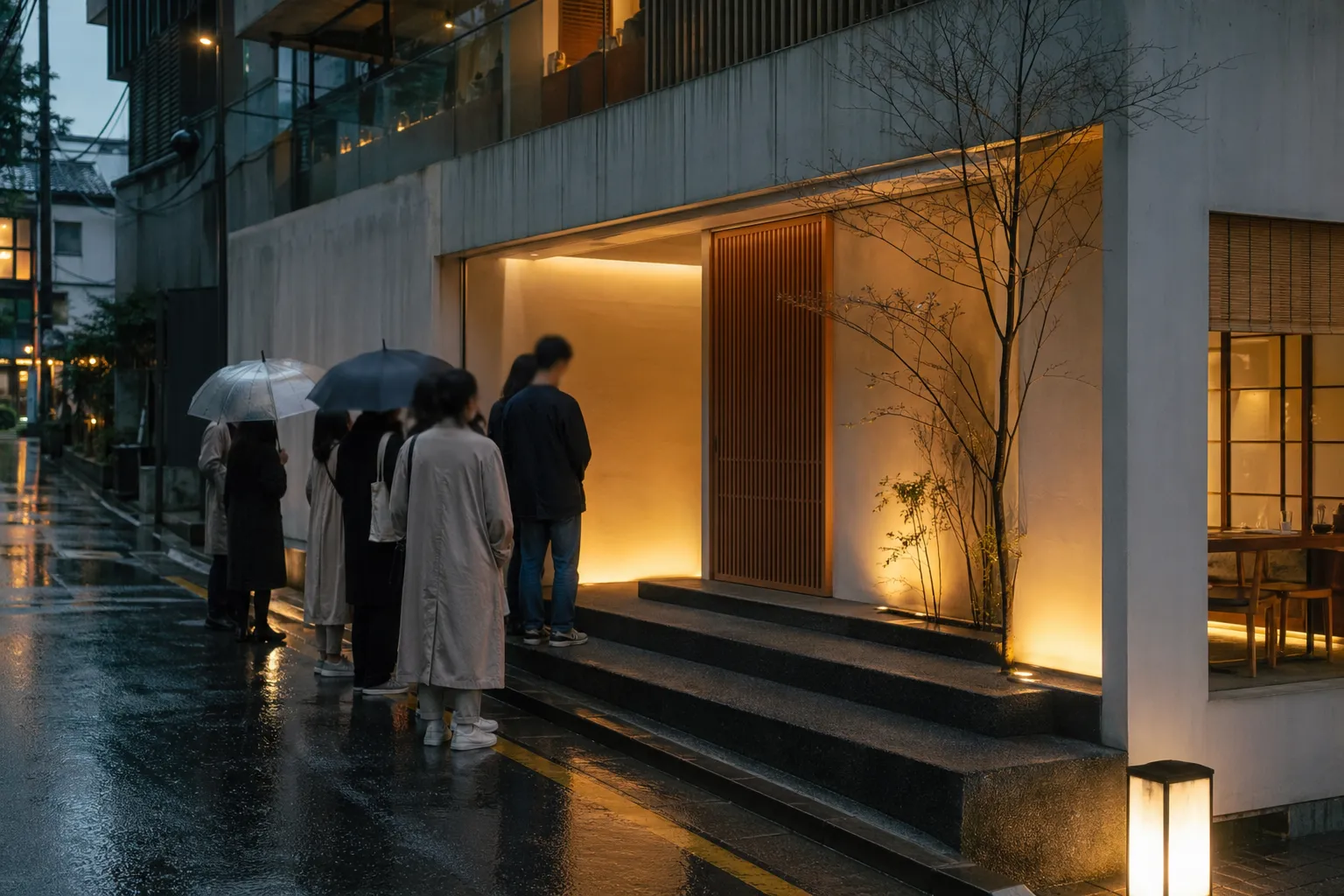
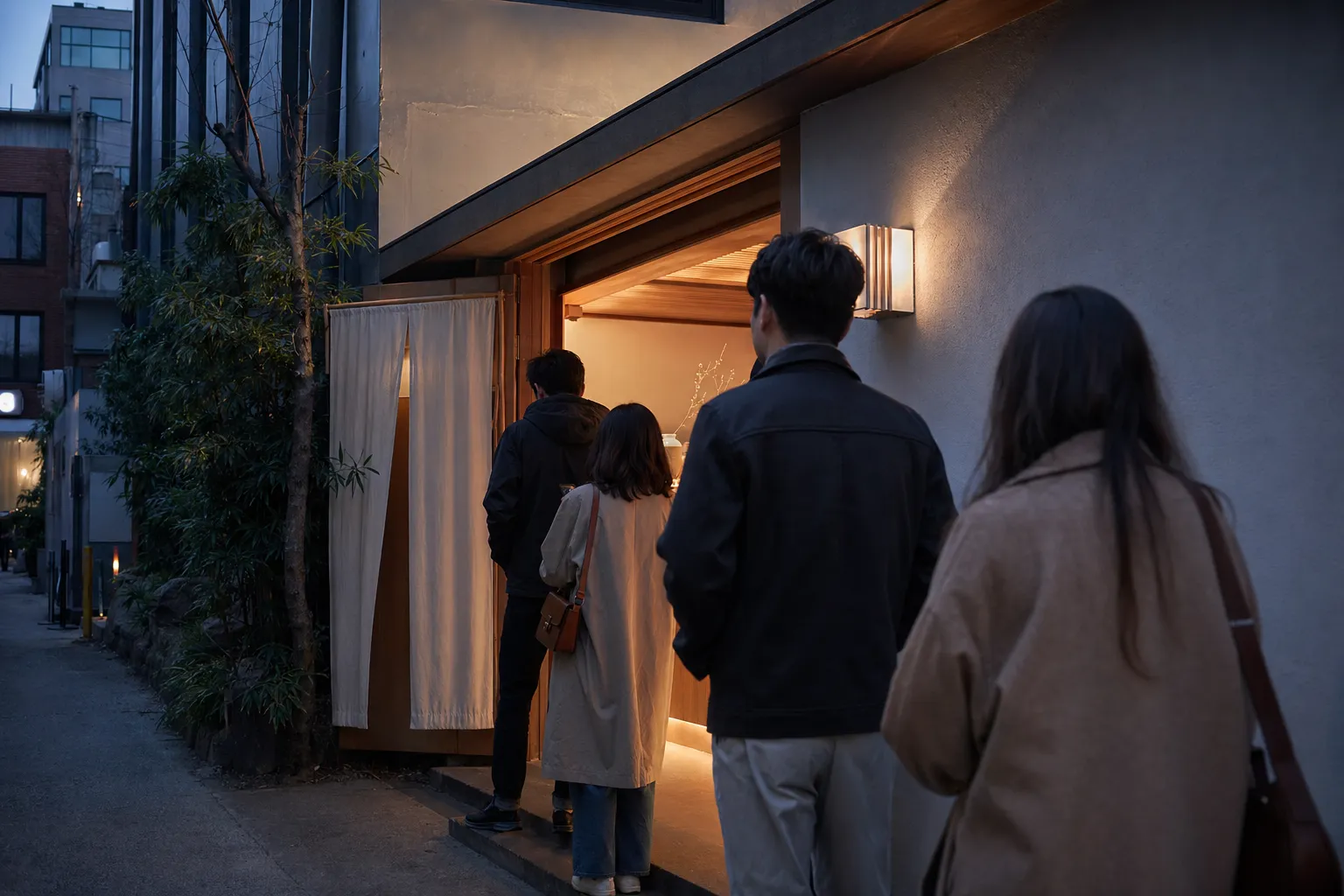
If you are looking up the waiting situation at Sobakiri Suzu in Sindang, the short version is simple: this is a small soba-focused restaurant with enough attention around it that planning ahead matters. The Michelin Guide lists Sobakiri Suzu as a soba restaurant at 98 Dongho-ro 12-gil, Jung-gu, Seoul, and marks it as a place that is “worth waiting for.”1
That phrase matters because it frames the restaurant less as a casual drop-in and more as a destination for people who are specifically seeking handmade soba. Interest has also grown after Sobakiri Suzu was newly selected for the Michelin Guide Seoul 2026 Bib Gourmand list, giving the Sindang restaurant a clearer place on Seoul’s value-focused dining map.2
Why Sobakiri Suzu Has a Waiting Reputation
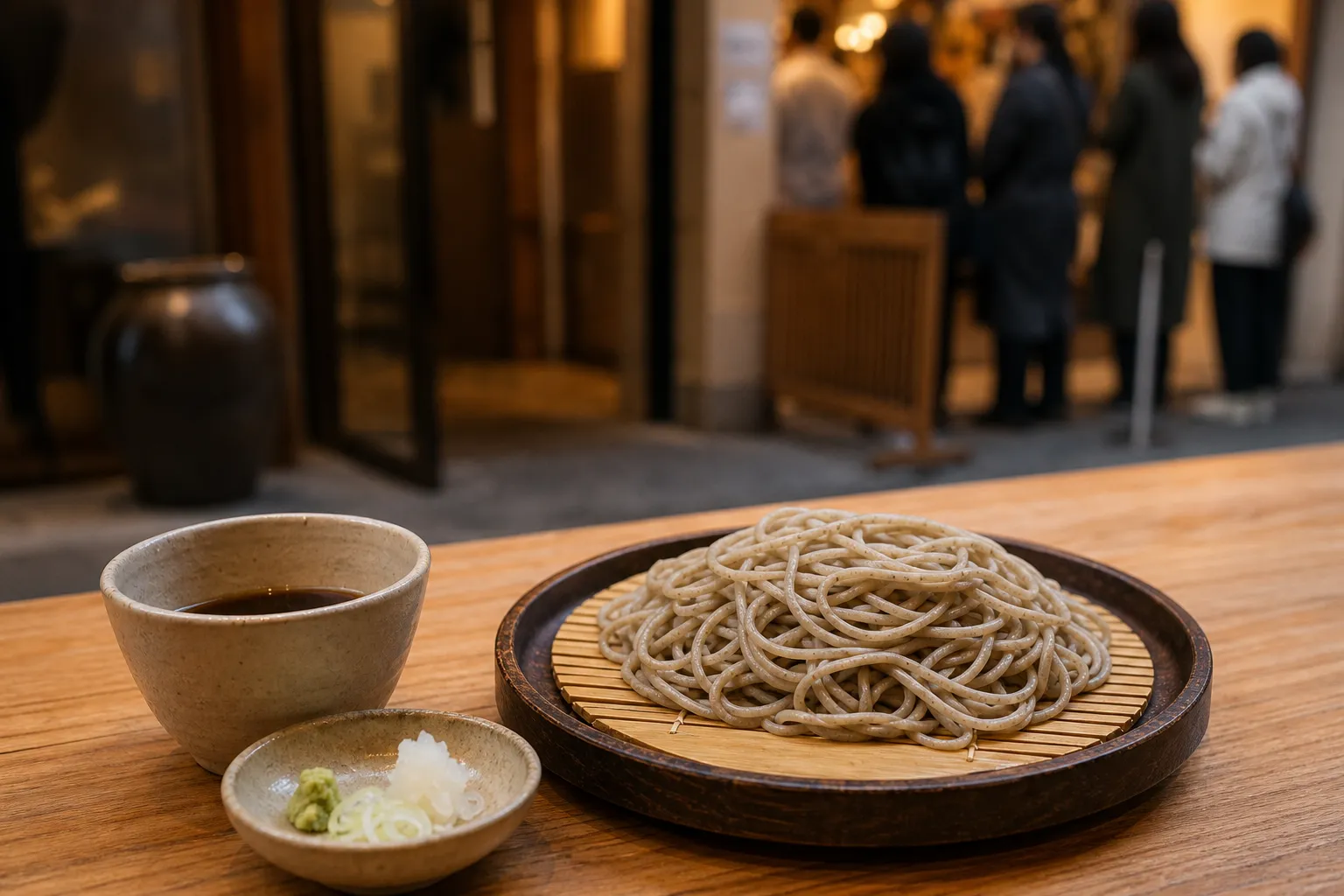
Sobakiri Suzu’s waiting appeal starts with a very specific specialty: soba made with Korean buckwheat. Cook&Chef described the restaurant as using domestic buckwheat and making noodles in a Japanese style, with same-day noodle production as one of its key features.2 For diners, that means the draw is not just the label of “Michelin-listed,” but the idea of a focused noodle shop built around freshness, texture, and buckwheat aroma.
The restaurant is also associated with the “sotoichi” method, using a 10-to-1 ratio of buckwheat flour to wheat flour.2 Maeil Business Newspaper also highlighted that Sobakiri Suzu uses this 10-to-1 sotoichi approach rather than juwari or nihachi styles, presenting it as part of how the restaurant interprets soba tradition through Korean buckwheat.3
That combination helps explain why a wait can feel understandable: this is not a broad-menu restaurant trying to please every possible craving. It is a narrowly focused soba place, and the attention around it is tied to the craft of the noodles themselves.
Michelin 2026 Bib Gourmand Context
Sobakiri Suzu’s visibility rose because it appeared among the new Seoul selections for the 2026 Michelin Guide Seoul & Busan Bib Gourmand list. JoongAng Ilbo reported that the 2026 Bib Gourmand selection included 71 restaurants in total, with 51 in Seoul and 20 in Busan, and that eight were newly selected.4 Sobakiri Suzu was named among the new Seoul selections.4
The Bib Gourmand category is especially relevant for people deciding whether a wait is worthwhile, because it is not the same as a luxury fine-dining award. For Seoul and Busan, the category applies to restaurants where a meal is available for 45,000 won or less per person and that have been selected through Michelin inspectors’ evaluation.4
The broader 2026 list also suggests that Michelin was paying attention to range, not only to familiar restaurant genres. Kukje Shinmun reported that the new Seoul selections included 3dae Samgyeyjangin, Gosari Express, Sobakiri Suzu, Andeok, and Oilje, noting that the new additions broadened the list across traditional Korean food, buckwheat dishes, vegan noodle cooking, and soba specialty dining.5
A short official comment quoted in coverage helps explain that wider framing. Gwendal Poullennec said, “This year’s selected Bib Gourmand restaurants show the depth and diversity of Korean gastronomy.”4 Sobakiri Suzu fits neatly into that idea: it is Japanese-style soba, but made meaningful in Seoul through Korean buckwheat and a Sindang setting.
Practical Waiting and Reservation Notes
For anyone thinking about visiting, the most useful detail is that Michelin’s listing says reservations are managed directly by the restaurant and that guests who want to reserve should contact the restaurant directly.1 Tableling’s store page also tags the restaurant with “reservation available,” along with “Michelin Guide 2026 new” and “lunch.”6
The operating schedule is another important part of avoiding unnecessary waiting. Cook&Chef lists Sobakiri Suzu’s hours as 11:30 a.m. to 8:00 p.m., with a break time from 3:00 p.m. to 5:00 p.m., and regular closing days every Monday and Tuesday.2 Tableling gives the same core schedule: Wednesday through Sunday, 11:30 a.m. to 8:00 p.m., with a 3:00 p.m. to 5:00 p.m. break and regular closures on Monday and Tuesday.6
Because the available sources do not provide real-time queue length, exact wait times, or a day-by-day crowd pattern, it is better not to treat any single number as reliable. What can be said from the sources is that Sobakiri Suzu has both Michelin visibility and a direct-reservation note, so checking the restaurant’s current reservation or waiting process before going is the most practical move.
If your goal is to reduce uncertainty, avoid arriving during the break time, avoid the regular closing days, and remember that attention from the 2026 Bib Gourmand selection may influence demand. The sources support the idea that this is a place people wait for; they do not provide a guaranteed “best time” to walk in.
Quick FAQ
Does Sobakiri Suzu take reservations?
Michelin notes that the restaurant manages reservations directly and says guests should contact the restaurant itself for reservation inquiries.1 Tableling also labels the restaurant as reservation available.6
What are Sobakiri Suzu’s opening hours?
The listed hours are Wednesday through Sunday, 11:30 a.m. to 8:00 p.m., with a 3:00 p.m. to 5:00 p.m. break time. Monday and Tuesday are regular closing days.6 !신당 소바키리 스즈 웨이팅 Seoul dining guide Sobakiri Suzu’s waiting reputation is best understood through its focused soba identity, Korean buckwheat noodles, Michelin Guide Seoul 2026 Bib Gourmand recognition, and direct reservation guidance. If you are planning around the line, the most source-backed advice is to confirm the restaurant’s current reservation process, check the opening schedule carefully, and treat the wait as part of visiting one of Sindang’s most talked-about soba specialists.
References
- 소바키리 스즈 – Seoul – 미쉐린 가이드 레스토랑 (미쉐린 가이드)
- [미슐랭 스토리] 은은한 메밀 향과 탄탄한 면발…미쉐린 2026 빕 구르망 신규 선정 ‘소바키리 스즈’ (Cook&Chef, 2026-03-11)
- 4만 5000원 이하…올해 미쉐린이 공개한 빕 구르망은 어디? (매일경제, 2026-02-28)
- 삼계탕부터 비건 면까지…미쉐린 ‘가성비 미식’ 빕 구르망 공개 [쿠킹] (중앙일보 / 미주중앙일보, 2026-02-25)
- 2026 미슐랭 빕구르망에 부산 뫼밀집·송헌집·평양집 추가 (국제신문, 2026-02-26)
- 테이블링 – 소바키리 스즈 (테이블링)
About the Author