The Seongsu Station Starbucks Dujjonku buzz centered on Starbucks Korea’s limited Dubai Chewy Roll, officially sold as “Dubai Jjondeuk Roll” rather than a cookie. The product went on sale on January 30, 2026, at only six Seoul Starbucks stores, including the Seongsu Station branch, and quickly became part of the wider Dujjonku dessert conversation.1
For anyone trying to understand why Seongsu Station became one of the names attached to the trend, the key point is simple: Starbucks Korea did not roll this out nationwide. It chose a small group of stores, added strict purchase rules, and introduced a dessert built around the same ingredients driving Korea’s Dubai-style chewy dessert craze.
Seongsu Station Starbucks Dujjonku Was Really a Dubai Chewy Roll
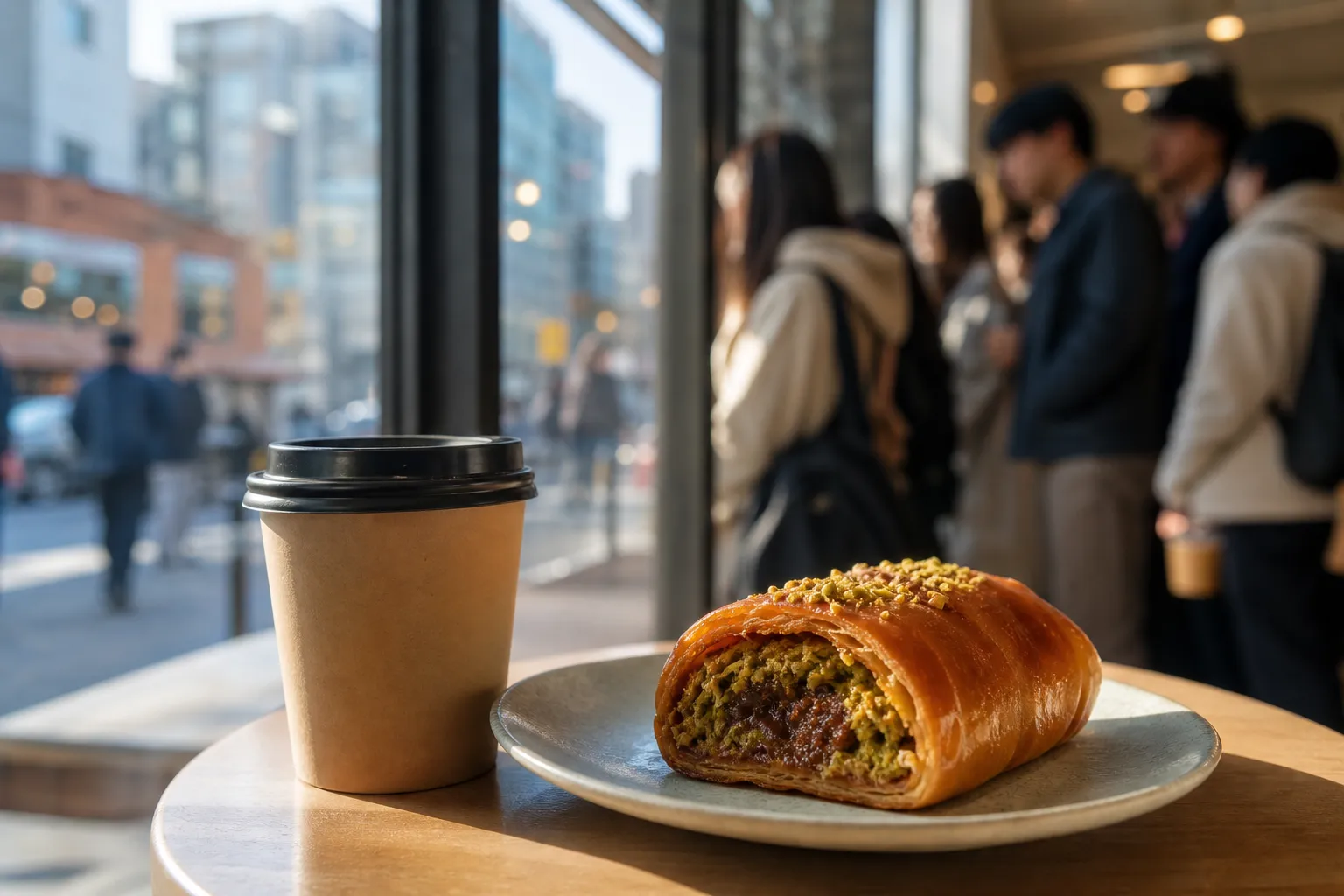
Although many people described the release through the shorthand of Dujjonku, Starbucks Korea’s product was not introduced as a Dubai chewy cookie. Its official name was “Dubai Jjondeuk Roll,” often translated naturally as Dubai Chewy Roll. That distinction matters because the format was different: instead of a cookie, the dessert was described as kadaif and pistachio paste rolled in marshmallow.1
Other reports described the structure in similar terms, noting a filling made with kadaif and pistachio wrapped in a marshmallow sheet.2 Asia Economy also described the dessert as using kadaif and pistachio paste as filling ingredients, wrapped with marshmallow mixed with cocoa powder.3 In plain English, this was Starbucks Korea’s roll-shaped take on the flavor and texture language that had already made Dubai-style pistachio desserts a viral category.
That is why the Seongsu Dujjonku keyword can be a little confusing. If you were searching for a Starbucks cookie at Seongsu Station, the source-backed product was actually the Dubai Chewy Roll. The public shorthand connected it to the Dujjonku wave, but the menu item itself had its own name, shape, and selling rules.
Starbucks Korea previewed the release on its official Instagram account on January 27, 2026, with the line “Dubai is coming,” a short teaser that fit the product’s trend-driven appeal.4 The post announced the January 30 start date and listed the six participating stores: Reserve Gwanghwamun, Starfield COEX Mall R, Yongsan Station Summit R, Centerfield R, Seongsu Station, and Hongdae Donggyo.1
Why the Seongsu Station Store Drew Attention
The Seongsu Station branch mattered because it was one of just six Seoul locations where the Dubai Chewy Roll was sold. Reports on the launch emphasized that the product was limited not only by store count but also by daily stock. Newsis reported that each participating store sold around 40 to 50 units per day, priced at 7,200 won.5
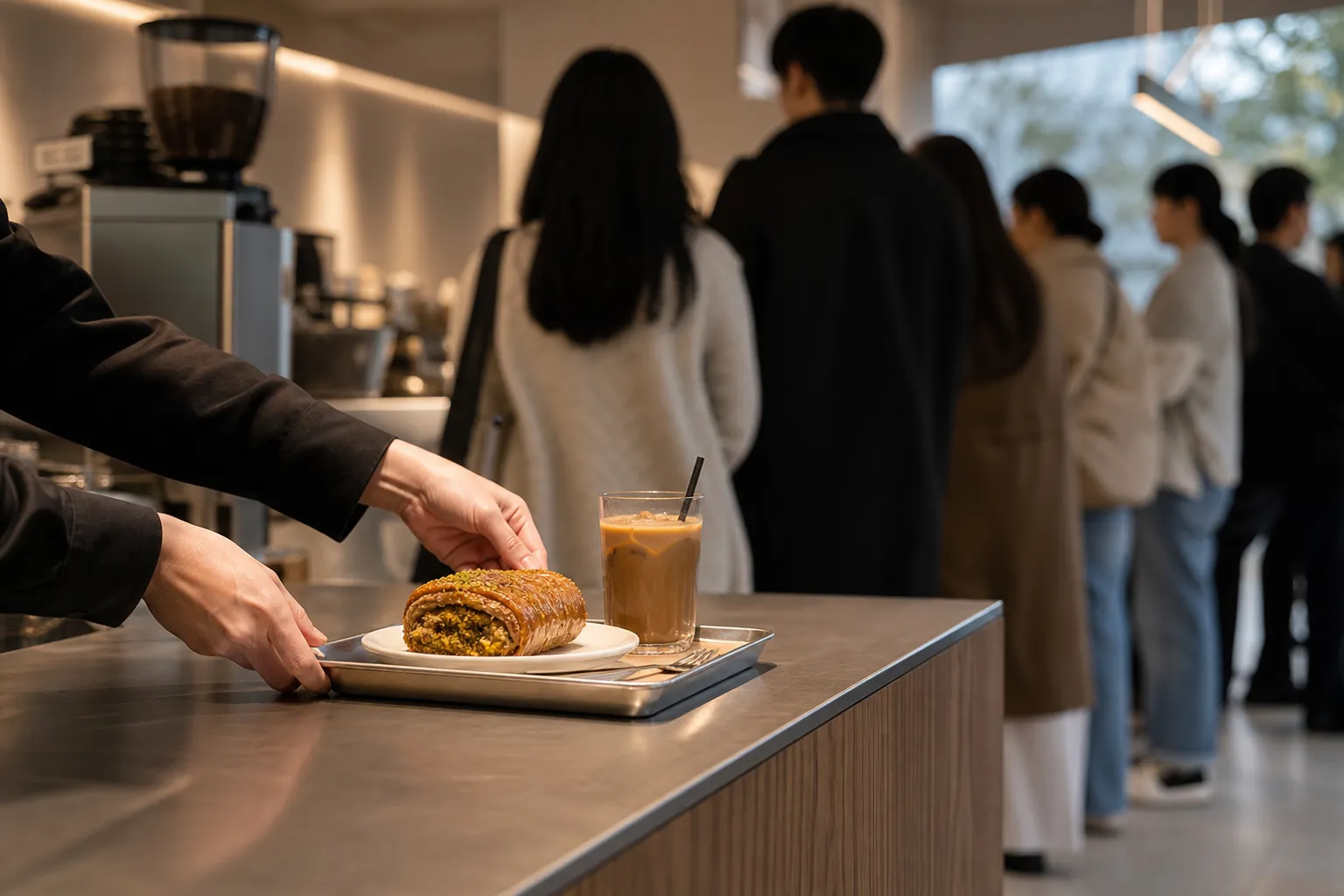
The rules also made the release feel more like a limited drop than a regular cafe menu item. Yonhap News TV reported that purchases were limited to two per person and had to be ordered directly from store staff.4 Newsis added that the product was not available through Siren Order, drive-thru, delivery, or outside sales channels.5 For a Starbucks item, that is a notably controlled purchase path.
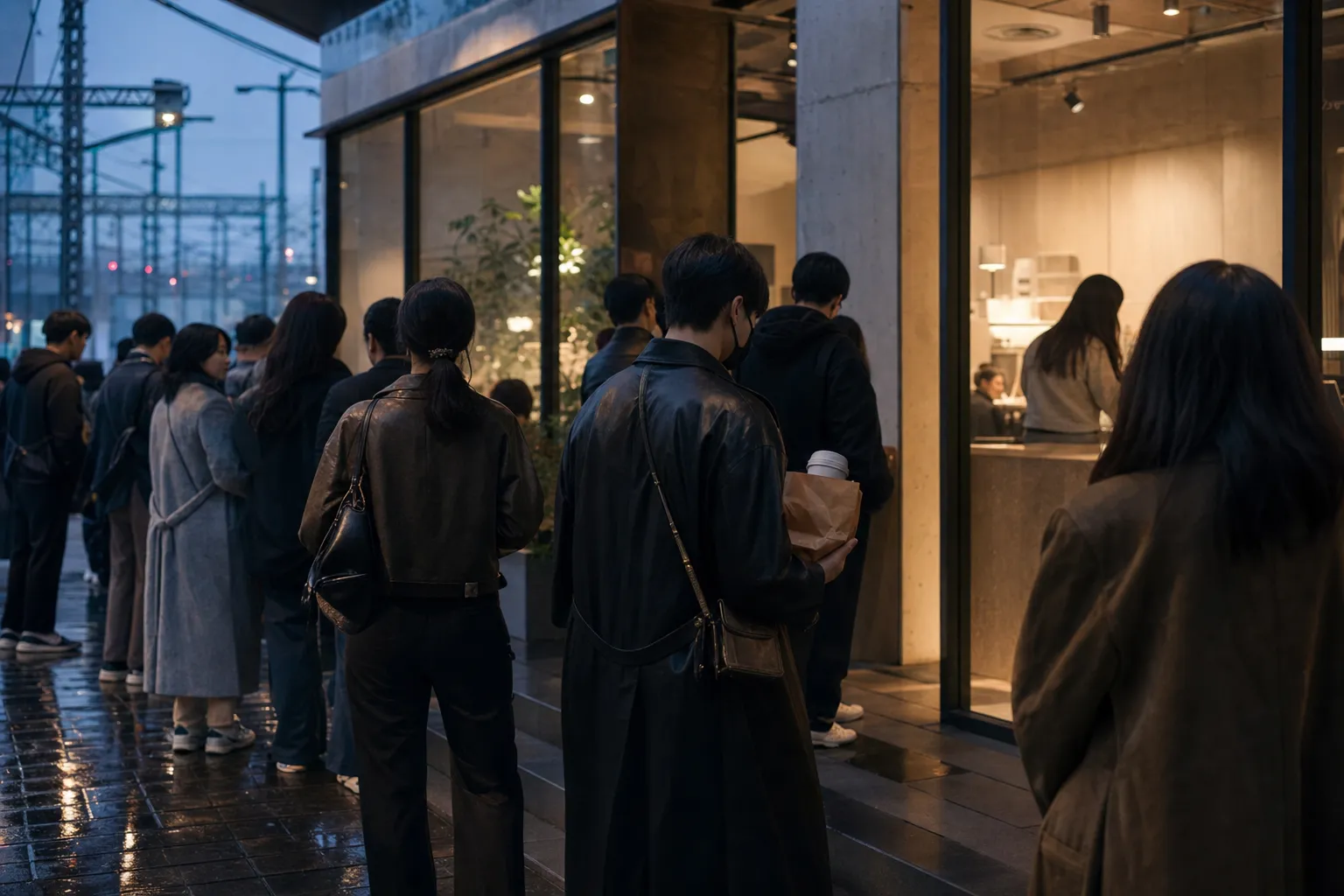
The launch-day response was immediate. On January 30, 2026, Starbucks began selling the Dubai Chewy Roll at the six Seoul stores, and Newsis reported that it sold out in about 10 minutes after opening.5 Edaily TV also reported that the day’s supply was exhausted shortly after sales began, with consumers lining up before opening at stores including Seongsu Station.6
A Starbucks representative quoted by Edaily TV said that even in cold weather, some consumers began lining up about an hour before opening, and that all six stores sold their daily supply of around 40 units as soon as they opened.6 That quote helps explain why the product became a story beyond a simple menu launch: scarcity, trend timing, and a recognizable brand all converged at once.
How It Fit Into the Wider Dujjonku Craze
The Starbucks release did not appear in isolation. SBS Biz framed it as Starbucks joining the Dubai chewy cookie trend with its own Dubai Chewy Roll, sold at only six stores.2 Edaily TV similarly reported that major food and franchise companies, including Ediya Coffee, Paris Baguette, Orion, and Shinsegae Food, were also releasing Dujjonku-related products.6
That broader context is important because it shows why the Seongsu Station Starbucks product gained attention even from people who might not usually track limited cafe desserts. The ingredients were already part of a bigger pattern: kadaif for crunch, pistachio for richness, and cocoa or marshmallow elements for sweetness and chew. Starbucks Korea’s version translated that trend into a roll format and attached it to a small-store launch.
Asia Economy also connected the trend to ingredient costs, reporting that core raw materials such as pistachio and cocoa were contributing to cost pressure in the industry.3 The available sources do not give a detailed cost breakdown for the Starbucks item itself, so the safest way to read that point is as wider market context, not a direct explanation of the 7,200 won price.
Conclusion
The Seongsu Station Starbucks Dujjonku story is best understood as a limited Starbucks Korea dessert launch that rode the momentum of Korea’s Dubai-style chewy dessert boom. The official product was Dubai Jjondeuk Roll, sold from January 30, 2026, at six Seoul stores including Seongsu Station, with limited daily quantities, a two-per-person purchase cap, and no Siren Order or delivery option. By launch morning, those limits helped turn a small dessert release into a sellout event.
References
- 바삭한 식감의 카다이프와 고소한 피스타치오 페이스트를 … (스타벅스코리아 공식 인스타그램, 2026-01-27)
- 두쫀쿠 말고 '두쫀롤'…스타벅스 6곳에서만 판다 (SBS Biz, 2026-01-30)
- 스타벅스도 드디어 '두쫀쿠' 열풍 참전…"한 개에 7200원, 한정수량 이래" 오픈런? (아시아경제, 2026-01-29)
- 스타벅스도 합류했다…'두쫀쿠' 열풍, 이제는 프랜차이즈까지 (연합뉴스TV, 2026-01-27)
- 스타벅스 7200원 '두쫀롤' 판매 대란…오픈 10분 만에 '완판' (뉴시스, 2026-01-30)
- `스타벅스표` 두쫀쿠에 오픈런…대기업 참전 “가격 또 오를라” (이데일리TV, 2026-01-30)
About the Author