Seongsu has become one of Seoul’s clearest examples of a modern Seoul hot place, and the appeal goes well beyond cafe photos. Around Seongsu Cafe Street, Yeonmujang-gil, and the streets near Seongsu Station, older industrial spaces, pop-up stores, flagship retail, and steady visitor traffic have created a district where brands and visitors keep meeting in the same compact neighborhood.
Why Seongsu Became a Hot Place
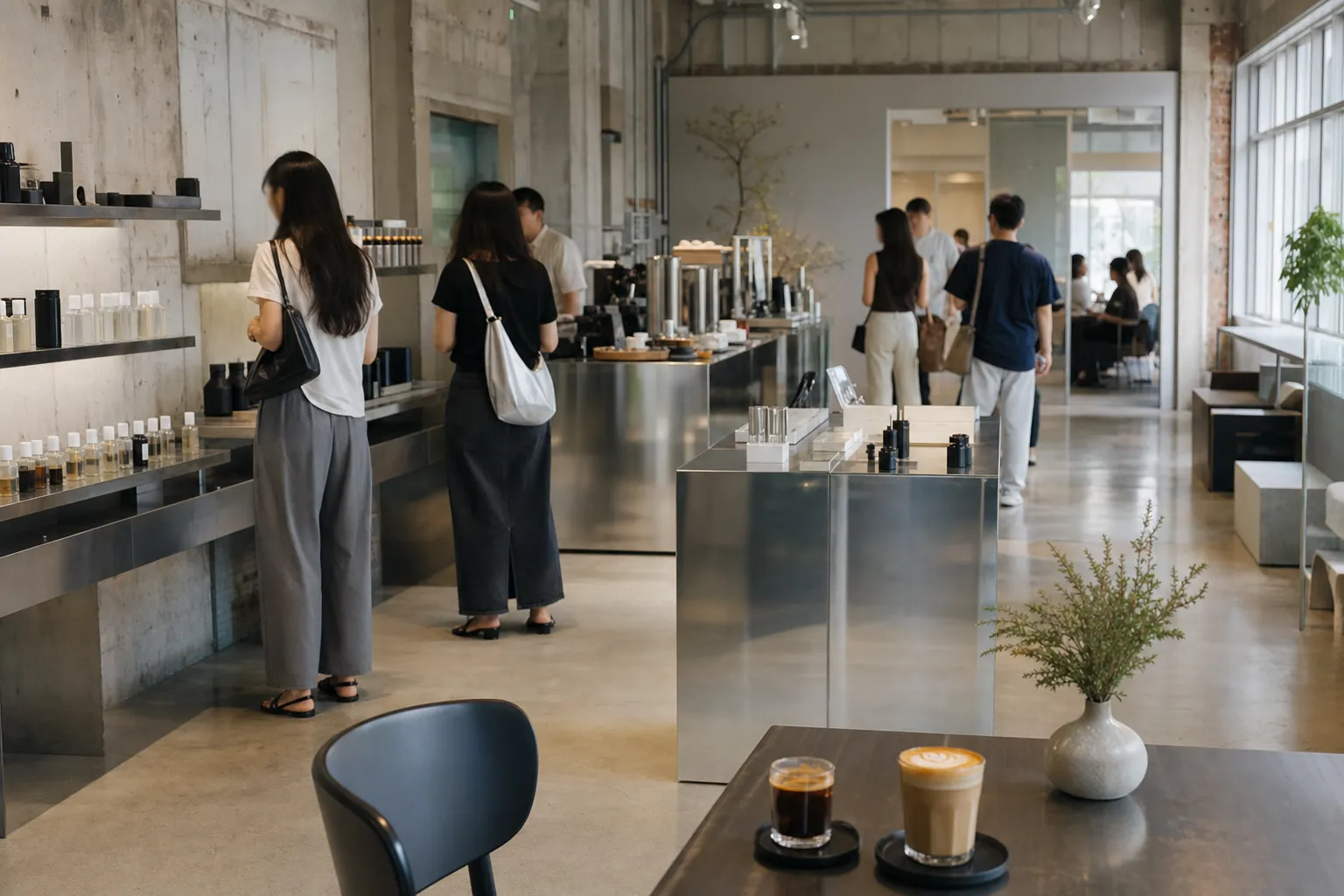
Part of Seongsu’s appeal comes from the neighborhood’s earlier identity. The area was once associated with clusters of handmade shoe factories and auto repair shops, but those traces have not disappeared from its current image. Red brick factory buildings, warehouse-like interiors, concrete textures, and the area’s local history are now described as key reasons Seongsu feels different from more polished commercial districts. Maeil Business Newspaper, while introducing the book 『성수동의 시대』, described Seongsu’s transformation from an industrial area into a globally recognized hot place with a distinctive spatial character.1
That background helps explain why the district works so well for temporary brand spaces. A former workshop or warehouse can become a showroom, beauty experience zone, fashion event, or themed pop-up while still keeping the rougher texture that gives Seongsu its personality. The setting itself becomes part of the content.
This is also why the phrase “pop-up mecca” fits the current conversation around Seongsu. Weekly Seoul reported that companies across beauty, construction, automobile, and other industries have used Seongsu as a pop-up marketing stage, including CJ Wellcare, LG Household & Health Care, GS E&C, and Ferrari Korea.2 In the same report, an industry source described pop-up stores as spaces where products and brands can be experienced most intuitively.2 For visitors, that means the neighborhood often feels like a walkable mix of shopping, browsing, brand discovery, and cafe stops rather than a single-purpose commercial street.
The Pop-Up Energy Around Seongsu Cafe Street
The numbers behind the buzz are part of the story. Based on Seoul commercial district analysis cited by Weekly Seoul, the average daily floating population around Seongsu Station rose from 42,671 in the first quarter of the previous year to 47,246 in the fourth quarter, a 10.7% increase.2 EToday also reported that foot traffic at Seongsu Station increased 10% over a year and described Seongsu as moving beyond a simple commercial district into a content space.3
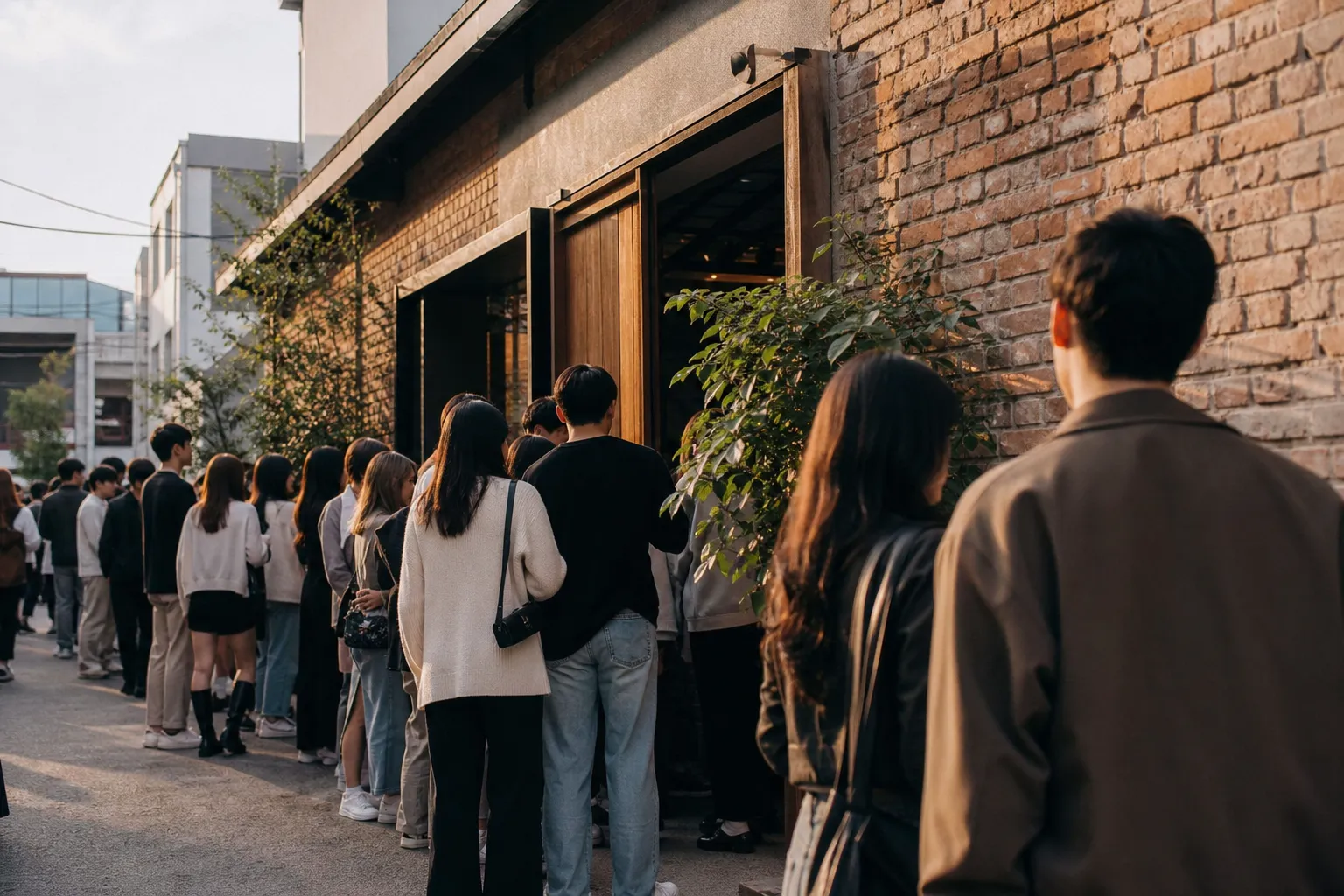
For a casual visitor, that can show up as a very layered street experience. You may see a line outside a bakery, a cafe crowd, a temporary brand installation, foreign tourists, and large retail signage within a short walk. EToday’s field report from a weekday afternoon in late May described pop-up stores, foreign tourists, and brand advertisements concentrated around Seongsu Station.3
The demand from brands is strong enough to affect rental conditions. EToday reported that pop-up rental fees differ by location and scale, ranging from several million won per day to the 10 million-20 million won range.3 That level of cost makes sense only when companies believe the neighborhood can deliver attention, movement, and shareable brand encounters.
Fashion and lifestyle retail have added another layer to the district’s identity. Apparel News reported in April 2026 that, in the Seongsu and Ttukseom commercial areas, card payment counts among people in their 20s and 30s increased 20.7% year over year, while payment amounts rose 55.2%.4 The same report mentioned major store openings including Musinsa Mega Store Seongsu, Musinsa Run, and ABC-MART Grand Stage Flagship Seongsu. It also referred to a K-Swiss flagship that had been planned for May and a 29CM living shop planned for August.4
This is where Seongsu Cafe Street fits naturally into the broader Seongsu hot place image. Cafes remain an important part of the area’s rhythm, but the draw is no longer only coffee or desserts. The neighborhood now functions as a wider lifestyle route, where cafe-going, retail browsing, limited-time events, and street-level brand culture overlap.
Crowds and Safety Are Part of the Conversation
Seongsu’s popularity has also brought more practical concerns. Newsis, through Daum, reported that a large crowd gathered for a Pokémon pop-up event in the Seongsu area on May 1, 2026, and the event was canceled after the crowding. Nearby merchants and office workers then raised concerns about pedestrian inconvenience and safety risks.5
The same report said multiple pop-up events were taking place across Seongsu’s alleys, with more than 800 people waiting at some event sites. It also pointed to narrow alley structures and insufficient on-site control as problems raised from the scene.5 That detail is important because it keeps the idea of a “hot place” grounded. Popularity can make a neighborhood exciting, but it can also make walking, waiting, and working in the area more difficult.
MoneyToday reported similar concerns around Yeonmujang-gil, where pedestrians, waiting lines, and vehicles were observed mixing in a risky way. Citing Korea Tourism Organization data, the report said the total number of visitors to Seongsu 2-ga 3-dong, where Yeonmujang-gil is located, reached 33,133,236 in the previous year, more than double the 2021 figure.6 The article also raised the need for pedestrian and traffic safety measures. Professor Kim Jin-yu of Kyonggi University’s Department of Urban and Transportation Engineering said measures were needed so cars would pay maximum attention to pedestrians, including sidewalk-style paving.6
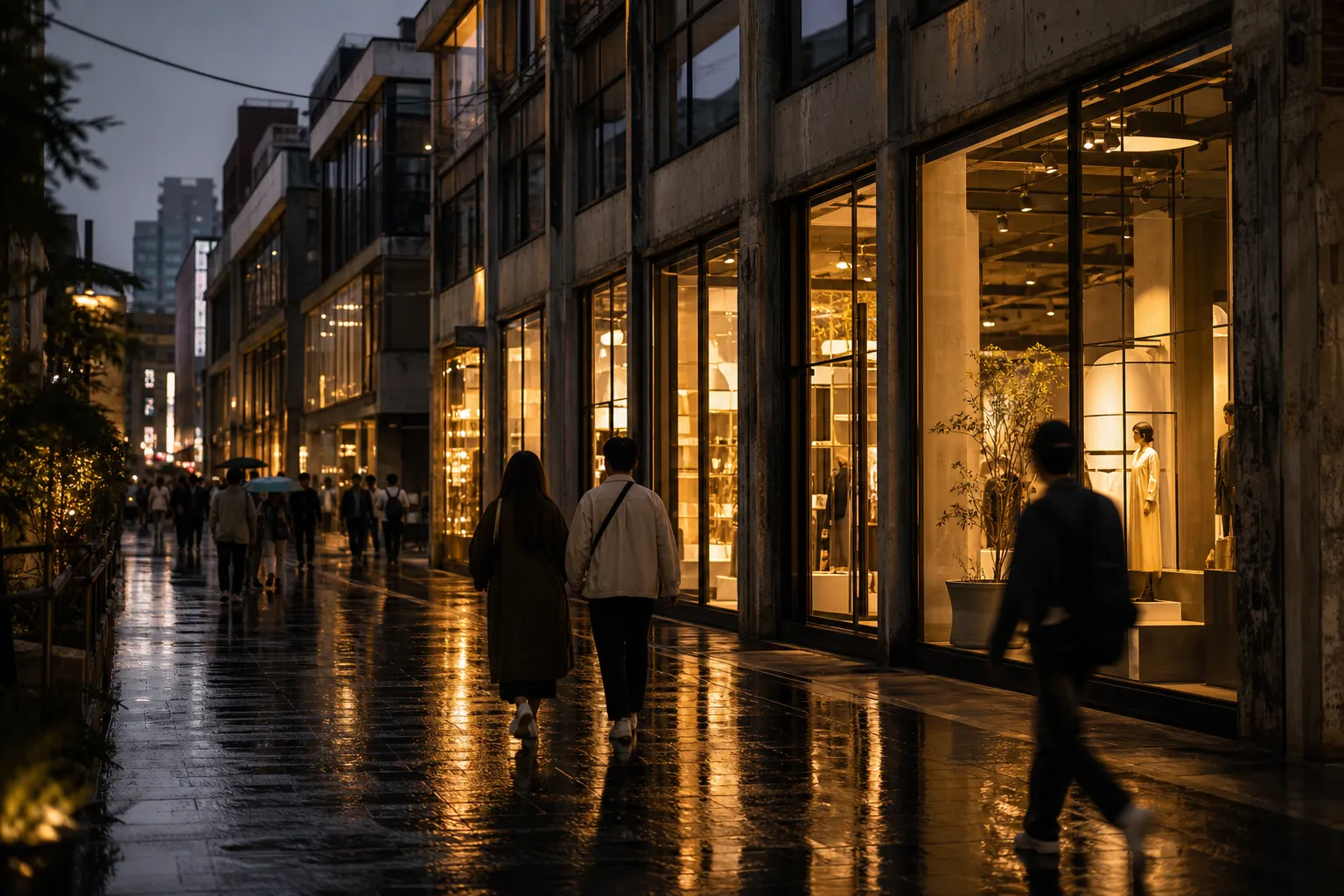
Seongsu’s current appeal comes from a specific mix: industrial memory, flexible spaces, strong brand demand, cafe culture, flagship retail, and heavy street traffic. If you are trying to understand why Seongsu remains one of Seoul’s most discussed hot places, the answer is not just that people gather there; it is that the neighborhood gives both visitors and brands a dense, recognizable setting where culture, commerce, and everyday city movement meet.
References
- "뜨는 공간엔 늘 이유가 있다"…팝업 성지된 성수동, 비결은 (매일경제, 2026-06-12)
- 왜 성수인가…기업들이 ‘팝업 성지’ 찾는 이유 (위클리서울, 2026-06-04)
- “하루 임대료 2000만원인데도 꽉 찼다”⋯팝업 성지 성수동 [르포] [뜨는 거리, 꺼진 거리 ③] (이투데이, 2026-06-02)
- [핵심 상권 리포트] 성수 / 이태원 / 홍대 (어패럴뉴스, 2026-04-27)
- '팝업 성지' 된 성수동…"이러다 사고 날까 걱정" (뉴시스/Daum, 2026-05-09)
- '팝업' '소금빵' 줄 서는데 차까지 아슬아슬…위험천만 성수동 연무장길 (머니투데이, 2026-01-12)
About the Author