
RESCENE’s “LOVE ATTACK” reversal is not a simple case of one viral phrase lifting an old track by chance. The available record shows a clearer chain: the Geoje Yaho meme widened recognition of the group, that attention moved into music-platform behavior, and public institutions and broadcasters then amplified the same momentum.
The song was released in August 2024, but reports in late May and June 2026 described it as rewriting the group’s own chart records. The strongest available evidence points to a feedback loop between short-form culture, local identity, and K-pop discovery, with “LOVE ATTACK” becoming the measurable outcome of a meme-led visibility spike.
How ‘LOVE ATTACK’ Became the Measurable Result

The central fact is that “LOVE ATTACK” moved back up Korean music charts after RESCENE became associated with the “Geoje Yaho” meme. Geoje City’s official release said the track had recorded a chart reversal through word of mouth on social media and online communities, while also noting continued exposure through university festivals, professional baseball cheering, and short-form challenges.1
That matters because the meme did not remain only a joke inside a fan community. StarNews reported on June 1, 2026, that “LOVE ATTACK” had reached Bugs real-time No. 11, FLO No. 19, Melon TOP100 No. 28, Apple Music Today’s TOP100 Korea No. 10, YouTube Music Korea Popular Songs Top100 No. 11, and Spotify Korea Daily No. 22.2 MoneyToday IZE later reported on June 10, 2026, that the 2024 track had reversed as high as No. 5 on Melon.3
Those figures suggest that the public’s meme awareness translated into active listening rather than passive recognition alone. In K-pop, viral clips often create name recall, but fewer produce multi-platform chart movement. Here, the sources link the phrase, the group identity, and the song’s renewed consumption closely enough to read the reversal as a cross-platform attention event.
| Confirmed point | Source-backed detail |
|---|---|
| Track at the center | RESCENE’s “LOVE ATTACK,” released in August 2024, later reversed on charts.2 |
| Meme trigger | MINAMI’s “Geoje Yaho” line spread from content on member WONI’s personal YouTube channel.3 |
| Early chart evidence | Bugs real-time No. 11, FLO No. 19, Melon TOP100 No. 28, Apple Music Korea No. 10, YouTube Music Korea No. 11, Spotify Korea Daily No. 22.2 |
| Later Melon report | MoneyToday IZE reported that “LOVE ATTACK” rose to No. 5 on Melon.3 |
| City partnership date | Geoje City appointed RESCENE as promotional ambassadors on May 22, 2026.1 |
| Campaign reach | The appointment content passed 2.68 million combined YouTube and Instagram views in six days.4 |
Why Geoje Yaho Had Unusual Promotional Force
The “Geoje Yaho” phrase worked because it carried both personality and place. News1 reported that RESCENE drew attention through content from Geoje-born member WONI’s personal YouTube channel, where Japanese member MINAMI’s “Geoje Yaho” remark became the memorable moment. The same report noted that “yaho” is known as a greeting among young Japanese women.5
The short quote itself was compact enough for remixing: “Geoje Yaho.”5 Its appeal also came from contrast. A Japanese member’s casual phrase was attached to Geoje, a specific Korean city, while WONI’s local background gave the moment a natural link to place rather than a forced branding concept.
StarNews also identified WONI’s personal YouTube-channel content, including a gyaru and dialect concept, as part of the social-media buzz around the group.2 That detail is important for analysis because it shows the meme was not only about a phrase. It was attached to character performance, regional speech, and member chemistry, all of which are highly portable in short-form video.
The public-sector response strengthened the loop. Yonhap reported that Geoje City appointed RESCENE as city promotional ambassadors and chose a digital-content-style appointment rather than a formal ceremony. The content showed a “Geoje Yaho” message being delivered to RESCENE against tourist-site backgrounds, using the meme’s existing language instead of replacing it with conventional municipal messaging.6
Geoje City’s own release confirmed that the appointment content was jointly released through RESCENE’s official account and Geoje City’s official account.1 That joint distribution is meaningful because it connected two audience pools: K-pop viewers who already understood the meme and civic-tourism channels that could frame it as local promotion.
From Meme Reach to Institutional and Broadcast Spillover
The campaign’s viewership numbers show why the city’s participation became more than symbolic. Geoje City said the RESCENE promotional-ambassador content reached 1.24 million views in one day and 2.68 million combined YouTube and Instagram views in six days. Instagram alone passed 860,000 views within the first day.4
The audience composition is even more revealing. Geoje City reported that 99.2% of viewers were non-followers and that people aged 18 to 34 accounted for 88.9% of viewers.4 For a city promotion campaign, that profile indicates the content traveled beyond existing municipal followers and landed heavily among younger viewers, the same demographic likely to encounter music clips, challenges, and entertainment edits.
MoneyToday IZE also reported that WONI’s personal YouTube channel surpassed 400,000 subscribers within three months of opening, and it cited RESCENE’s Geoje City ambassador appointment and confirmed appearance on JTBC’s “Knowing Bros” as follow-on examples of the meme’s wider impact.3 Based on the available facts, the sequence is not simply “meme first, song second.” It is more accurate to say that the meme created a public-facing entry point, while “LOVE ATTACK” gave new listeners a track to act on once they became curious.
The city’s comment framed the appointment as “a starting point for creating new stories and content for Geoje City together with RESCENE.”6 That phrasing is promotional, but it also captures the practical strategy: Geoje did not just borrow celebrity visibility; it used a meme already tied to the city’s name.
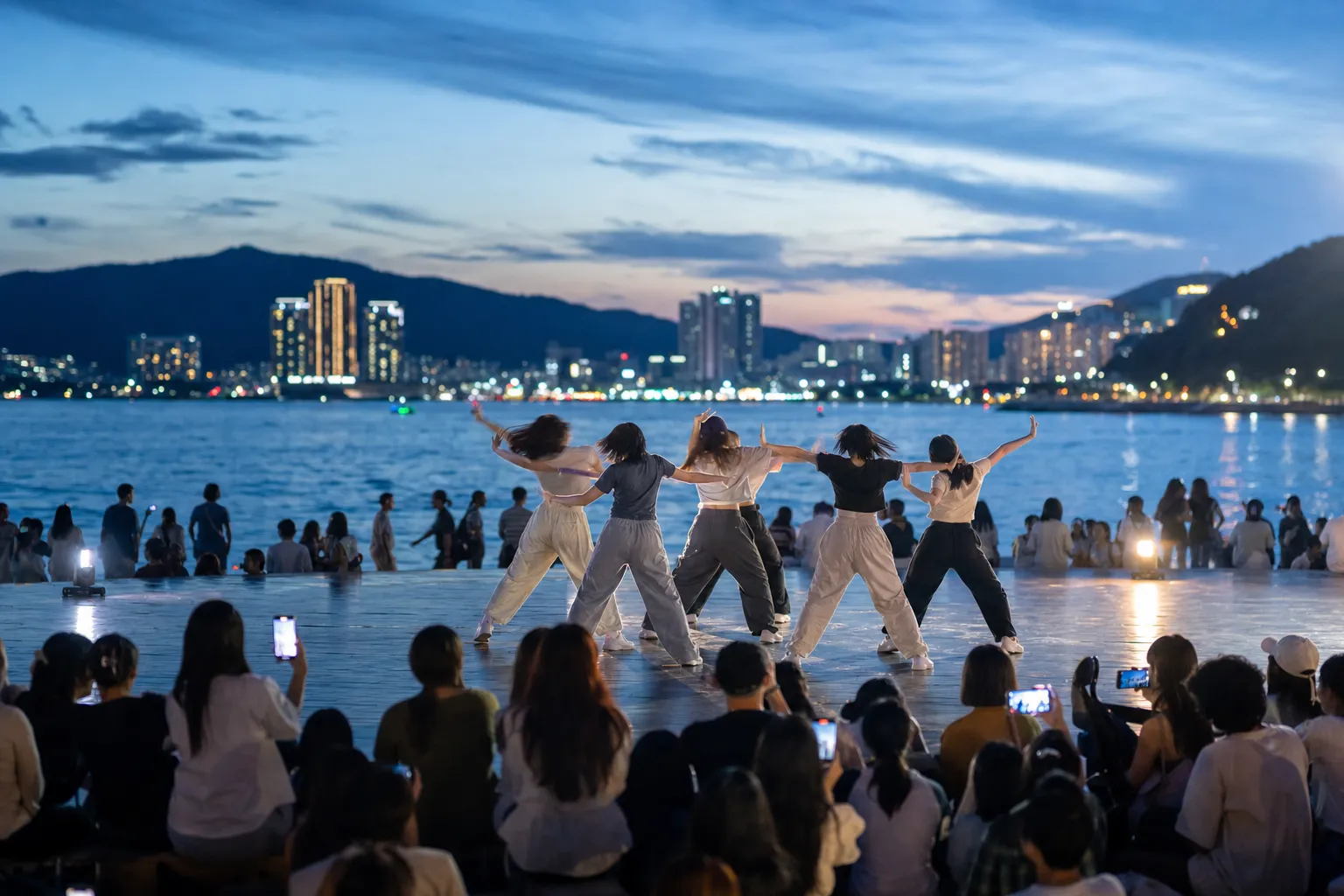
The confirmed facts show “LOVE ATTACK” as the clearest commercial signal from a broader visibility surge. Geoje Yaho gave RESCENE a distinctive discovery hook, but the chart reversal required listeners to move from clip recognition to music consumption. That conversion, supported by chart rankings, city campaign data, and subsequent media attention, is what makes the “LOVE ATTACK” reversal a notable case of meme momentum becoming measurable K-pop traction.
References
- 거제시, 그룹‘리센느(RESCENE)’와 손잡고 도시 홍보 나선다 (거제시청, 2026-05-24)
- 리센느 야호~! SNS 점령→'러브 어택' 역주행..대세 행보 (스타뉴스, 2026-06-01)
- "거제 야호!" 한마디로 초대박…리센느, 밈 타고 본업까지 떡상 [K-POP 리포트] (머니투데이 IZE, 2026-06-10)
- 거제시, 리센느 홍보대사 콘텐츠 268만 조회 돌파 (거제시청, 2026-05-28)
- '거제 야호' 밈으로 뜬 리센느, 음원 역주행 효과 '톡톡' (뉴스1/경북도민일보, 2026-05-27)
- '거제야호' 밈 유행시킨 '리센느', 거제시 홍보대사 위촉 (연합뉴스, 2026-05-23)
About the Author