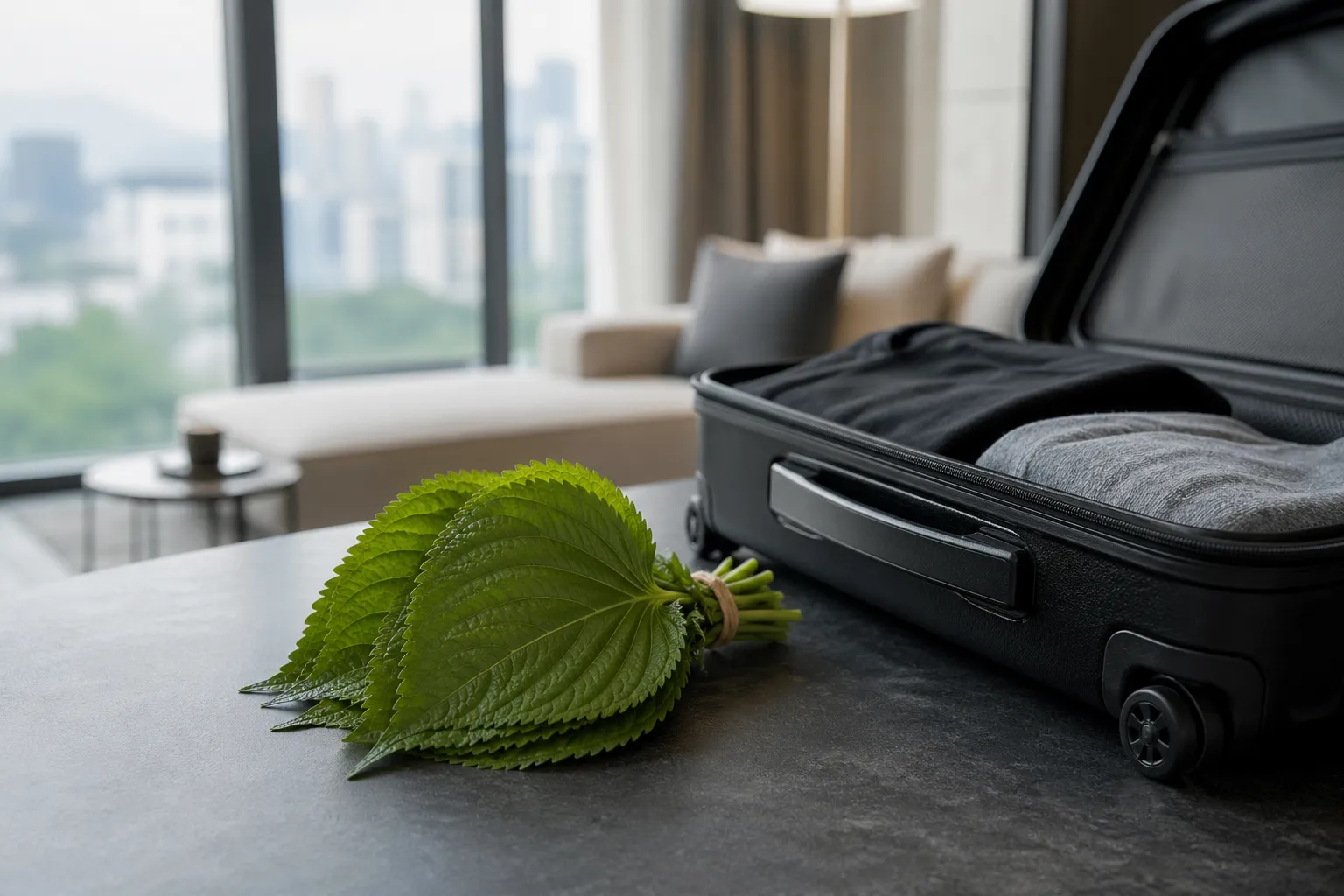
Perilla Import Restrictions have become an important issue for travelers who want to bring Korean food ingredients into the United States. Under current U.S. agricultural entry rules, travelers must declare agricultural products to Customs and Border Protection when they arrive. Fresh plant products are treated cautiously because they can carry pests or diseases, and almost all fresh fruits and vegetables, whether whole or cut, are prohibited from entering the country. The available federal guidance does not list fresh perilla leaves as generally admissible, which means travelers should not assume they can bring them into the United States simply because they are for personal use.
Why Perilla Import Restrictions Exist
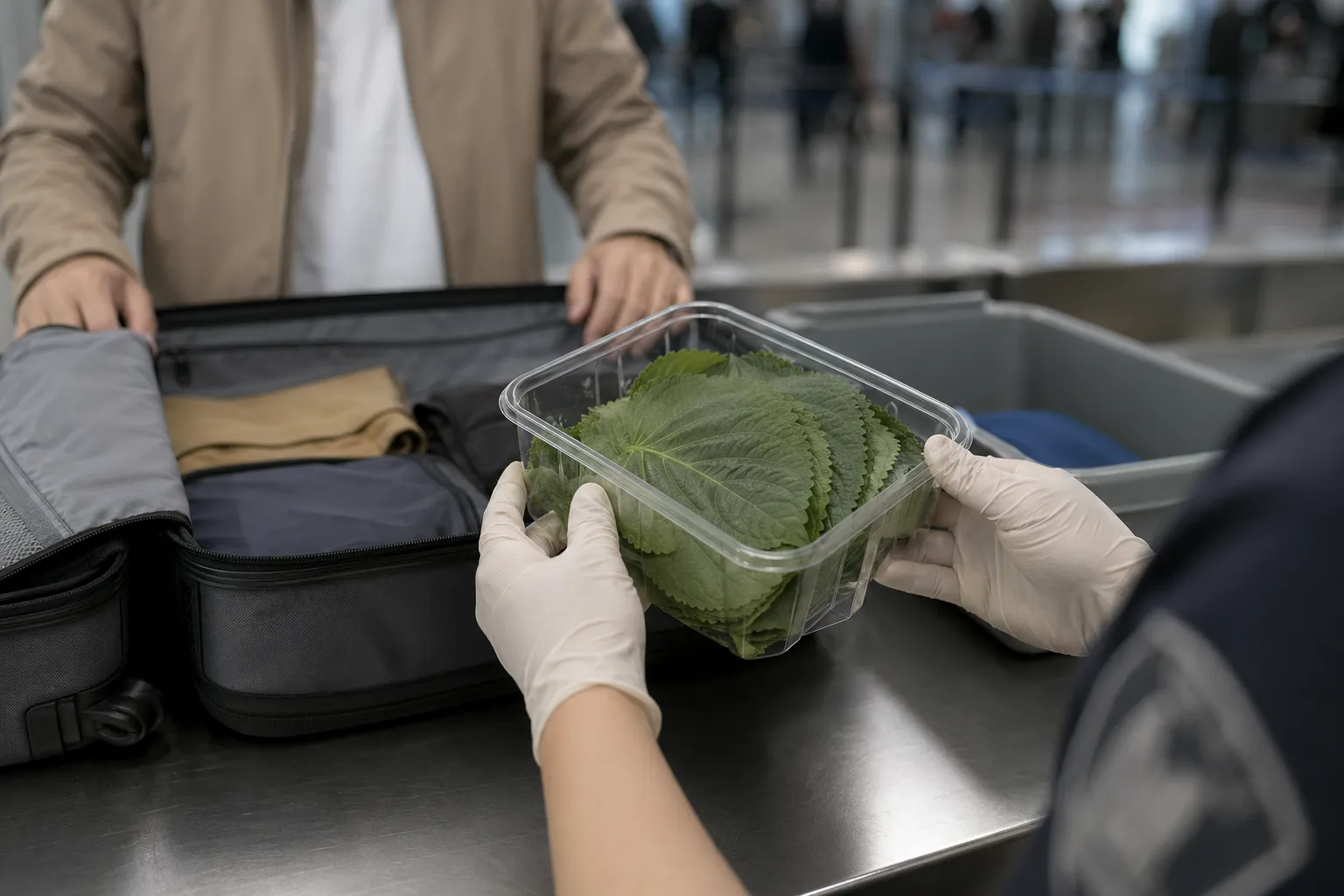
The central issue is not whether perilla leaves are popular, familiar, or commonly used in Korean cooking. The issue is agricultural risk. U.S. Department of Agriculture Animal and Plant Health Inspection Service guidance says fresh fruits and vegetables are restricted because they can introduce plant pests and diseases. U.S. Customs and Border Protection also states that many agricultural products are prohibited from entering the United States from certain countries for the same reason.
These rules apply broadly to travelers entering the United States. Customs guidance requires travelers to declare meats, fruits, vegetables, plants, seeds, soil, animals, and products made from plant or animal materials. That declaration requirement matters even when an item seems small, ordinary, or packed for home cooking. Perilla leaves fall into the broader category of plant or vegetable products, and federal guidance makes clear that such products may be prohibited or restricted depending on what they are and where they come from.
The rules also distinguish between declaration and admissibility. Declaring a product does not guarantee that it will be allowed in. It means officers and agricultural specialists can inspect it and decide whether it may enter. If an item is not allowed, declared products can be refused or abandoned at the port of entry. The key point for travelers is that declaring the item is the required first step.
Perilla Import Restrictions and Fresh Produce Rules
Fresh produce faces the strictest treatment in the available guidance. USDA APHIS states that almost all fresh fruits and vegetables, whether whole or cut, are prohibited from entering the United States. APHIS also maintains commodity-specific import requirements and directs importers to the Agricultural Commodity Import Requirements database, where rules depend on the commodity and country of origin.
That commodity-specific structure is important for understanding perilla leaves. APHIS guidance on generally authorized non-propagative plant products lists items that generally do not require an import permit or additional APHIS requirements, while still noting that all commodities remain subject to inspection at ports of entry. The same guidance allows many dried, cured, cooked, or processed fruits and vegetables, including pickles and preserves, without APHIS permits. However, its generally admissible fresh produce list is limited, and perilla leaves are not listed there.
Because the provided federal information does not identify fresh perilla leaves as generally admissible, travelers should treat them as restricted fresh produce unless an applicable import requirement specifically allows them. That is especially relevant for travelers bringing food from Korea, where perilla leaves are widely used as a fresh wrap, side dish ingredient, or herb. Familiarity in Korean cuisine does not change the federal inspection standard at the U.S. border.
The rules for commercial importers are also not automatic. APHIS explains that import requirements depend on the commodity and country of origin and that products not already approved may require a commodity import request. A separate APHIS notice involving fresh Korean sweet potato root illustrates this process: Korean sweet potatoes were allowed only into Guam and the Commonwealth of the Northern Mariana Islands at that point, and broader entry into the United States required specific safeguards based on pest risk analysis. That example does not concern perilla leaves directly, but it shows how Korean fresh produce can be handled through a formal commodity-by-commodity review.
What Travelers Should Do at the U.S. Border
The practical rule is straightforward: declare agricultural products. CBP says all travelers entering the United States are required to declare fruits, vegetables, plants, seeds, soil, and other agricultural products. USDA APHIS likewise states that travelers entering the United States must declare agricultural products to CBP.
Declaration protects travelers from avoidable enforcement problems. APHIS guidance says declared agricultural products do not trigger penalties if inspectors determine they cannot enter. CBP guidance also says declared prohibited items can be abandoned at the port of entry. By contrast, prohibited agricultural items that are not declared can be confiscated and may result in civil penalties.
Travelers should also understand that inspection is not a formality. CBP says some fruits, vegetables, and plants may enter depending on the country of origin if they are declared, inspected, and found free of pests. That means the final decision can depend on the exact item, its origin, its condition, and applicable import rules. A traveler carrying fresh perilla leaves should be prepared for the possibility that the leaves will not be admitted.
Processed plant products are treated differently in the available guidance, but processing must matter under the rules. APHIS says many dried, cured, cooked, or processed fruits and vegetables, including pickles and preserves, are generally allowed without APHIS permits, though all commodities remain subject to inspection. The provided information does not specifically state how every prepared perilla product is treated, so travelers should not infer that every perilla-based food is automatically acceptable. The safest fact-based approach is to declare it and allow inspection.
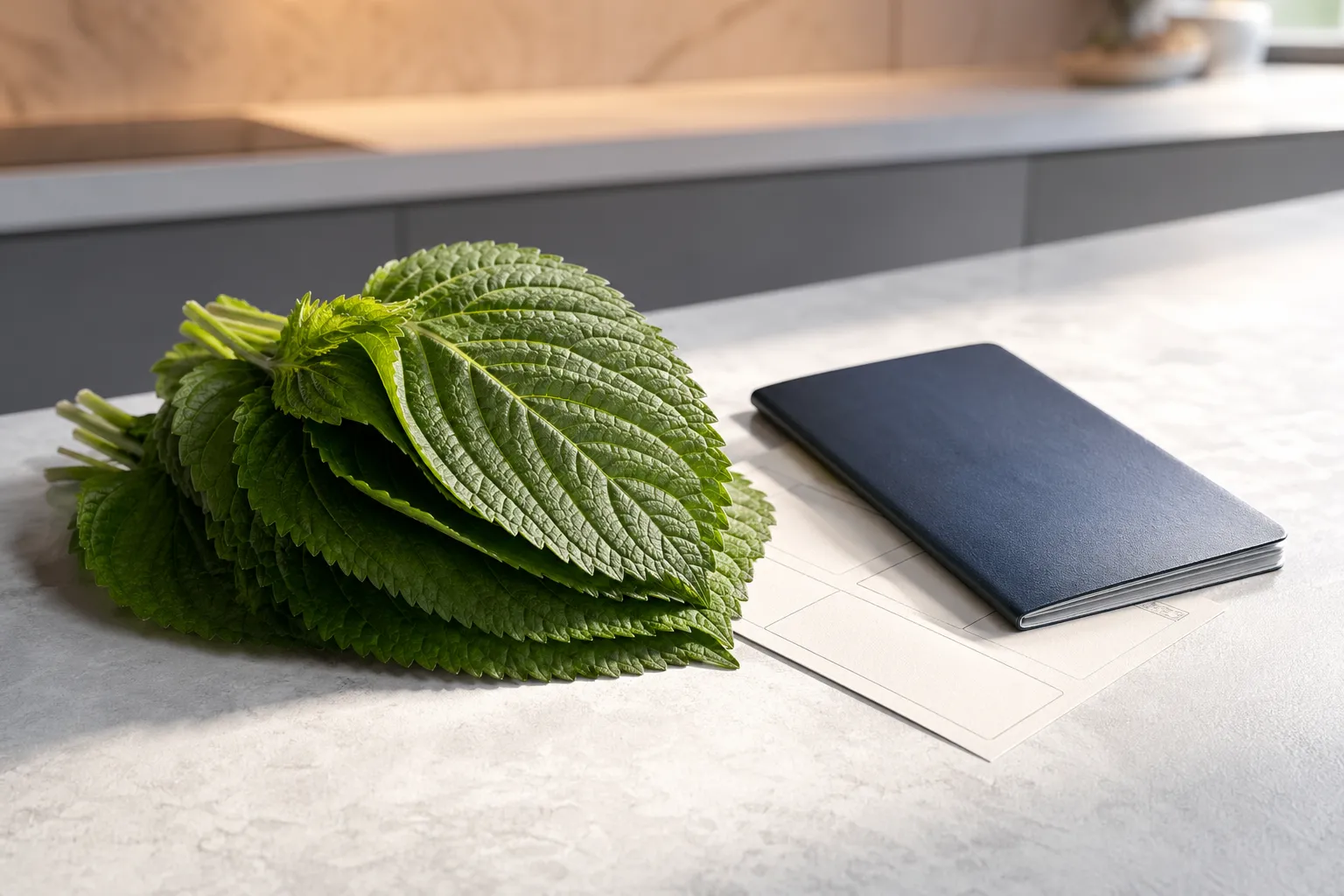
In conclusion, Perilla Import Restrictions are part of a broader U.S. agricultural protection system, not a rule aimed only at one ingredient or one cuisine. Fresh perilla leaves are not listed among generally admissible fresh produce in the provided guidance, while most fresh fruits and vegetables are prohibited because of pest and disease risks. Travelers should declare all agricultural products, expect inspection, and understand that declared items may be refused without the same penalty risk associated with undeclared prohibited products.
About the Author