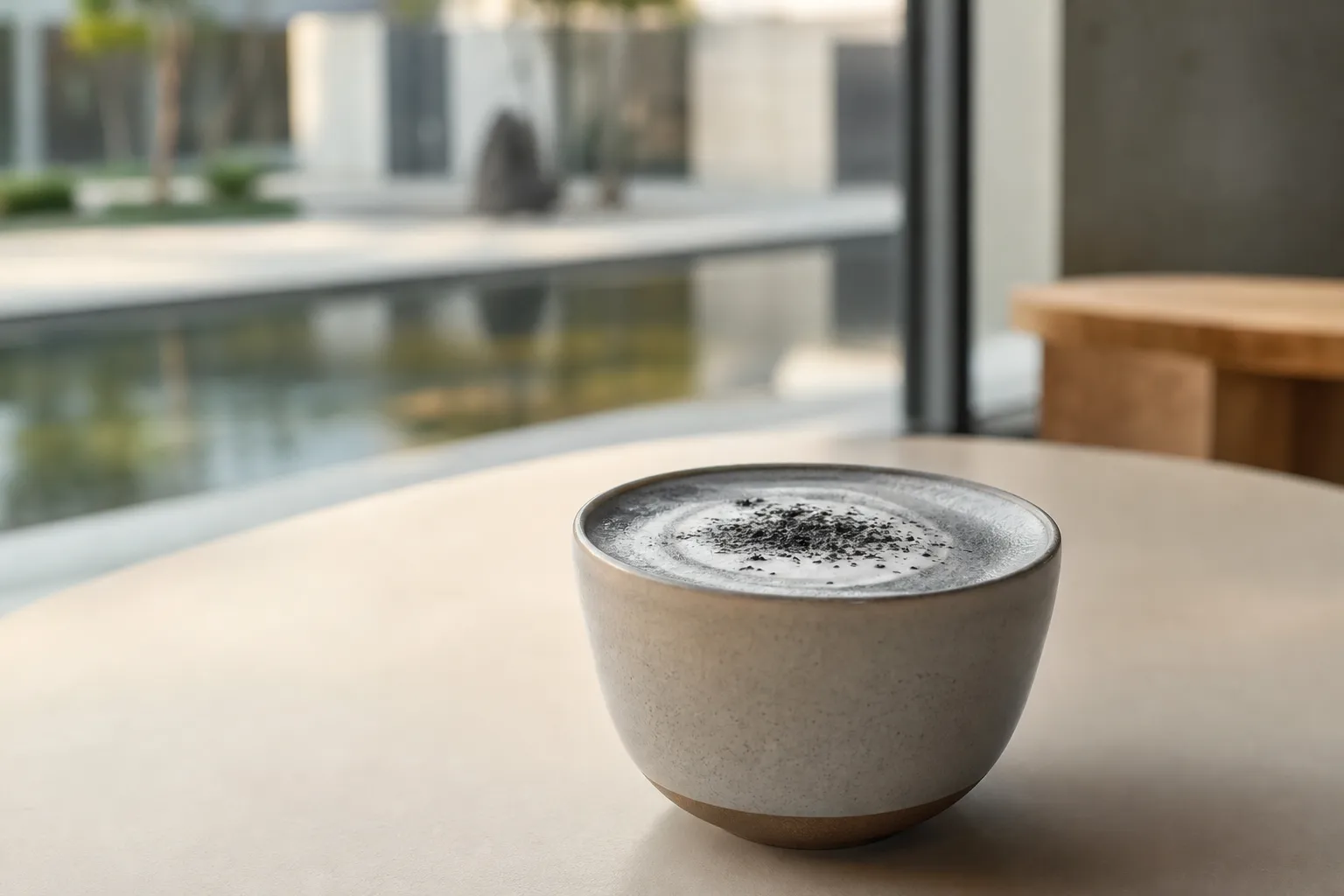
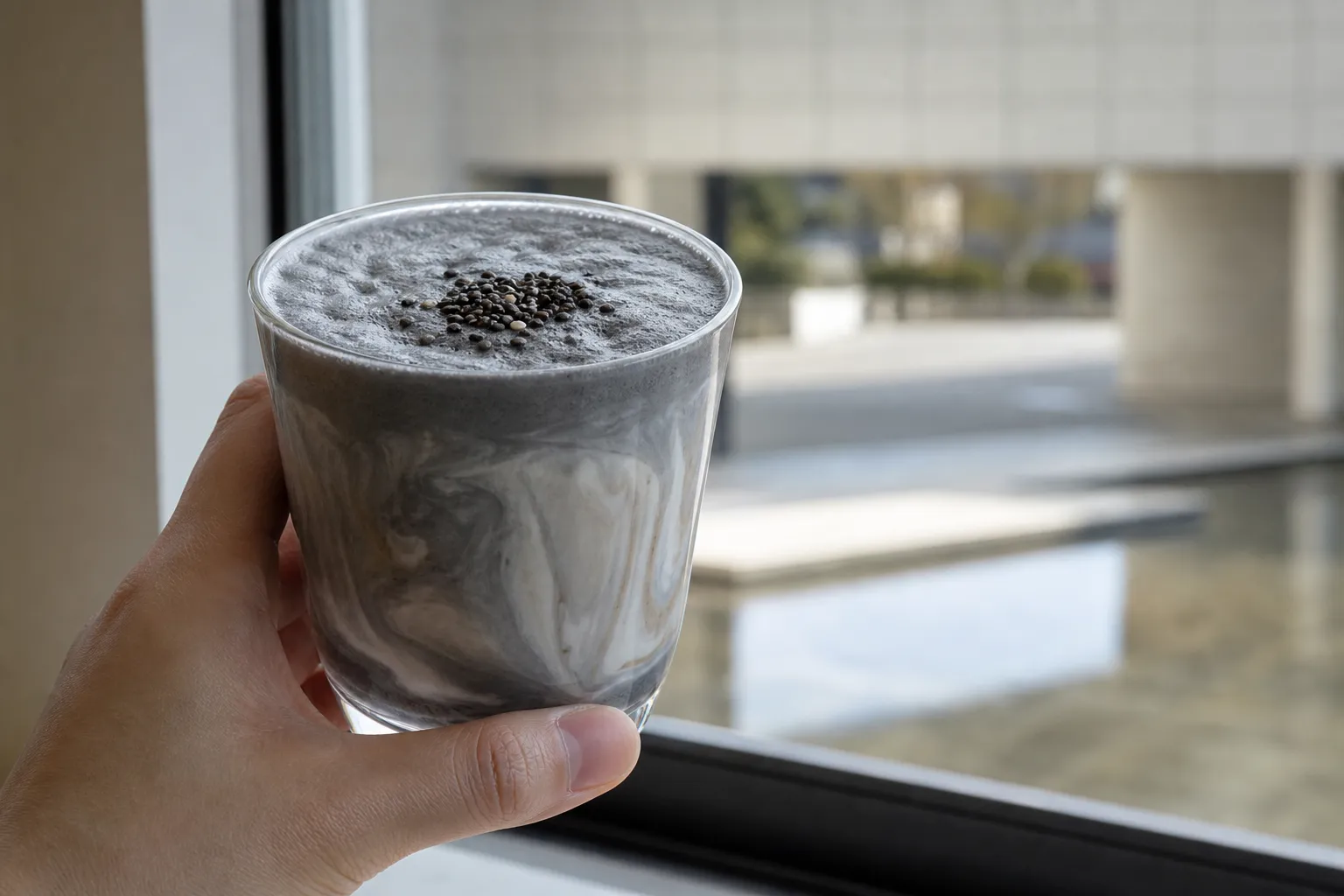
The National Museum of Korea Black Sesame Latte is best understood through its official cafe name: Gukjungbak Signature Latte. Served by EDIYA Coffee at its National Museum of Korea locations, the drink uses black sesame to give a familiar latte format a distinctly Korean flavor profile, and it became the most selected beverage among foreign customers in the museum cafes’ April 1-23 payment data.1
That makes the Black Sesame Latte more than a simple cafe order. It sits at the meeting point of museum-going, Korean ingredients, and the growing appeal of food experiences that feel tied to a specific place.
What Is the National Museum of Korea Black Sesame Latte?
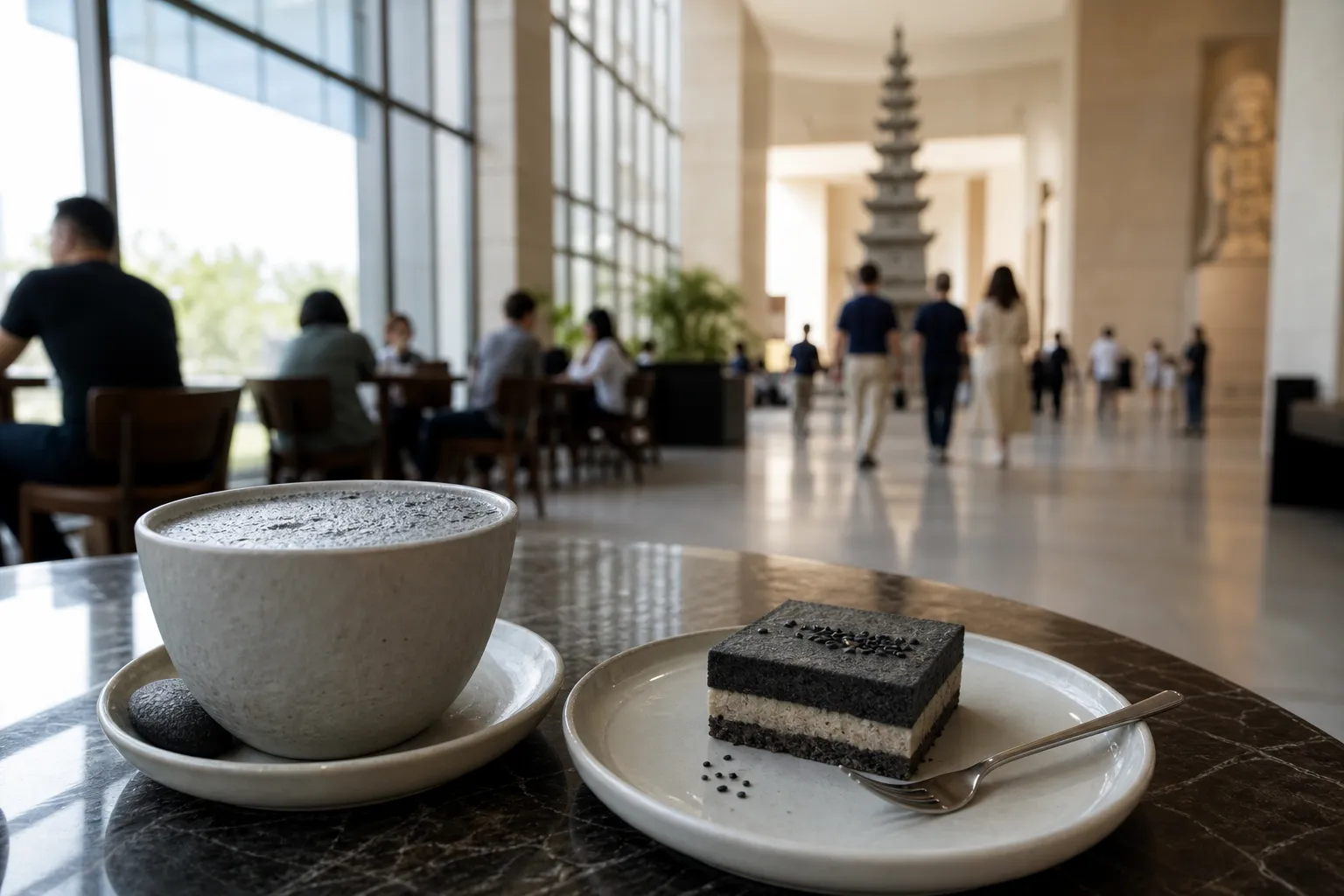
The drink at the center of the attention is the Gukjungbak Signature Latte, a museum-specialized beverage introduced as part of EDIYA Coffee’s arrival at the National Museum of Korea. When EDIYA first announced its museum-specific menu, the company listed three featured drinks: Gukjungbak Signature Latte, Crispy Gimbugak Milkshake, and Suragan Pear Quince Ade. The Gukjungbak Signature Latte was described as a menu item using black sesame.2
Later reports gave more detail on why the drink stood out. The latte was described as combining black sesame with a rich, nutty cream, adding a Korean element to the familiar taste of coffee.3 Other coverage described it as a museum-specialized drink topped with black sesame cream.4
That detail matters because the drink does not ask visitors to choose between a standard coffee and a traditional Korean flavor. Instead, it blends the two. For someone already comfortable with lattes, the format is familiar. For someone looking for something they may not easily find outside Korea, the black sesame element gives it a sense of place.
Black sesame, known in Korean food culture for its deep, nutty taste, also connects naturally with desserts. EDIYA’s museum lineup did not stop at the latte: early dessert offerings included black sesame jeungpyeon, a steamed rice cake, and ice cream red bean monaka.2 In that context, the latte feels like part of a broader cafe concept built around Korean ingredients rather than a one-off novelty.
Why Foreign Visitors Chose It First
The strongest reason the drink became a talking point is the cafe data from EDIYA Coffee’s five National Museum of Korea stores. In the April 1-23 payment analysis, one in six total customers was a foreign customer, and the Gukjungbak Signature Latte was the beverage foreign customers selected most often.1
The ranking is especially interesting because the drinks that followed were very familiar coffee-shop choices: Americano, cafe latte, espresso, and cappuccino.1 In other words, foreign customers were not simply avoiding coffee. They were choosing a drink that still belonged to the coffee category but offered a Korean ingredient story.
Yonhap also reported, citing EDIYA Coffee’s announcement, that foreign customers chose the black sesame Gukjungbak Signature Latte most often, while domestic customers most often looked for Americano.5 That contrast gives the menu item a clearer role: for international visitors, the museum cafe can become another part of the cultural itinerary, not just a place to rest between galleries.
An EDIYA Coffee representative said the analysis confirmed that foreign customers tended to choose specialized menu items containing Korean ingredients and sentiment over more familiar coffee menus.1 A separate quoted company comment framed the goal as offering “a new Korean culinary experience.”3 Those statements match the pattern shown in the reported sales data: the drink worked because it was accessible, but still specific.
A Museum Cafe Menu Built Around Korean Flavors
The latte’s popularity also makes more sense when viewed alongside the full National Museum of Korea cafe rollout. EDIYA Coffee first opened two of its planned five museum cafe locations, including the outdoor cafe branch and the Beogeum Hall cafe branch, in March. It later operated all five locations: the outdoor cafe, Beogeum Hall cafe, Udeum Hall cafe, Sayu Space tea house, and Yong cafe.4
That five-store footprint helped give the menu more visibility inside the museum setting. Instead of being a limited item tucked away in a single corner, the black sesame latte belonged to a larger cafe presence across the museum.
The dessert rankings also point in the same direction. Traditional refreshment sets and black sesame jeungpyeon ranked sixth and seventh in overall menu sales, and Korean-style desserts such as honey hotteok and bungeoppang were also among the higher-selling items.5 Maeil Business Newspaper likewise reported that traditional refreshment sets and black sesame jeungpyeon placed sixth and seventh, with honey hotteok and bungeoppang also selling strongly.6
For a visitor, that means the latte is not isolated from the rest of the menu. It can be paired mentally, and perhaps practically, with Korean snacks and desserts that echo the same idea: a cafe experience shaped by local ingredients and familiar Korean treats.
The National Museum of Korea Black Sesame Latte became notable because it answers a simple visitor desire: something easy to order, easy to understand, and still clearly connected to Korea. The available data does not tell us every reason each customer chose it, but it does show a clear pattern across the museum’s EDIYA Coffee stores: among foreign customers, the black sesame Gukjungbak Signature Latte rose above even the most familiar coffee classics. For anyone following Korean cafe culture, it is a small but telling example of how a museum drink can become part of the cultural experience itself.
References
- "한국에서만 먹을 수 있어" 외국인들 사로잡은 국중박 카페 메뉴는? (아시아경제, 2026-04-24)
- 이디야커피, 국립중앙박물관 입점 기념 특화 메뉴 선보여 (이코리아, 2026-03-09)
- '국중박 시그니처 라떼' 뭐길래… 외국인 최애 커피로 꼽혀 (한국경제, 2026-04-24)
- “국중박 왔으니 K-라떼”…외국인 최애 음료 된 ‘검은깨 라떼’ (동아일보 소다, 2026-04-24)
- 이디야커피 중앙박물관점 외국인 인기 메뉴는 '검은깨 라떼' (연합뉴스, 2026-04-24)
- “국중박 가면 이거 꼭 마셔보래”…외국인들 사이 입소문 난 음료 정체는 (매일경제, 2026-04-24)
About the Author