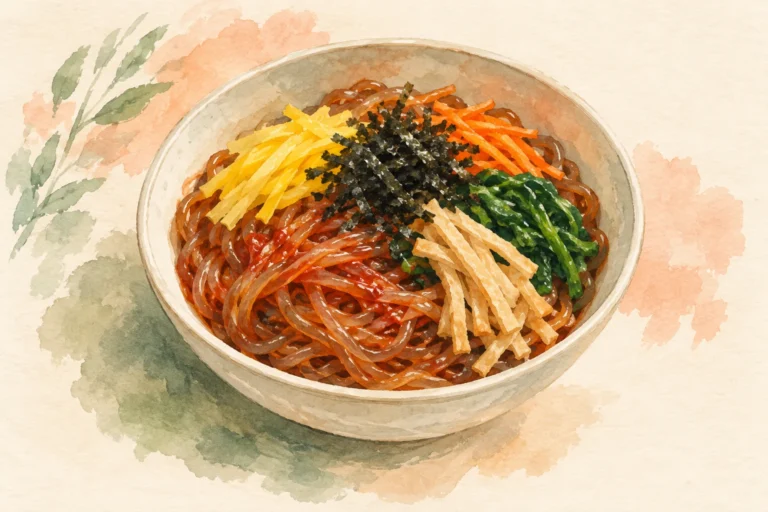
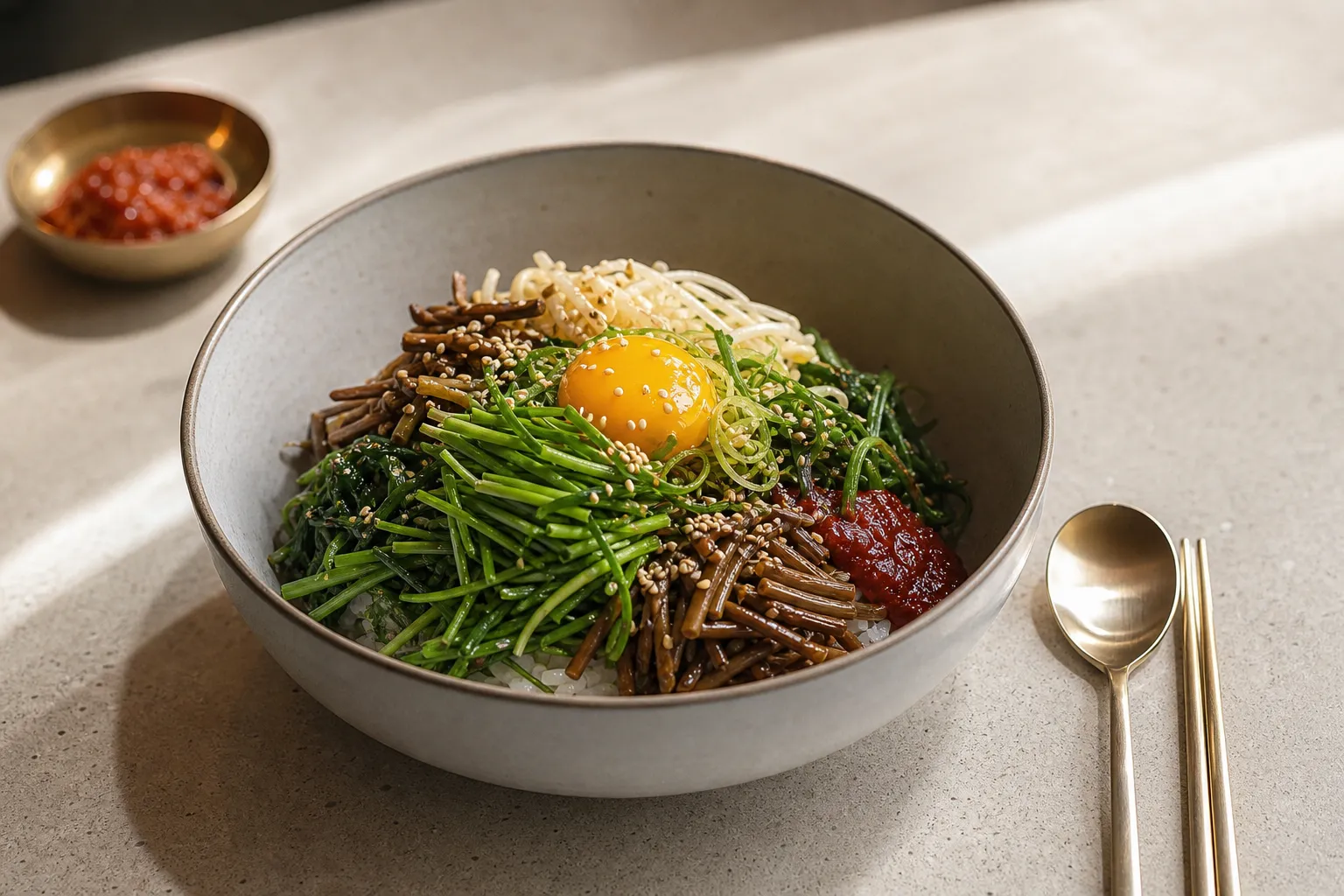
Muwol Table’s dallae bibimbap is being highlighted for a very specific kind of pleasure: a sharp, fragrant flavor built around dallae, the Korean wild chive often associated with spring greens. For anyone searching for Muwol Table Gangnam with bibimbap in mind, this dish offers a focused way to understand the restaurant’s broader appeal: neat Korean single-person meals, polished plating, and a casual setting that does not make solo dining feel awkward.12
The available source material does not provide a full ingredient list for Muwol Table’s own version, so it is better not to over-describe what is in the bowl. What is clear is the official framing: Muwol Table presents the dallae bibimbap as a menu item with an “alssa” sharpness and an aromatic quality, served within the restaurant’s tidy Korean table setting style.1
Dallae Bibimbap at Muwol Table
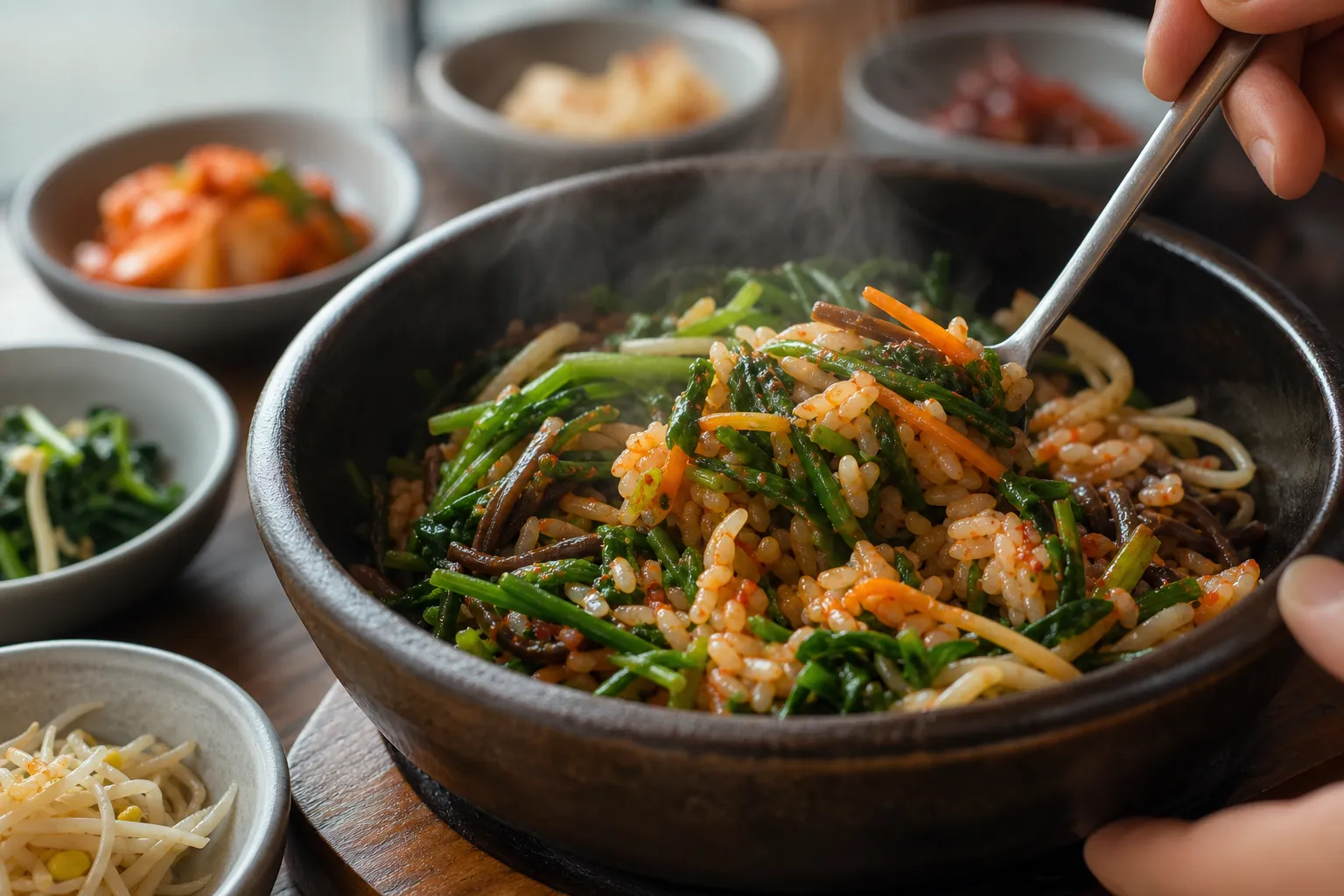
Dallae bibimbap sits comfortably in a Korean food tradition where rice, vegetables, seasoning, and sauce come together in one bowl. Dallae itself brings a distinctive allium character, often translated loosely through ideas like wild chive, garlicky greens, or spring herbs. In the source material, the official Muwol Table Instagram description keeps the focus simple and sensory: the dish is prized for being both piquant and fragrant.1
That description matters because bibimbap is not only about mixing ingredients; it is about balance. A bowl can lean savory, spicy, nutty, briny, herbal, or fresh depending on the sauce and toppings. With dallae in the center, the expected impression is brighter and more aromatic than a heavier meat-led rice bowl. FoodToday’s separate recipe feature on dallae-jang bibimbap gives helpful context for this style of dish, listing dallae with other spring greens and describing a seasoning sauce made with soy sauce, minced garlic, sesame salt, sesame oil, and cooking wine.3
That FoodToday recipe is not presented as Muwol Table’s recipe, so it should be read as background rather than a claim about the restaurant’s kitchen. Still, it helps explain why dallae bibimbap can feel so vivid: the herb and sauce combination is meant to carry fragrance through rice and vegetables. In that same feature, cooking researcher Yang Hyang-ja describes the appeal with a short promise: “the fragrant scent of spring will fill your mouth.”3
Why the Gangnam Setting Fits the Dish
Muwol Table is introduced by Visit Gangnam as a restaurant serving neat Korean single-person meals, with the address listed as 23 Gangnam-daero 102-gil, Gangnam-gu, Seoul. The page gives the operating hours as 11:00 to 22:00 daily and lists the phone number as 02-552-9280.2
That one-person meal format is a useful detail for readers. Bibimbap is naturally complete in a single bowl, but Muwol Table’s broader style appears to frame Korean dining as an individually plated, well-arranged meal rather than a shared spread. Visit Gangnam also notes a casual atmosphere where eating alone does not feel burdensome, along with individual bowl plating.2
Other restaurant listings point in the same general direction. Siksin describes Muwol Table as a Korean restaurant near Sinnonhyeon Station in Gangnam and highlights tidy interiors, bar seating, single-person bansang meals, and individual evening drinking sets.4 AutoReserve classifies it as a Korean cuisine restaurant in Gangnam-gu and lists the same address, while showing business hours of 11:30 to 22:00 with last order at 21:00.5
Because the listed hours differ between Visit Gangnam and AutoReserve, readers should treat the exact opening time as something to confirm before going. What remains consistent across the sources is the location in Gangnam-gu, the Korean cuisine category, and the restaurant’s identity around orderly, individually composed Korean meals.25
What to Expect From the Menu Context
The available sources show that Muwol Table’s menu is not limited to one bibimbap. Siksin lists examples such as hand tofu gang-doenjang bibimbap, webfoot octopus and pork belly flying fish roe wrap rice bowl, and minari Beolgyo cockle bibimbap.4 AutoReserve’s menu examples include herbal barbecue bossam, soy-marinated shrimp rice bowl, and Beolgyo cockle bibimbap.5
That menu context makes the dallae bibimbap feel less like an isolated novelty and more like part of a larger house style: Korean rice-centered meals with clear toppings, sauces, and regional or seasonal accents. The official Instagram description also mentions a neat full table composition and provides branch location and inquiry guidance through linked information, reinforcing that the dish is presented as part of a carefully arranged dining format.1
For a visitor, the main appeal is likely clarity. You are not trying to decode a sprawling tasting menu or a highly formal hanjeongsik experience. Based on the available descriptions, Muwol Table is closer to an approachable Korean table where an individual diner can order a complete meal and still feel the structure of a proper bansang.
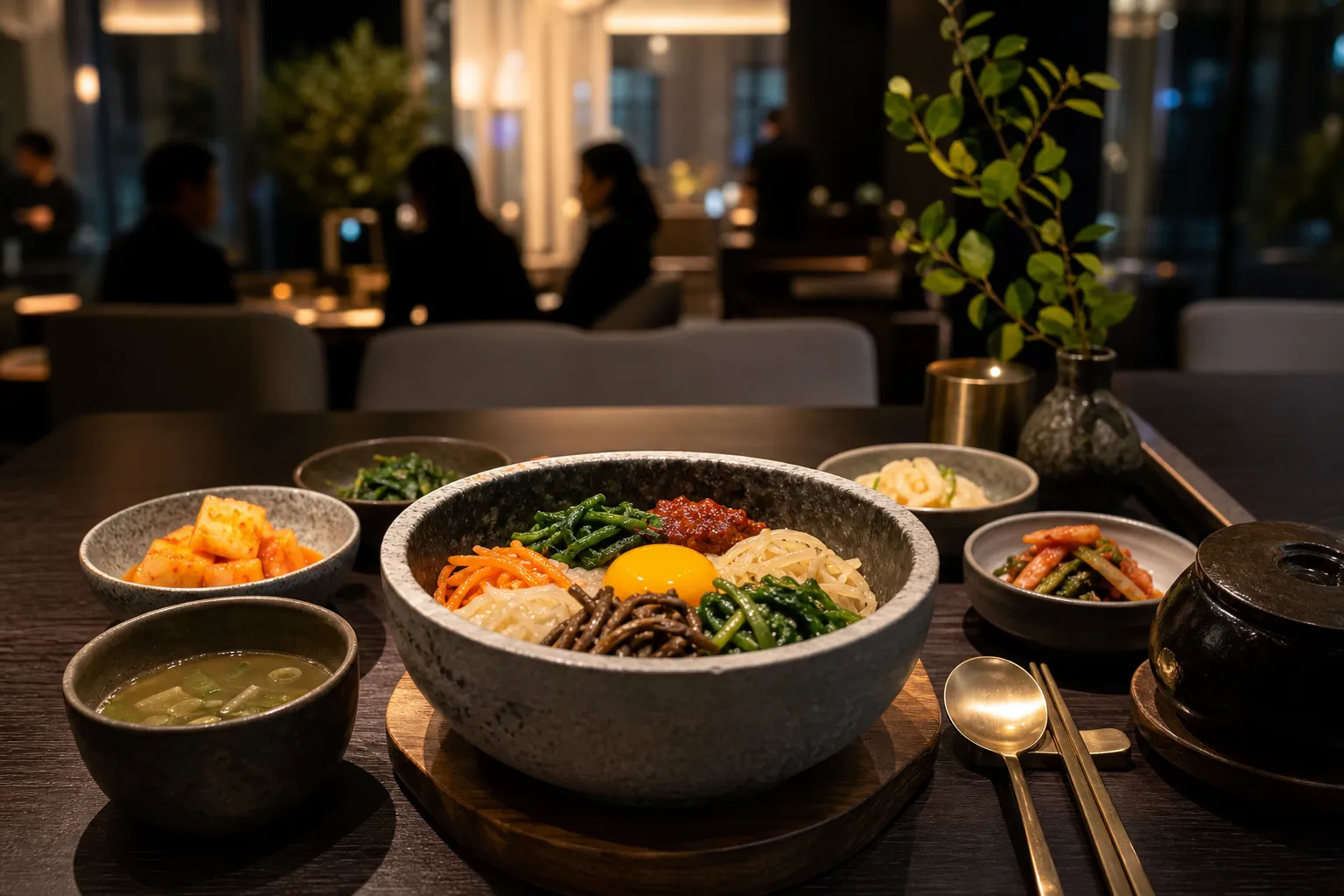
Muwol Table’s dallae bibimbap is best understood as a fragrant, piquant rice bowl within a Gangnam restaurant known for tidy Korean one-person meals. The sources do not reveal every detail of the restaurant’s recipe, but they do support a clear picture: this is a focused herb-forward bibimbap, served in a setting built around neat plating, casual comfort, and accessible Korean dining in Gangnam.
References
- 알싸하면서도 향긋한 풍미가 일품인 달래비빔밥 (무월식탁 공식 Instagram)
- 무월식탁 (Visit Gangnam, 2026-06-19)
- [봄봄봄 레시피] 향긋한 봄향기가 입안 가득~ '달래장비빔밥' (푸드투데이, 2021-04-06)
- 무월식탁 – 서울, 강남구, 역삼동 (식신)
- 무월식탁 | 강남구, 서울특별시 | 한국요리 (AutoReserve)
About the Author