Mangwon Market gochu twigim entered a wider spotlight when Wooirak’s stuffed fried pepper became a Lotteria collaboration menu. For readers exploring Mangwon Market Food, this is a clear example of how a local market snack can be adapted into a national fast-food format while keeping its most recognizable idea: a large fried pepper with a savory filling.
The official menu name was “Wooirak Gochu Twigim.” Lotte GRS introduced it as a collaboration with Wooirak, a Mangwon Market eatery, and began selling it at Lotteria stores nationwide from June 20, 2024, as the third collaboration menu in the Lotteridan-gil project.1
What Mangwon Market Gochu Twigim Means in This Collaboration
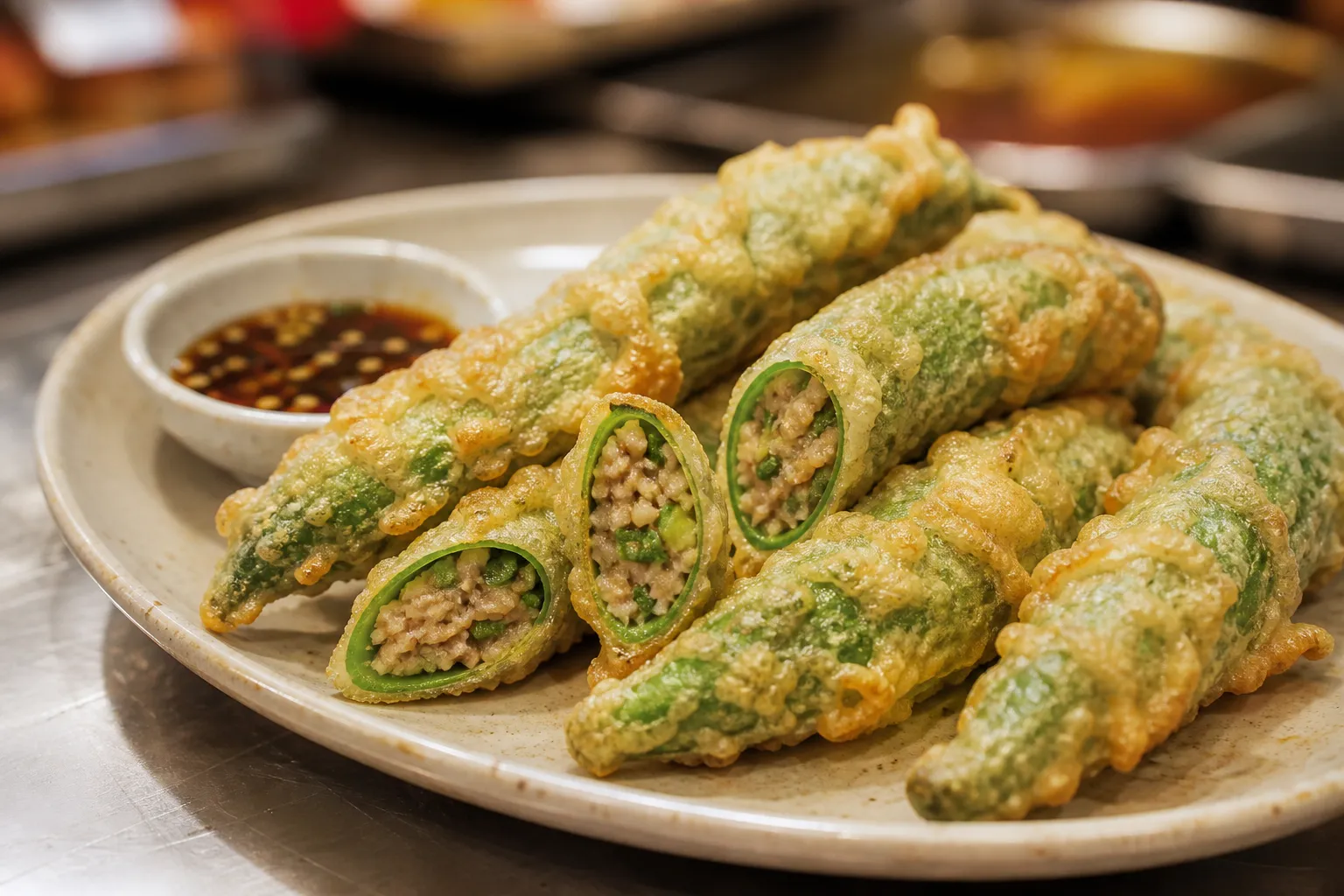
Gochu twigim translates simply as fried chili pepper, but the Wooirak collaboration item was not just a plain battered pepper. The product was described as a large pepper filled with minced meat, coated in batter twice, and fried.1 That structure explains why it reads as more than a small side: it has the shape and familiar idea of a market snack, but the meat filling gives it a more substantial bite.
The sauce was also part of the product identity. Coverage described the item as being served with chili mayo sauce, and the official Lotte Eatz product page presents “Wooirak Gochu Twigim” as a K-dessert that includes one chili mayo sauce.23 In this context, “K-dessert” does not need to mean a sweet dessert. It works more like a fast-food snack category: something compact, fried, and easy to add to an order.
For someone curious about why this item stood out, the appeal is fairly direct. It brings together a recognizable Korean market-food format, a savory filling, a double-battered fried coating, and a prepared dipping sauce. Nothing in the source material requires exaggerating it as a reinvention of Korean food. Its importance is simpler: a specific Mangwon Market-style item moved into a broader restaurant setting under Wooirak’s name.
From Wooirak to Lotteria’s Nationwide Menu
The collaboration sat inside Lotteria’s Lotteridan-gil project, which focused on working with local alley restaurants. Lotte GRS described the project as “a new type of win-win campaign” planned for the purpose of revitalizing local economies.1 That framing is important because the product was not presented only as a quirky limited snack. It was tied to a broader campaign about connecting a large food-service brand with smaller local food names.
The Wooirak partnership also fits a larger pattern in Korean food marketing at the time. CEO Score Daily described food companies as expanding “loconomy” menus that use local restaurants and regional specialties, and cited Lotteria’s June 2024 Wooirak Gochu Twigim launch as one example.4 The term points to a strategy built around local identity, K-food interest, and the image of regional cooperation.
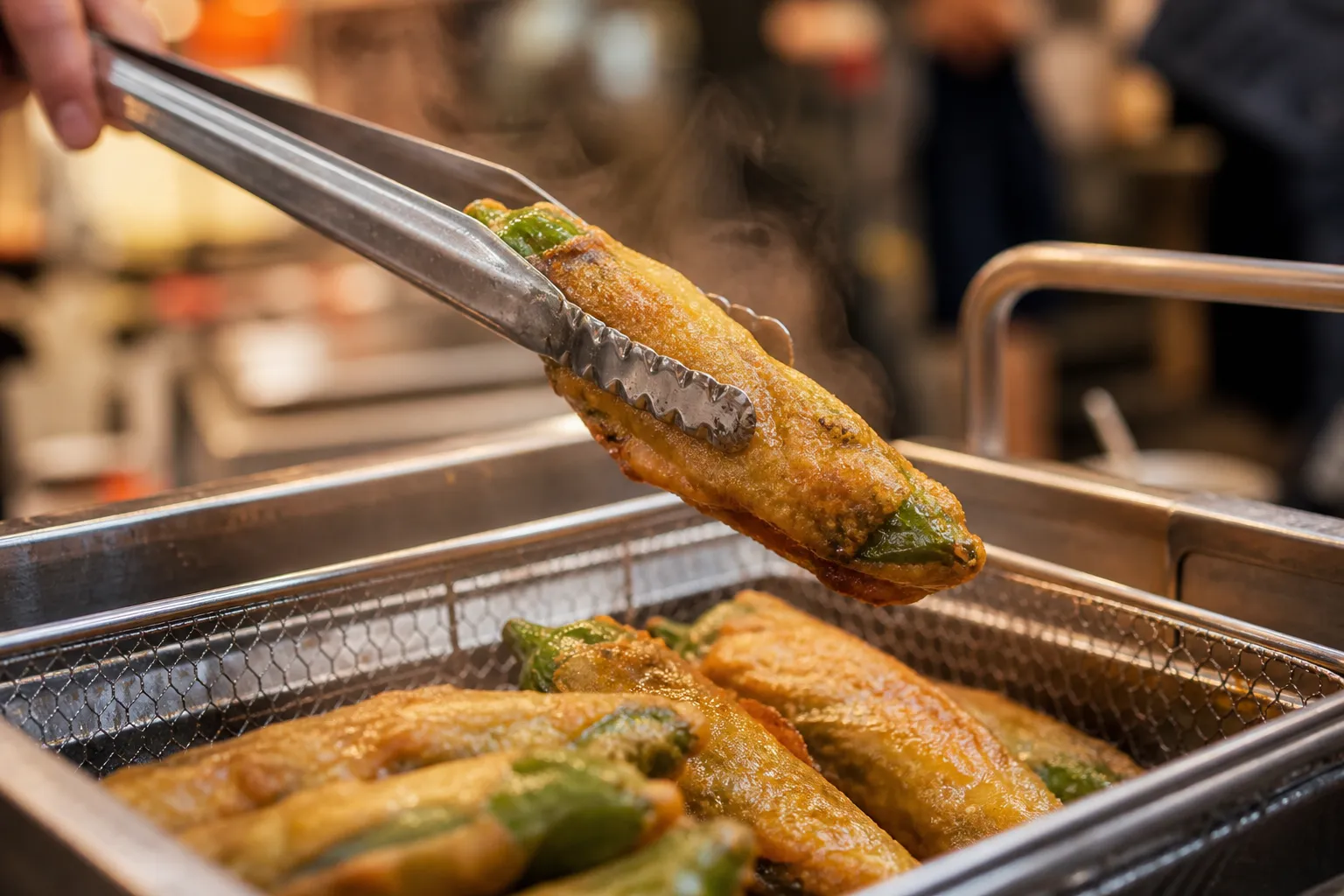
Still, the product itself remained easy to understand. It was not an abstract branding exercise; it was a fried pepper filled with meat and served with chili mayo. Bizwatch’s coverage also noted that the item was cooked after ordering, with an indicated cooking time of 8 to 9 minutes.2 That detail helps explain why the menu was discussed as a prepared fried snack rather than a prepackaged side.
The official product information adds a few practical details for readers who want the basic specs. Lotte Eatz listed the price at 3,400 won, total weight at 87.4 grams, calories at 211 kcal, and sodium at 420 mg.3 Those figures are useful because they place the item in the range of a compact side menu rather than a full meal.
Why the Sales Figures Drew Attention
Wooirak Gochu Twigim drew attention because its sales were reported beyond the launch announcement. Lotteria said the item sold about 900,000 units in roughly two months after its June 2024 release.5 Bizwatch also reported that figure while describing the product as part of Lotteria’s experiment with Korean flavors and trend-focused limited menus.6
The customer data reported by Lotteria added another reason the menu became a talking point. NewsPim reported that the purchase share among customers in their 20s and 30s was about 55%, while the purchase share among female customers was more than 60%.5 These numbers do not tell the whole story of why people bought it, but they do show the demographic profile Lotteria highlighted after the launch.
For a market food item, that kind of fast-food visibility matters. Mangwon Market is already associated with casual, approachable eating, but a nationwide Lotteria menu gave one Wooirak-linked item a different scale. The collaboration turned a local fried pepper concept into something people could encounter outside the neighborhood market, while still pointing back to Wooirak and Mangwon Market as the source of the idea.
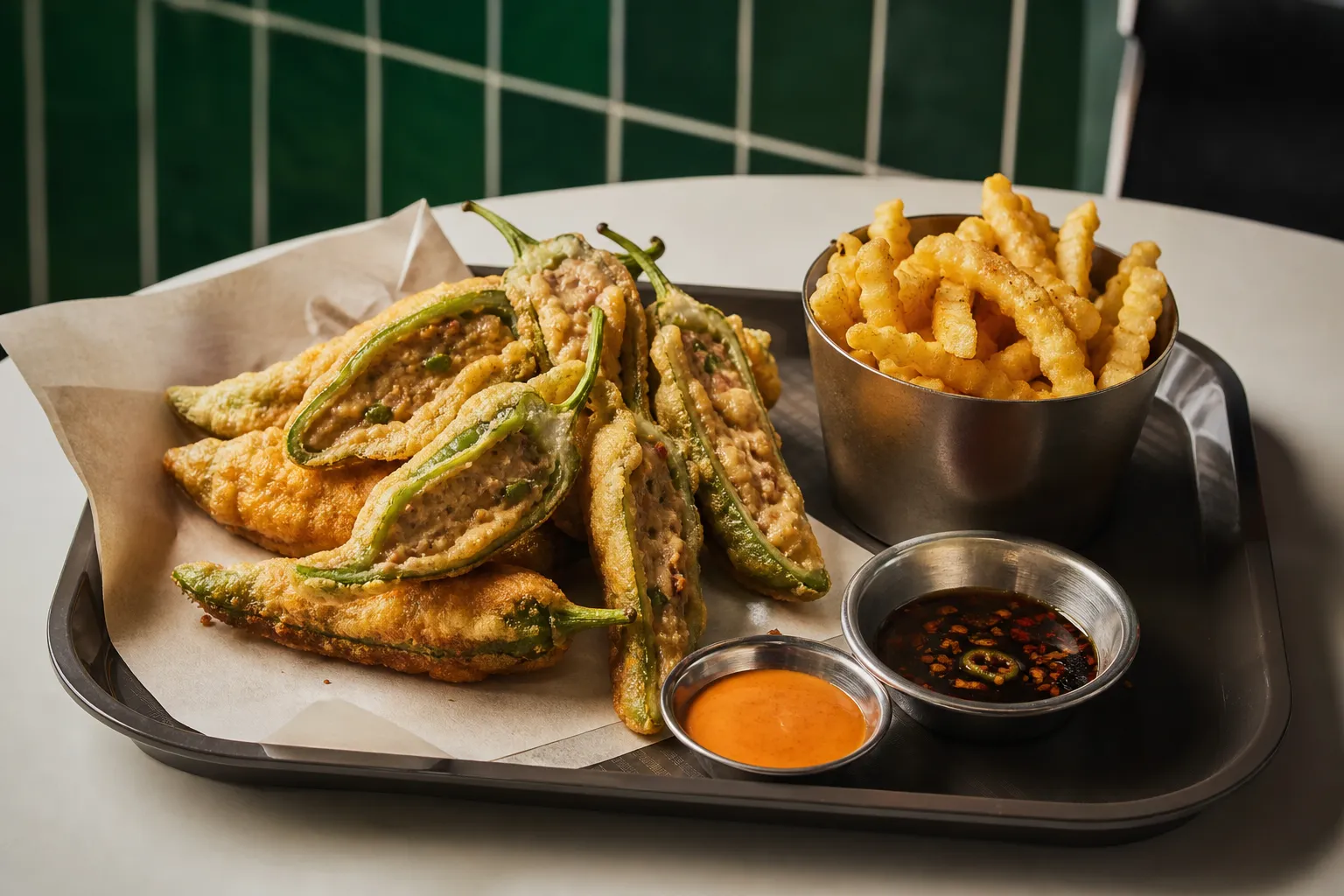
The most useful way to understand Mangwon Market gochu twigim in this case is not as a trend detached from its roots, but as a local snack format that proved adaptable. Wooirak Gochu Twigim kept the core idea simple: a large pepper, a minced-meat filling, a fried coating, and chili mayo sauce. Its reported sales show why the collaboration was noticed, but its appeal begins with a familiar market-food structure that was clear enough to travel into a national fast-food menu.
References
- 롯데리아, 골목 맛집과 협업…'우이락 고추튀김' 출시 (뉴스핌, 2024-06-19)
- [슬소생]이정도면 진심…롯데리아, '고추튀김' 맛집이었다 (비즈워치/다음, 2024-06-25)
- 우이락 고추튀김 (롯데잇츠)
- 한국적인 맛이 인기…맥도날드·롯데리아·SPC 등 ‘지역성’ 활용한 메뉴로 승부 (CEO스코어데일리, 2024-08-15)
- 롯데리아 '한국적인 맛' 통했다…우이락 고추튀김 90만개 판매 (뉴스핌, 2024-08-13)
- 롯데리아, '한국의 맛' 실험 통했다 (비즈워치, 2024-08-13)
About the Author