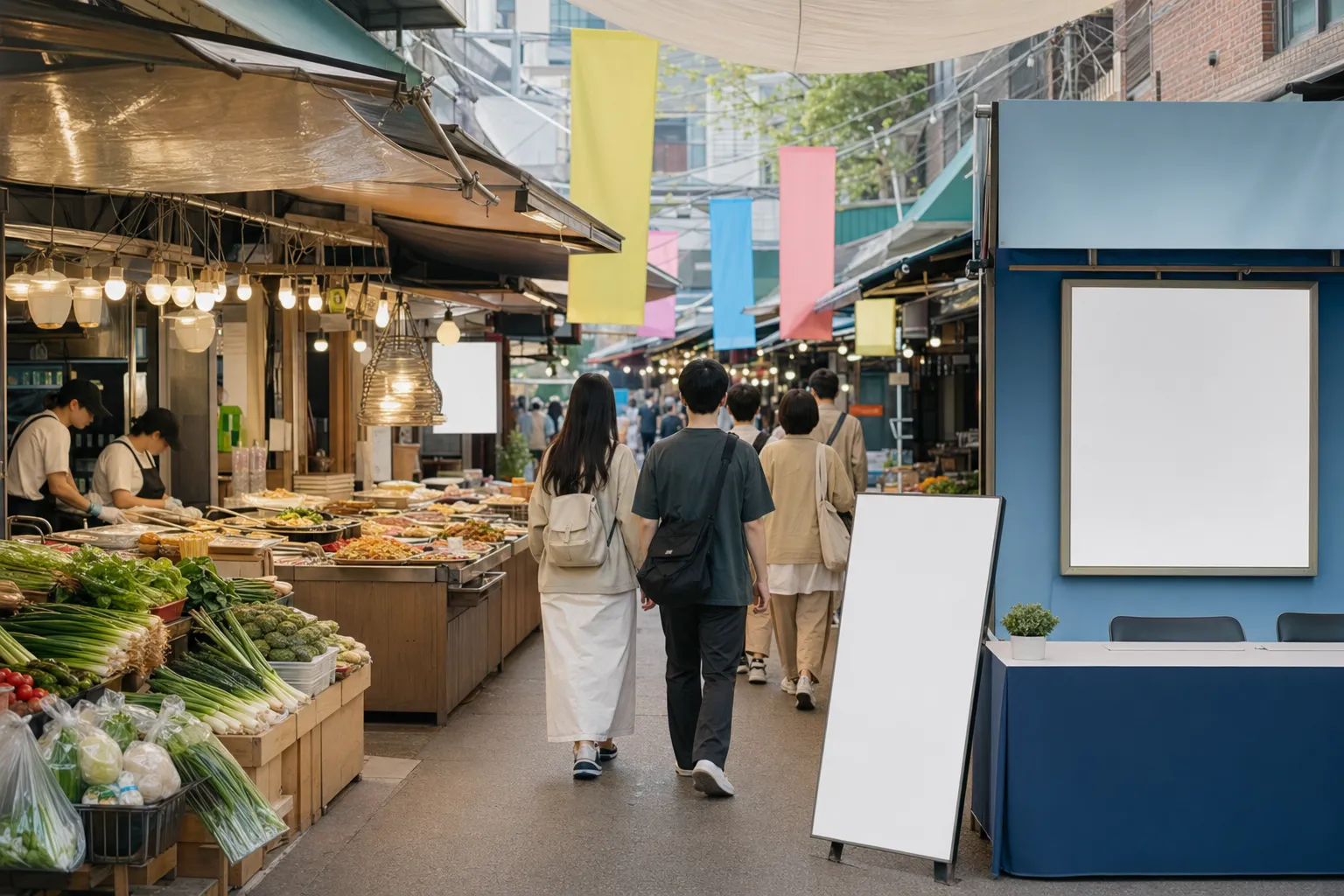
Mangwon Market is being discussed as a practical alternative for visitors concerned about overcharging at traditional markets in Seoul. The issue has gained attention after repeated pricing and service controversies at Gwangjang Market, including a case involving a 500 ml bottle of water sold for 2,000 won and reports of stalls asking for cash or bank transfer instead of card payment.1
For travelers, the point is not to treat one market as perfect and another as unusable. The useful question is simpler: if you want a Seoul traditional market experience with clearer visitor support, better tourism planning, and fewer reported overcharging complaints in the available sources, what should you know before choosing Mangwon Market?
Why Mangwon Market Is Being Viewed as a Safer Alternative
The latest overcharging discussion began around Gwangjang Market, where a controversy developed after a video showed a stall separately charging 2,000 won for a bottle of water. The stall involved in that case suspended business for three days from April 22 to April 24, 2026.2 The broader concern was not only the water price. Field reporting also described examples of insufficient price-label details, including missing weight or quantity information, and some stalls requesting cash or bank transfer instead of card payment.1
That background explains why Mangwon Market has entered the conversation. Reporting on foreign visitor reactions noted that some tourists were considering other traditional markets, including Mangwon Market and Kyungdong Market, while travel-community comments described Mangwon Market as cleaner and friendlier.3 Mangwon Market’s side also stated that it had not received complaints about overcharging; translated naturally, the market representative said, “There have been no complaints filed over overcharging.”3
This does not mean every transaction at Mangwon Market is automatically guaranteed to be perfect. It does mean the source-backed public record presented here gives visitors a reasonable basis to compare options. If your priority is avoiding confusing pricing, unclear payment expectations, or tourist-targeted frustration, Mangwon Market currently has a stronger visitor-facing story in the available reports.
What Supports Mangwon Market’s Visitor Appeal
Mangwon Market is not only benefiting from comparison with Gwangjang Market. It has also been selected for the second phase of the “K-Tourism Market” project led by the Ministry of Culture, Sports and Tourism and the Korea Tourism Organization. The selection covered 11 markets across 10 regions, and selected markets are set to receive support for food and experience content, programs linked with nearby attractions, and domestic and overseas promotion.4
For a visitor, that matters because these are not abstract branding exercises. The reported support areas match common pain points for foreign travelers: clearer information, stronger payment systems, and better guidance around what to buy or do. A separate report on the Korea Tourism Organization’s plan said the selected traditional markets, including Seoul’s Kyungdong Market and Mangwon Market, would strengthen brand strategy and overseas marketing while pursuing fixed-price systems, payment infrastructure improvements, and expanded multilingual guidance.5
Mangwon Market’s surrounding area also helps. Mapo District cited the market’s foreign-tourist-friendly infrastructure, K-food appeal, and links with nearby attractions such as Mangridan-gil and Mangwon Hangang Park as part of its evaluated strengths.4 That makes the market easier to build into a half-day Seoul plan: eat at the market, continue through the surrounding commercial streets, or connect the visit with the riverside area.
For visitors who are specifically trying to avoid the stress associated with overcharging disputes, the most relevant improvements are fixed pricing, payment infrastructure, and multilingual information. These measures are not described as completed across every stall in the source material, so visitors should still check displayed prices and confirm payment methods before ordering. But the direction of the official tourism support is aligned with the exact problems that have made some travelers reconsider where to go.
Practical Timing: The May 1-3 Campaign
There is also a short-term reason Mangwon Market may be especially visible at the start of May 2026. The Seoul Regional Small and Medium Venture Business Administration is running a consumption-promotion campaign connected with the Donghaeng Festival at Mangwon Market from May 1 to May 3, 2026.6
The campaign includes gifts of traditional small items for purchasing customers, traditional hanbok experience and photo-zone programming, traditional fan-making, and children’s face painting. The program is described as aimed at attracting foreign visitors and MZ-generation tourists.6 During the campaign period, visitors are also being informed about eco-friendly paper bag distribution and a temporary increase in the discount rate for Digital Onnuri Gift Certificates.6
If you plan to visit during those dates, expect the market to be more event-oriented than on an ordinary shopping day. That can be useful if you want photo activities or cultural add-ons, but it may also mean more foot traffic around campaign areas. The available source material does not provide stall-by-stall schedules, detailed operating hours, or a complete list of participating shops, so the safest approach is to treat the campaign as an added benefit rather than the only reason to go.
For basic buying decisions, keep the same practical habits you would use at any busy market. Look for prices before ordering, ask what quantity or portion is included, and confirm whether card payment is accepted. These steps are especially relevant because the Gwangjang Market controversy involved both pricing clarity and payment-method concerns.1
Quick FAQ
Is Mangwon Market officially part of a tourism support program?
Yes. Mangwon Market was selected for the second phase of the “K-Tourism Market” project, which supports selected markets through content development, links with nearby attractions, and domestic and overseas promotion.4
Is there evidence of overcharging complaints at Mangwon Market?
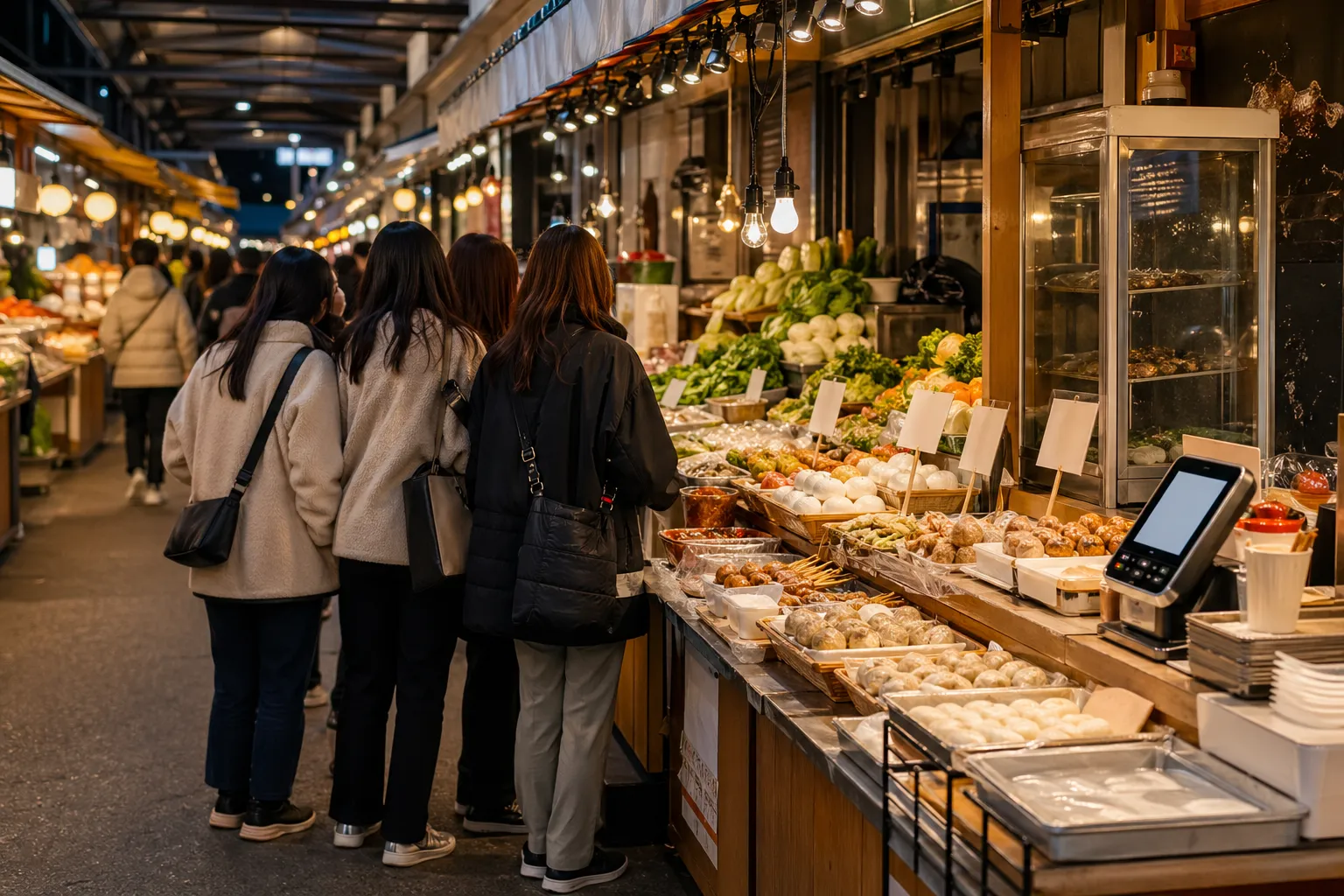
The cited report says Mangwon Market’s side stated that no complaints over overcharging had been received.3 That is a reported statement, not a blanket guarantee for every purchase, so visitors should still check prices and payment terms before ordering. !Mangwon Market May 2026 campaign overcharging alternative Mangwon Market stands out in this discussion because it combines a cleaner public record in the available reporting with official tourism-development support and a visitor-focused campaign from May 1 to May 3, 2026. For travelers who still want a Seoul traditional market experience but want to reduce the risk of unclear pricing or uncomfortable payment situations, Mangwon Market is a practical alternative worth considering.
References
- '생수 한 병 2000원' 광장시장…'외국인 바가지' 오명 언제까지 (더팩트, 2026-04-27)
- "한국서 이런적은 처음"…'물값 2000원' 따로 받던 광장시장 노점, 결국 3일 영업정지 (아시아경제, 2026-04-24)
- 또 ‘바가지’ 논란 휩싸인 광장시장, 외국인 “경동·망원시장 갈 것” (르데스크)
- 마포구 망원시장, K-관광마켓 2기 선정…"글로벌 명소로 도약" (파이낸셜뉴스 / 뉴스1, 2026-03-10)
- 관광公, 11개 전통시장 'K-관광마켓'으로 키운다 (파이낸셜뉴스, 2026-03-04)
- 서울중기청, 동행축제 기간 망원시장 소비촉진 캠페인 (국제뉴스, 2026-04-29)
About the Author