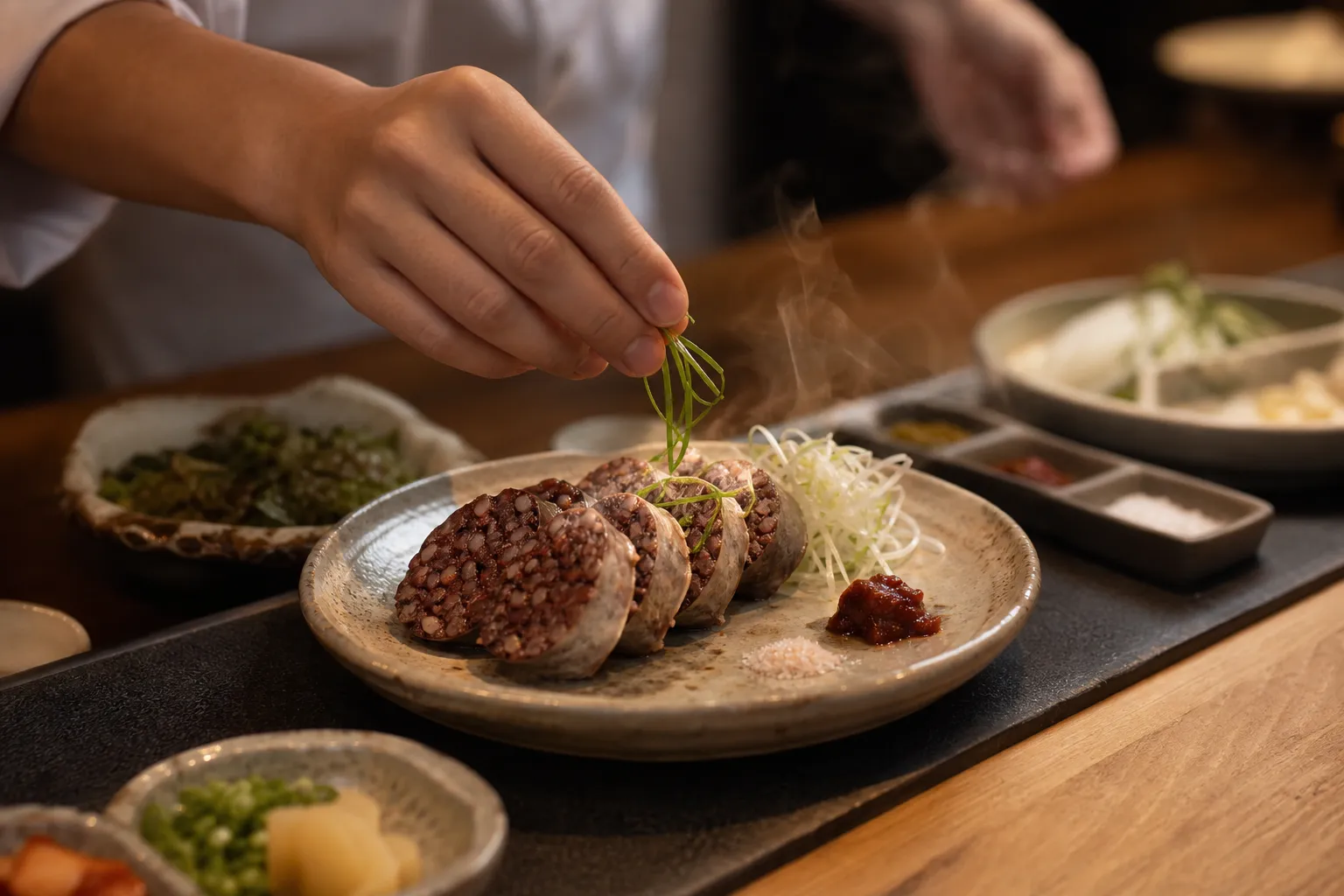
Lee Buk Bang Sundae Omakase is best understood as a focused course-style expression of sundae, the Korean blood sausage that the Seoul restaurant places at the center of its identity. Rather than treating sundae as a casual street-food side note, Lee Buk Bang builds a Korean dining experience around inherited Northern Korean flavors, traditional pairings, and more creative ingredients.
That makes the restaurant an interesting case for anyone curious about Sundae Omakase as a category. The available sources do not give a full dish-by-dish course list, but they do clearly show why Lee Buk Bang has become closely associated with sundae, Northern Korean cooking, and Chef Choi Ji-hyung’s modern interpretation of family food traditions.
Lee Buk Bang Sundae Omakase and Its Northern Korean Roots
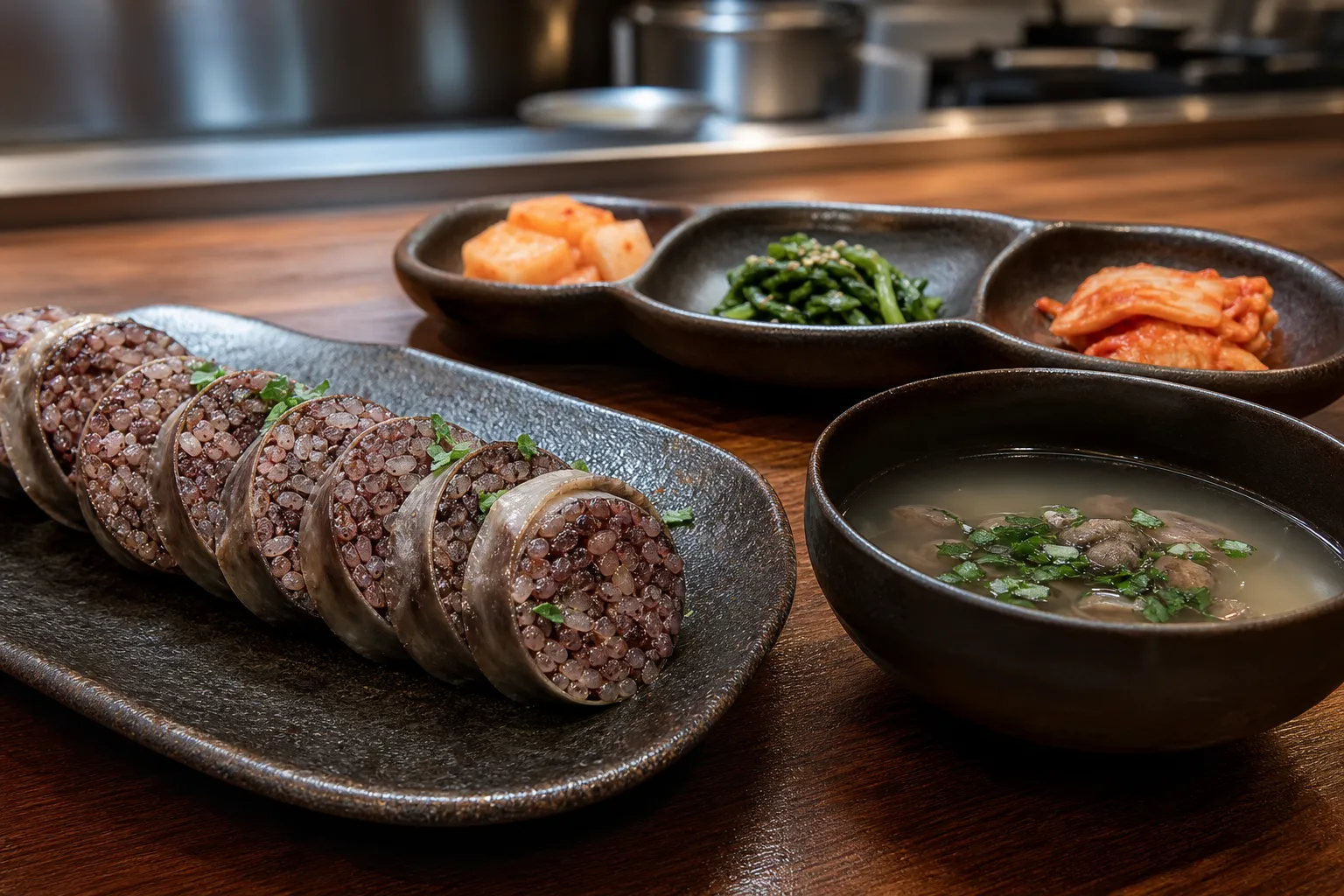
Lee Buk Bang is introduced by the MICHELIN Guide as a Korean restaurant in Mapo-gu, Seoul, with sundae at the heart of its cooking. The guide describes the restaurant’s course format as one built around sundae, including both traditional combinations and creative ingredients, and connects that focus to food passed down through the chef’s family.1
That family-rooted angle matters because Lee Buk Bang is not presented simply as a trendy tasting counter. The restaurant’s identity is repeatedly tied to Northern Korean cuisine, especially the food traditions associated with regions north of the Korean Peninsula’s modern border. In a MICHELIN Guide feature published on November 4, 2024, Lee Buk Bang and Chef Choi Ji-hyung are framed as keeping the roots of Northern Korean food while adding a contemporary interpretation.2
For readers who know sundae mostly as a market snack, this is a useful shift in perspective. In Lee Buk Bang’s case, sundae becomes a subject for careful variation: a dish family, not just a single item. The sources describe the restaurant’s course as including inherited sundae dishes, familiar traditional pairings, and more inventive uses of ingredients.1 That is where the omakase-style appeal comes in: you are not just ordering “a sundae,” but entering a guided format shaped by a chef’s point of view.
The restaurant’s wider reputation also rests on the broader language of Northern Korean food. A January 7, 2025 report by Kyunghyang Shinmun, covering Starfield Suwon’s “Bites Place Season 4,” described Lee Buk Bang as a brand that carries on the taste and tradition of Northern Korean cooking learned from a grandmother from Hamgyong Province, with sundae and dumplings among its representative foods.3
Chef Choi Ji-hyung’s Growing Public Profile
Chef Choi Ji-hyung is central to how Lee Buk Bang is being introduced outside the restaurant itself. The sources identify him as the chef behind Lee Buk Bang and describe him as a specialist in Northern Korean cuisine. Shinsegae Group Newsroom, for example, introduced him in connection with a 2025 SSG.com collaboration and linked the products to the public awareness of Lee Buk Bang as a Northern Korean restaurant.4
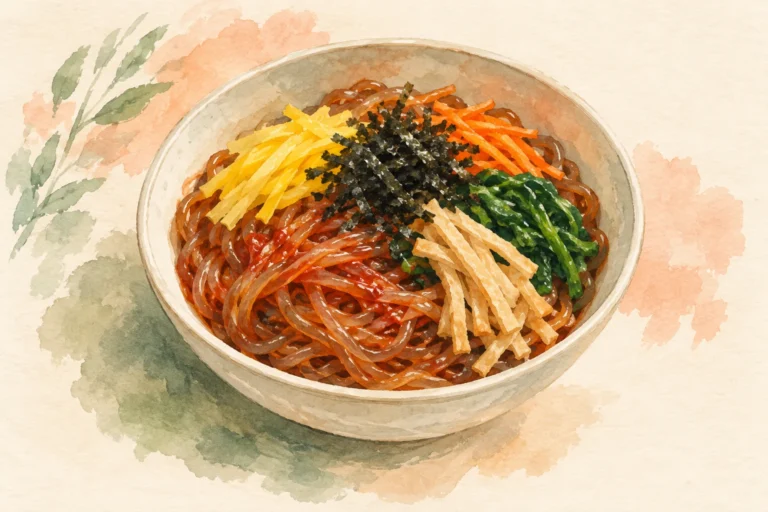
That collaboration, announced on June 19, 2025, brought three home meal replacement products to SSG.com: jeyuk bibim noodles, Northern Korean-style dakgaejang, and doenjang maekjeok-gui.4 Money Today reported the same product lineup and noted that the items were sold through SSG.com’s Gourmet Hall.5 These are not described as sundae omakase dishes, so they should not be confused with the restaurant course. Still, they show how Choi’s cooking identity has moved beyond the dining room into a wider consumer-food context.
A short quote from SSG.com MD Lee Nan-young also helps explain the framing of that project: the platform was introducing “the food stories and recipes of famous chefs” through its Gourmet Hall.4 In other words, the collaboration was not just about putting a chef’s name on packaged food; it was presented as part of a broader attempt to translate restaurant narratives into home dining.
Lee Buk Bang’s influence has also appeared in institutional dining. Bongroup announced that Bon Food Service’s cafeteria brand Bon Woori Jipbap served a Lee Buk Bang signature menu, a Northern Korean-style white sundae soup set, at Bongroup’s headquarters branch on February 26, 2025. The event was planned as a brand day designed to bring Chef Choi’s know-how to cafeteria customers.6
That detail is useful because it shows how one signature idea, Northern Korean-style white sundae soup, can travel from a restaurant identity into a very different setting. It also reinforces that Lee Buk Bang’s reputation is not only built around the word “omakase,” but around the deeper theme of Northern Korean sundae cookery.
Why This Sundae Omakase Stands Out
What makes Lee Buk Bang’s Sundae Omakase distinctive is the way it gives structure and seriousness to an ingredient many diners may think they already understand. The MICHELIN Guide’s restaurant page points to sundae as inherited family food, then notes that the course includes both conventional combinations and more creative ingredients.1 That balance is the core appeal: tradition is not treated as decoration, and creativity is not presented as a break from the past.
The Northern Korean context also gives the restaurant a clearer culinary identity. The sources connect Lee Buk Bang with Hamgyong Province family tradition, Northern Korean food roots, sundae, dumplings, and modern reinterpretation.32 Together, those details make the restaurant feel less like a broad “Korean tasting menu” and more like a focused study of a specific food heritage.
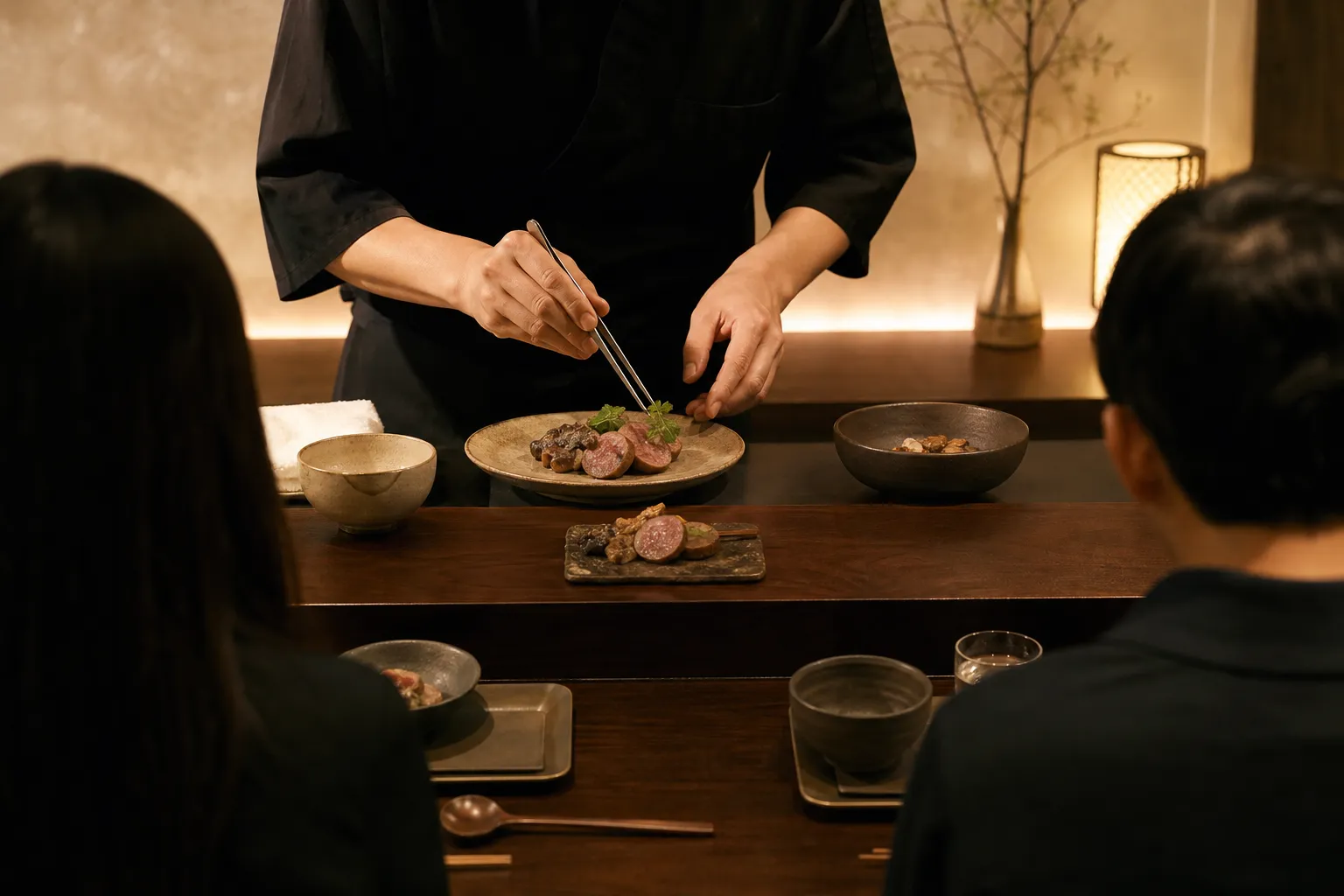
For anyone searching for Sundae Omakase in Seoul, the important takeaway is that Lee Buk Bang’s appeal is not only novelty. The restaurant’s profile is built from several source-backed layers: a Mapo-gu Korean restaurant recognized by the MICHELIN Guide, Chef Choi Ji-hyung’s Northern Korean cuisine background, a sundae-centered course format, and broader collaborations that have introduced Lee Buk Bang’s flavors to retail and cafeteria audiences.146
Lee Buk Bang shows how sundae can become the center of a refined, story-rich Korean dining format while still staying tied to family memory and Northern Korean culinary tradition.
References
- 리북방 – Seoul – 의 미쉐린 가이드 레스토랑 (MICHELIN Guide)
- 전통을 품는 창조적 시도: 리북방 최지형 셰프 (MICHELIN Guide, 2024-11-04)
- “흑백요리사 스타셰프 4인방이 스타필드 수원에 떴다” (경향신문, 2025-01-07)
- SSG닷컴, 리북방 최지형 셰프 손잡고 간편식 3종 출시 (신세계그룹 뉴스룸, 2025-06-19)
- SSG닷컴, '리북방' 최지형 셰프 손잡고 간편식 3종 출시 (머니투데이, 2025-06-19)
- 본우리집밥, 흑백요리사 ‘최지형 셰프’ 노하우로 선보인 브랜드 데이 리북방 시그니처 메뉴 ‘이북식 백순대국’ 정식 선봬 (본그룹, 2025-02-28)
About the Author