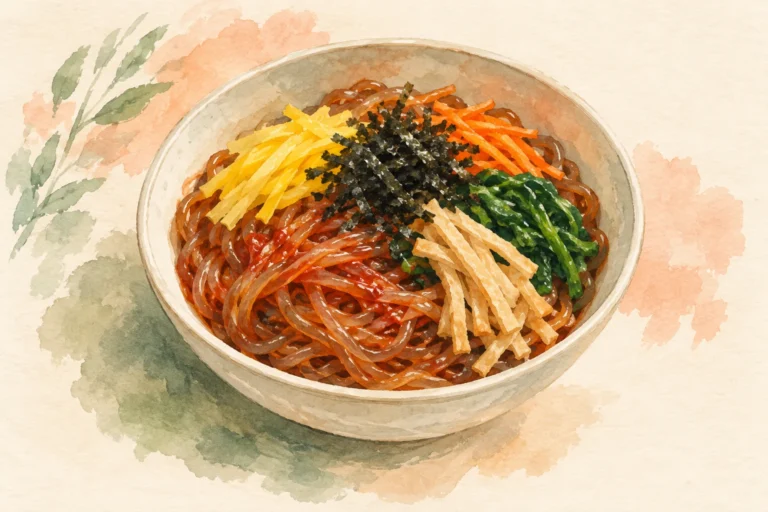
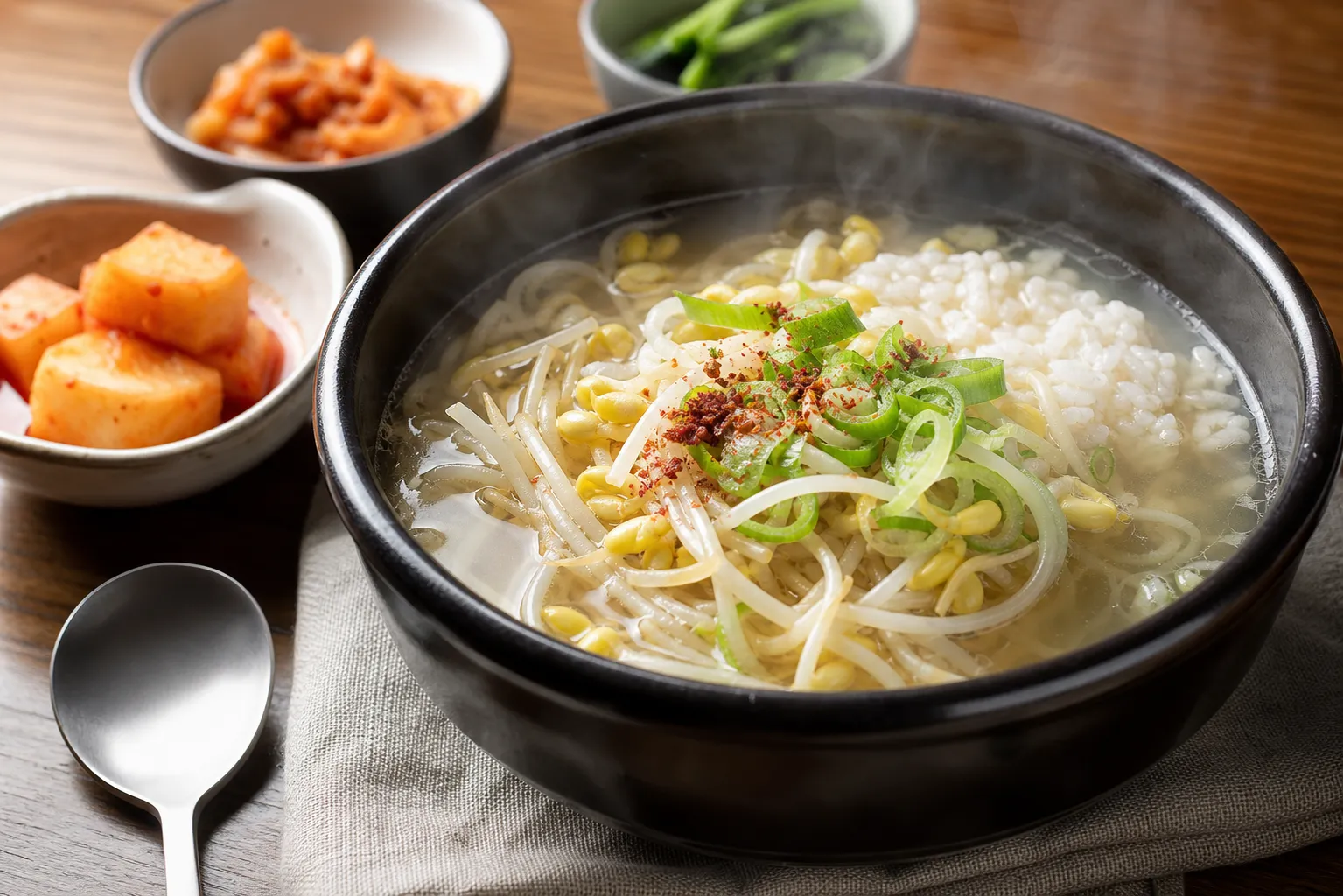
Jeonju Ogeori Kongnamul Gukbap is best understood through Ogeori Kongnamul Haejangguk, a focused bean sprout soup restaurant listed at 83 Gongbuk-ro, Wansan-gu, Jeonju, Jeollabuk-do. For travelers looking beyond the most obvious names in Jeonju Kongnamul Gukbap, this spot stands out because the available sources describe it as a specialist near the Ogeori area by Jeonju Jungang Market, with a short morning service built around kongnamul haejangguk, or bean sprout hangover soup.12
That compact focus is part of the appeal. The menu information available from Tabling lists kongnamul gukbap at 7,000 won, a whole squid add-on at 5,000 won, and a bowl of rice at 1,000 won. Hours are also clear and very breakfast-oriented: Monday through Saturday from 06:30 to 12:00, with Sundays closed.1 If you are planning a meal around this restaurant, the most important practical point is simple: it is a morning place, not an all-day stop.
Why Ogeori Kongnamul Haejangguk Fits Jeonju’s Breakfast Culture
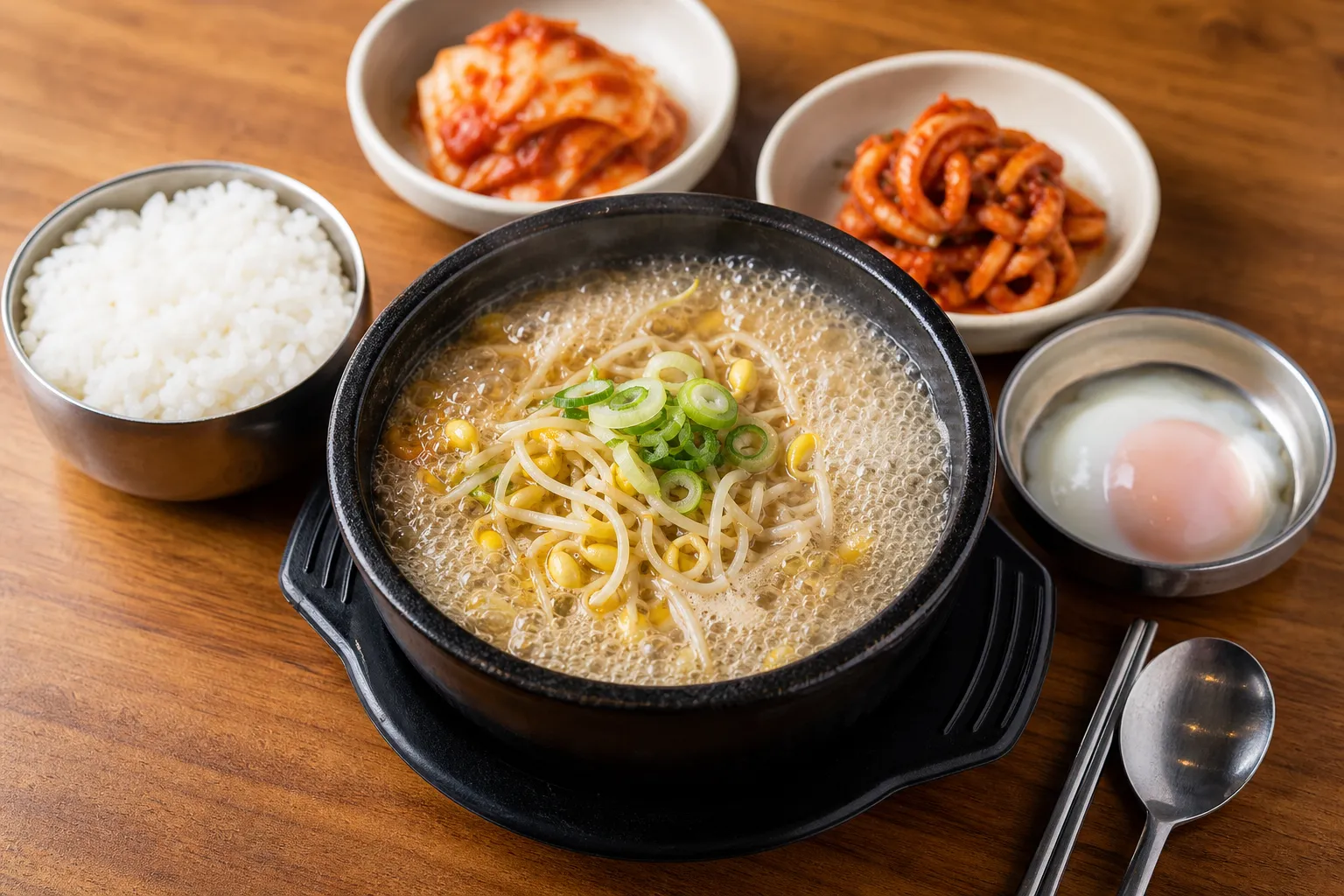
Jeonju kongnamul gukbap is not just another soup on a local menu. The Korea Tourism Organization’s Korea Travel article presents it alongside hanjeongsik and bibimbap as one of Jeonju’s three major delicacies, and describes the dish as being built from broth, bean sprouts, chopped kimchi, and rice, with sides such as kimchi, kkakdugi, salted shrimp, salted squid, and poached egg.3 The Encyclopedia of Korean Culture defines Jeonju kongnamul gukbap as a haejangguk-style rice soup from Jeonju, Jeollabuk-do, made with bean sprouts as the main ingredient.4
That matters because Ogeori Kongnamul Haejangguk sits inside a much larger food tradition. Jeonju’s version is tied to the city’s food identity, but it is also practical and direct: warm broth, rice, bean sprouts, and seasonings that make sense at breakfast. TravelPlus reported in 2021 that National Geographic UK included Jeonju kongnamul gukbap among Korean foods associated with hangover recovery; the article described it as a popular dish eaten the morning after drinking, with ingredients such as green onion and chili.5
One short quote from that coverage captures the way the dish is often framed for outside readers: Lauren Shockey described it as “a very popular food eaten the morning after drinking.”5 That does not mean the dish is only for hangovers, of course. In the sources, it is also a regional food, a breakfast bowl, and a symbol of Jeonju’s everyday cooking culture.
What the Sources Say About the Ogeori Style
The information available for Ogeori Kongnamul Haejangguk is refreshingly specific. A Brunch Story post describes it as a kongnamul haejangguk specialist near the Ogeori area of Jeonju Jungang Market, with the menu centered on the soup. It also notes that diners can choose mild, medium, or spicy flavor levels, and can add boiled squid or an extra bowl of rice.2 The same post gives the hours as 06:30 to 12:00, closed on Sundays, and notes cash payment.2
Another useful detail comes from a Jeju Ilbo feature supplied by Jeonbuk Ilbo. In its broader explanation of Jeonju kongnamul gukbap, the article says the dish is associated with the water, market culture, and bean sprout production base around Jeonju’s Gyodong and Nambu Market areas. It also explains that Jeonju kongnamul gukbap cooking methods are commonly divided into direct-heating and toryeom-style preparation.6
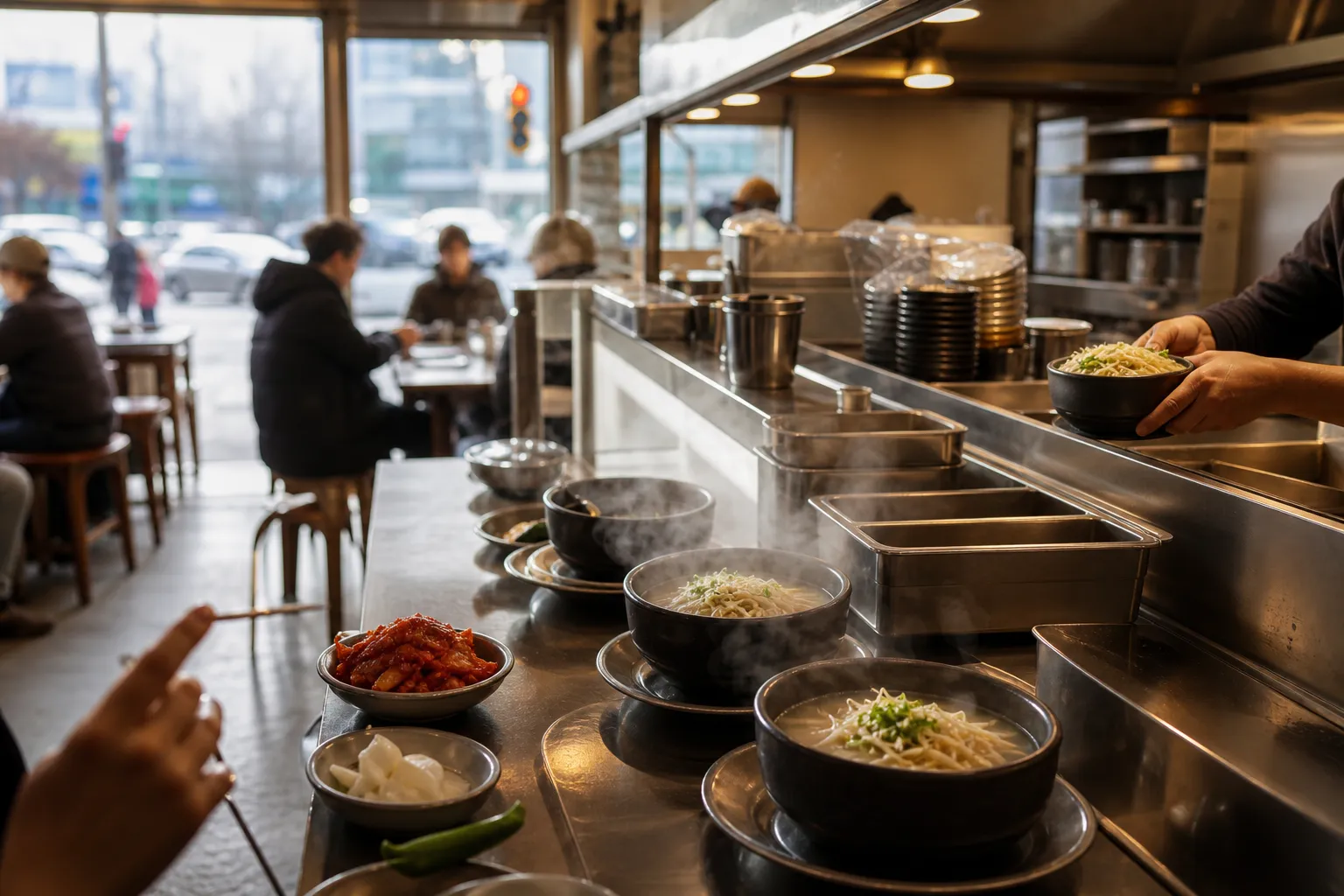
For Ogeori specifically, that same feature points to two memorable characteristics: generous bean sprouts and a cooking process that can be watched.6 Those are small details, but they help explain why a simple-looking bowl can have a loyal following. A bean sprout soup restaurant lives or dies by balance: the broth has to stay clean, the sprouts need crunch and volume, and the seasoning should support the bowl without overwhelming it.
How to Plan a Visit Around the Facts
Because the confirmed operating window is short, the safest way to think about Ogeori Kongnamul Haejangguk is as an early-day meal. The listed schedule runs from 06:30 to noon from Monday through Saturday, and the restaurant is closed every Sunday.1 That makes it easier to pair with a morning market walk, but it also means there is little room for a late lunch plan.
The ordering structure appears straightforward. The central bowl is kongnamul gukbap or kongnamul haejangguk, with optional squid and rice add-ons listed in the available menu information.12 If you prefer a gentler breakfast, the Brunch Story source’s note about mild, medium, and spicy options is useful; if you want something heartier, boiled squid and extra rice are the documented additions.2
It is also helpful to know how the restaurant fits into the wider Jeonju style. The Korea Tourism Organization notes that Jeonju has more than one approach to kongnamul gukbap, including Sambakjip-style and Nambu Market-style variations.3 The Encyclopedia of Korean Culture similarly explains that modern Jeonju kongnamul gukbap may be prepared either by boiling with egg or by serving a poached egg separately, with accompaniments such as salted shrimp, salted seafood, dried seaweed, and poached egg.4
Ogeori Kongnamul Haejangguk is not presented in the available sources as a flashy destination, and that is exactly why it feels worth knowing about. The source-backed picture is of a morning-focused Jeonju bean sprout soup specialist near Jungang Market’s Ogeori area, serving a compact menu with clear hours, simple add-ons, and a place within one of Jeonju’s defining food traditions.
References
- 오거리 콩나물 해장국 (테이블링)
- 해장의 완성 (브런치스토리 바롱이, 2024-05-25)
- 무엇과도 비교할 수 없는 깊고 시원한 맛 ‘전주 콩나물국밥’ (한국관광공사 대한민국 구석구석)
- 전주콩나물국밥 (한국민족문화대백과사전, 2024-07-05)
- 英 내셔널 지오그래픽 선정 숙취해소에 좋은 한국 음식은? (여행플러스, 2021-01-16)
- [신팔도명물]뒤집힌 속 풀기에 뜨끈한 ‘국밥’ 한 그릇으로 ‘뚝딱’ (제주일보, 2022-07-21)
About the Author