

Japan’s Golden Week visits to Korea are drawing close attention in 2026 because several indicators point in the same direction: stronger travel intent, active government promotion, and visible commercial preparation inside Korea. The phrase “Super Golden Week” captures the wider timing, as Japan’s holiday period overlaps with China’s Labor Day demand, but the Japanese market has its own clear momentum.
The confirmed numbers show why Korea is treating the period as more than a short holiday bump. Japan was described by Korea’s Ministry of Culture, Sports and Tourism as the second-largest inbound market after China, while Japanese arrivals to Korea in 2025 reached a record-level 3.65 million visitors. By February 2026, Japanese arrivals were already up 14.8% from a year earlier, giving policymakers a stronger base before the Golden Week campaign began.1
Japan Golden Week Visits to Korea: The Demand Signals
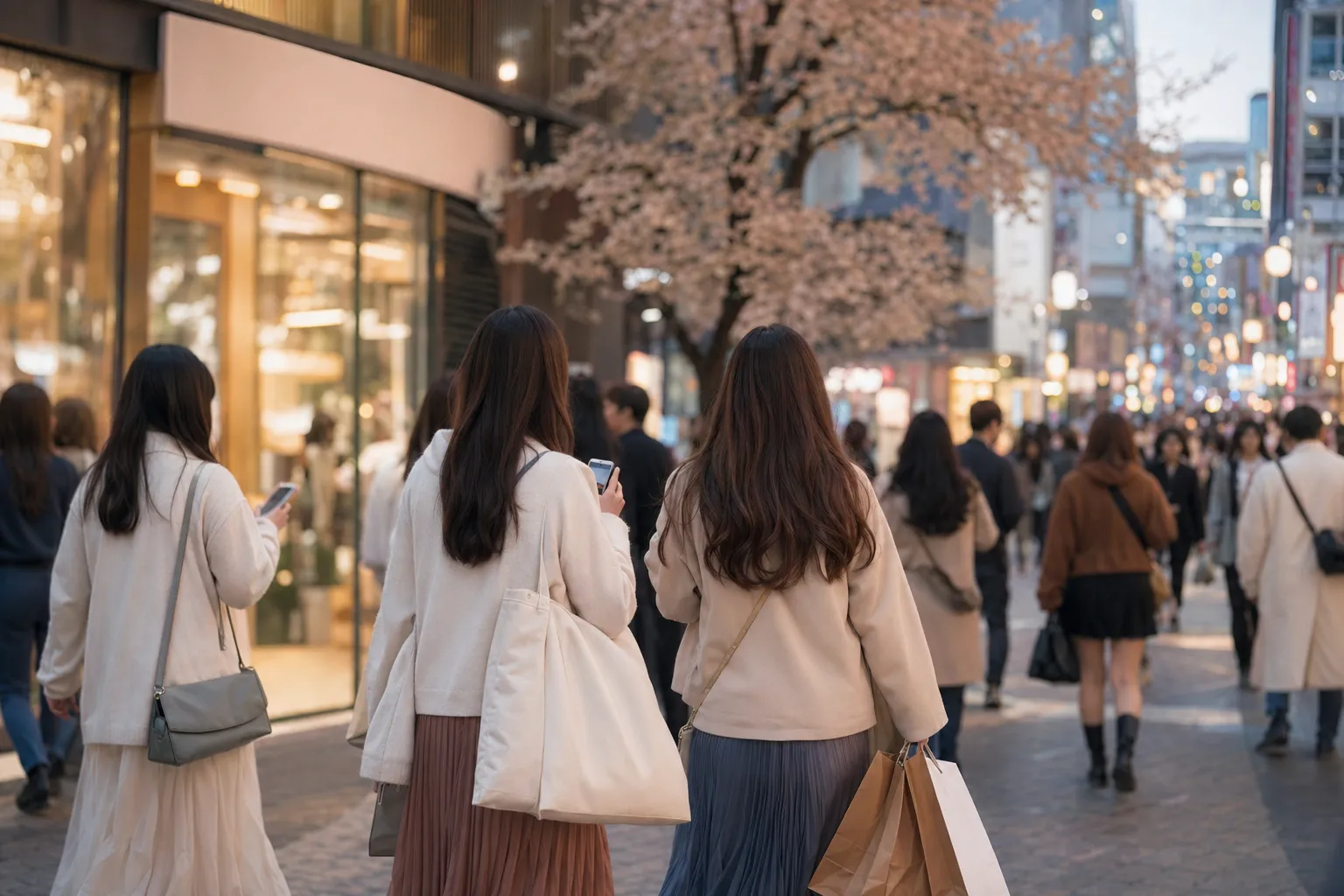
The clearest official forecast is that 80,000 to 90,000 Japanese visitors were expected to come to Korea during the holiday period. That projection sits alongside a wider first-quarter recovery: Japanese arrivals in Korea reached 940,000 in the first quarter of 2026, up 20% year on year.2 Those figures do not by themselves prove that all segments are recovering evenly, but they do show that Golden Week demand is being built on an already expanding inbound base.
Japan-side travel data supports the same reading. JTB estimated that 572,000 Japanese travelers would take overseas trips during the 2026 Golden Week period, up 8.5% from the previous year, with average planned overseas travel spending of 329,000 yen. In detailed destination estimates, Korea accounted for 143,000 travelers, or 25.0% of total overseas travel.3 That makes Korea a major destination within Japan’s outbound holiday market, not simply one option among many.
HIS reservation trends add a booking-based perspective. For its travel products departing from April 24 to May 6, 2026, HIS reported overseas travel reservations at 126.7% of the previous year, with an average unit price of 218,400 yen, or 104.3% year on year. Seoul ranked first by overseas travel reservation count, while Jeju ranked fifth and Busan sixth.4 The ranking matters because it suggests that Korea demand is not concentrated only in Seoul, even though Seoul remains the leading draw.
| Indicator | Confirmed figure | Why it matters |
|---|---|---|
| Expected Japanese visitors to Korea during the holiday | 80,000-90,000 | Official short-term demand estimate2 |
| Japan arrivals to Korea in Q1 2026 | 940,000, up 20% YoY | Shows broader pre-holiday growth2 |
| Japanese visitors to Korea in 2025 | 3.65 million | Record-level base for 2026 promotion1 |
| JTB estimate for Korea-bound Golden Week travelers | 143,000, 25.0% of overseas travel | Indicates Korea’s high share of Japan outbound demand3 |
| HIS overseas reservation ranking | Seoul No. 1, Jeju No. 5, Busan No. 6 | Shows multiple Korean destinations in the top tier4 |
Promotion Strategy: Turning Intent Into Visits
Korea’s public-sector response has been unusually coordinated around this holiday window. The Ministry of Culture, Sports and Tourism and the Korea Tourism Organization held K-tourism roadshows in Osaka, Tokyo, and Fukuoka from April 9 to 30, 2026, explicitly aiming to connect the strong 2025 Japanese visitor trend to Golden Week demand.1
The Fukuoka event on April 30 sharpened that message with the theme “Shall we go to Korea today?” and included a Hwang Min-hyun performance, a Korea tourism talk show, and promotional booths for Busan, Jeju, airlines, food, and cosmetics. Newspublished reporting also cited Korea Tourism Organization statistics showing 482,042 Japanese visitors in March 2026, 28.4% above March 2019.5 That comparison to 2019 is important because it frames current demand not only as a year-on-year recovery, but as a level already exceeding the pre-pandemic benchmark for that month.
The official language also points to how Korea views the market. Kim Dae-hyun, Second Vice Minister of Culture, Sports and Tourism, said, “Japan is one of the key markets for inbound tourism,” and expressed hope that the holiday would become an opportunity for more Japanese tourists to visit Korea.5 Choi Hwi-young, Minister of Culture, Sports and Tourism, said the government would use Japan’s Golden Week and China’s Labor Day as opportunities to maintain growth in inbound tourism.2
The campaign was not limited to brand messaging. The Japan-focused Golden Week push included airfare discounts for families traveling with children, additional checked baggage, and coupons for duty-free shops and department stores.2 This mix is notable because it addresses both travel cost and in-destination spending, two practical barriers that can determine whether holiday interest becomes an actual booking.
Retailers Are Preparing for Spending, Not Just Arrivals
The retail sector’s activity suggests that Korean businesses expect the Golden Week period to affect sales as well as arrival statistics. Shinsegae Duty Free, Shinsegae International, Lotte Department Store, and Lotte Mart were reported to be expanding promotions aimed at foreign tourist shopping demand, including payment discounts, point rewards, added tax refund benefits, and travel-platform-linked coupons.6
Lotte Mart’s Japan-specific approach is especially telling. It worked with Japanese OTA Konest to provide dedicated discount coupons and also prepared visit benefits connected to hotels with a high share of Japanese guests.6 This is a targeted inbound retail strategy: the customer is identified before arrival through travel platforms and accommodation patterns, then encouraged to spend once in Korea.
Cautiously interpreted, the 2026 Golden Week picture is not just about a one-time holiday surge. It shows a tourism pipeline in which official promotion, airline and shopping incentives, destination diversity, and retailer targeting are being linked around a high-intent Japanese travel window. The available data cannot confirm final arrivals or spending outcomes before the period ends, but it does show that Korea entered the holiday with measurable demand signals and a coordinated effort to capture them.

The broader implication is that Japan’s Golden Week may function as an early stress test for Korea’s 2026 inbound tourism strategy. If the forecasted visitor range, strong reservation rankings, and retailer campaigns translate into actual arrivals and spending, the holiday will reinforce Japan’s role as one of Korea’s most important short-haul tourism markets.
References
- 일본 황금연휴 'K-관광' 유치 확대…오사카·도쿄·후쿠오카 '로드쇼' (대한민국 정책브리핑, 2026-04-09)
- 문체부·관광공사, 5월 황금연휴 앞두고 방한 관광객 유치 총력 (이데일리/다음뉴스, 2026-04-28)
- 2026年ゴールデンウィーク(4月25日~5月7日)の旅行動向 (JTB総合研究所/JTB Group, 2026-04-16)
- HIS 2026年GW旅行予約動向 (HIS, 2026-04-02)
- 방한 붐 이어간다…日 골든위크 맞아 후쿠오카서 ‘K-관광 로드쇼’ (뉴시스, 2026-04-30)
- "골든위크·노동절 특수 온다"…유통가, 외국인 쇼핑 유치전 치열 (뉴시스, 2026-04-28)
About the Author