
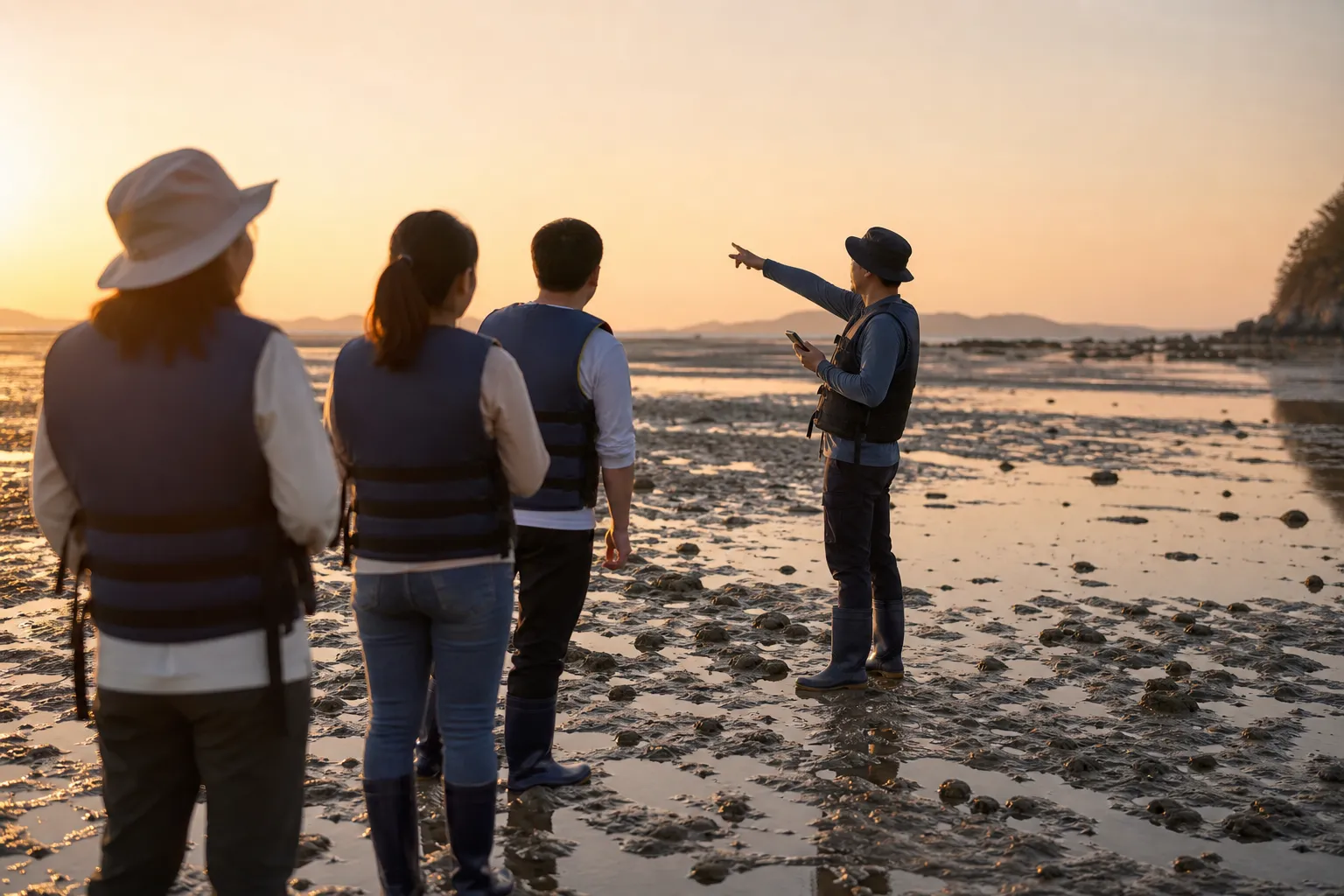
Mudflat experiences around Buan can be memorable, but Gyehwa-ri mudflat experience safety should come before any shell gathering, walking, or coastal sightseeing plan. For anyone planning Buan Mudflat Travel, the key lesson from recent safety notices is simple: the West Sea’s tides can change a peaceful outing into an emergency very quickly.
Buan’s coastal areas are known for exposed tidal flats, sea roads, and hands-on mudflat activities. That same landscape also creates risk. Official and media reports point to fast-rising tides, tidal channels, changing weather, and vehicle access on flats as recurring safety concerns. The goal is not to scare you away from the coast, but to help you plan with the same caution local rescue agencies are urging.
Why Gyehwa-ri Mudflat Experience Safety Matters
The strongest safety message comes from a recent Buan case. On June 3, 2026, two residents became stranded by the incoming tide while collecting shellfish near Seokpo Sluice Gate in Seokpo-ri, Jinseo-myeon, Buan-gun. They were rescued by 119 after a report was filed, and the rescue was completed in 33 minutes. The rescued residents were reported to be in good condition and did not need hospital transport.1
Buan Fire Station later warned residents and visitors that mudflat isolation accidents had been continuing along the Jeonbuk west coast. The same report said mudflat and nighttime shellfish-gathering accidents along the Jeonbuk west coast averaged 56 cases per year over the previous three years, and that 12 vehicle-stranding accidents occurred in the jurisdictional waters in the previous year.2
Those numbers matter for travelers because mudflat activity often feels low-risk at first. The ground is open, the sea may look far away, and people may focus on clams, photos, or walking routes. But the danger is not only deep water. It is also losing the return path, stepping into tidal channels, or underestimating how quickly the water can move back in.
Choi Gil-woong, chief of Buan Fire Station, warned that in mudflat isolation accidents, “movement routes can be cut off in an instant,” making early response especially important.2 That is a practical warning for any visitor: if the route back starts to look uncertain, the safest time to act is immediately, not after trying to wait it out.
Tide, Weather, and Group Rules to Follow
The first rule is to check the tide table before entering a mudflat. Korea’s Policy Briefing, using Ministry of Oceans and Fisheries material, explains that sudden incoming tides and tidal channels are major danger factors, and that West Sea tidal flats need special caution because of the large tidal range.3 This applies naturally to Buan-area mudflat outings, including Gyehwa-ri-focused travel planning.
The second rule is to check the weather and avoid coastal experience activities when weather alerts are in effect. Mokpo Coast Guard’s June 19, 2026 notice said a coastal safety accident risk forecast “caution” stage would be issued from June 20 until the wind wave advisory was lifted, because worsening weather increased the risk of falls into the sea and isolation along the coast. Its prevention guidance included checking weather information frequently, avoiding coastal experience activities during weather advisories, and thoroughly checking tide times when doing mudflat shellfish gathering.4
The third rule is to go with at least one other person. The national safety guidance recommends going in groups of two or more, following low-tide timing, and calling 119 if danger develops.3 A companion can call for help, notice changing conditions, or assist if someone becomes stuck or disoriented.
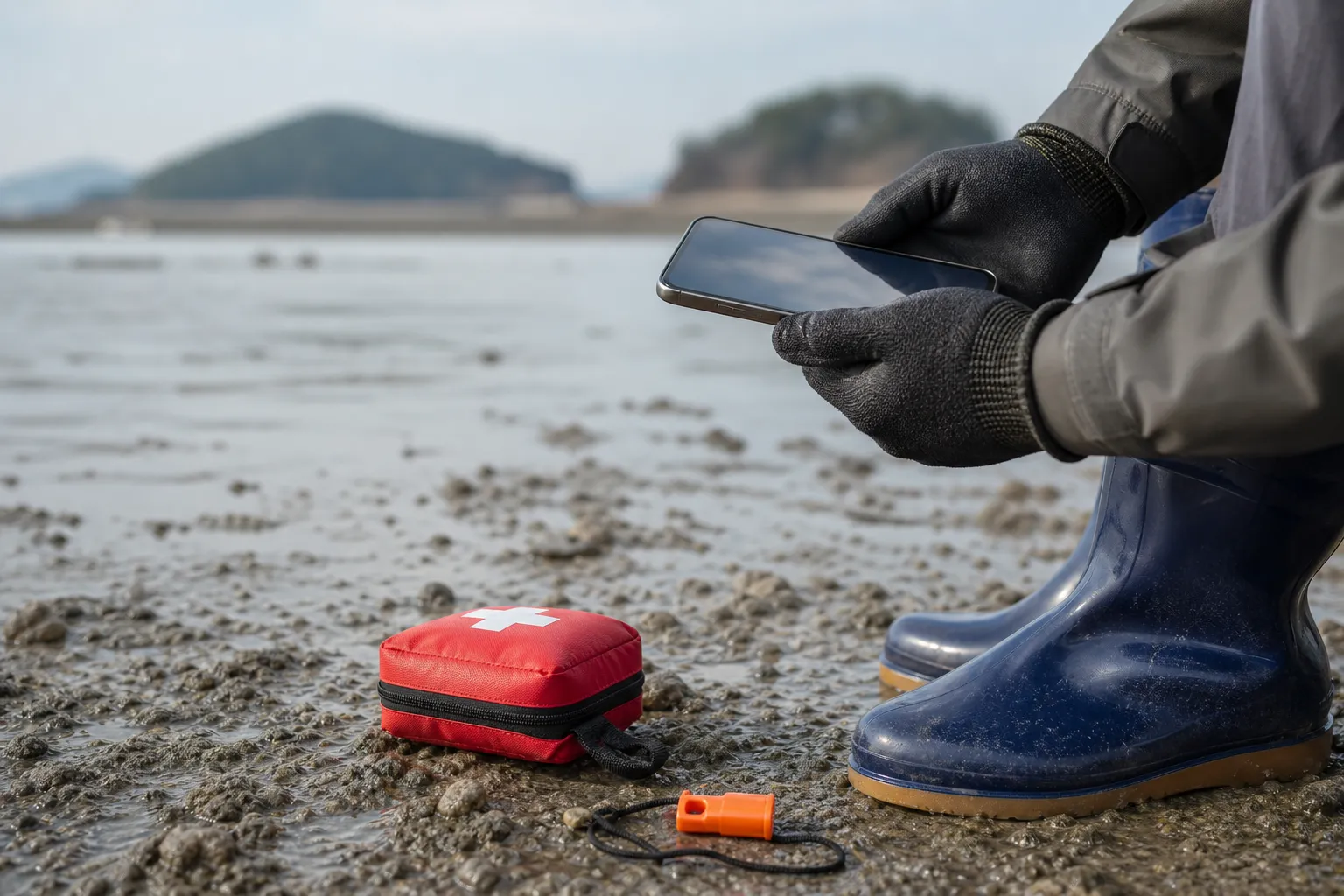
The fourth rule is to carry a mobile phone. Buan Coast Guard emphasized this point when it issued a safety accident risk forecast “caution” stage for Buan and Gochang from February 14 to 18, 2026, during a period when the Lunar New Year holiday overlapped with spring tides. The Coast Guard strengthened field safety management because popular coastal destinations and mudflats, including areas such as Chaeseokgang, were considered more likely to see isolation accidents.5
A Buan Coast Guard official asked people to “always check the tide time” and carry a mobile phone while following safety rules for coastal activities.5 For travelers, that means the phone should be charged, reachable, and protected from water or mud, not buried at the bottom of a bag.
What Nearby Buan Cases Teach Travelers
Even when your planned route is around Gyehwa-ri, nearby Buan coastal safety cases are useful because they show the same pattern of risk. Haseom, another Buan coastal spot where a sea road and mudflat appear, has been repeatedly identified as dangerous during periods with strong tidal movement and tidal channels. Byeonsanbando National Park Office urged visitors on November 17, 2025 to be careful of mudflat safety accidents during late-autumn spring tides.6
Reports on Haseom stated that over the previous 10 years, five visitors drowned and 11 isolation accidents occurred there.6 Daum News also reported the same Haseom figures while covering the June 3, 2026 Seokpo-ri rescue case.1 These figures are not given for Gyehwa-ri specifically, so they should not be read as Gyehwa-ri accident statistics. They do, however, support the broader warning that Buan’s tidal-flat environments demand careful timing and route awareness.
The most useful mindset is to treat the mudflat as a changing coastal zone, not as a fixed walking field. Before entering, identify the path back. Watch for tidal channels. Keep enough time to return before the tide turns. If water begins cutting across the route, stop collecting, photographing, or exploring and move out immediately.
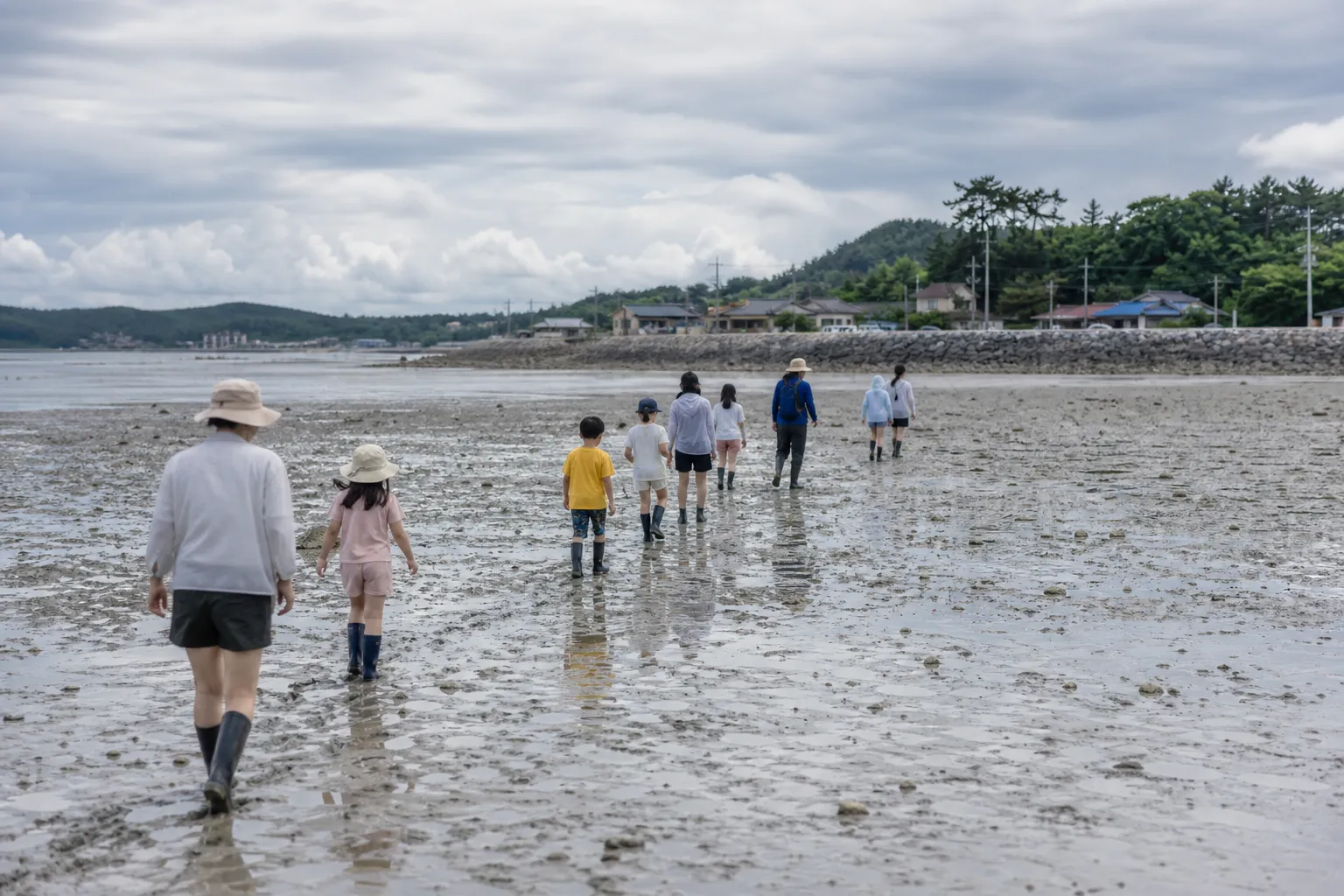
For Buan Mudflat Travel, safety is not a side detail; it is the plan that makes the outing possible. Check tides and weather, avoid advisory conditions, go with someone else, keep your phone ready, follow low-tide timing, and call 119 when danger appears. A careful visit lets the mudflat remain what it should be: a coastal experience shaped by nature, not a rescue situation.
References
- 부안 갯벌서 조개 캐다가 고립된 주민 2명, 119에 구조 (Daum 뉴스, 2026-06-05)
- 부안소방서, 갯벌 고립사고 주의보 발령 (부안독립신문, 2026-06-09)
- 갯벌 체험 시 꼭 지켜야 할 안전수칙 (대한민국 정책브리핑, 2024-09-02)
- 안전사고 위험예보제 ‘주의보’ 단계 발령 및 사고 예방 요령 (목포해양경찰서, 2026-06-19)
- “갯벌 고립 조심하세요”…해경, 연휴 기간 대조기 안전사고 ‘주의보’ 발령 (서울신문, 2026-02-13)
- 변산반도국립공원 "늦가을 대조기 갯벌 안전사고 주의해야" (연합뉴스, 2025-11-17)
About the Author