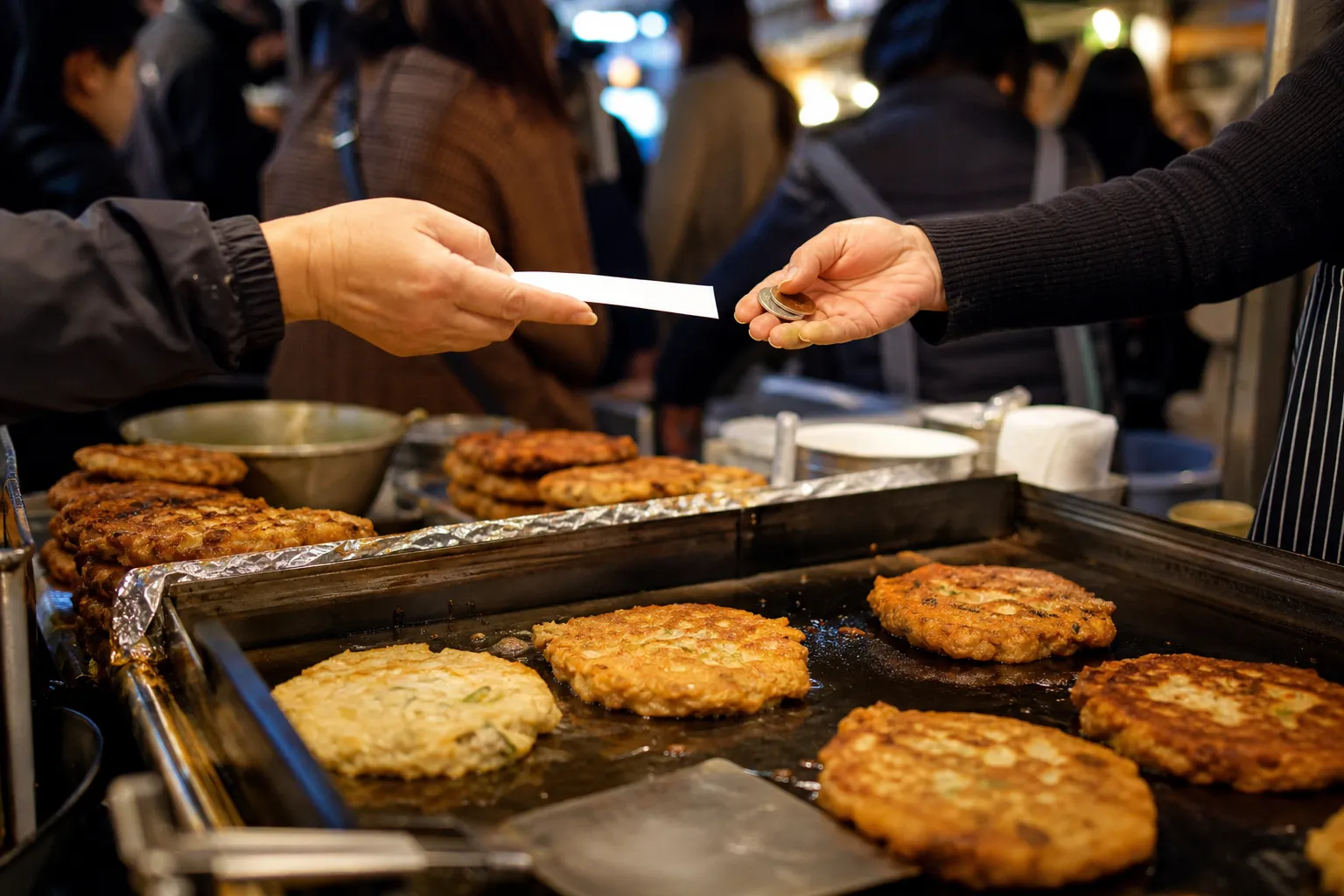
Gwangjang Market’s price controversy has become more than a one-off complaint about street food. Around the same market area known to many visitors for Gwangjang Market Bindaetteok, a series of reports about disputed prices, portion sizes, payment issues, and hygiene concerns has pushed Seoul and Jongno District to tighten oversight of stalls and food vendors.
For travelers, the story matters because Gwangjang Market is not just a place to eat. It is one of Seoul’s best-known traditional market destinations, where casual food culture, local vendors, and tourist curiosity meet in a very crowded space. The latest official response shows how seriously local authorities are treating trust, pricing transparency, and basic service standards.
Why the Gwangjang Market Price Controversy Grew
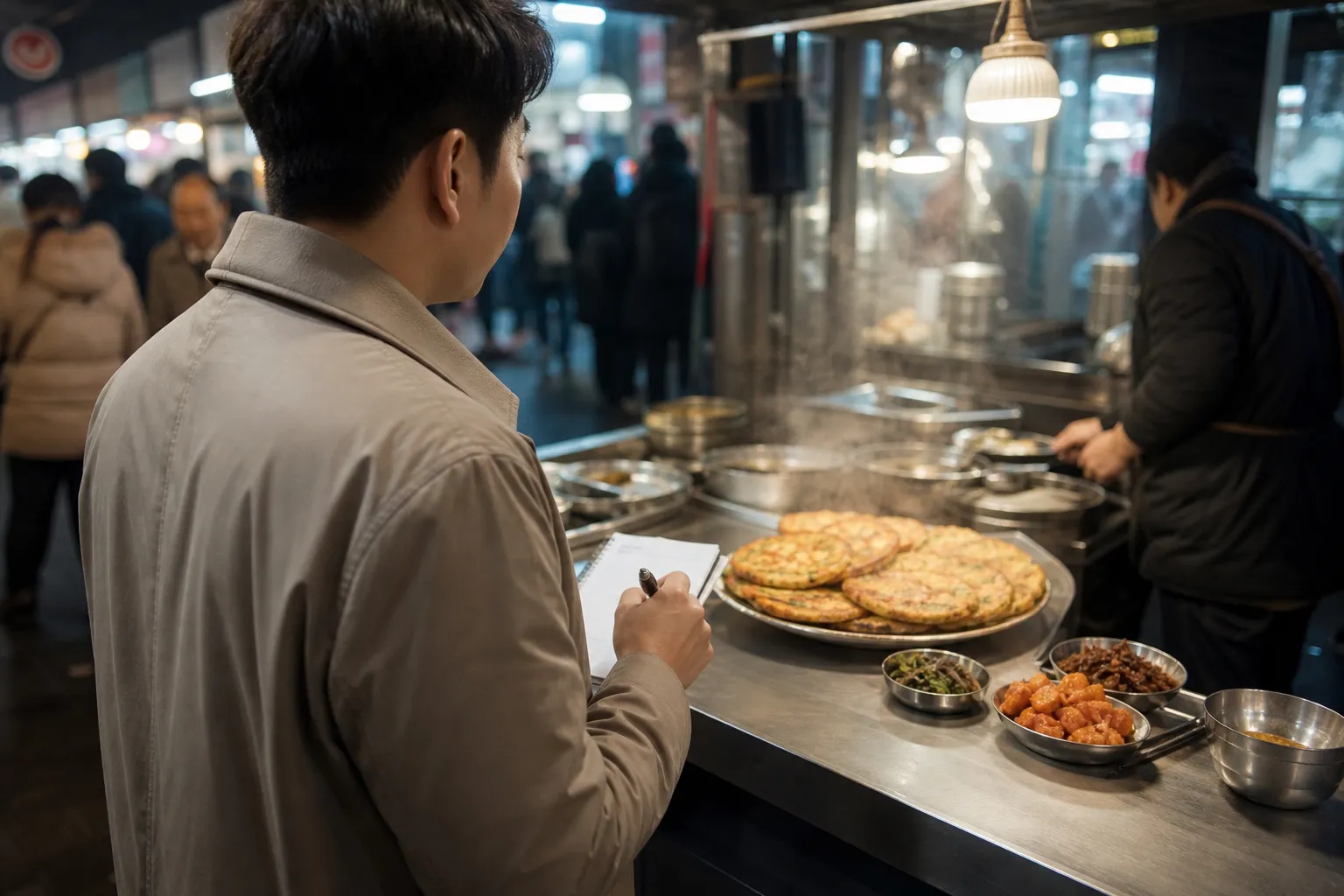
The controversy built through several reported incidents rather than a single moment. In November 2025, MBC News reported that a one-minute YouTube Shorts video reignited debate after a customer ordered sundae marked at 8,000 won on the price board but was asked for 10,000 won. The exchange included the customer asking, “Why is this 10,000 won? It says 8,000 won here,” while the merchant replied that it was mixed with meat. The sundae shop received a 10-day business suspension from the Gwangjang Market merchants’ association, and MBC said the video passed 12 million views in eight days.1
Later that month, another report focused on two men who visited the market after a YouTube video was released on November 22, 2025. They tried to order a 5,000 won bindaetteok and 4,000 won tteokbokki, but the report said they were asked to place an additional order. They also ordered 7,000 won sundae, and the food served was described as six pieces of tteokbokki and nine pieces of sundae. The same report said card payment was unavailable, so payment was made by bank transfer.2
In April 2026, the discussion returned with a smaller but very visible example: a 500ml bottle of water sold for 2,000 won at a stall in Gwangjang Market. Nongmin Shinmun reported that the stall received a three-day suspension and stopped operating from April 22 to April 24, 2026. The report also summarized earlier disputes over sundae pricing and the amount of tteokbokki and sundae served.3
These examples help explain why the issue touched a nerve. A market can be busy, informal, and flexible while still needing clear prices and fair transactions. When the same market appears repeatedly in reports about overcharging or unclear sales practices, the question becomes less about one vendor and more about whether visitors can understand what they are paying for.
Seoul’s Response: Mystery Shoppers And Wider Checks
Seoul City and Jongno District moved from case-by-case reactions toward structured monitoring. Yonhap News reported that Seoul and Jongno District would conduct intensive checks in May and June 2026 on about 260 Gwangjang Market stores and food stalls. The checks use Korean and foreign mystery shoppers to look for overcharging, forced sales, unfair treatment of foreign visitors, unfriendly service, and unsanitary practices. Shops found in violation become subject to reinspection.4
The idea is simple: if ordinary customers may feel pressured or confused, trained mystery shoppers can observe the transaction as it happens. That matters in a tourist-heavy market because disputes may occur quickly, in crowded conditions, and sometimes across language barriers.
Seoul’s Min생 Labor Bureau director Lee Hae-seon framed the effort as more than a temporary crackdown, saying the city would work to build “regular management and constant monitoring” so the market could become trusted.4 The wording is important because the controversy had already resurfaced more than once. A short burst of inspections may calm attention for a week, but regular monitoring is meant to address repeated behavior.
This was not the first move toward mystery shopper monitoring. MoneyToday reported that Seoul began mystery shopper monitoring on November 26, 2025, after the overcharging controversy spread into conflict among merchants. That monitoring group was described as about 50 Korean and foreign evaluators checking overcharging, hygiene, and service, then passing improvement needs to Jongno District.5
What The Stall-Name System Could Change
A major follow-up measure is the stall-name system, formally introduced at Gwangjang Market from June 1, 2026, according to Dong-A Ilbo. Under the system, stalls caught for practices such as overcharging or food reuse can face business suspension and penalty points. A stall can be permanently removed if it exceeds 120 penalty points in one year or records four violations.6
That system changes the feel of enforcement. Instead of treating each complaint as a loose argument between customer and vendor, it creates a record tied to a specific stall. For a market with many small operators, that kind of traceability can make rules easier to apply and easier for customers to understand.
The same report said a QR reporting system was also planned so foreign tourists could file reports.6 That detail is especially relevant because one reported video exchange quoted a stall merchant saying, “There are many foreigners at Gwangjang Market,” in connection with a pricing dispute.3 Whether a visitor is local or from overseas, the basic expectation is the same: posted prices should be meaningful, portions should be clear enough to avoid surprise, and payment conditions should not become confusing at the end of the order.
None of this means every vendor at Gwangjang Market is part of the controversy. The available reports focus on specific incidents, penalties, and policy responses. Still, for a famous food market, public confidence depends on the overall experience. If people associate a destination with unclear prices, even vendors who follow the rules can be affected by the broader reputation.
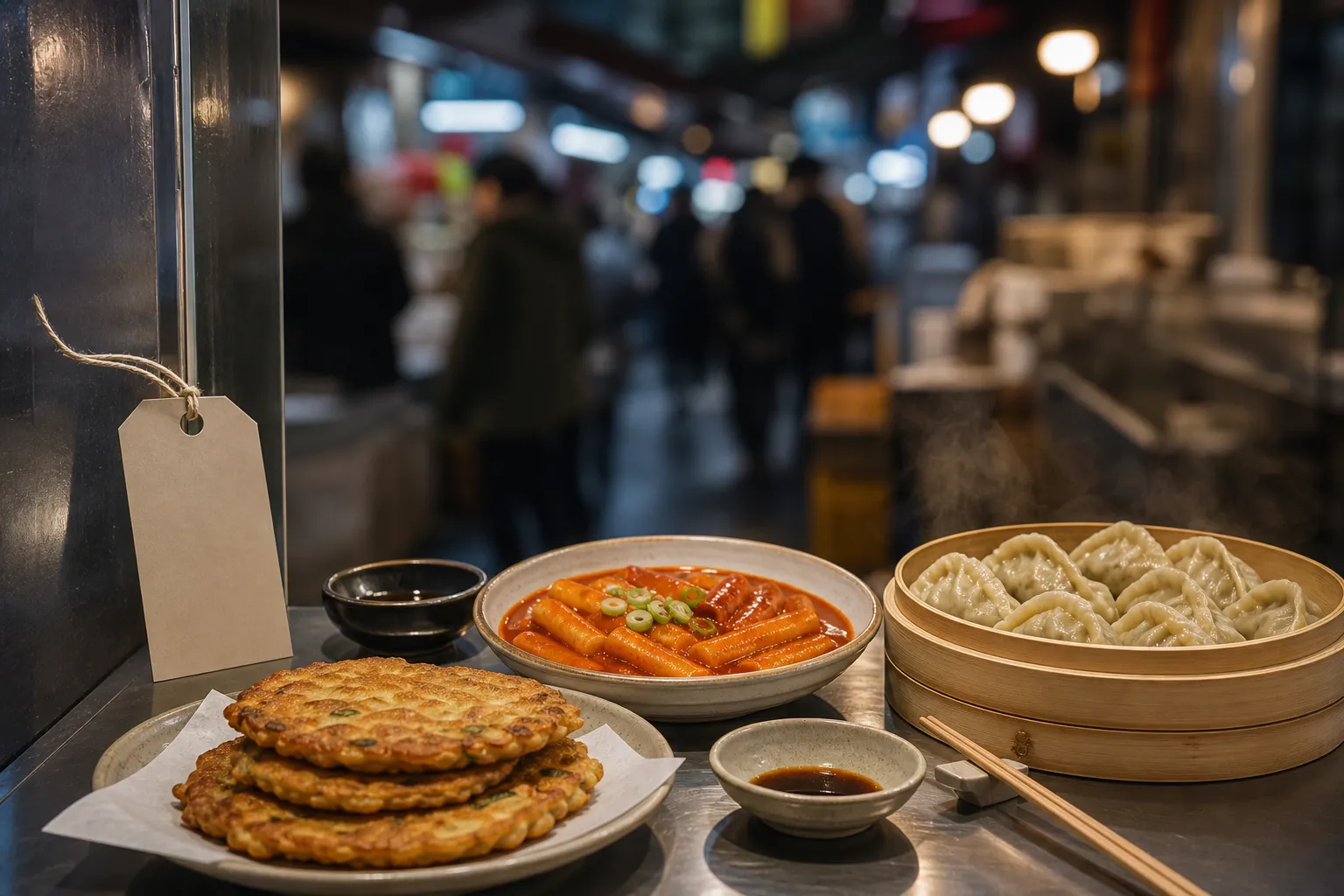
The Gwangjang Market price controversy is ultimately a story about trust in a beloved food space. With mystery shoppers, inspections across roughly 260 stores and food stalls, and a stall-name system that can lead from penalty points to removal, Seoul and Jongno District are trying to make the market easier to enjoy without second-guessing every order.
References
- 1분짜리 '쇼츠'에 '광장시장 바가지 논란' 재점화 (MBC 뉴스, 2025-11-12)
- 순대 9조각 7천원?…광장시장 바가지 논란 여전 (동아일보/뉴시스, 2025-11-25)
- 바가지 논란, 잊을 만하면 또…이번엔 생수 작은병 2000원 (농민신문, 2026-04-24)
- 광장시장 '바가지요금·비위생 점포' 잡는다…미스터리쇼퍼 투입 (연합뉴스, 2026-05-20)
- 또 터진 광장시장 '바가지' 논란…미스터리쇼퍼·노점실명제 단행 (머니투데이, 2025-11-26)
- 광장시장에 ‘노점 실명제’…바가지-음식 재사용하면 퇴출된다 (동아일보, 2026-05-17)
About the Author