Gwangjang Market is now the focus of a formal overcharging crackdown, with Seoul and Jongno-gu targeting pricing, hygiene, safety, and treatment of foreign visitors. For travelers following K-Market Tourism, the important change is practical: officials have moved from individual controversy response toward inspections, stall identification, and penalties tied to operator responsibility.1
The push followed renewed attention in April 2026, when MBC News reported that a Myanmar-born YouTuber visiting with a Russian friend was asked to pay 2,000 won for a 500mL bottle of water after ordering dumplings, japchae, and soju at a Gwangjang Market stall. The visitor was quoted as saying, “It is my first time seeing water sold in a Korean restaurant,” while the merchant’s explanation included the phrase, “because there are many foreigners.”2
Gwangjang Market Overcharging Crackdown: What Changed
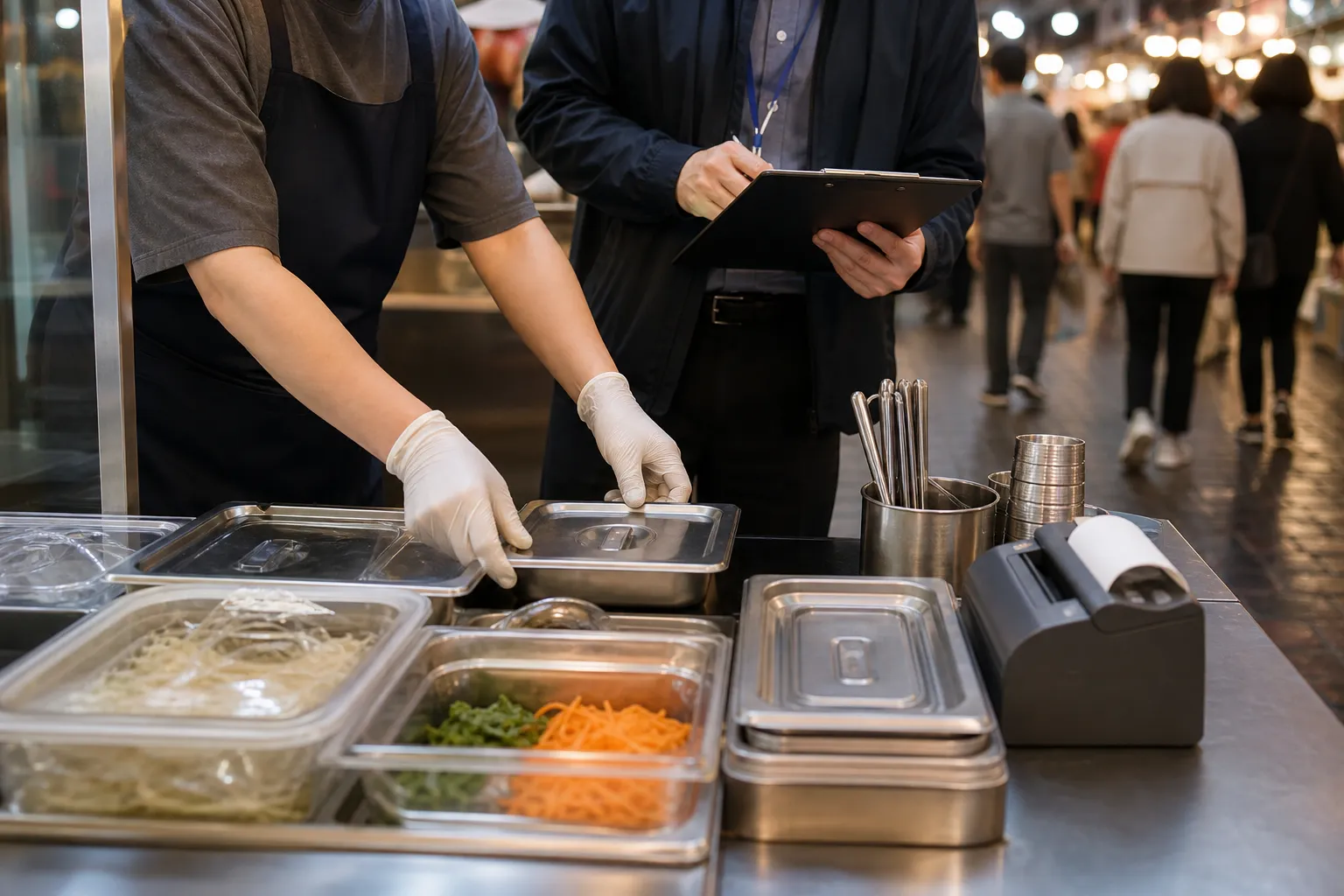
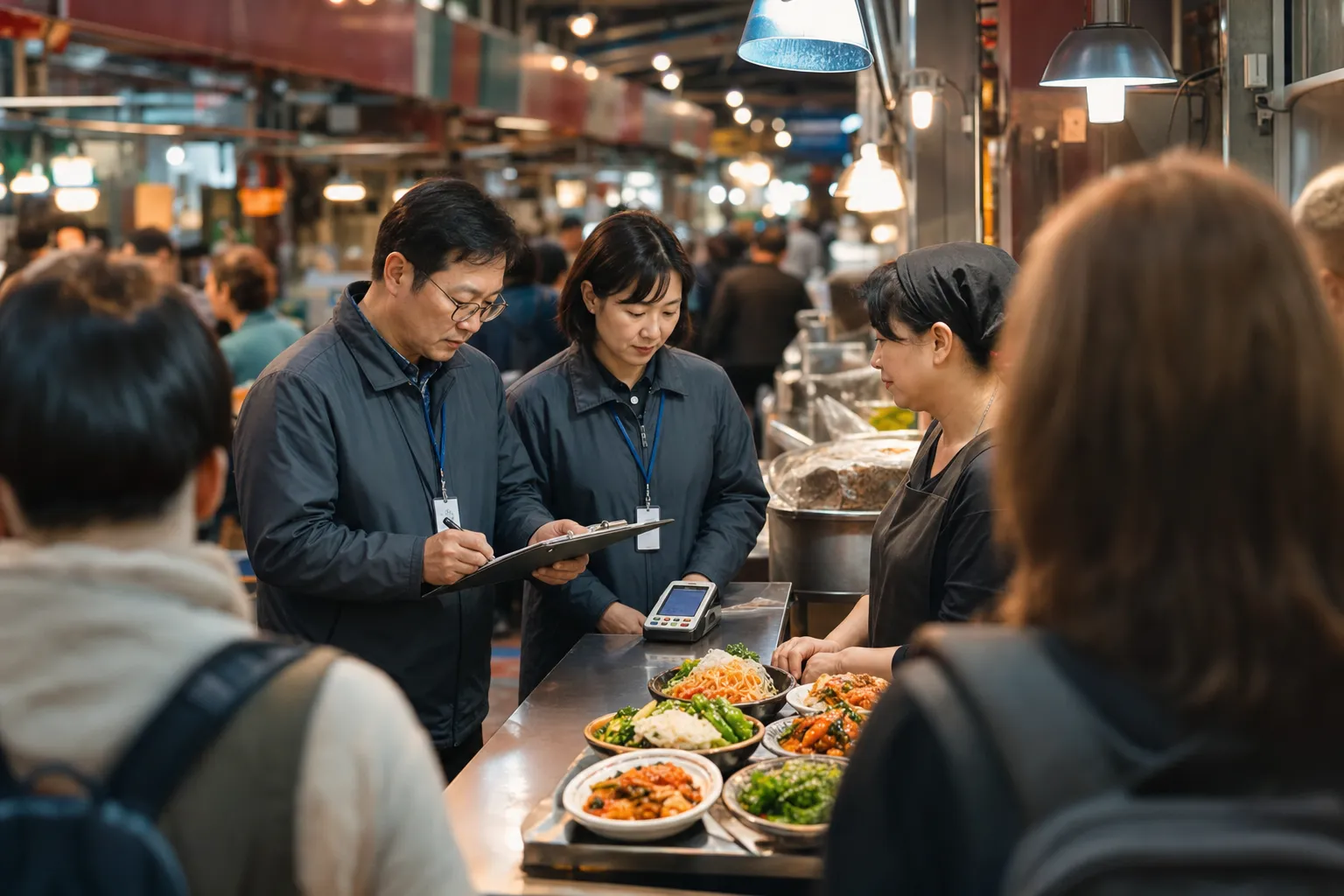
On May 20, 2026, the Seoul Metropolitan Government announced a joint intensive inspection of Gwangjang Market with Jongno-gu for May and June. The inspection targets include overcharging, coercive sales practices, unfair conduct toward foreign visitors, unfriendly service, and unsanitary behavior. Seoul also said both Korean and foreign mystery shoppers would be used during the checks.1
The crackdown is broader than price disputes alone. Seoul Shinmun reported that the inspection also covers food hygiene, compliance with price display rules, and fire safety. The same report said inspectors were checking food preparation, storage, and display conditions across 159 food service businesses and 109 street stalls.3
For visitors, this means unclear pricing, pressure to buy, poor service toward foreign customers, or questionable hygiene are not being treated as isolated annoyances. They are among the specific behaviors officials have identified for review. The available source material does not provide a full visitor complaint manual, but it does show that price transparency and foreign visitor treatment are central to the inspection agenda.
The April bottled-water case also led to a direct sanction before the wider June system began. Chosun Ilbo reported that the relevant Gwangjang Market stall received a three-day business suspension from April 22 to April 24, 2026, after the 2,000 won water controversy.4
How the Stall Real-Name System Works
A key part of the response is the “stall real-name system,” which Jongno-gu was reported to be introducing from June 1, 2026. Under this system, stalls are expected to use identification devices or markers connected to the stall and payment system, so responsibility for illegal business conduct can be assigned to the actual stall operator.5
The system is important because it links violations to identifiable operators. Dong-A Ilbo reported that illegal practices such as overcharging or food reuse can lead to penalty points and business suspension. If a stall exceeds 120 penalty points in one year or violates rules four times, it may be forced out.6
Reports also describe escalation beyond temporary discipline. Seoul Shinmun reported that after the stall real-name system takes effect, overcharging or food reuse can lead to penalty points, and repeat violators may become subject to cancellation of road occupancy permits.3
For a visitor, the practical takeaway is simple: a stall should be traceable, prices should be visible, and repeated misconduct is designed to carry consequences. That does not guarantee every dispute will be resolved immediately, but it gives the market and local authorities a clearer accountability structure than a general warning system.
What Visitors Should Check Before Ordering
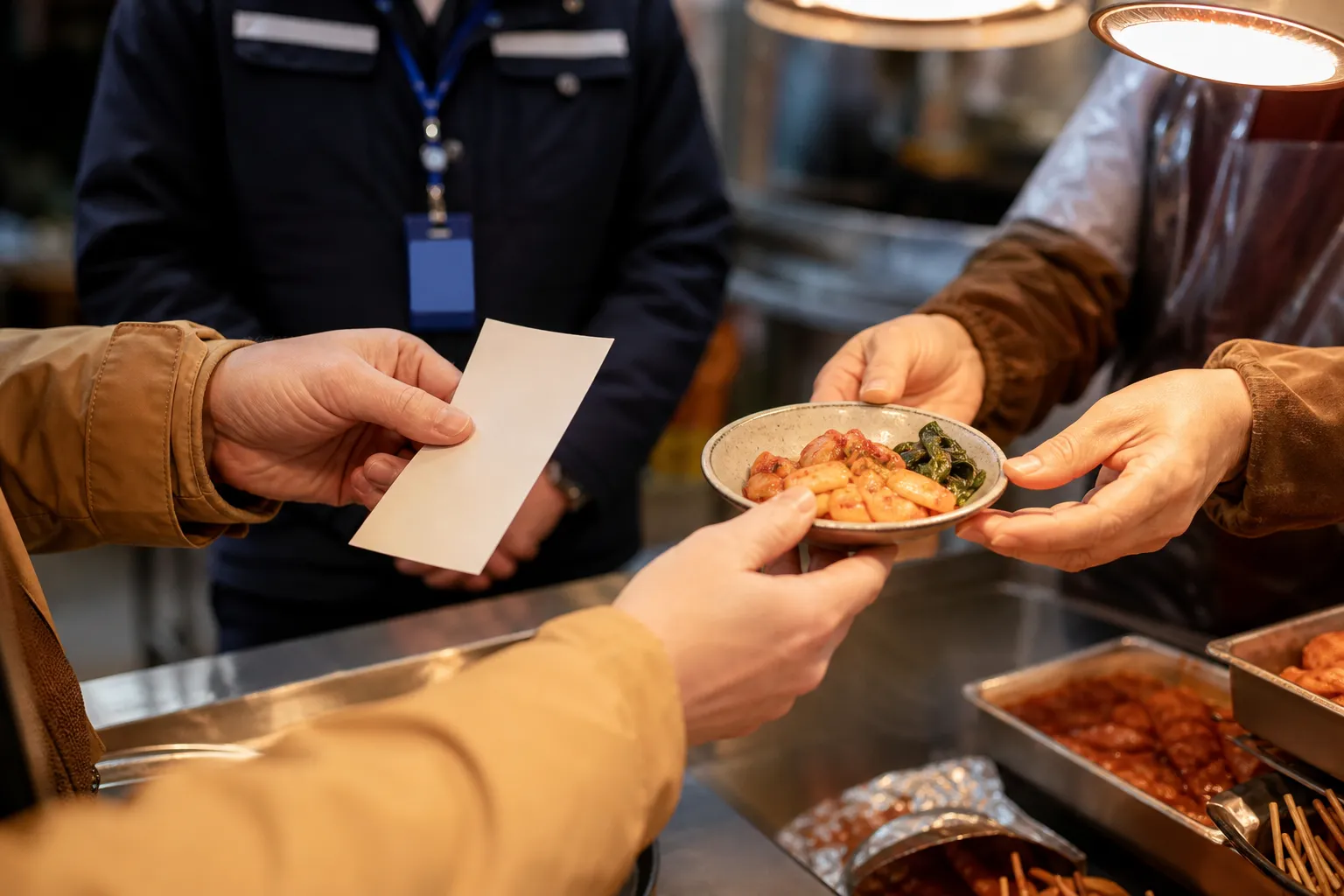
Start with the price display. Because price display compliance is one of the inspection areas, a visitor should look for listed prices before ordering food or drinks. If a price is unclear, ask before accepting the item. The source material does not state a specific required format for every stall, so the safest practical step is to confirm the item and price in advance.
Pay attention to add-on charges. The April controversy centered on bottled water, not the main food order, which makes small extra items especially important to confirm. If a stall offers water, alcohol, side dishes, or additional food, ask whether each item has a separate charge before it is opened or served.
Keep the stall identifiable where possible. With the real-name system tied to stall and payment identification, the stall’s visible marker, payment record, or location may matter if a problem needs to be reviewed. The available reports do not give a complete step-by-step claim process, but they do show that the new system is intended to connect violations to the actual operator.5
Dong-A Ilbo also reported that QR reporting systems were planned around the market so foreign tourists could report problems. The same report quoted Inha University consumer studies professor Lee Eun-hee as saying that multilingual guidance and reporting systems should be available throughout the market so foreign tourists can report discomfort more easily.6
Quick FAQ
When did the Gwangjang Market stall real-name system begin?
Reports citing Jongno-gu said the system was to be formally introduced from June 1, 2026. It is designed to connect stalls and payment systems to identifiable operators.5
What kinds of behavior are officials checking?
The inspection targets include overcharging, coercive sales, unfair conduct toward foreign visitors, unfriendly service, unsanitary behavior, food hygiene, price display compliance, and fire safety.13 The Gwangjang Market crackdown is best understood as a service and accountability measure, not only a response to one disputed charge. Visitors should check prices before ordering, confirm add-on costs, and pay attention to stall identification, while market operators face closer scrutiny over pricing, hygiene, and treatment of foreign customers.
References
- 서울시, 광장시장 '위생·상거래·안전' 종합점검 실시… 신뢰 회복 총력 (서울특별시, 2026-05-20)
- [와글와글] "물 2천 원"‥광장시장 또 '바가지' 논란 (MBC 뉴스, 2026-04-21)
- 서울시·종로구, 광장시장 ‘바가지 요금·비위생’ 노점 잡는다 (서울신문, 2026-05-20)
- 외국인에 '물값 2000원' 판매한 광장시장 노점, 3일 영업정지 (조선일보, 2026-04-25)
- 광장시장 '노점실명제'… 바가지·비위생 퇴출 (파이낸셜뉴스, 2026-05-26)
- 광장시장에 ‘노점 실명제’…바가지-음식 재사용하면 퇴출된다 (동아일보, 2026-05-17)
About the Author