Gwangjang Market’s overcharging controversy has moved from scattered online complaints into a wider public trust issue. In 2026, the response has become more formal: Seoul City, Jongno District, and central government agencies are tying the Gwangjang Market Crackdown to price display rules, hygiene checks, vendor accountability, and protections for foreign visitors.1
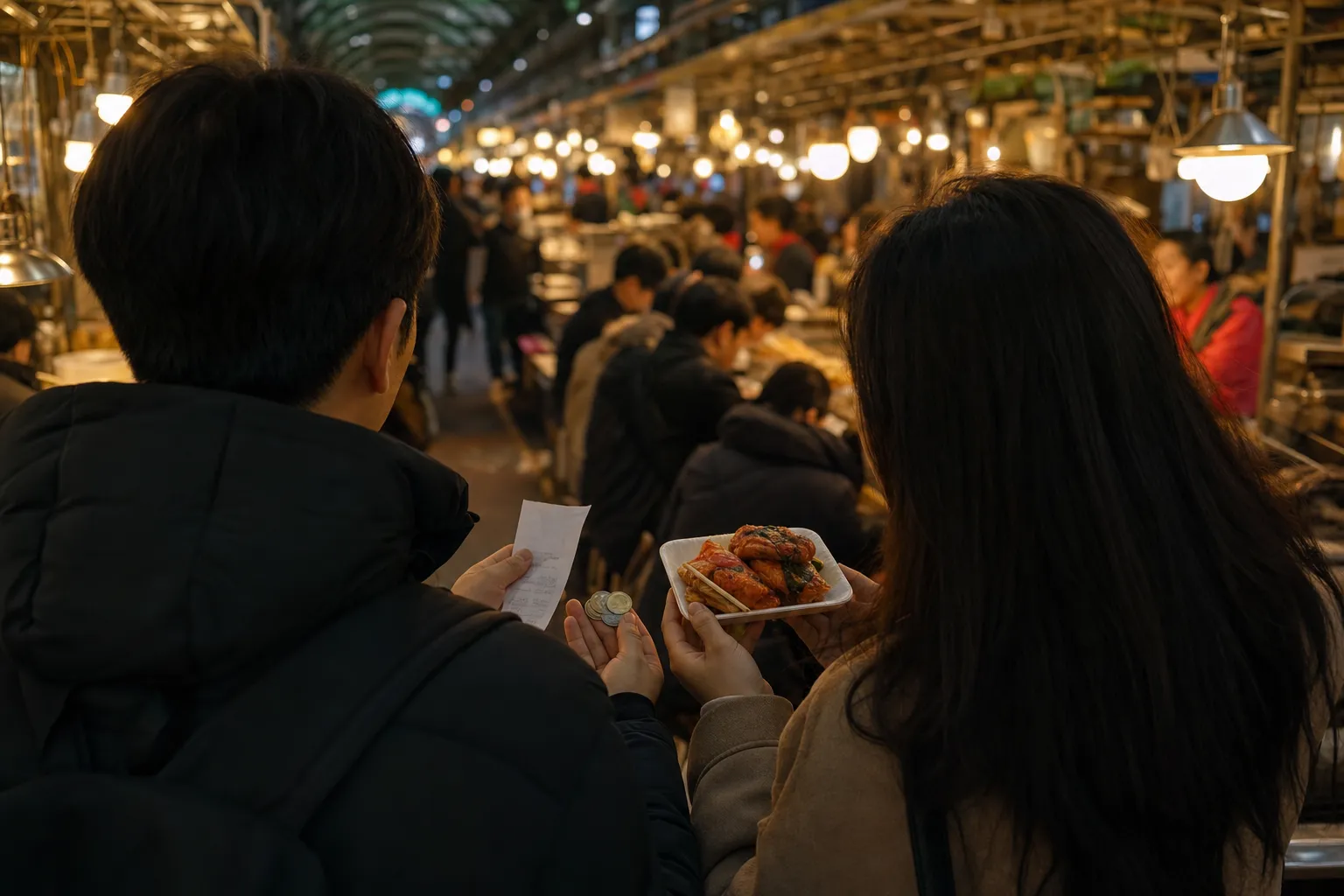
For travelers, food lovers, and anyone curious about one of Seoul’s best-known traditional markets, the story is not simply about one expensive snack or one disputed bill. It is about how a market famous for street food is trying to protect its reputation while dealing with repeated claims of unfair pricing, unclear charges, and uneven service.
Why the Gwangjang Market Overcharging Controversy Grew
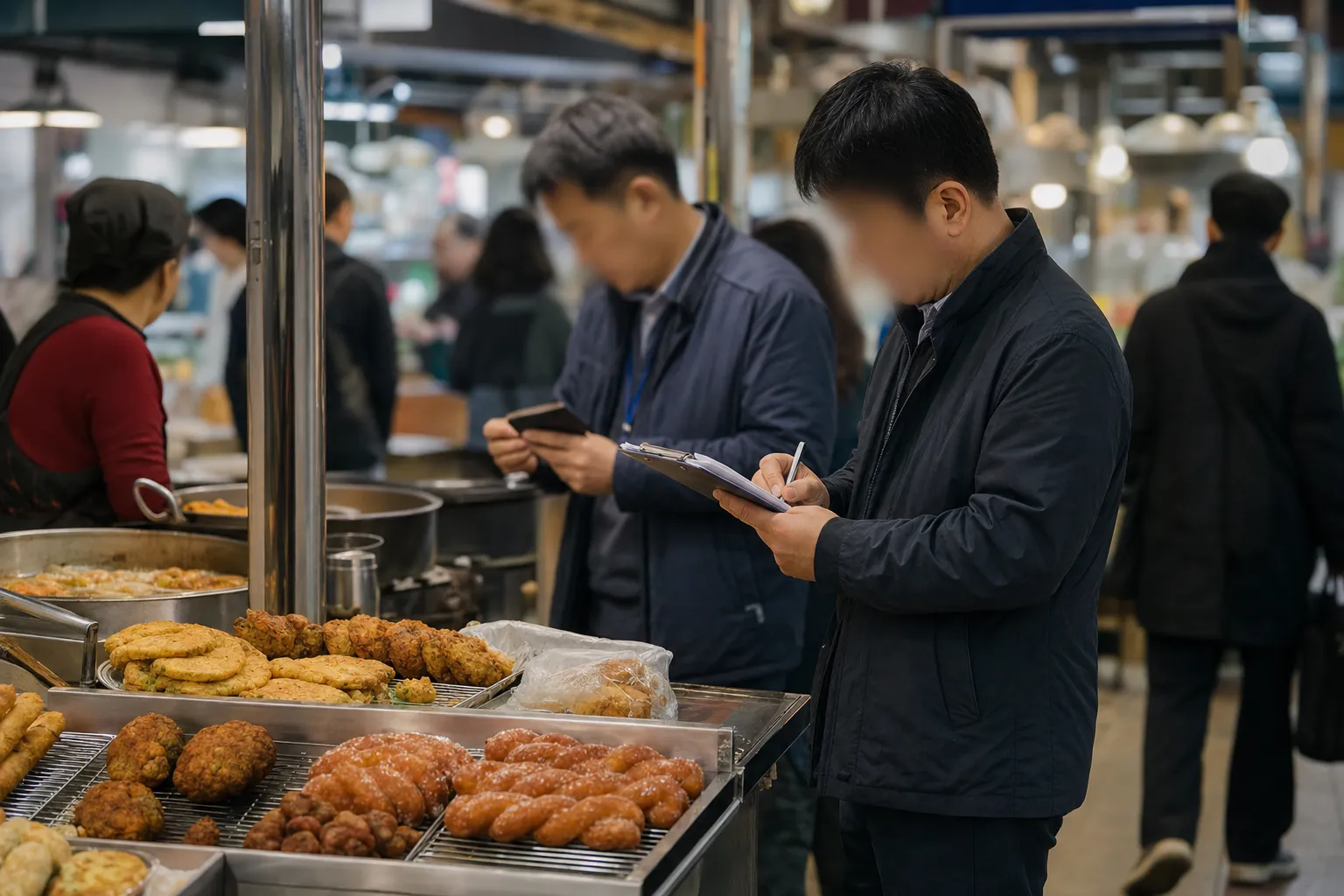
The controversy gained new momentum after several reported incidents involving stall pricing. In November 2025, a sundae stall at Gwangjang Market received a 10-day business suspension after an overcharging dispute. The case began with a YouTuber’s claim that an order listed at 8,000 won was charged at 10,000 won because the stall said meat had been mixed in. The stall stopped operating from November 10 to November 19, 2025, under a self-disciplinary decision by the Gwangjang Traditional Market Merchants’ Association.2
Another case followed in April 2026, when a stall was reported to have sold a 500 ml bottle of water for 2,000 won. The issue spread after a Myanmar-born YouTuber posted a video of a visit with a Russian friend. The stall then received a three-day suspension from April 22 to April 24, 2026. A representative of the Gwangjang Market street vendor association said the decision was made after “considering various circumstances comprehensively.”3
These incidents matter because Gwangjang Market is not just a neighborhood shopping area. It is a tourist-facing traditional market, and the expectations are higher when visitors may not speak Korean fluently or may not know typical local prices. That is why the public response has focused not only on individual sellers, but also on systems: posted prices, transparent payment, complaint channels, and clearer responsibility for each stall.
What Authorities Are Checking in 2026
Seoul City announced on May 20, 2026, that it would carry out intensive inspections at Gwangjang Market with Jongno District during May and June 2026. The inspection scope includes overcharging, forced sales, unfair conduct toward foreign visitors, unfriendly service, and unsanitary practices. Seoul City also said it would check whether vendors are following the price display system and take legal measures, including fines, for serious violations.1
That is a broad approach, and it reflects how the issue has expanded beyond price alone. A visitor who sees one amount on a menu but is charged another may experience the problem as overcharging. A visitor who feels pressured to buy more than intended may experience it as forced sales. A visitor who cannot easily ask for help may need a complaint system that works in more than one language. The official response is trying to cover these different points of friction.
There was also groundwork before the 2026 inspections. On December 5, 2025, the Ministry of SMEs and Startups held a field meeting with Seoul City, Jongno District Office, the Gwangjang Market merchants’ association, and the Gwangjang Traditional Market merchants’ association to discuss trust recovery and shared revitalization. The measures included price display checks, hygiene and menu display inspections, expanded friendly service training, and improved guidance infrastructure for foreign tourists.4
Lee Byung-kwon, the ministry’s second vice minister, emphasized “accurate implementation of price display” and “transparency in the payment process” at that meeting.4 In January 2026, the ministry also inspected follow-up measures at the market, including price display, service response, and market order improvements. Lee was quoted as saying that trust in price and service shapes the image of the market and the surrounding area.5
The Vendor Real-Name System and Possible Expulsion
One of the most concrete changes is the planned vendor real-name system. Dong-A Ilbo reported that Jongno District would introduce the system at Gwangjang Market from June 1, 2026. Under the plan, stalls found to have engaged in illegal practices such as overcharging or food reuse can face business suspension and penalty points. Vendors may be permanently expelled if they violate rules at least four times in one year or exceed 120 penalty points.6
The same report said Jongno District planned to install a QR reporting system that foreign tourists can use.6 That detail is important because many controversies involving famous markets now spread through online videos, but a better official channel could make complaints easier to handle before they turn into viral disputes.
A real-name system also changes the way responsibility works. Instead of treating a stall as an anonymous or temporary seller, management can connect conduct to a named operator. That may make it easier to track repeated violations, apply penalties consistently, and separate compliant vendors from those causing reputational damage.
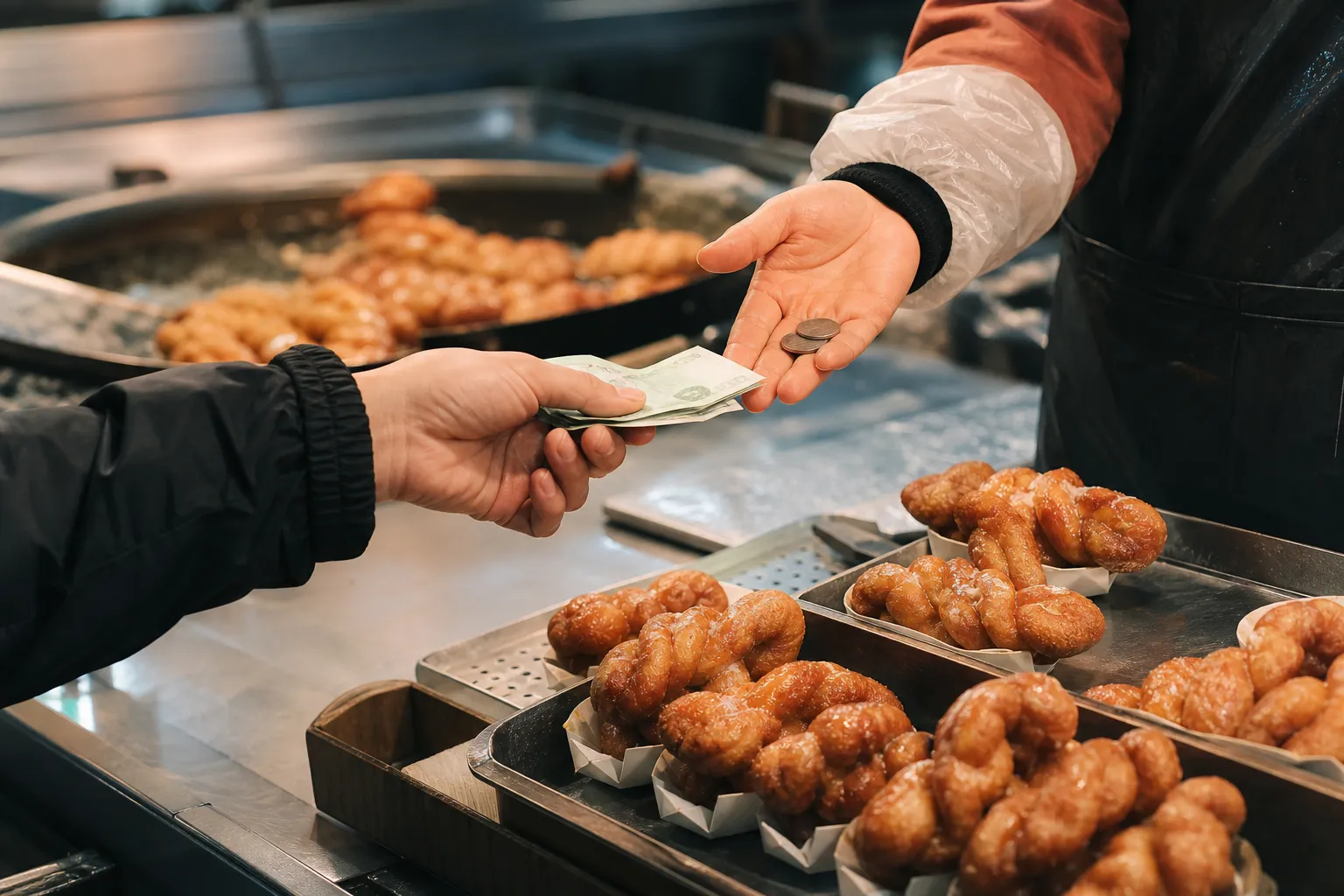
The Gwangjang Market overcharging controversy is ultimately about confidence. Visitors want clear prices, fair treatment, and food safety; responsible vendors want a market environment where one dispute does not damage everyone’s livelihood. The 2026 crackdown does not erase the previous incidents, but it shows that officials and merchant groups are trying to make pricing, service, and accountability easier to verify. If those measures are applied consistently, Gwangjang Market has a clearer path toward rebuilding trust while keeping the everyday energy that made it famous.
References
- 서울시, 광장시장 '위생·상거래·안전' 종합점검 실시 (서울특별시, 2026-05-20)
- '순대 바가지 논란' 광장시장 노점 열흘 영업정지 (연합뉴스, 2025-11-11)
- 바가지 논란, 잊을 만하면 또…이번엔 생수 작은병 2000원 (농민신문, 2026-04-24)
- '글로벌 광장시장', 신뢰회복 및 서비스 혁신 위해 관계기관 총력 대응 (중소벤처기업부, 2025-12-05)
- 중기부, 광장시장 상생 활성화방안 후속조치 현장점검 (연합뉴스, 2026-01-28)
- 광장시장에 '노점 실명제'…바가지-음식 재사용하면 퇴출된다 (동아일보, 2026-05-17)
About the Author