The Gwangjang Market crackdown is now focused on three things visitors care about most: fair prices, cleaner food handling, and clearer responsibility when something goes wrong. Seoul Metropolitan Government announced on May 20, 2026, that it would conduct an intensive May-June inspection of the market jointly with Jongno District, covering hygiene, commercial practices, and safety as part of an effort to restore trust.1
For many travelers, Gwangjang Market is tied to classic street foods such as bindaetteok, tteokbokki, sundae, and assorted jeon. But the latest enforcement push is less about the market’s fame and more about how the city plans to respond to repeated complaints over alleged overcharging, pushy sales, unfair treatment of foreign visitors, unkind service, and unsanitary practices.1
What the Gwangjang Market Crackdown Covers
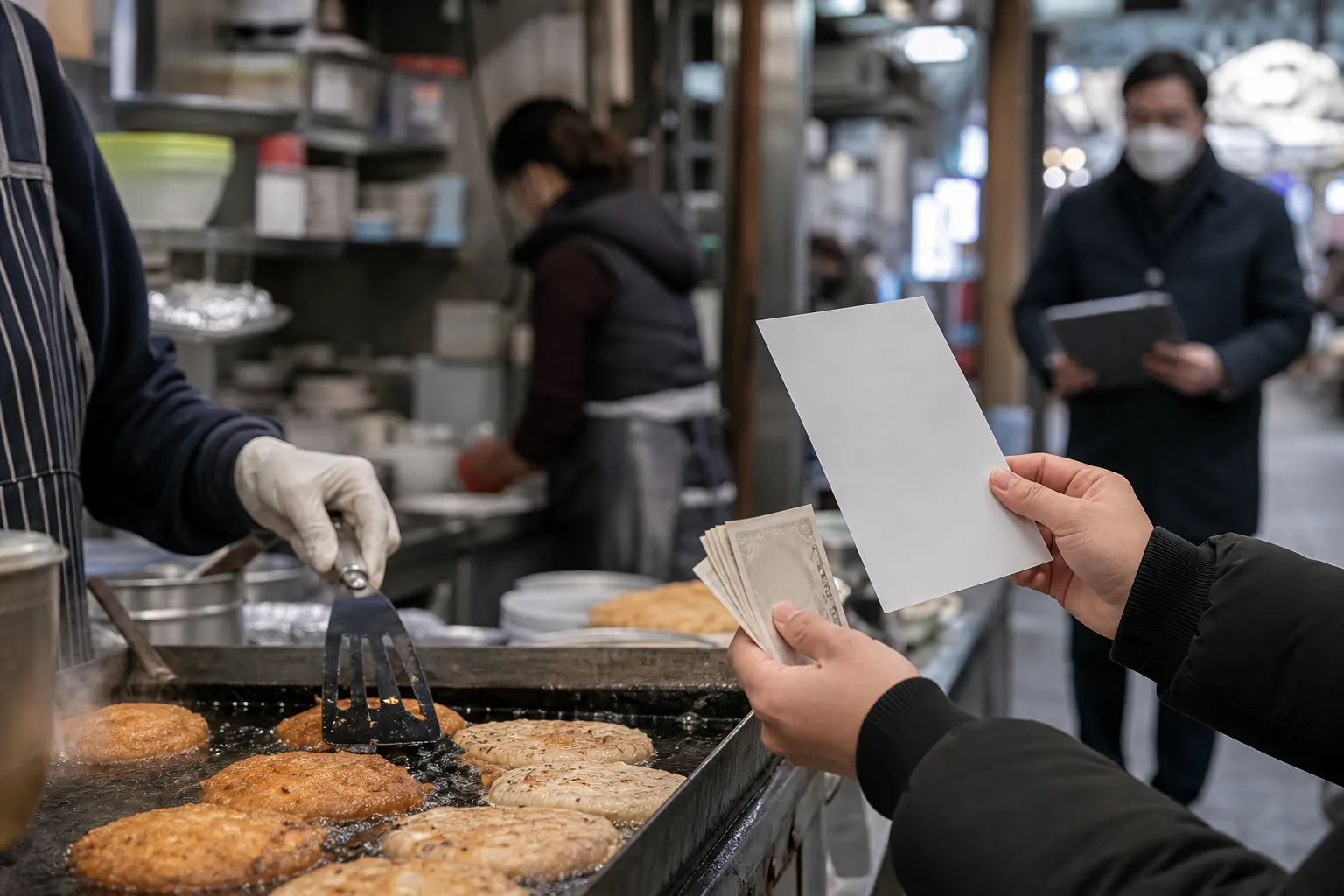
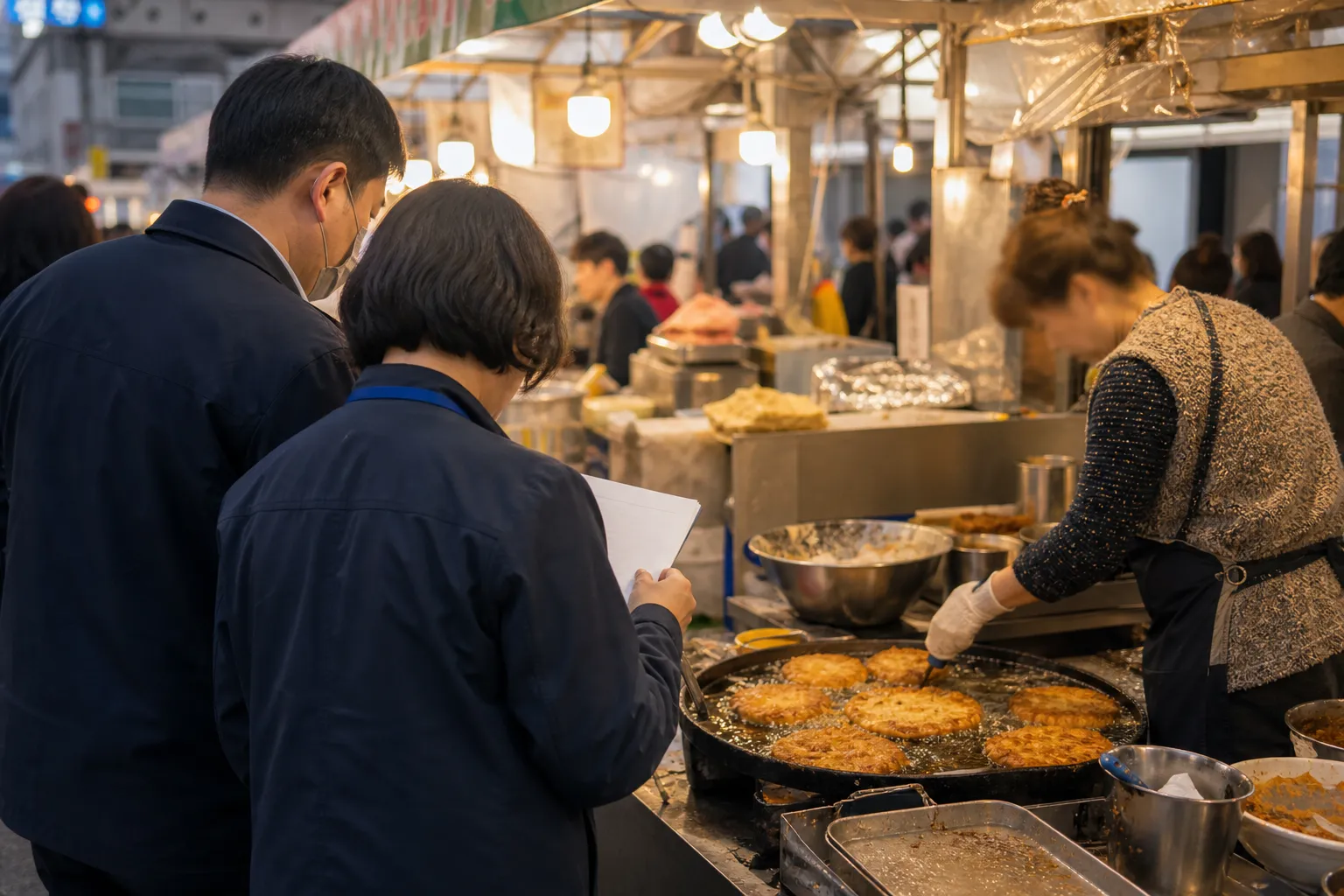
The city’s plan uses mystery shoppers, including both Korean and foreign participants, to monitor the market from a visitor’s point of view. Their checks are aimed at spotting inflated prices, forced purchases, unfair conduct toward foreigners, poor service, and unhygienic behavior.1
Yonhap News Agency reported that the inspection covers about 260 shops and food stalls inside Gwangjang Market. The hygiene portion includes 159 food-service businesses and 109 food stalls, while businesses found to have engaged in improper practices are set to face follow-up inspections.2
That detail matters because this is not only a one-time price check. The source material points to a broader management system: inspection, monitoring, rechecking, and administrative action when violations are confirmed. Lee Hae-seon, director of Seoul’s Livelihood and Labor Bureau, said that creating an environment where citizens and tourists can use the market with confidence is “most important.”1
The language of the enforcement plan also shows how officials are connecting visitor trust with everyday market operations. If a customer cannot tell whether a price is fair, whether a minimum order is being explained properly, or whether the stall follows basic hygiene rules, the damage goes beyond a single transaction. It affects the image of one of Seoul’s best-known traditional markets.
Street Stall Real-Name System Starts in June
A major part of the response is Jongno District’s street stall real-name system, formally introduced at Gwangjang Market on June 1, 2026. Under this system, illegal business practices such as overcharging or reusing food can lead to penalties including business suspension and penalty points.3
The penalty structure is unusually concrete. Reports say a stall can face permanent removal if it exceeds 120 penalty points within one year or violates the rules four or more times.3 MBC also reported the same June 1 launch date and said stalls caught for overcharging or food reuse would receive penalty points, with permanent expulsion possible after 120 accumulated points or at least four violations.4
This gives the crackdown a clearer accountability mechanism than a general warning campaign. A real-name system means stalls are not treated as anonymous vendors in a crowded market. If a problem is confirmed, officials can connect it to a specific stall operator and apply escalating consequences.
The district has also considered QR-code notices to make reporting easier for foreign tourists, according to MBC.4 That is a small but important point for a market that attracts overseas visitors. A complaint system that is difficult to understand, only available in Korean, or hard to find may not help the people most likely to need it.
Consumer studies professor Lee Eun-hee of Inha University was quoted as saying that multilingual notices and reporting systems need to be placed throughout the market.3 That suggestion fits the direction of the crackdown: not just punishing after controversy spreads online, but making it easier for visitors to understand prices, rules, and reporting channels while they are still on site.
Why Officials Are Acting Now
The crackdown follows several reported controversies involving prices and portions at Gwangjang Market. In April 2026, YTN reported that a stall received a three-day business suspension from the Gwangjang Market street vendors’ association after selling a 500mL bottle of water to a foreign customer for 2,000 won. The suspension ran from April 22 to April 24, 2026.5
Earlier concerns were also part of the public discussion. Channel A reported in November 2025 that a visitor raised complaints after being served six pieces of tteokbokki for 4,000 won and nine pieces of sundae for 7,000 won. The same report said the visitor had tried to order a 5,000 won bindaetteok and 4,000 won tteokbokki, but added sundae after hearing guidance about a minimum order of at least 5,000 won per person.6
One merchant quoted in that Channel A report explained the pressure from rising costs by saying that prices were not being raised, so the number of pieces was being reduced.6 That quote captures one reason these disputes can be complicated: merchants are dealing with costs, while customers judge fairness through what they see on the plate and what they are told before ordering.
Still, the enforcement response suggests that officials see a difference between difficult business conditions and practices that harm trust. Minimum order explanations, portion sizes, posted prices, food reuse, and treatment of foreign visitors all become part of the same visitor experience. If those moments feel unclear or unfair, even famous food streets can lose goodwill quickly.
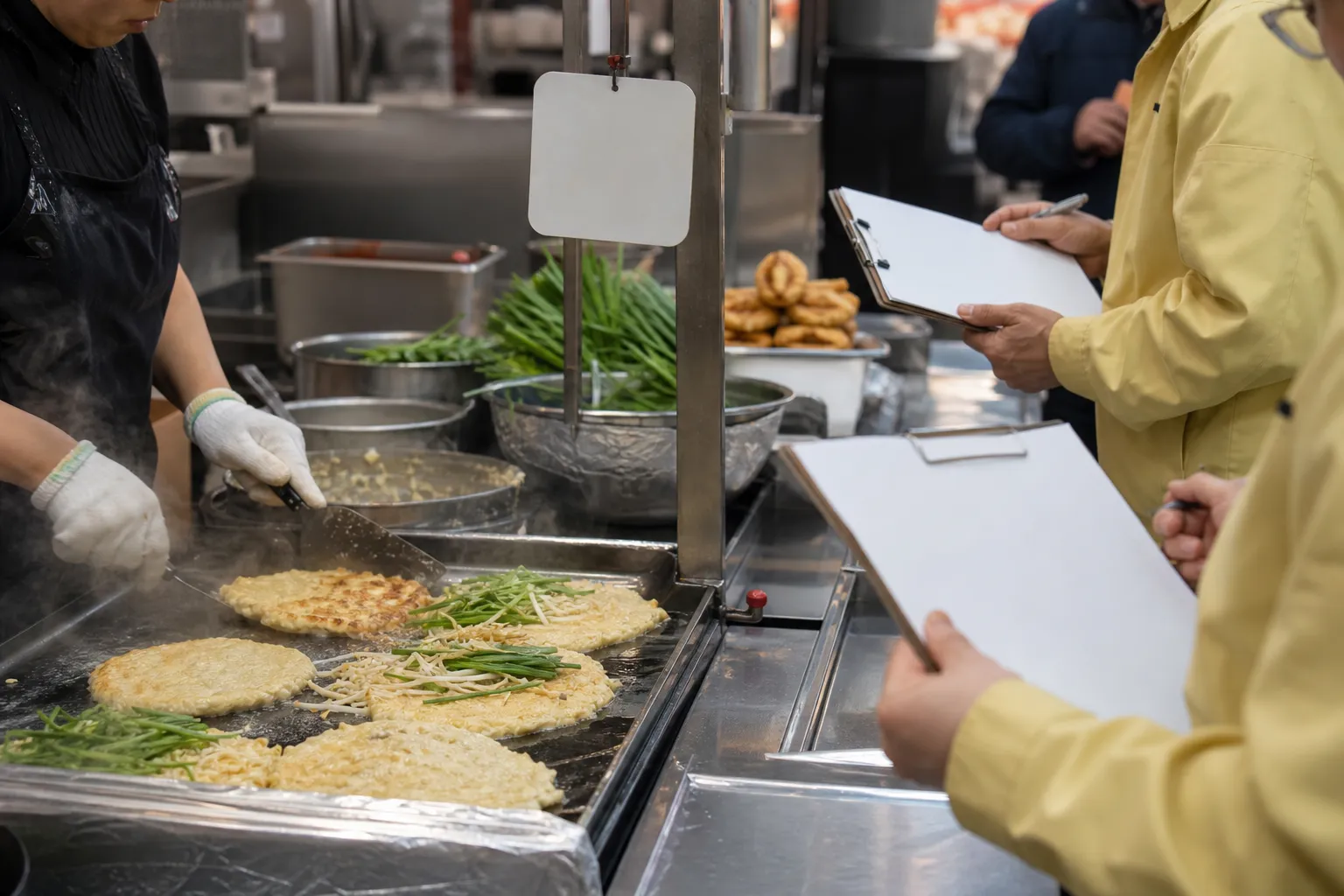
For readers planning a visit, the available facts point to a market under closer scrutiny rather than a market to write off. Seoul and Jongno District are trying to make Gwangjang Market easier to trust through mystery shoppers, hygiene inspections, a real-name stall system, and tougher penalties for repeated violations. The success of the Gwangjang Market crackdown will depend on whether those rules become visible in ordinary transactions, from posted prices to cleaner service and clearer ways for visitors to raise concerns.
References
- 서울시, 광장시장 '위생·상거래·안전' 종합점검 실시… 신뢰 회복 총력 (서울특별시, 2026-05-20)
- 광장시장 '바가지요금·비위생 점포' 잡는다…미스터리쇼퍼 투입 (연합뉴스, 2026-05-20)
- 광장시장에 ‘노점 실명제’…바가지-음식 재사용하면 퇴출된다 (동아일보, 2026-05-17)
- 바가지·위생 논란 '광장시장' 노점실명제 시행‥6월부터 퇴출 가능 (MBC, 2026-05-18)
- '외국인 손님에 생수 2천원 판매' 광장시장 노점 사흘 영업정지 (YTN, 2026-04-24)
- 광장시장 또 바가지 논란…“순대 9조각에 7천 원” (채널A, 2025-11-26)
About the Author