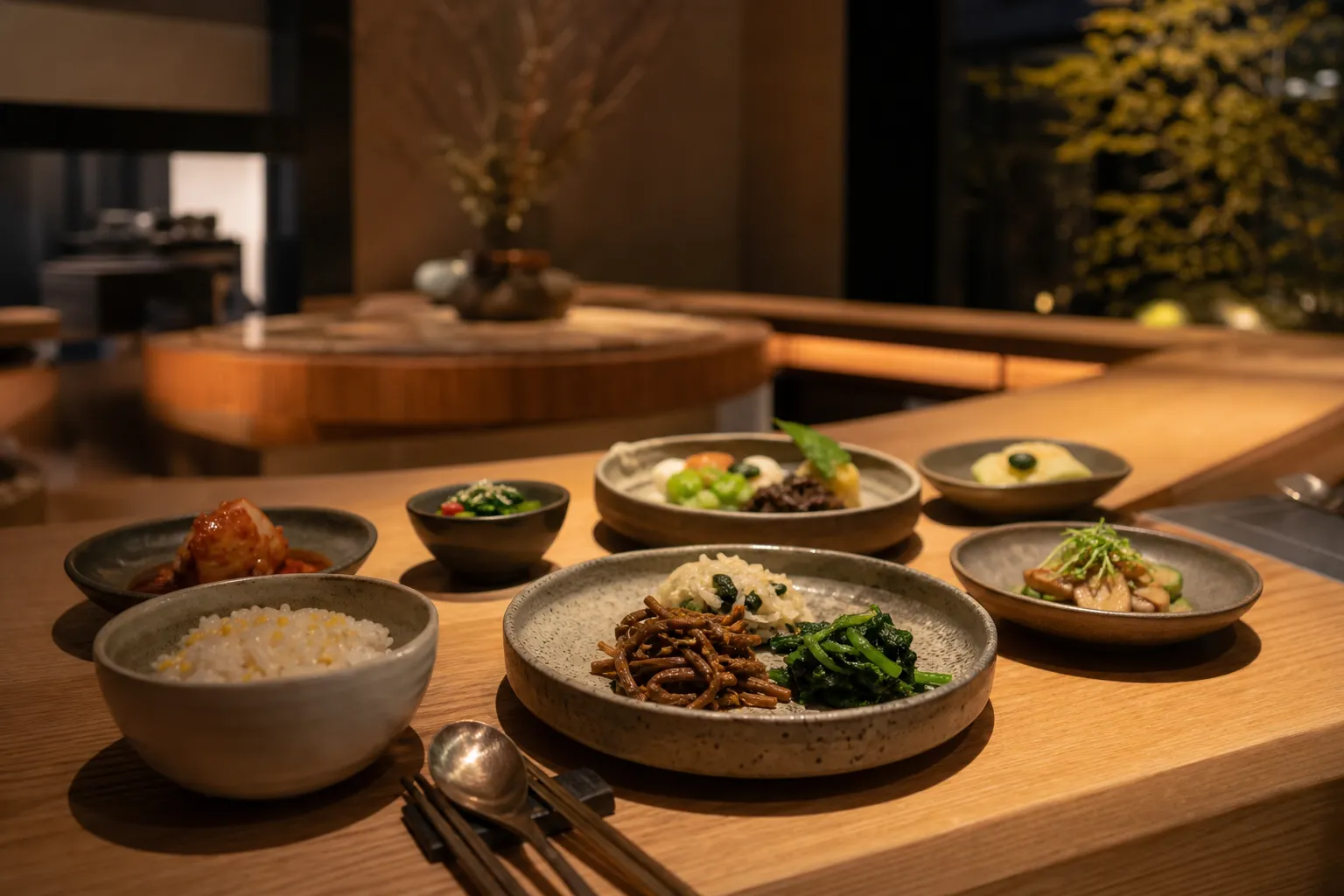
Gosari Express has become one of the most interesting names in Seoul’s vegan dining conversation after appearing in the MICHELIN Guide Seoul & Busan 2026. The small Sindang-dong restaurant is now tied to two MICHELIN distinctions: it was included among the new Bib Gourmand selections and was also introduced as a new MICHELIN Green Star restaurant in the 2026 guide cycle.12
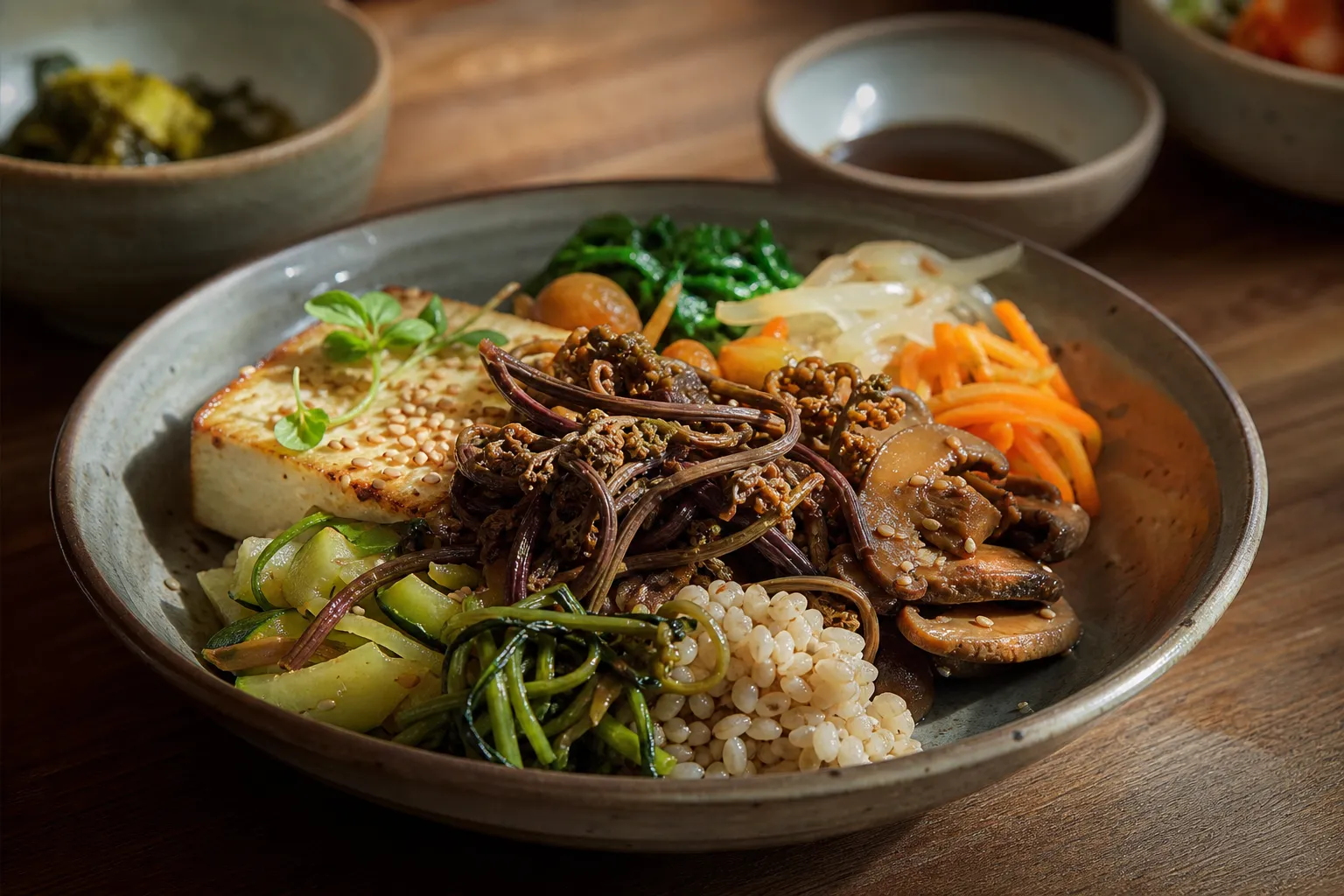
That combination gives the restaurant a very specific kind of appeal. It is not being framed only as a place for plant-based eaters, but as a restaurant using a familiar Korean ingredient, gosari, or bracken fern, as the starting point for creative Vegan Korean Dining. For readers curious about where Seoul’s vegan food scene is heading, Gosari Express offers a compact but meaningful case study.
Gosari Express and Its MICHELIN 2026 Moment
The MICHELIN Guide’s 2026 Seoul and Busan coverage placed Gosari Express among eight newly selected Bib Gourmand restaurants. In MICHELIN terms, Bib Gourmand recognition points readers toward restaurants that offer good cooking at good value, and the official restaurant page lists Gosari Express as a low-priced vegan restaurant in Seoul.13
The same guide season also brought a sustainability-focused spotlight. MICHELIN’s 2026 highlights named Gosari Express as a new Green Star restaurant, describing it as a vegan restaurant that creatively expresses the possibilities of gosari.2 Hotel & Restaurant reported that the full 2026 Seoul and Busan selection was announced on March 5, 2026, at Signiel Busan, and that there were four Green Star restaurants in 2026, with Mitou and Gosari Express newly added in Seoul.4
That matters because the restaurant’s story sits at the intersection of value, sustainability, and culinary identity. A vegan restaurant in a market alley receiving both Bib Gourmand and Green Star attention suggests that plant-based Korean food can be recognized not just as a niche alternative, but as part of the broader dining culture MICHELIN is documenting in Seoul.
There is also a useful wider context. In comments reported around the 2026 guide, MICHELIN Guide international director Gwendal Poullennec described Seoul as a dining capital balancing tradition and innovation.4 Gosari Express fits neatly into that frame: the restaurant works with a familiar Korean plant ingredient, then builds a modern, fully vegan menu around it.
What Makes the Menu Stand Out
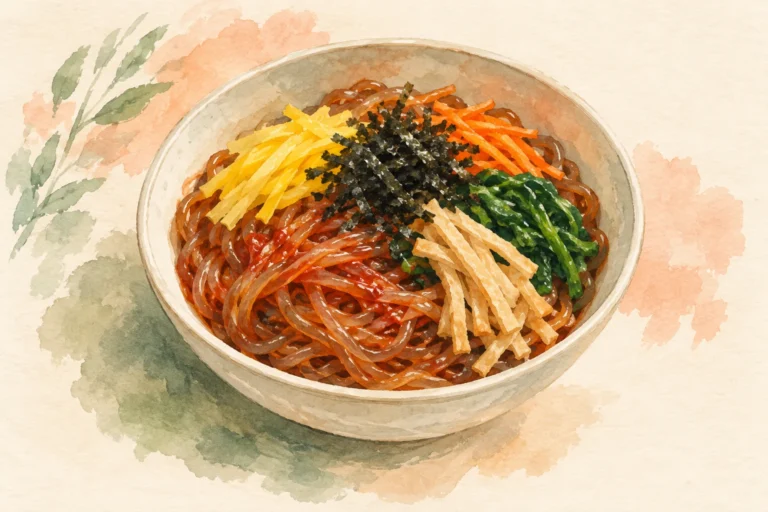
The key ingredient is right there in the name. Gosari Express centers its cooking on gosari oil sauce, and MICHELIN’s official introduction mentions plant-based dishes such as bibim noodles and tteokbokki made with that sauce.1 The official restaurant listing also highlights bibim noodles using gosari oil sauce together with perilla seeds, hummus, and vegetable rayu.3
That ingredient list helps explain why the restaurant has caught attention beyond the simple label of “vegan.” Rather than trying to copy meat-based Korean dishes directly, the menu appears to build flavor through vegetables, oils, grains, nuts, legumes, and spicy condiments. It sounds like a kitchen focused on depth, texture, and seasoning rather than on substitution alone.
Cook&Chef reported that Gosari Express is located in an alley of Sindang Jungang Market in Jung-gu, Seoul, and that all of its menu items are 100% vegan. The report also said the restaurant uses its independently developed gosari oil sauce as a core base.5 For anyone following Seoul food trends, that location detail is important. The restaurant is not described as a large, polished dining room in a luxury district; its identity is tied to a market neighborhood and a focused, sauce-led concept.
The Dong-A Ilbo’s English edition adds another layer through Bad Carrot, the startup founded by Kim Je-eun. The report says Bad Carrot develops vegan sauces and meal kits based on domestic Korean produce and operates Gosari Express in Sindang-dong. It also describes the restaurant as a 10-seat operation that has been running since 2024.6
Kim’s comments help clarify the thinking behind the food. Speaking about sauce development, Kim said, “I wanted to demonstrate how a single sauce could be utilized in multiple ways.”6 Another quoted principle points to plant-based ingredients, domestic agricultural products, and the savory appeal of vegetables as the basis for product development.6 Those remarks align closely with what the restaurant’s MICHELIN descriptions emphasize: a plant-based concept built around Korean produce and a versatile signature sauce.
Why It Matters for Vegan Korean Dining in Seoul
For diners, Gosari Express is interesting because it makes vegan Korean food feel specific rather than generic. The available source material does not present it as a broad plant-based cafe, a fusion concept, or a wellness-branded restaurant. Instead, it is described through a single ingredient, a sauce, and a short list of dishes that reinterpret Korean comfort food in plant-based form.
That specificity is valuable. Vegan Korean Dining can sometimes be discussed in very broad terms, especially for travelers trying to understand what is available in Seoul. Gosari Express gives the conversation a more concrete shape: gosari oil sauce, bibim noodles, tteokbokki, perilla, hummus, vegetable rayu, domestic agricultural produce, and a 10-seat Sindang-dong restaurant format.136
It also shows how MICHELIN recognition can amplify a small restaurant’s role in a larger cultural shift. The Bib Gourmand selection points toward accessibility and value, while the Green Star highlights environmental and sustainable dining considerations. Together, they make Gosari Express more than a restaurant listing; they position it as one of the clearest examples of how Seoul’s vegan scene is being noticed within formal dining guides.
For travelers, the practical takeaway is simple: if you are researching vegan restaurants in Seoul, Gosari Express belongs on the radar because its recognition is specific, current to the 2026 MICHELIN Guide cycle, and supported by official guide listings. For food-curious locals, it is also a reminder that innovation in Korean dining does not always need to come from luxury tasting menus. Sometimes it can start with a market alley, a small counter, and a sauce built around a humble fern.
Quick FAQ
Is Gosari Express listed in the MICHELIN Guide Seoul & Busan 2026?
Yes. MICHELIN’s official materials list Gosari Express as part of the 2026 Korea guide’s Bib Gourmand selection, and the guide’s 2026 highlights also identify it as a new MICHELIN Green Star restaurant.23
Is Gosari Express fully vegan?
Cook&Chef reported that every menu item at Gosari Express is 100% vegan, and MICHELIN’s official descriptions also classify it as a vegan restaurant in Seoul.35 !Gosari Express Michelin recognition Sindang-dong Seoul vegan restaurant Gosari Express stands out because its MICHELIN recognition is tied to a clear idea: Korean plant-based cooking can be creative, grounded in local ingredients, and serious enough to earn attention from a global dining guide. Its 2026 Bib Gourmand and Green Star mentions make it a small restaurant with an outsized place in Seoul’s evolving vegan dining story.
References
- 미쉐린 가이드 서울 & 부산 2026, 빕 구르망 8곳 신규 선정 (MICHELIN Guide)
- 미쉐린 가이드 서울 & 부산 2026: 역대 최다 신규 및 승격 미쉐린 스타 레스토랑 발표 (MICHELIN Guide)
- 고사리 익스프레스 – 미쉐린 가이드 레스토랑 (MICHELIN Guide)
- [현장취재] 한국 발간 10주년 미쉐린 가이드, 서울·부산서 역대 최다 신규 스타 레스토랑 탄생 (호텔앤레스토랑, 2026-03-05)
- [미슐랭 스토리] “고사리, 이렇게도 먹을 수 있다니!” 미쉐린 그린스타로 신규 선정 ‘고사리 익스프레스’ (Cook&Chef, 2026-03-09)
- "More Delicious and Fun": Bad Carrot Aims to Mainstream Veganism with Domestic Korean Produce (The Dong-A Ilbo, 2025-12-11)
About the Author