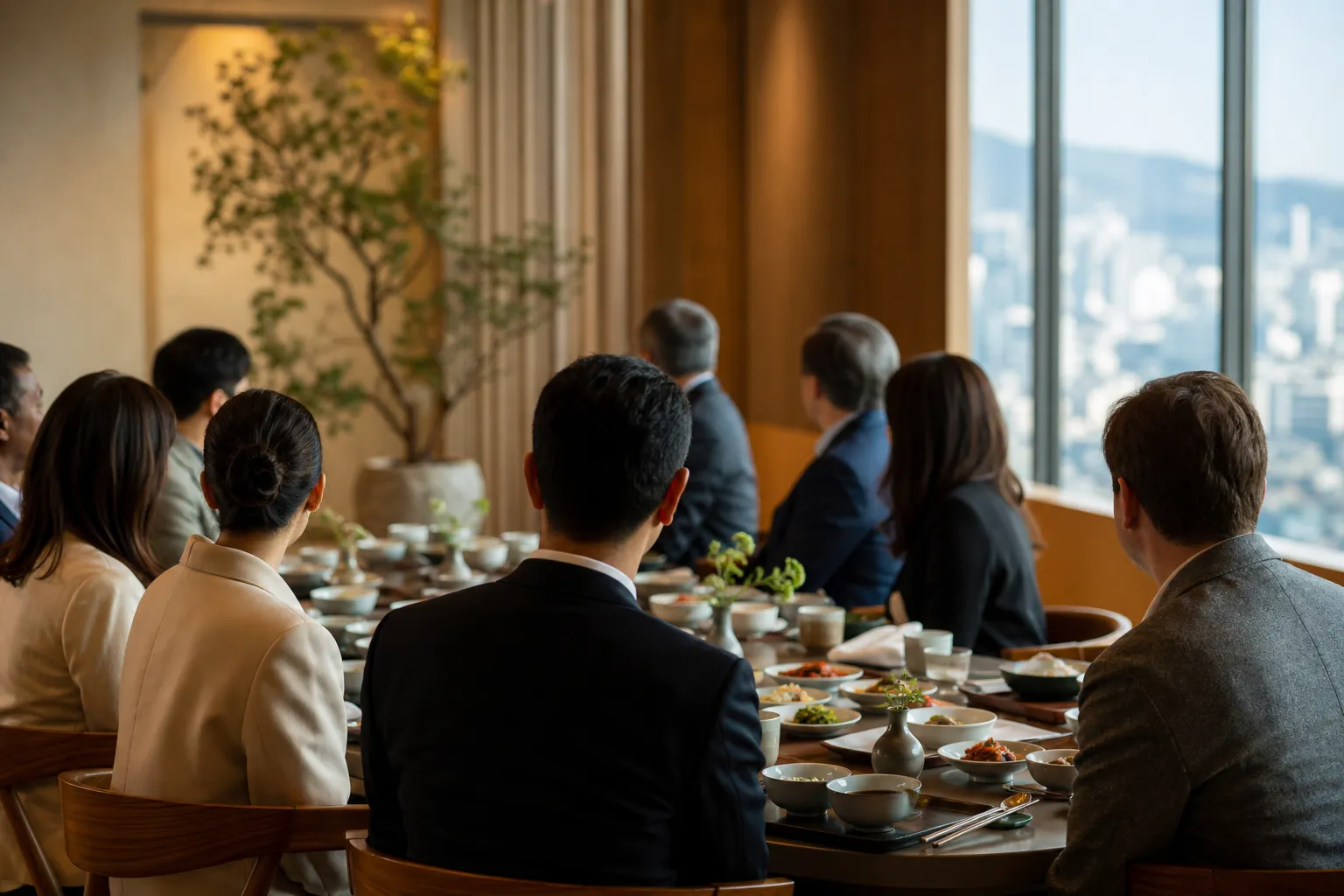
The foreigner-focused Korean food seminar held in Seoul on May 29, 2026, offered a structured look at how Korean cuisine is seen, chosen, and understood outside Korea. Officially titled “2026 First Hansik Seminar – Korean Food from the World’s Perspective,” the event was organized by the Ministry of Agriculture, Food and Rural Affairs and the Korean Food Promotion Institute at Hansik Culture Space E:eum in Jongno-gu, Seoul. 1
For readers following Korean dining etiquette, Korean food education, or overseas interest in hansik, the seminar matters because it treated Korean cuisine not only as a menu of famous dishes but also as a cultural experience shaped by image, consumption habits, and local expectations abroad.
What the Foreign-Focused Hansik Seminar Covered
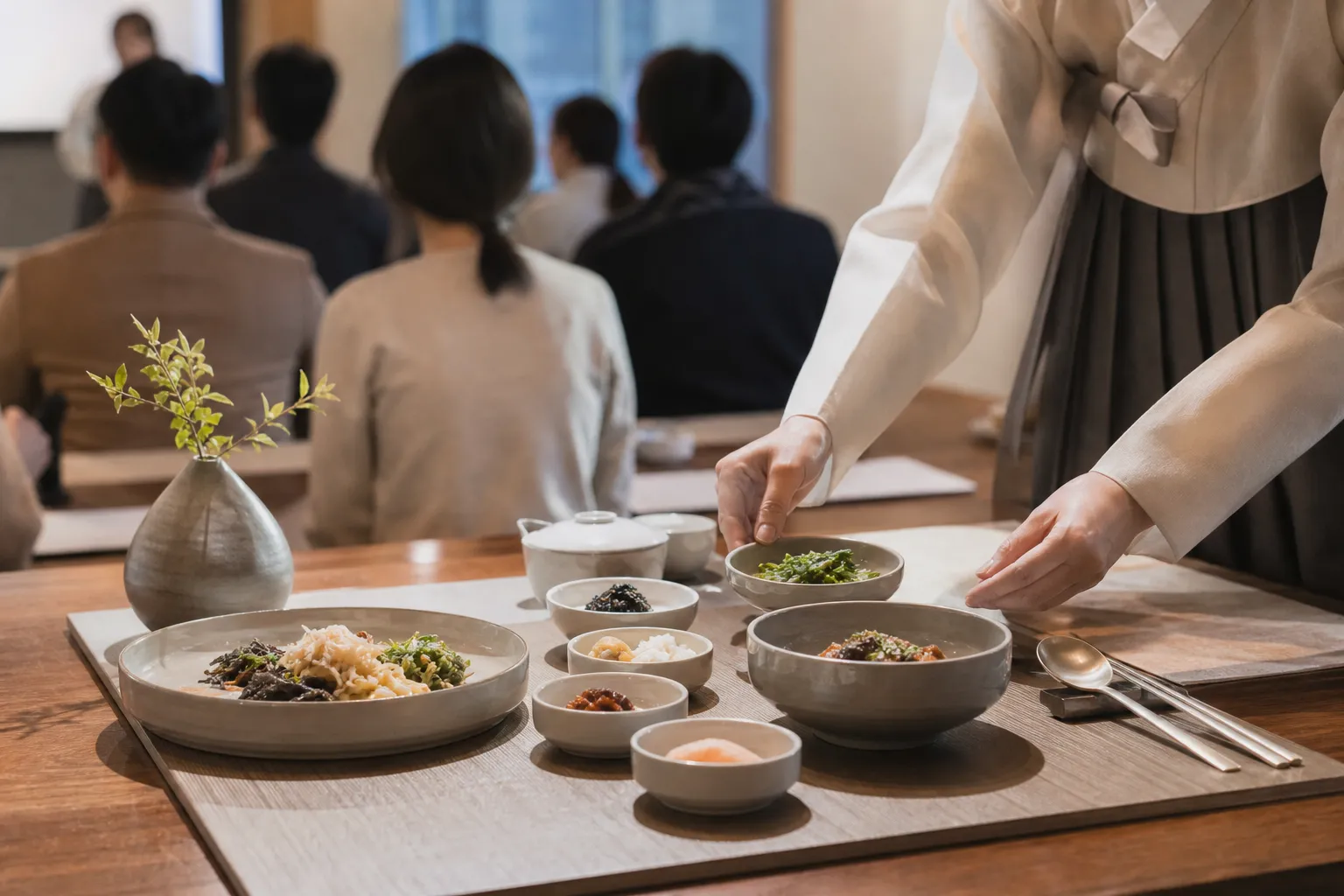
The seminar was announced as a forum to review the global status of Korean food and identify areas for improvement from the viewpoint of foreigners. Its stated agenda included analysis of Korean food images and consumption trends, with discussion of strategies for overseas markets. 1
Because the event took place before the current date of June 13, 2026, it should now be read as a completed policy and research seminar rather than an upcoming public program. A follow-up release reported that the Korean Food Promotion Institute held the event on May 29, 2026, at Hansik Culture Space E:eum. 2
The program centered on two named presentations. Professor Hong Seok-kyung of Seoul National University was scheduled to discuss Hallyu and Korean food in the world, and Kim Tae-yeon, head of the Kimchi Hansik Culture Education Center, was scheduled to present changes in European perceptions of Korean food. 3
After the event, the main themes became clearer. Hong addressed how the image of Korean food connects, or fails to connect, with actual consumption amid the spread of Hallyu. Kim drew on educational experience in the Netherlands to explain European consumer preferences for Korean food and localization strategies. 2
For practical readers, the key point is simple: the seminar was not a cooking demonstration or a basic etiquette class. It was a research and discussion event about how Korean food is perceived globally, how people abroad decide to consume it, and what Korean institutions may need to consider when presenting hansik overseas.
Why It Matters for Korean Dining Etiquette
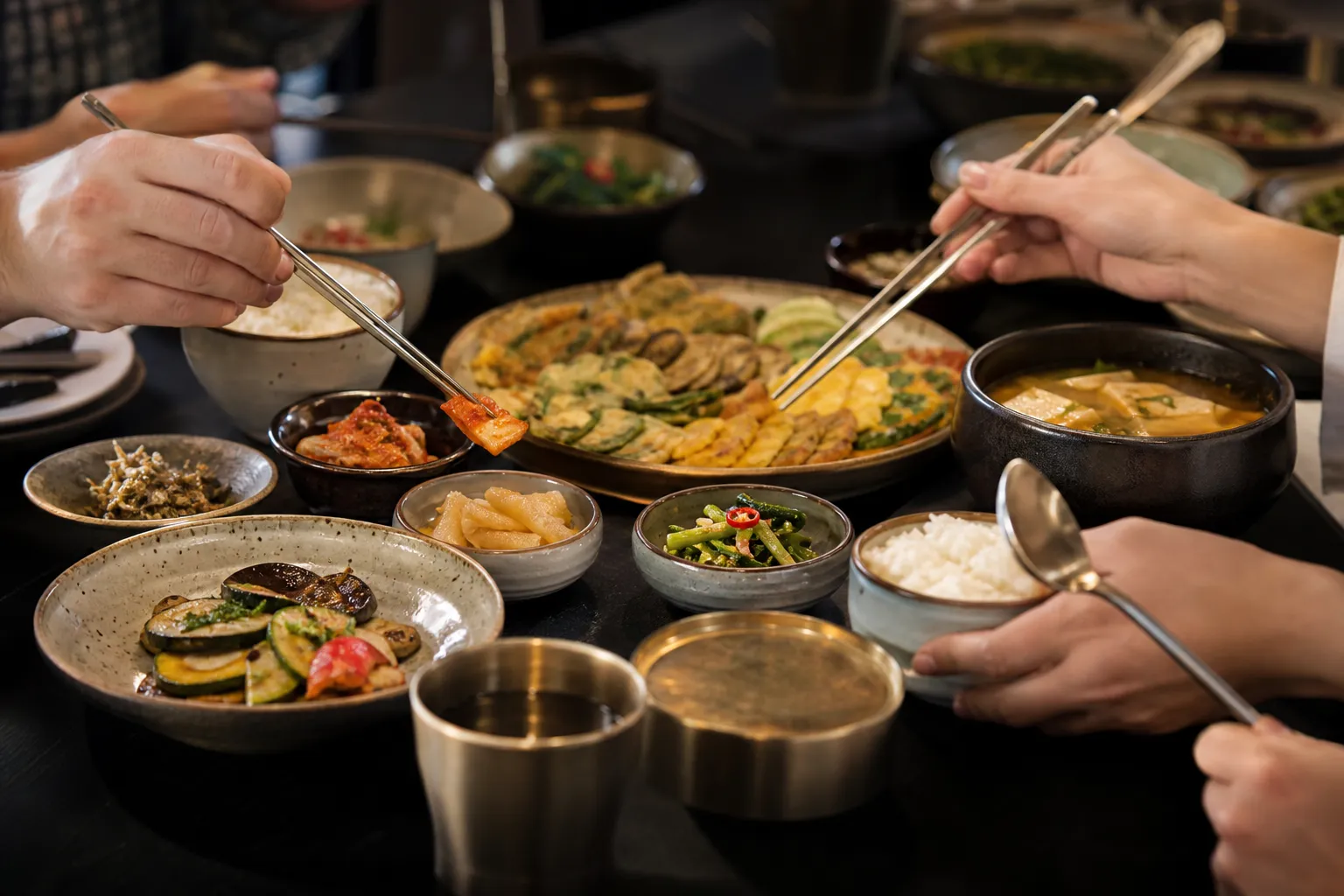
Korean dining etiquette is often introduced through table manners, shared dishes, side dishes, chopstick use, and respect-based dining habits. The seminar did not provide a step-by-step etiquette manual in the available source material, but its focus helps explain why etiquette remains part of the broader international conversation around Korean food.
News coverage of the completed seminar noted that global interest in Korean food extends beyond well-known items such as kimchi, bibimbap, bulgogi, and tteokbokki. Korean cooking methods and food culture itself are also drawing attention from international audiences. 4
That distinction is important. When foreigners encounter Korean food, they may first recognize a dish name from media, restaurants, or travel content. But eating Korean food often also involves understanding how dishes are served together, how flavors are balanced across the meal, and how the meal functions socially. The seminar’s emphasis on image, consumption, preference, and localization suggests that successful global outreach depends on more than translating menus.
The Korean Food Promotion Institute framed the event as a way to look again at Korean food through the eyes of the world. Chair Lee Kyu-min said the seminar would help “reexamine Korean food from the world’s perspective,” a concise statement of the event’s purpose. 1
For organizations planning Korean food education for international audiences, the available facts point to three practical lessons. First, Korean food should be explained through both cuisine and culture. Second, overseas preferences differ by region, so European responses, such as those discussed through the Netherlands-based education experience, should not automatically be treated as universal. Third, Korean food promotion can benefit from linking public interest generated by Hallyu to actual opportunities to taste, cook, and understand food.
How Foreign Learners Are Experiencing Korean Food
The seminar sits alongside other 2026 examples of foreigner-facing Korean food programs. On May 22, 2026, KOREA.net reported a Korean cooking class at Sempio Woorimat Space in Jung-gu, Seoul, where students from the University of Georgia in the United States participated in making gimbap. 5
Earlier in the year, on January 22, 2026, Culture Minister Choi Hwi-young inspected the 2026 Korea Grand Sale at The Hyundai Seoul and joined a Korean cooking class using K-sauces for foreign tourists with Visit Korea Committee Chair Lee Boo-jin. 6
These examples are not the same event as the May 29 seminar, but they show the practical side of the same trend described in the seminar materials: foreigners are not only hearing about Korean food, they are being invited to cook, taste, and interpret it in organized settings.
For readers trying to understand where Korean dining etiquette fits, this is the most useful takeaway. Etiquette can be introduced more effectively when it is connected to real food experiences, not presented as an isolated list of rules. A gimbap class, a sauce-focused tourism event, or a seminar on global perceptions each offers a different entry point into Korean food culture.
Quick FAQ
Was the 2026 First Hansik Seminar a public cooking class for foreigners?
The available sources describe it as a seminar, not a cooking class. Its focus was on global perceptions, Korean food image, consumption trends, Hallyu, European preferences, and overseas strategy. 1
Did the seminar teach specific Korean dining etiquette rules?
The available sources do not list specific etiquette rules taught at the seminar. They show that the event addressed Korean food culture and international perceptions, which are closely related to how Korean dining etiquette is introduced abroad. 2 !foreigners and Korean food seminar dining etiquette trend in Seoul The 2026 First Hansik Seminar is best understood as a guidepost for how Korean food may be presented to international audiences: not only through famous dishes, but through culture, context, regional consumer behavior, and the dining experiences that help foreigners understand what Korean food means in practice.
References
- “외국인들은 한식을 어떻게 볼까?” 한식진흥원, 제1차 한식연구 학술세미나 개최 (한식진흥원, 2026-05-15)
- 한식진흥원, 2026년 제1차 한식 세미나 ‘세계인의 눈으로 보는 한식’ 성료 (뉴스와이어, 2026-06-02)
- 2026 제1차 한식 세미나 -세계인의 눈으로 보는 한식- 개최 (전통문화포털, 2026-05-13)
- 한식진흥원, ‘세계인의 눈으로 보는 한식’ 세미나 성료 (뉴스네트워크, 2026-06-02)
- [사진으로 보는 한국] 외국인 학생들의 한식 요리 체험 (코리아넷 / 문화체육관광부 한국문화원, 2026-05-22)
- 방한 관광과 소비 촉진하는 ‘2026 코리아그랜드세일’ 현장 점검 (문화체육관광부 열린장관실, 2026-01-23)
About the Author