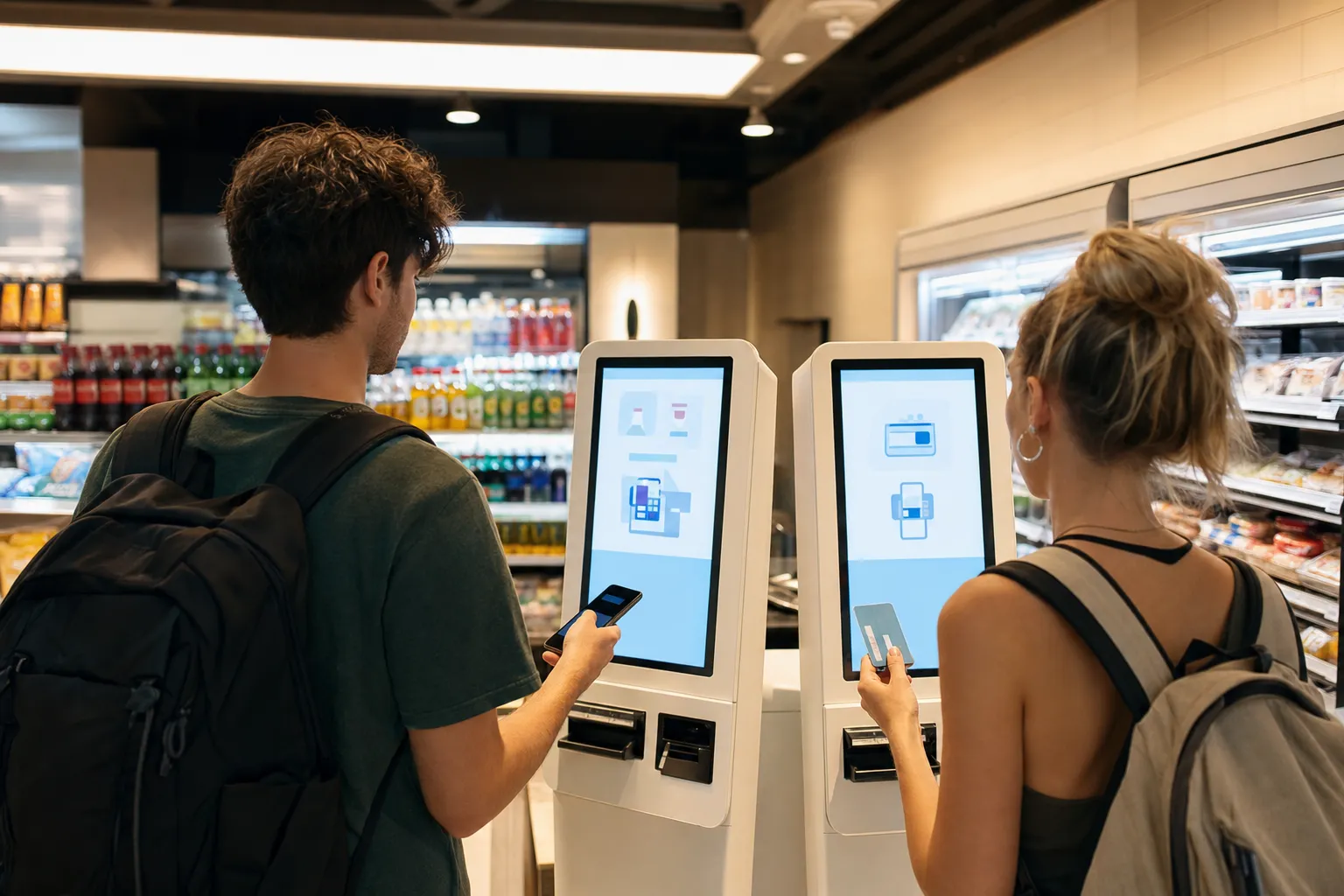
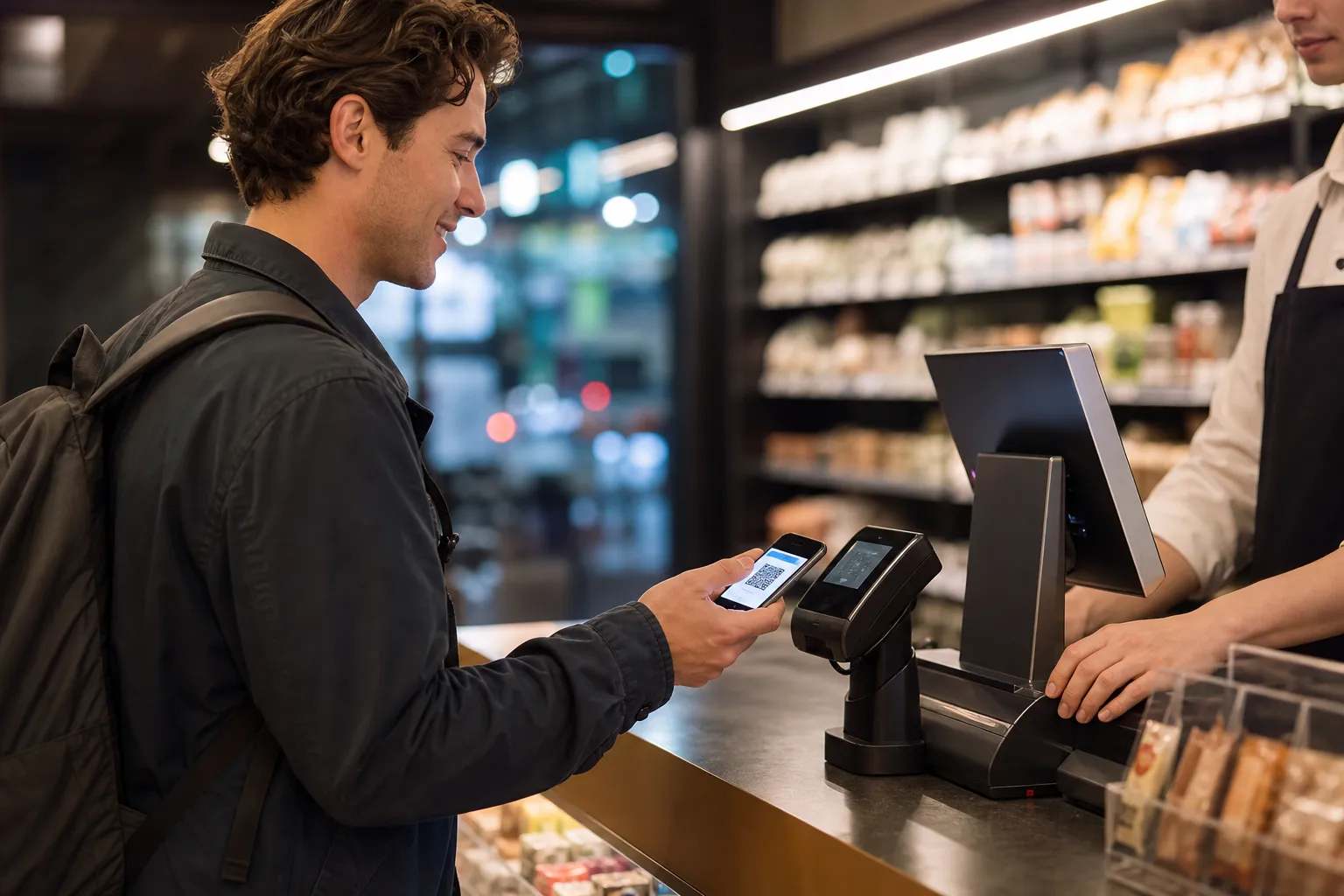
Foreign visitor convenience store payment in Korea is no longer limited to cash or international credit cards. For anyone planning a K-Convenience Tour, the most useful change is that major convenience store chains are expanding mobile wallets, multilingual checkout tools, and related travel services aimed directly at tourists.
The shift is tied to a larger rise in inbound travel. From January 1, 2026 through the third week of June 2026, cumulative foreign visitors to Korea exceeded 10 million, based on figures cited from the Ministry of Culture, Sports and Tourism.1 At the same time, convenience stores have become a regular stop on tourist routes, helped by familiar payment options such as Alipay and WeChat Pay.2
How Foreigners Can Pay at Korean Convenience Stores
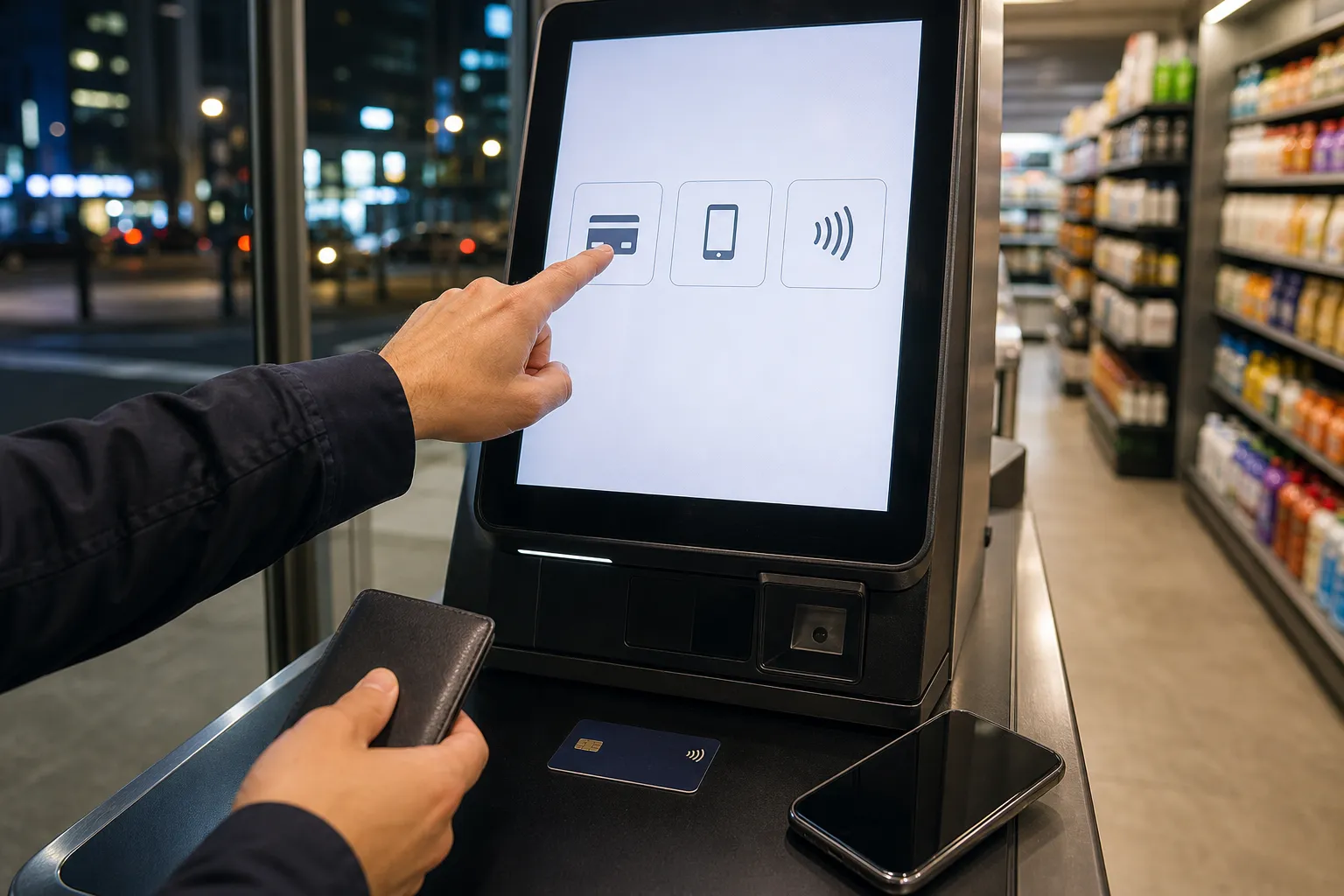
The clearest practical point is that payment options vary by chain, but the direction is consistent: Korean convenience stores are adding more foreign-friendly payment methods. Emart24 introduced LINE Pay at stores nationwide from May 2026, adding it alongside existing Alipay, WeChat Pay, and UnionPay support.1 For travelers from markets where LINE Pay is common, that can reduce the need to rely only on cards or cash.
GS25 is also operating Alipay, WeChat Pay, UnionPay, and Japan’s PayPay, giving visitors from China and Japan more familiar ways to pay.3 These options matter because mobile wallets are not a minor add-on in the foreign tourist market. GS25’s foreign payment amount in 2025 rose 74.2% from the previous year, and Alipay plus WeChat Pay accounted for 97.7% of foreign payment value at the chain.4
For visitors, the practical takeaway is simple: before shopping, check whether the store supports the wallet already used on your phone. If it does, convenience store payment can work much like it does at home: open the app, present the code or scan the required code, and complete payment at the counter or supported checkout system.
The industry’s reason for investing in these tools is also clear. One industry official said that “payment convenience is becoming an important competitive factor.”1 That is not just a retailer-side concern. For travelers moving quickly between hotels, subway stations, tourist areas, and late-night snack runs, a familiar wallet can be the difference between a smooth purchase and an abandoned basket.
What to Expect at Checkout
At CU, payment support is being paired with language support. CU expanded 38-language AI interpretation services to about 70 major-location stores and added English, Chinese, and Japanese modes to self-checkout machines nationwide.5 This is especially useful for visitors who want to use convenience stores independently but may not know the Korean names for products, bagging options, or checkout prompts.
Promotions may also be linked to payment methods. CU has offered WeChat Pay discount coupons, while GS25 has run a UnionPay 15% instant discount promotion targeting foreign payment demand.5 These promotions should be treated as time- and store-dependent rather than guaranteed benefits. The safer approach is to look for in-store notices or ask staff whether a specific wallet promotion is active before paying.
The growth in payment support is part of a broader change in tourist shopping routes. Foreign visitor spending has been spreading from duty-free stores into city convenience stores, and reports describe convenience stores in tourist paths as a growing part of the shopping journey.5 In 2025, foreign customer sales increased across the four major convenience store chains: CU rose 101.2%, GS25 74.2%, Seven-Eleven 60%, and Emart24 38% from the previous year.2
AlipayPlus data adds another useful angle for travelers. In Korea during 2025, convenience stores accounted for 32% of all AlipayPlus transactions, compared with 17% for duty-free stores.6 By payment amount, duty-free stores and beauty clinics were larger categories, but by transaction count, convenience stores were a major use case.6 In other words, small everyday purchases are a central part of how foreign visitors use mobile payment in Korea.
Extra Services That Can Help a K-Convenience Tour
Some convenience stores are also expanding beyond checkout. Seven-Eleven introduced unmanned foreign exchange kiosks that combine currency exchange, prepaid card issuance, and transportation card top-up in one place.3 For a traveler, this can make a convenience store useful before the shopping even begins: it may help with local transit preparation or payment backup planning.
These services are still best understood as chain- and location-specific. A major store near a tourist area is more likely to offer foreigner-focused support than a small neighborhood branch, although nationwide payment support is expanding in some cases. If a specific payment method is essential, it is wise to carry a backup option such as an international card or enough cash for a small purchase.
Product choice is another reason payment convenience matters. A professor quoted in coverage of the sector said that “various K-foods are appealing to foreign tourists.”2 That helps explain why tourists are using convenience stores not just for emergency purchases but as part of the travel experience: snacks, ready-to-eat meals, drinks, and limited items are easier to try when payment is quick and familiar.
Quick FAQ
Can foreign tourists use Alipay or WeChat Pay at Korean convenience stores?
Yes, the source material confirms Alipay and WeChat Pay support at major chains including Emart24 and GS25.13 At GS25, those two payment methods made up 97.7% of foreign payment value in 2025.4
Are Korean convenience store self-checkouts usable for non-Korean speakers?
CU has added English, Chinese, and Japanese modes to self-checkout machines nationwide, and it expanded 38-language AI interpretation services to about 70 major-location stores.5 Availability of staff help and interpretation services may still depend on the store. !Korea convenience store mobile payment travel services guide For foreign visitors, convenience store payment in Korea is becoming more practical because the major chains are aligning checkout with the wallets tourists already use. A smooth K-Convenience Tour now depends less on figuring out Korean retail systems from scratch and more on checking which familiar payment option is supported at the store in front of you.
References
- 외국인 관광객 지갑 연다…유통가, 할부·간편결제 도입 속도 (데일리한국, 2026-07-01)
- [新큰손 외국인] 관광객 필수 코스 K편의점, 매출 지형 바꾼다 (블로터, 2026-06-30)
- 진화하는 편의점, 외국인 금융·결제 서비스 확대 (SR타임스, 2026-06-08)
- GS25, 외국인 결제 금액 74.2% 성장…관광객 2000만 시대 정조준 (매일경제, 2026-01-29)
- 관광객들 “한국가면 무조건 편의점부터”…매출 최대 2배 늘었다 (매일경제, 2026-02-05)
- 외국인 관광객도 간편 결제… 한국서 보폭 넓히는 알리페이플러스 (조선비즈, 2025-12-09)
About the Author