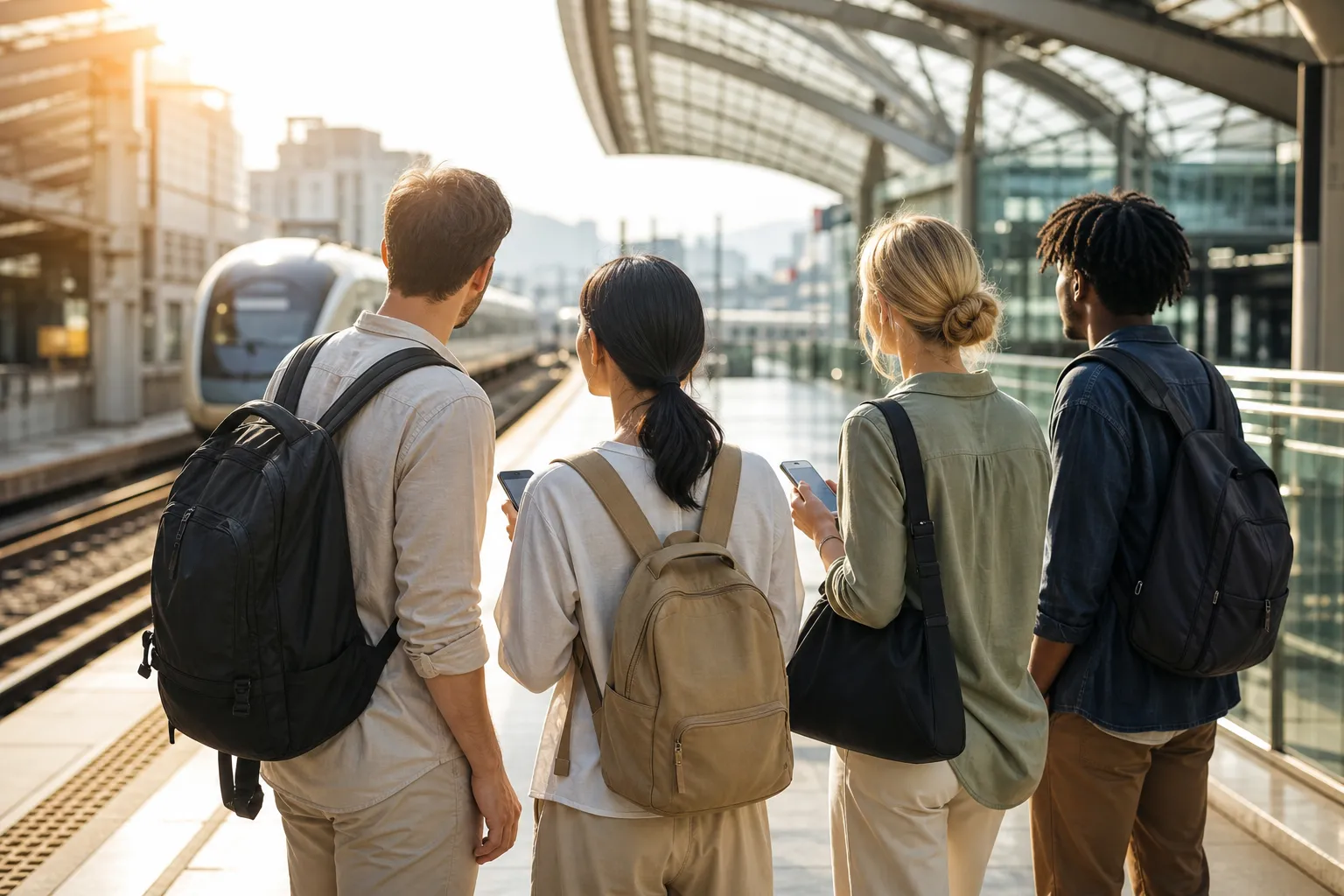
Foreign residents’ same-day travel in Korea is already a major part of domestic tourism demand. In the 2026 “Survey Report on the Tourism Market for Foreign Residents in Korea,” published through Korea Tourism Data Lab on May 13, 2026, recent travel behavior shows that day trips are more common than overnight trips among foreign residents.1
The clearest figure is practical: among 1,000 foreign residents surveyed, 69.1% had taken a same-day domestic trip within the previous year, compared with 58.8% who had taken an overnight domestic trip.2 For anyone planning programs, local routes, or community travel information, Foreign Residents Korea Travel is not just about airports and inbound tourists. It is also about people already living in Korea who are using weekends, holidays, and short free time to explore nearby regions.
Foreign Residents’ Same-Day Travel: What the Survey Shows
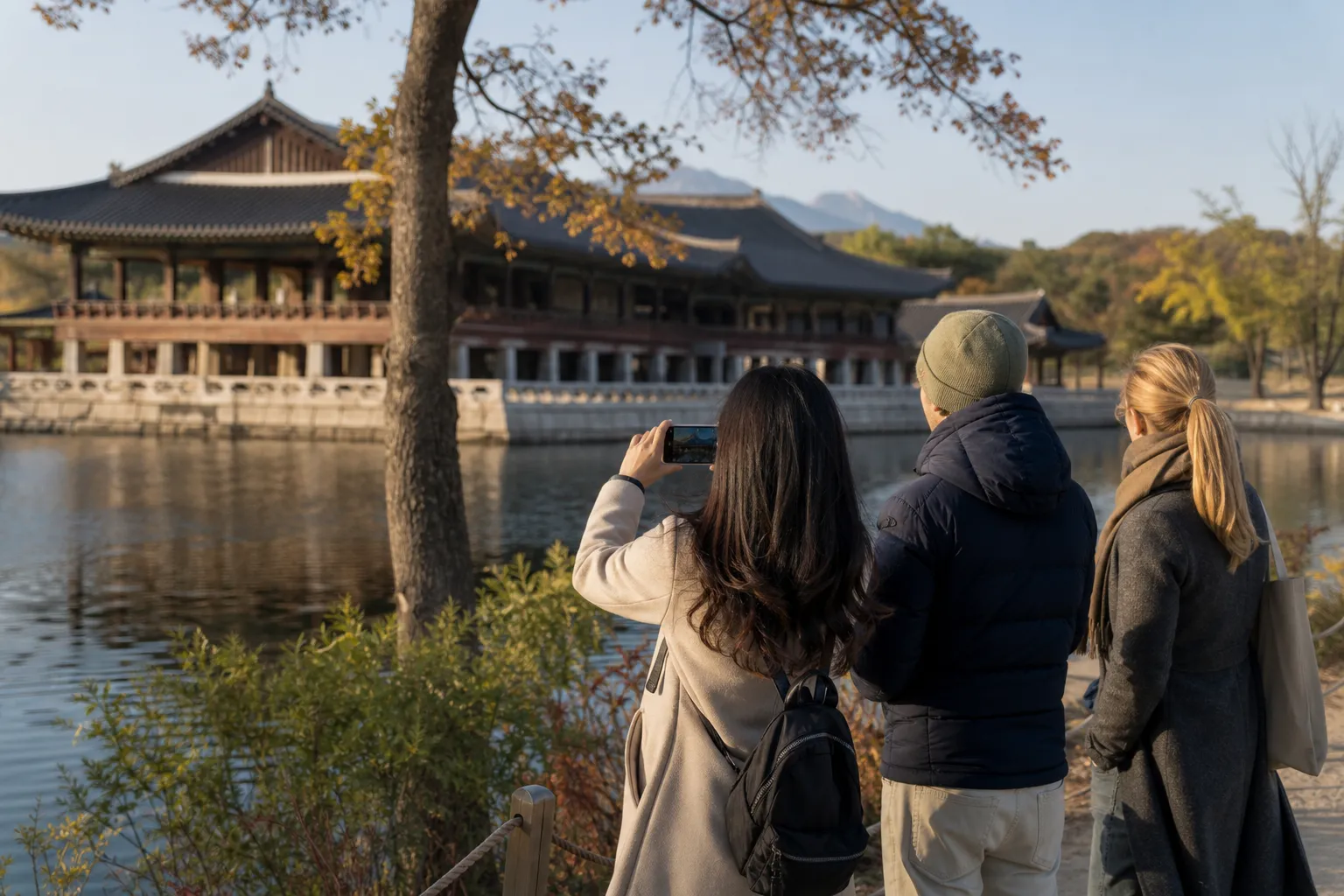
The survey points to a strong base of demand for short domestic travel. Same-day travel is especially important because it requires less time, simpler planning, and often lower cost than overnight travel. The available data does not list detailed itineraries, budgets, or transport modes, so the safest reading is limited to participation rates and regional preferences.
For same-day trips, the leading destinations were Gyeonggi, Seoul, Busan, Gangwon, and Incheon, in that order.2 This ranking suggests that both metropolitan access and recognizable regional destinations matter. Gyeonggi and Incheon are closely connected to the Seoul area, while Busan and Gangwon also appear strongly in broader domestic travel preferences among foreign residents.
Travel behavior also differs by residence status. International students had the highest same-day travel experience rate, at 79.1%.3 That figure is useful for universities, local governments, and community groups because it identifies students as a particularly active day-trip audience. The source material does not explain why students travel at a higher rate, so planners should avoid assuming motivations beyond the measured result.
Overnight travel follows a different pattern. The survey reported that Gangwon, Busan, and Jeju accounted for large shares of overnight travel destinations, and separate reporting noted that Gangwon had the highest overnight travel regional share at 27.7%.24 This contrast matters when choosing how to present destinations: some areas may work better as quick day-trip options, while others may be more strongly associated with stays.
How to Use the Findings When Planning a Day Trip
For foreign residents, the most practical starting point is to separate “possible in one day” from “better with a night.” The survey-backed same-day destination list begins with Gyeonggi and Seoul, followed by Busan, Gangwon, and Incheon.2 That does not mean every place in those regions is equally convenient for every resident. It means these regions had the highest reported same-day trip experience in the survey.
A simple planning approach is to first choose a region already supported by day-trip behavior, then check whether the route fits the time available. The source material does not provide train schedules, bus routes, ticket prices, or opening hours, so those details should be checked directly with transport operators and destination websites before travel. What the survey does provide is a reliable signal that same-day domestic travel is familiar to many foreign residents, not a niche activity.
Local governments and cultural institutions can also read the data as a service-design cue. If international students are the most active same-day travelers, multilingual notices, group-friendly registration, and clear arrival instructions may be especially useful for programs aimed at that group. If a destination is trying to attract residents rather than short-term inbound tourists, it should treat foreign residents as repeat domestic travelers with different time limits and information needs.
One official example is the Hwaseong City Independence Movement Memorial Hall’s 2026 cultural exploration program for foreign residents, titled “I, Too, Am a Foreign Independence Activist.” The program is scheduled to run free of charge five times from June to November 2026, for foreign resident groups of up to 45 people.5 Its listed route includes the permanent exhibition hall, the Jeam-ri Martyrs’ Cemetery, the March 1st Movement Martyrs Memorial Tower, and the Schofield statue.5 This is not presented in the source as a general tourism product for individuals, but it shows how a local institution is packaging history-oriented travel for foreign resident groups.
Why Local Tourism Offices Are Paying Attention
Foreign residents are a sizable population group in Korea. The Ministry of the Interior and Safety announced on October 30, 2025 that the number of foreign residents in 2024 reached 2.58 million, up by 120,000 from the previous year and equal to about 5% of the total population.6 That population base helps explain why domestic travel by foreign residents is becoming relevant to tourism policy.
Future intent is also high. In the survey cited by Financial News, 85.9% of respondents said they planned to take a domestic trip within one year, with an average planned frequency of about four trips per year.3 In another reported result, 66.3% said they were willing to invite friends or acquaintances from their home country to Korea.2 These figures connect local domestic travel with a wider ambassador effect, because residents who know destinations may later influence visits by people abroad.
Kim Sung-eun, head of the Korea Tourism Organization’s Tourism AI Data Office, described foreign residents in Korea as “a major domestic travel demand group” and “ambassadors” who share Korea’s appeal with the world.2 The same office also said it planned to strengthen region-linked marketing and tourism content tailored to foreign residents.3 Those statements show that the policy interest is not only in counting trips, but also in shaping local content for people already living in Korea.
Quick FAQ
Which regions were most common for same-day trips by foreign residents?
The reported order was Gyeonggi, Seoul, Busan, Gangwon, and Incheon.2 The source material does not provide city-by-city routes or specific day-trip itineraries.
Are there official cultural programs specifically for foreign residents?
Yes. One listed example is Hwaseong City Independence Movement Memorial Hall’s free 2026 program “I, Too, Am a Foreign Independence Activist,” scheduled for five sessions from June to November 2026 for foreign resident groups of up to 45 people.5 Foreign residents’ same-day domestic travel is best understood as an active, measurable travel pattern rather than a future possibility. The available evidence shows high recent day-trip participation, strong one-year travel intent, and early examples of local programs designed specifically for foreign resident groups.
References
- 주한외국인 관광시장 실태조사 보고서 (한국관광 데이터랩, 2026-05-13)
- 국내 체류 외국인 10명중 7명 “친구·가족 한국 초청하고 싶다” (매일경제, 2026-05-14)
- 국내 체류 외국인 85.9% "1년 내 국내여행 계획 있다" (파이낸셜뉴스, 2026-05-13)
- 속초시, 체류형 관광도시 도약 추진…'머물고 다시 찾는 도시로' (연합뉴스, 2026-05-19)
- 화성시독립운동기념관 '2026년 외국인 주민 대상 문화탐방 프로그램' 신청 안내 (화성시 동탄구청)
- 국내 거주 외국인주민 수 258만 명, 총인구 대비 5%, 지속적인 증가세 이어가 (행정안전부, 2025-10-30)
About the Author